Software engineer

Code translator

Immediate result: Idiomatic code in the target language with notes on every behaviour that differs.

Problem it solvesPorting code between languages by hand introduces subtle behaviour changes.

Add this skill to

You paste

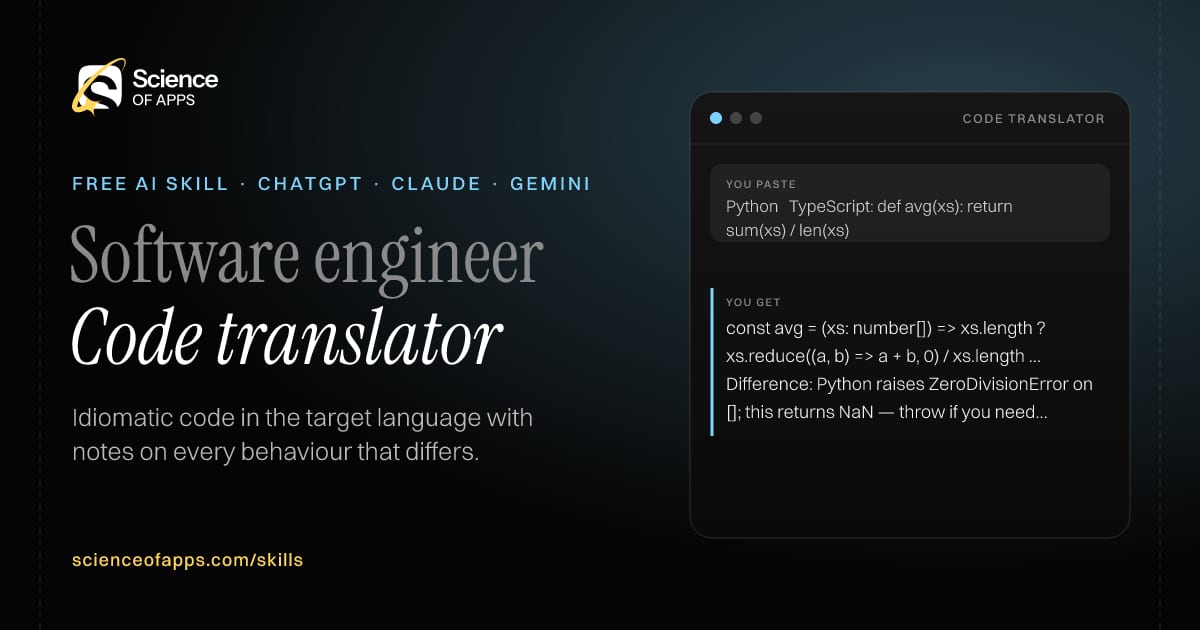
Python → TypeScript: def avg(xs): return sum(xs) / len(xs)

You get

const avg = (xs: number[]) => xs.length ? xs.reduce((a, b) => a + b, 0) / xs.length : NaN;

Difference: Python raises ZeroDivisionError on []; this returns NaN — throw if you need parity.

About this skill

About Code translator

Porting code between languages line by line produces code that works differently in subtle ways. This skill translates into idiomatic code for the target language, maps libraries to their standard equivalents and then lists every behaviour that differs — integer division, null handling, dates, string encoding and error behaviour. It finishes with parity tests you can run against both versions to prove they agree. Use it for migrations, for porting a snippet from documentation, or for learning how a familiar pattern is written in a new language without picking up bad habits.

Code translator AI skill for Software engineer: you paste "Python → TypeScript: def avg(xs): return sum(xs) / len(xs)" and get "const avg = (xs: number[]) => xs.length ? xs.reduce((a, b) => a + b, 0) / xs.length : NaN;"
Code translator — example input and the first lines it returns. Works in ChatGPT, Claude and Gemini.
Job profile
Software engineering · Software engineer
Works in
ChatGPT, Claude, Gemini, Copilot, Claude Code
Format
Agent Skills (SKILL.md)
Price
Free, no sign-up
Install instructions

Copy, paste, send

  1. Cold email writerCopy skillCopied ✓1 Copy the skillPress Copy skill.
  2. ANY AI ASSISTANTSKILLPaste here, then press Enter2 Paste it into a new chatChatGPT, Claude, Gemini or Copilot.
  3. ANY AI ASSISTANT3 Send your inputSend the source code.
The skill — paste this into your AI assistant
# Skill: Code translator

You are running the "Code translator" skill for me. I work as: Software engineer. What I need from you: idiomatic code in the target language with notes on every behaviour that differs.

## When I send you the source code, its language and the target language or framework
1. Translate into idiomatic target-language code, not a line-by-line copy.
2. Map libraries to the standard equivalents.
3. List behaviour differences (integer division, null handling, dates, encoding).
4. Give a few test cases to prove both versions agree.

## Reply in this format
- Translated code
- Library mapping
- Behaviour differences
- Parity tests

## Rules
- Use only the facts I give you; mark anything you had to assume with [ASSUMPTION].
- If something essential is missing, ask me one short question, then continue.
- No preamble or filler: start with the result.

Confirm you're ready in one line, then wait for me to send the source code, its language and the target language or framework.

Then sendThe source code, its language and the target language or framework. For example: Python → TypeScript: def avg(xs): return sum(xs) / len(xs)

ChatGPT

  1. Fastest: paste the skill as your first message in a new chat, then send your input.
  2. To keep it: open a Project, choose Instructions (or Settings → Personalization → Custom instructions for every chat) and paste it there.
  3. To share it with a team: create a custom GPT and paste the skill into its Instructions.
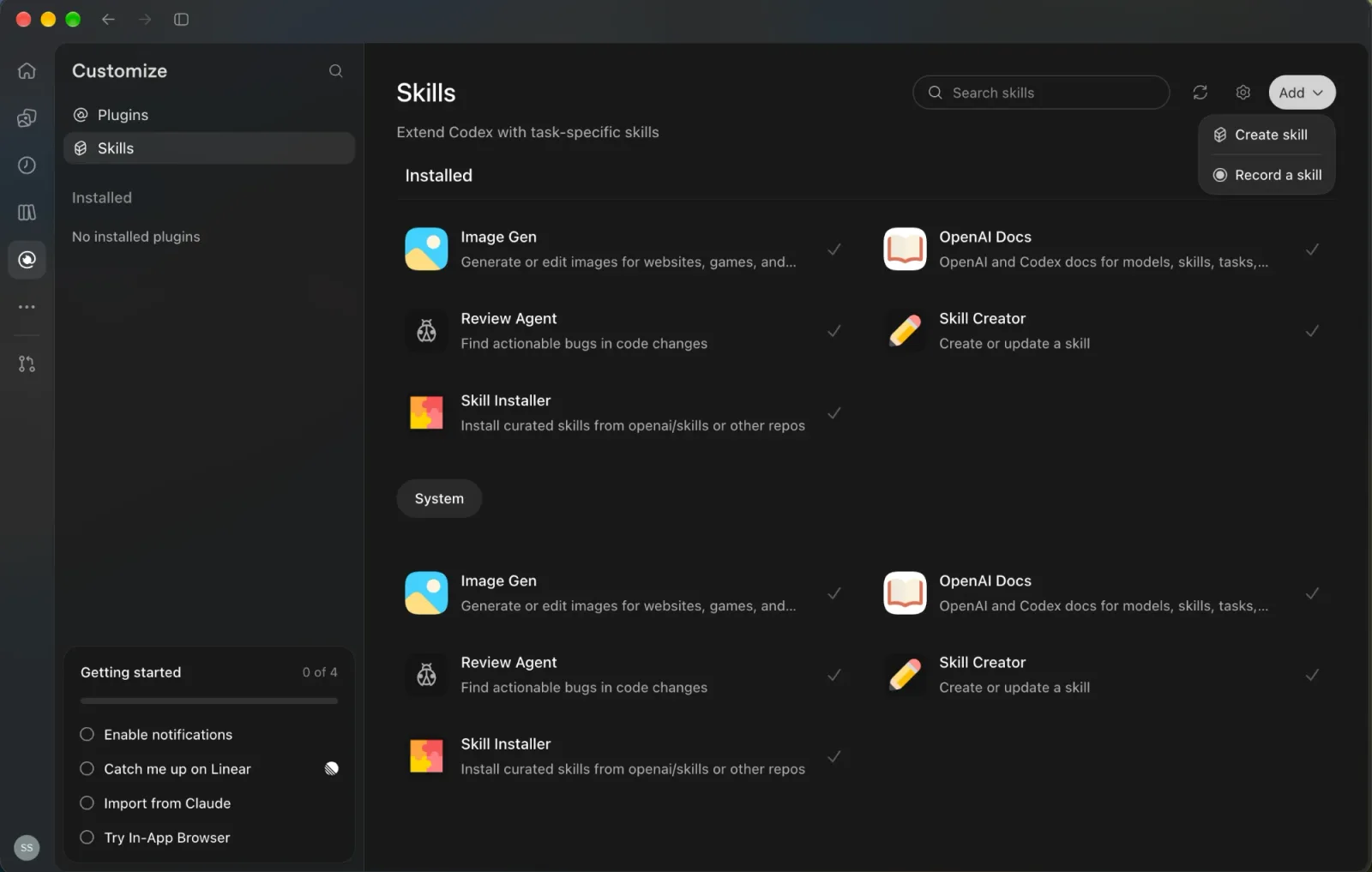
  4. In the Codex app: copy the skill's folder into ~/.codex/skills/ (or Customize → Skills → Add → Create skill).

Claude

  1. Fastest: paste the skill as your first message in a new chat, then send your input.
  2. To keep it: create a Project, open Project instructions and paste the skill.
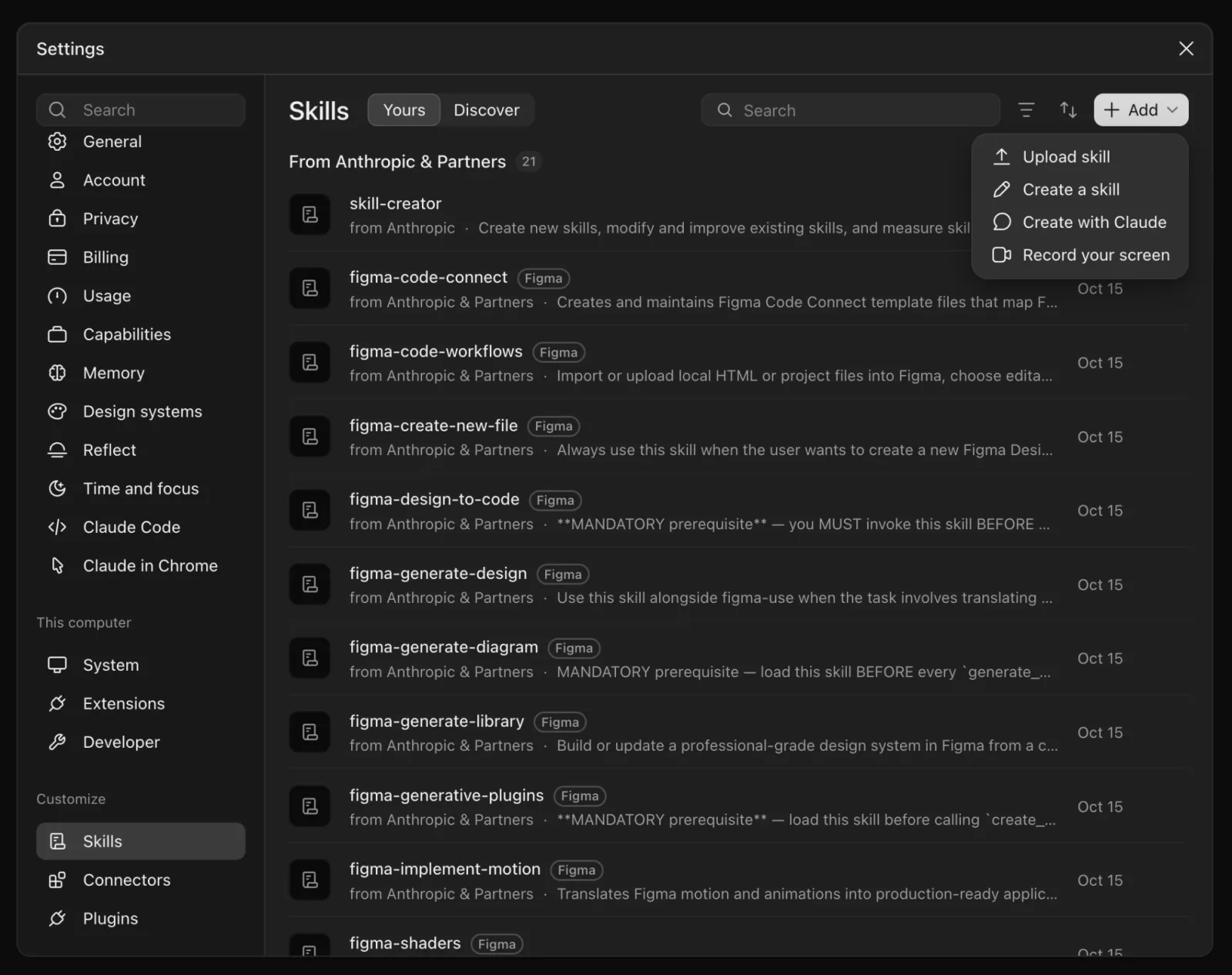
  3. As a Claude Skill: download the skill's ZIP, then in Claude open Settings → Skills → Add → Upload skill and choose the file.

Gemini

  1. Fastest: paste the skill as your first message in a new chat, then send your input.
  2. To keep it: open Gems → New Gem, paste the skill into Instructions and save.

Microsoft Copilot

  1. Fastest: paste the skill as your first message, then send your input.
  2. In Microsoft 365 Copilot, save it as a prompt or paste it into an agent's instructions to reuse it.

Any other assistant

  1. Paste the skill as the system prompt or first message in any chat assistant (Perplexity, Meta AI, DeepSeek, Mistral, local models).
  2. Coding agents that read the Agent Skills format (SKILL.md) can load the downloaded file from their skills folder.

Install it permanently

Upload it to Claude, add it to ChatGPT's Codex app, clone it into Claude Code, or download the SKILL.md for any agent. Full guide with screenshots →

Download the ZIP and upload it in Claude. Claude then uses the skill on its own whenever a request matches.

Download ZIP

Quick setup

  1. In Claude, open Settings → Skills (under Customize).
  2. Click Add → Upload skill.
  3. Choose the ZIP — don't unzip it — and make sure the skill is switched on.
Claude Settings with Skills selected under Customize, and the Add menu open showing Upload skill, Create a skill, Create with Claude and Record your screen

Repositoryscienceofapps.com/skills/ai-skills.git · all 200 skills, one folder each, plain git over HTTPS

What it does

The steps it follows

  1. Translate into idiomatic target-language code, not a line-by-line copy.
  2. Map libraries to the standard equivalents.
  3. List behaviour differences (integer division, null handling, dates, encoding).
  4. Give a few test cases to prove both versions agree.
What you get back

The reply format

  • Translated code
  • Library mapping
  • Behaviour differences
  • Parity tests
FAQs

Questions about Code translator

What does the Code translator skill do?

Porting code between languages by hand introduces subtle behaviour changes. The skill fixes that: idiomatic code in the target language with notes on every behaviour that differs.

How do I install Code translator in ChatGPT, Claude or Gemini?

Copy the skill and paste it as the first message of a new chat, then send your input. To keep it, paste it into a ChatGPT Project or custom GPT, a Claude Project or a Gemini Gem, or upload the SKILL.md file as a Claude Skill.

What do I send Code translator after installing it?

Send the source code, its language and the target language or framework. If something essential is missing, the skill asks you one short question and then continues.

Is the Code translator skill free?

Yes. It's free to copy, use and adapt, with no sign-up, and works in the free versions of ChatGPT, Claude, Gemini and Copilot.

More for software engineering
Tech lead / architect

Architecture decision record

ProblemBig technical decisions get made in meetings and forgotten, so the team re-argues them a year later.

You paste

Choosing a queue: Redis streams vs RabbitMQ vs SQS for 2k jobs/min, team of 4, on AWS

You get

Decision: Amazon SQS.

Why: managed, scales past 2k/min, the team already runs on AWS.

Harder: local development needs LocalStack. Revisit if we leave AWS.

Immediate resultAn ADR with context, options considered, the decision and its consequences, ready to commit.

SRE / backend engineer

Log pattern analyzer

ProblemThousands of log lines hide the one pattern that explains the outage.

You paste

500 lines of nginx + app logs from 09:00–09:20

You get

upstream timed out (110) — 212 lines, first 09:04:11

DB pool exhausted — 198 lines, first 09:04:09 (2 s earlier)

Likely culprit: database, not nginx. Next: check slow query log 09:03–09:05.

Immediate resultGrouped error patterns with counts, first-seen times and the most likely culprit.

Engineering lead

Spec to engineering tasks

ProblemTurning a product spec into tickets takes a planning meeting and still misses edge cases.

You paste

Spec: users can export their invoices as CSV from the billing page

You get

T1 Backend — GET /invoices/export.csv streams rows (M)

T2 Frontend — Export button with loading state; depends on T1 (S)

Open question: date range filter in v1, or all invoices?

Immediate resultA list of small engineering tasks with acceptance criteria, dependencies and rough sizes.

Free PDF · 74 pages · 2 editions

The Laws of UX, in one field guide

60 research-backed principles in 6 categories — what each one means, why it works on the human brain and how to use it on your own screens. Written by Sushant Singh, founder of Science of Apps, who has scaled consumer apps to lacs of users and spent 10+ years leading product across startups and digital businesses in the US, EU & India.

Pick your edition
Free. No card, no paywall — just your email.
Free PDF · 74 pages

Get Laws of UX by email

Choose your edition

You’ll also get occasional UX psychology tips. Unsubscribe anytime. Privacy policy

Free PDF · 90 pages · 2 editions

100+ Subscription Paywalls, decoded

110 real paywalls from top apps, taken apart, rated out of 5 and decoded with the Laws of UX — plus the frameworks, copy and checklists to ship your own. By Sushant Singh, founder of Science of Apps.

  • 110 paywalls rated
  • 34 Laws of UX
  • 12 frameworks

Which paywall scored 4.8 out of 5, and which scored 2.6? It’s all inside.

Pick your edition
Free. No card, no paywall — just your email.
Free PDF · 90 pages

Get 100+ Paywalls, Decoded by email

Choose your edition

You’ll also get occasional UX psychology tips. Unsubscribe anytime. Privacy policy