 By
Quick answer: What is the best open-source alternative to Shopify?
- WooCommerce: free, open source (GPL-2.0) plugin for WordPress; no monthly platform fee.
- PrestaShop and OpenCart: free standalone PHP stores (OSL-3.0 and GPLv3).
- Magento Open Source: OSL-3.0; powerful, but heavy to run.
- Headless: Medusa (MIT, cloud from $29/mo) and Saleor (BSD-3, free sandboxes).
- Free hosted, not open source: Square Online's $0 plan; Big Cartel's free Gold plan.
Key takeaways
- Open-source software is free; running a store on it isn't.
- WooCommerce is the easiest open-source path because WordPress hosting is everywhere.
- Headless platforms suit developer teams, not a solo founder's first store.
- Free hosted plans recover their cost through payment processing fees.
- Check the licence: Medusa and Vendure keep some parts outside their open-source licence.
Shopify is easy, but every month you pay for the plan, often for apps on top, and you never own the platform your store runs on. That's why people search for a Shopify open-source alternative: software you can download, run anywhere and change as you like. The catch is that "free software" isn't the same as "a free store". This guide ranks eight open-source e-commerce platforms by who they suit, with each licence read from the project's own repository and each cost from its own site on 20 November 2026, then covers two free hosted Shopify alternatives for people who don't want to run servers. Jump to the table, which to choose or the plan.
Open-source and free Shopify alternatives
 List your tool free
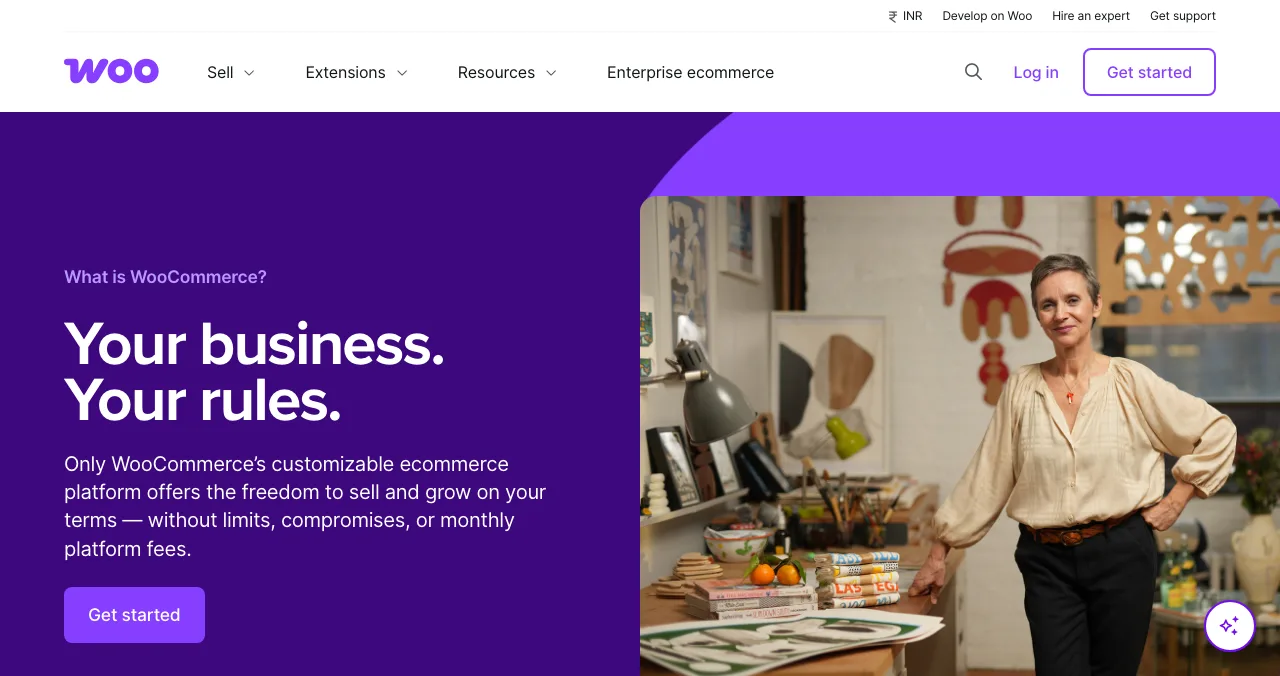
WooCommerce Best for most stores
Free e-commerce on WordPress, the biggest ecosystem.
GPL-2.0any WP host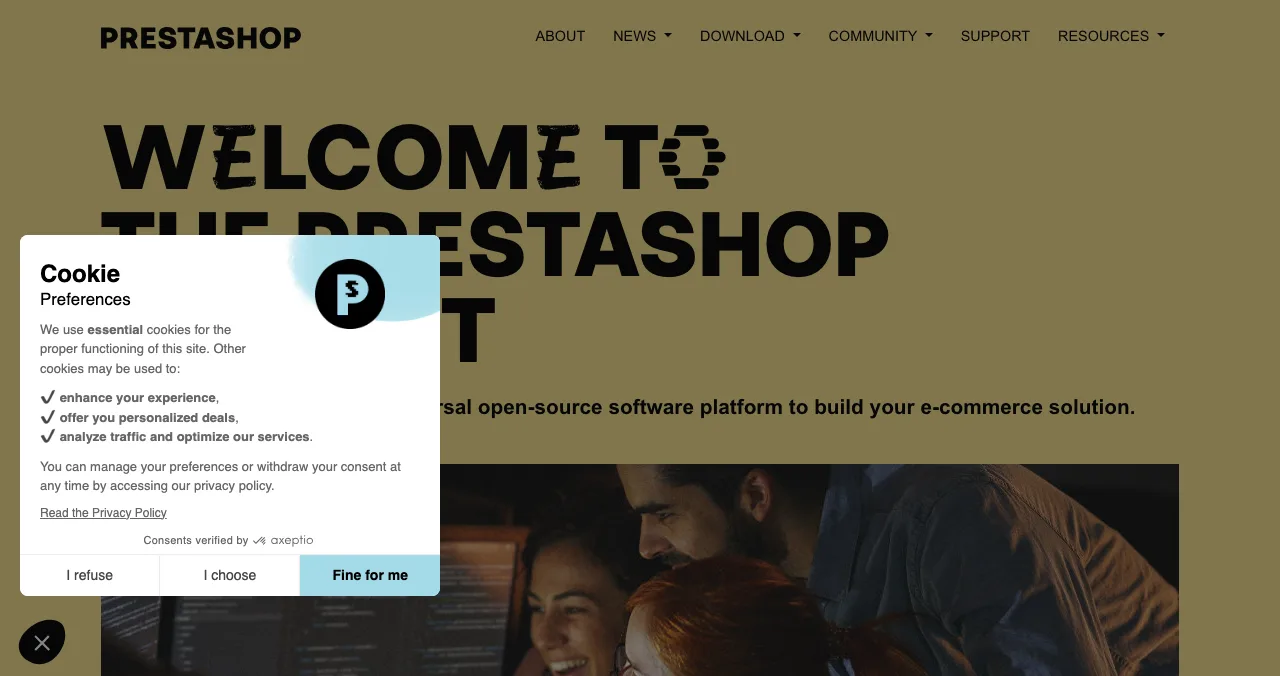
PrestaShop
A standalone open-source store, strong in Europe.
OSL-3.0self-hosted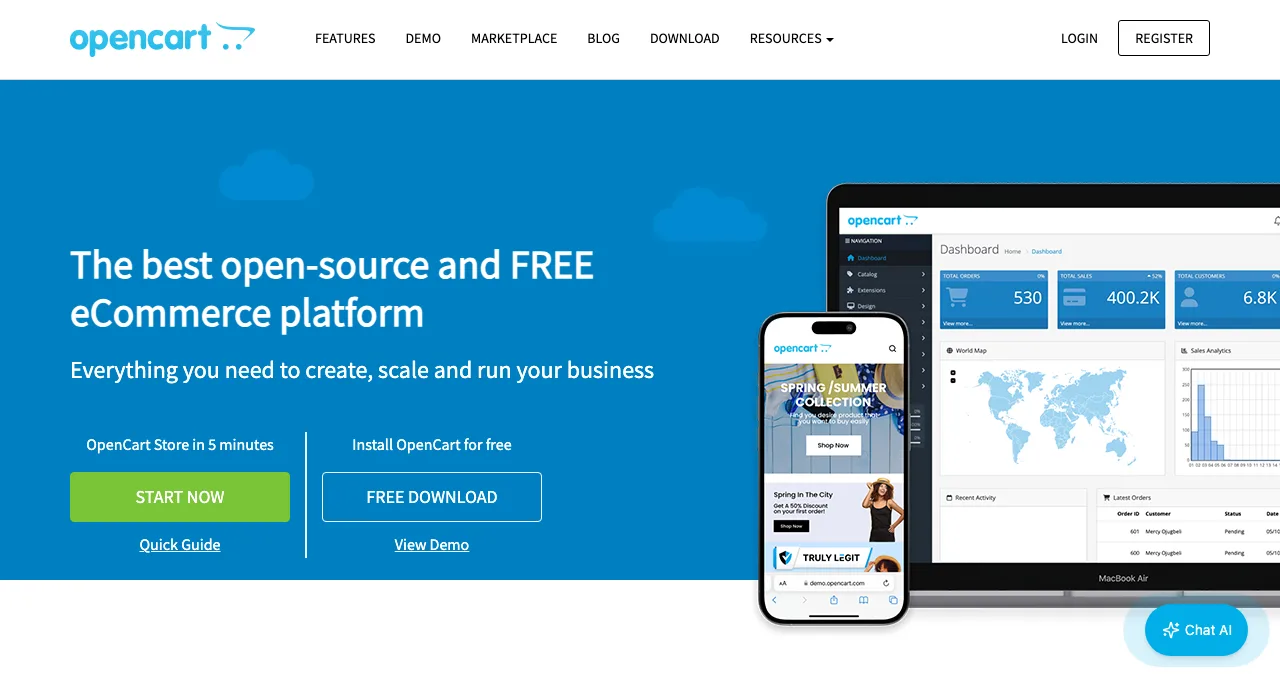
OpenCart
A light, simple PHP store with zero monthly fees.
GPLv3cloud option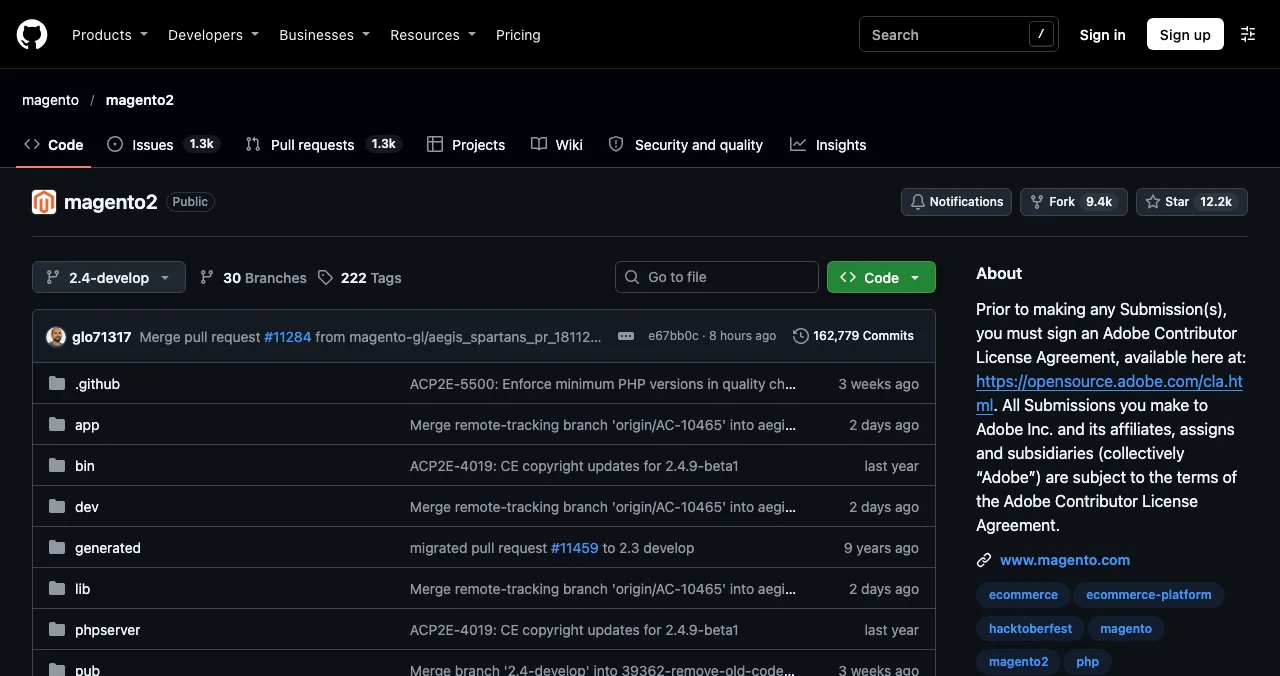
Magento Open Source
Enterprise-grade power, heavy to run.
OSL-3.0needs a team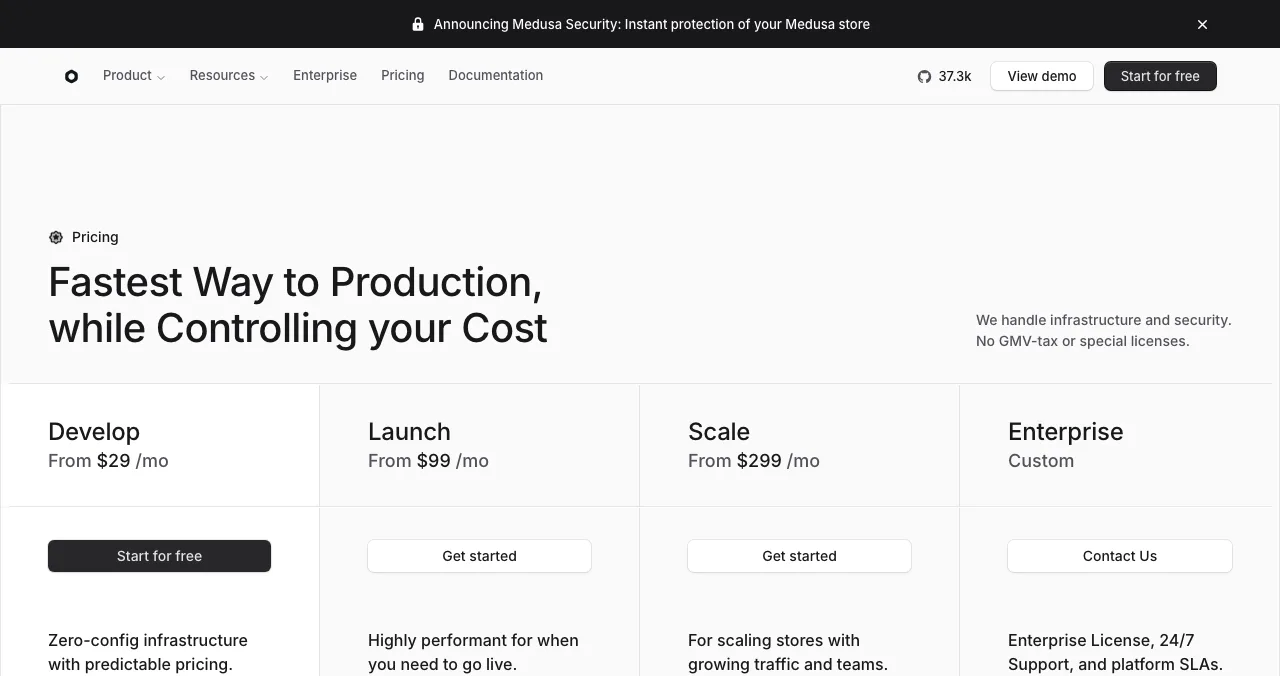
Medusa
Headless commerce in TypeScript.
MITcloud from $29/mo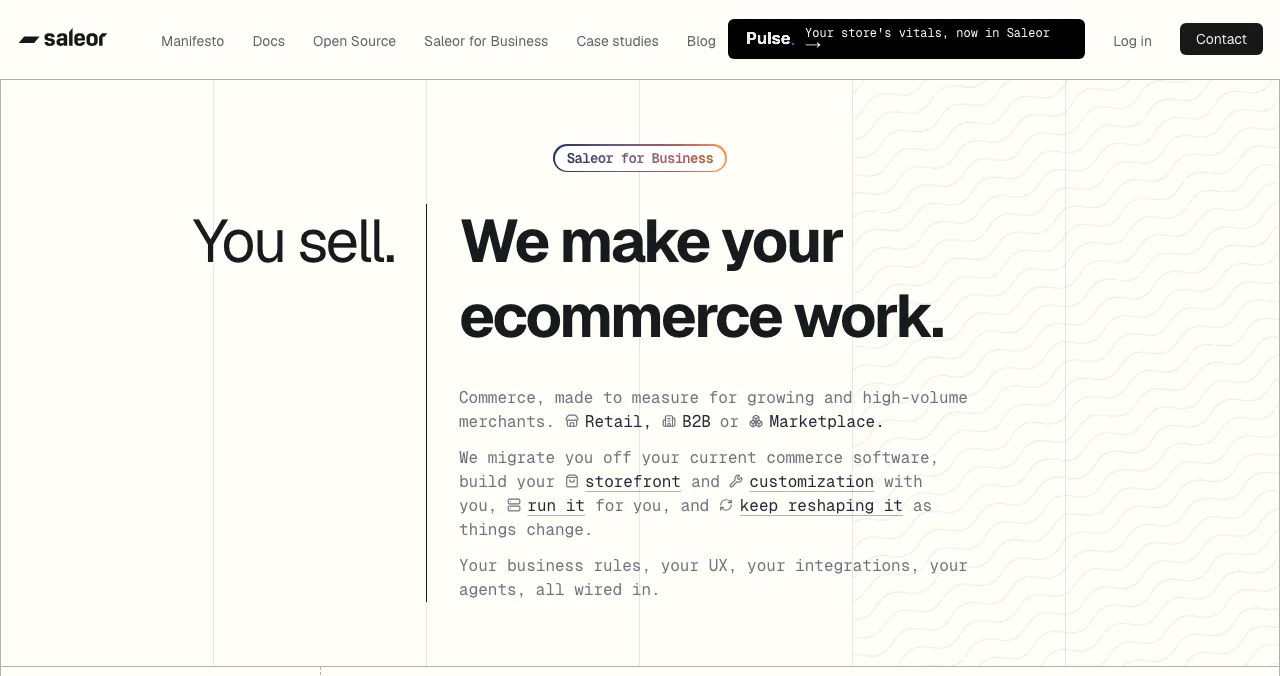
Saleor
API-first commerce in Python.
BSD-3free sandboxes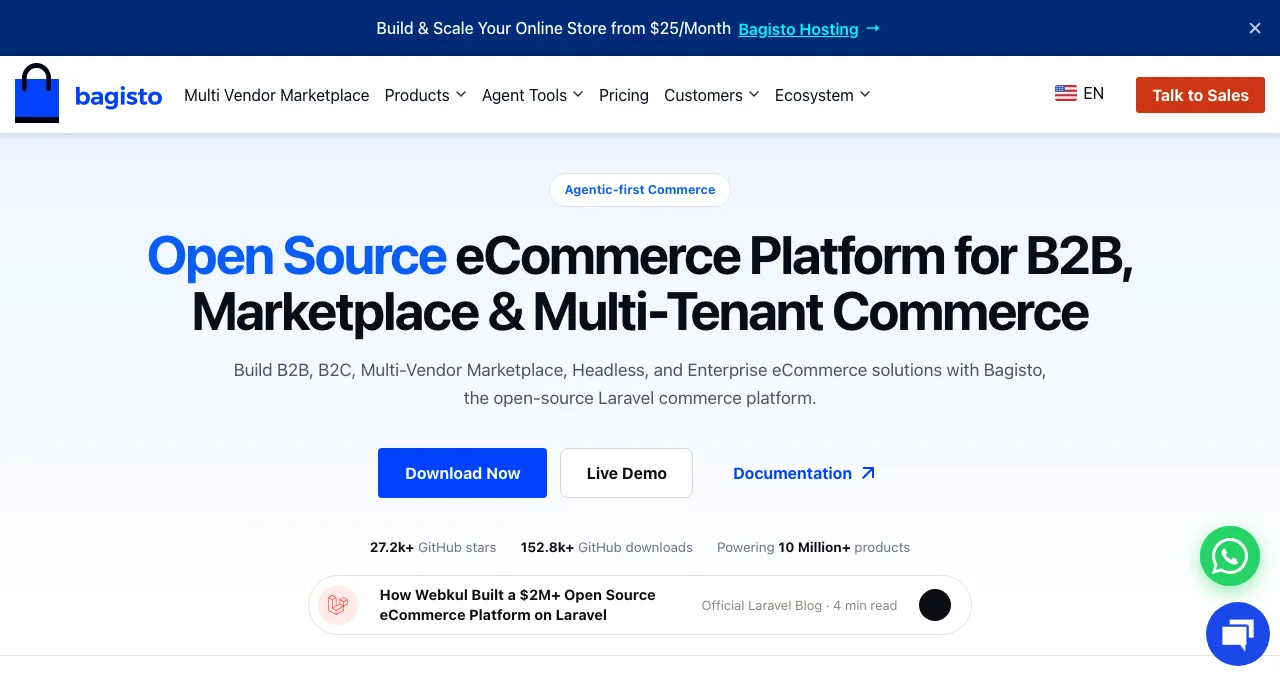
Bagisto
Laravel commerce for marketplaces and B2B.
MITPHP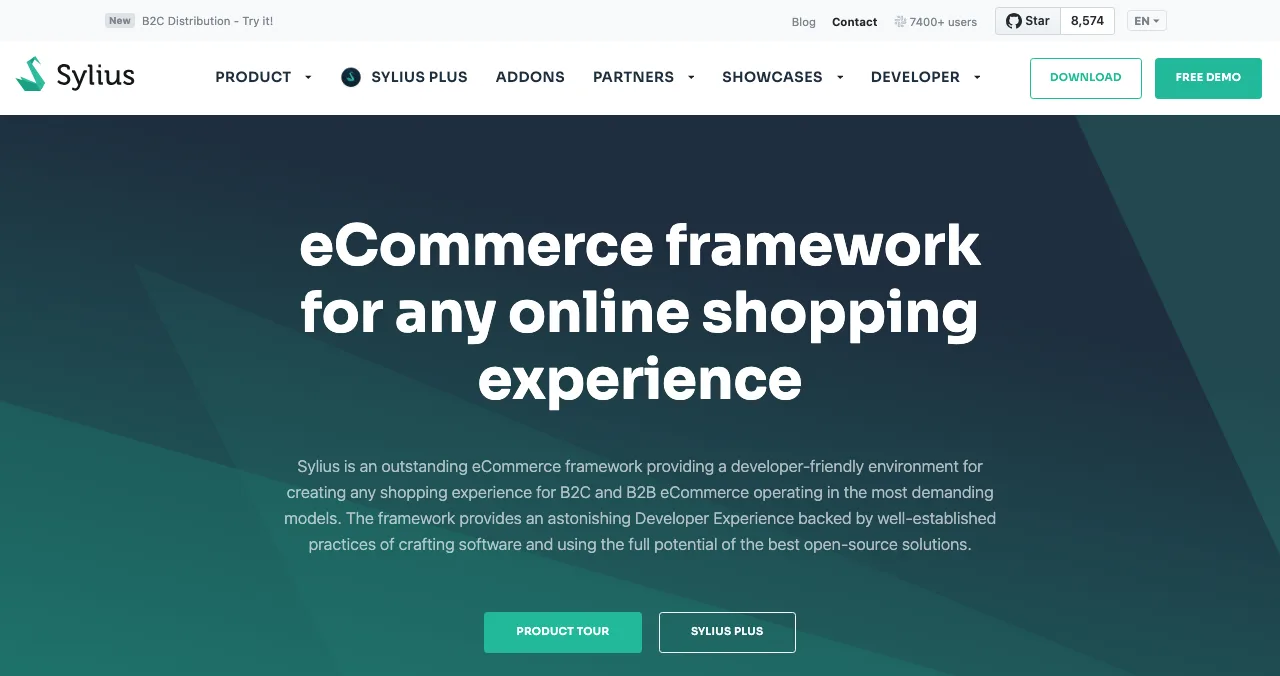
Sylius
A Symfony framework for custom commerce.
MITdevelopers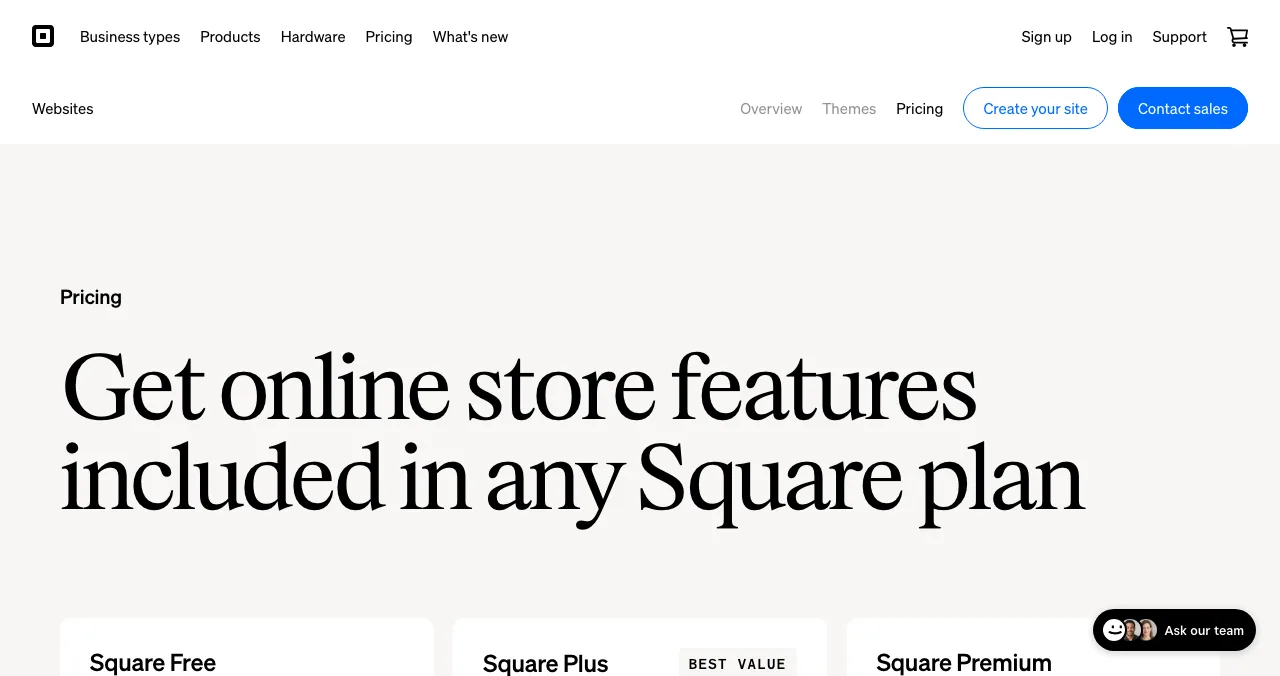
Square Online
A free hosted store, not open source.
$0 planfees on sales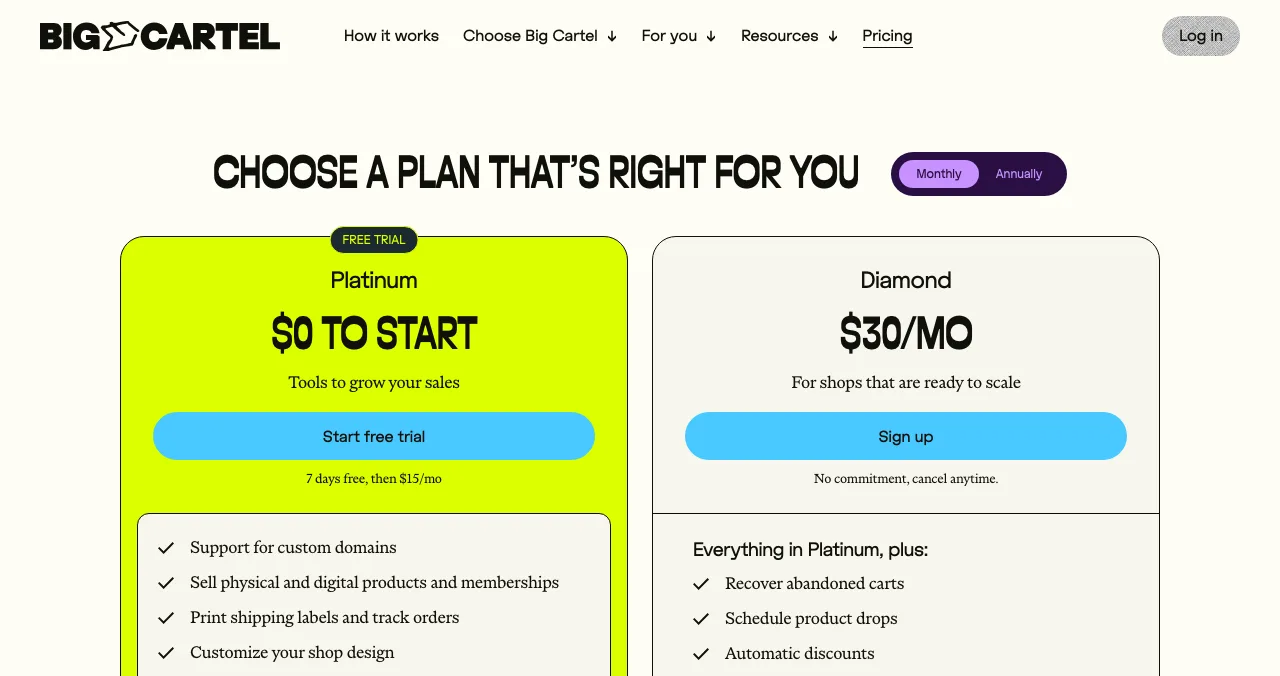
Big Cartel
Small shops for makers, free Gold plan.
Free plan0% transaction fees
Shopify open-source alternatives compared
| Platform | Licence | Language / stack | Hosted option | Best for | Main catch |
|---|---|---|---|---|---|
| WooCommerce | GPL-2.0 | PHP, WordPress | Any WordPress host | Small and mid stores, content + commerce | Plugin sprawl; you maintain WordPress |
| PrestaShop | OSL-3.0 (core), AFL-3.0 (modules) | PHP | Self-hosted | Standalone stores, multi-language | Many paid modules |
| OpenCart | GPLv3 | PHP | OpenCart Cloud | Simple catalogue stores | Smaller ecosystem |
| Magento Open Source | OSL-3.0 | PHP | Self-hosted (Adobe Commerce is paid) | Large catalogues | Heavy to host and develop |
| Medusa | MIT (except enterprise materials) | TypeScript, Node.js | Medusa Cloud from $29/mo | Headless, custom builds | Needs developers |
| Saleor | BSD-3-Clause | Python, GraphQL | Saleor Cloud from $1,599/mo | API-first, high volume | Cloud is enterprise-priced |
| Bagisto | MIT | PHP, Laravel | Bagisto hosting from $25/mo | Marketplaces, B2B | Laravel skills needed |
| Sylius | MIT | PHP, Symfony | Sylius Plus (commercial) | Bespoke B2B/B2C builds | A framework, not a quick start |
Table: Open-source Shopify alternatives (licences from each GitHub repository; prices from each site, checked 20 Nov 2026)
1. WooCommerce: the default open-source Shopify alternative
- Licence
- GPL-2.0
- Cost
- Free plugin; no monthly platform fee
- Runs on
- WordPress, any host
- Extensions
- Hundreds, free and paid
- Catch
- You maintain WordPress and plugins
WooCommerce turns any WordPress site into a store. Its page promises the freedom to sell "without limits, compromises, or monthly platform fees", and you can download it free. Its repository is licensed GPL-2.0.
- Cost: the software is free; you pay for hosting, a domain, paid extensions you choose, and payment processing.
- Strength: content and commerce together; WordPress's SEO and blogging are built in.
- Catch: every plugin is something to update and secure.
Best for: most small stores that want ownership without a development team. Full comparison: Shopify vs WooCommerce.
2. PrestaShop: a standalone open-source store
- Licence
- Core OSL-3.0; modules AFL-3.0
- Cost
- Free on GitHub
- Runs on
- PHP, self-hosted
- Catch
- Many add-ons are paid
The PrestaShop Project calls itself "a universal open-source software platform to build your e-commerce solution" and says it is "freely available on GitHub". Its licence file says the core is OSL-3.0 and modules AFL-3.0. Unlike WooCommerce, it's a dedicated store application rather than a plugin.
Best for: a standalone store, especially multi-language European shops.
3. OpenCart: simple, light, zero monthly fees
- Licence
- GPLv3
- Cost
- Free download and updates
- Hosted
- OpenCart Cloud (plans vary)
- Catch
- Smaller extension ecosystem
OpenCart says it "comes with free downloads and updates. Zero monthly fees", and offers free community or paid commercial support. If you don't want to host, OpenCart Cloud runs it for you on paid plans. It's lighter than Magento and simpler than PrestaShop.
Best for: a straightforward catalogue store on cheap hosting.
4. Magento Open Source: enterprise power, enterprise effort
- Licence
- OSL-3.0
- Cost
- Free software
- Paid sibling
- Adobe Commerce
- Catch
- Demanding hosting and development
Magento Open Source is the free edition of what Adobe sells as Adobe Commerce. Its repository is licensed OSL-3.0 and is actively developed. It handles large catalogues, complex pricing and many store views, but it needs serious hosting and a developer who knows it.
Best for: established merchants with a technical team, not a first store.
5. Medusa: headless commerce in TypeScript
- Licence
- MIT (except enterprise materials)
- Self-host
- Free
- Medusa Cloud
- Develop from $29/mo, Launch from $99/mo
- Catch
- You build the storefront
Medusa is an open-source commerce engine for developers who want to build their own storefront. Its licence file says the repository is MIT, except enterprise materials covered by a separate licence. Medusa Cloud runs it for you from $29 a month, with "No GMV-tax or special licenses".
Best for: developer teams building a custom, headless store.
6. Saleor: API-first commerce in Python
- Licence
- BSD-3-Clause
- Self-host
- Free
- Sandboxes
- Free forever, no card
- Saleor Cloud
- From $1,599/mo
- Catch
- Cloud is priced for scale
Saleor says "Saleor is open source. What you build on it is yours", and you can move between its cloud and self-hosting. It offers free development sandboxes with the full API; production Saleor Cloud plans start at $1,599 a month (up to $200,000 monthly GMV). Self-hosting the BSD-licensed core is free.
Best for: engineering-led, high-volume brands.
7. Bagisto: Laravel commerce for marketplaces
- Licence
- MIT
- Stack
- PHP, Laravel
- Strength
- Multi-vendor marketplaces, B2B
- Hosting
- From $25/mo if you don't self-host
- Catch
- Laravel skills needed
Bagisto, built on Laravel, focuses on B2B, multi-vendor marketplaces and headless builds. The code is MIT-licensed; Bagisto's own hosting starts at $25 a month if you'd rather not run servers.
Best for: a marketplace idea with a Laravel developer on hand.
8. Sylius: a framework for custom commerce
- Licence
- MIT
- Stack
- PHP, Symfony
- Commercial
- Sylius Plus modules
- Catch
- A framework, not an out-of-box shop
Sylius describes itself as an open-source headless e-commerce platform for mid-market and enterprise brands needing custom solutions, built on Symfony. The core is MIT; Sylius Plus adds commercial modules.
Best for: agencies and in-house teams building bespoke commerce.
Free hosted Shopify alternatives (not open source)
If you don't want to host software at all, these are the free Shopify alternatives we could verify. Shopify itself showed a 3-day free trial when we checked, with plan prices shown in local currency.
Square Online: a $0 hosted plan
Square's US plans page lists Square Free at $0/mo per location, with online processing at 3.3% + 30¢ per transaction; paid plans are $49 and $149 a month with a 30-day free trial. It includes a website builder with SEO tools, pickup, local delivery and shipping.
Best for: a shop that also sells in person, with no upfront cost.
Big Cartel: small shops, no transaction fees
Big Cartel's pricing page says "0% transaction fees on all features on all plans", lists Platinum at $15 a month after a 7-day free trial and Diamond at $30 a month, and mentions "the free, limited feature Gold Plan" for anyone starting out.
Best for: artists and makers with a small catalogue.
If you build e-commerce tools, list them free
- Cost
- Free, forever
- Accepts
- SaaS, dev tools, extensions, open source
- Found by
- The problem it solves
- Ranking
- Relevance, never payment
- Included
- Product test and report
If you're reading this because you build for merchants (a WooCommerce plugin, a Shopify app, a headless storefront kit, an open-source store), the Launchpad lists your product free, forever. It accepts SaaS, developer tools, browser extensions and open-source projects; founders find it by the problem it solves; and it's ranked by relevance, editorial picks and community interest, never payment. You get a Featured badge on going live, earned badges, vouches and followers, and a free baseline diagnosis of your landing page, discoverability and speed. Pair it with the marketplaces in where to launch e-commerce tools.
- Areas of your product tested
- 22
- Automatic measurements, desktop and mobile
- 39
- Expert checks behind your login
- 74
- Verdicts that rank what to fix first
- 5
See your tool as a store owner sees it
List free, then order the report that fits: the first impression, or the full diagnosis with a plan.

 Economy
See what new customers see
- Store listing and homepage, screen by screen
- Scorecard against 60 Laws of UX
- Customers, competitors and the fixes worth most
PremiumThe full diagnosis and the plan
- Every screen, every finding, every flow
- All 60 laws with evidence and fixes
- 8 strategy chapters and a 90-day roadmap
Researched from your live product and fact-checked against the evidence.
Which Shopify alternative should you choose?
| You are… | Choose | Why |
|---|---|---|
| A small store with WordPress skills | WooCommerce | Free, huge ecosystem, cheap hosting |
| A standalone shop, many languages | PrestaShop | Built for stores, not blogs |
| On a tight hosting budget | OpenCart | Light and simple |
| A large merchant with a dev team | Magento Open Source | Depth and scale |
| A dev team building headless | Medusa or Saleor | API-first, modern stacks |
| Building a marketplace | Bagisto | Multi-vendor focus |
| Not technical, want $0 to start | Square Online Free or Big Cartel Gold | Hosted, no servers |
| Building a tool for merchants | Launchpad listing | Free, found by founders |
Table: Which free or open-source Shopify alternative fits whom
A sensible plan

- Count total cost, not licence cost — hosting, extensions, payments, your time.
- Prototype on a free plan or local install — WooCommerce or a Saleor sandbox.
- Check payment options for your country — the platform is useless without them.
- Plan updates and backups — before the first order, not after the first breach.
- Launch, then list what you build — tools and plugins on the Launchpad.
Mistakes to avoid

- Choosing headless for a first store — you'll build a storefront before you sell anything
- Ignoring licences — "open core" products keep some features commercial
- Treating free hosting as free — free plans earn through processing fees
- Skipping security updates — self-hosted means self-patched
- Too many checkout steps — every extra field loses buyers (Hick's law)
Ready to launch?
How we chose
We included actively maintained open-source commerce platforms (each repository had commits within the last week on 20 November 2026) and read each licence from its GitHub repository and each price from the project's own site that day. Hosted plans come from Square's US plans page and Big Cartel's pricing page; Shopify showed us local-currency prices, so we don't quote them. We didn't install each platform. Search volumes are Google Keyword Planner's global 12-month averages. Science of Apps runs the Launchpad and has no relationship with any platform named.
Key terms, defined
- Open source: software whose code you can read, run, change and share under a licence.
- Self-hosted: you run the software on a server you choose and pay for.
- Headless commerce: a store back end delivered by API, with a separately built front end.
- GMV: gross merchandise value, the total value of goods sold.
- Open core: an open-source base with some features under a commercial licence.
- Transaction fee: a platform's cut of each sale, separate from card processing.
Frequently asked questions
What is the best open-source alternative to Shopify?
For most small stores, WooCommerce: it's free, open source under GPL-2.0, runs on any WordPress host and has a huge extension ecosystem. PrestaShop and OpenCart are strong standalone options. Development teams that want a headless, API-first store should compare Medusa (MIT) and Saleor (BSD-3-Clause). Magento Open Source suits large catalogues with an experienced team.
Is there a free Shopify alternative?
Yes. Self-hosted open-source platforms such as WooCommerce, PrestaShop and OpenCart cost nothing to download, but you pay for hosting and a domain. Among hosted stores, Square Online lists a Square Free plan at $0 a month (you pay processing fees on sales), and Big Cartel offers a free, limited-feature Gold plan.
Is WooCommerce really free?
The plugin is free and open source under GPL-2.0, and WooCommerce says there are no monthly platform fees. You still pay for WordPress hosting, a domain, any paid extensions or themes, and payment processing. Many stores run well on free extensions; others add paid ones for subscriptions, bookings or advanced shipping.
What licence do open-source Shopify alternatives use?
From each project's GitHub licence on 20 November 2026: WooCommerce GPL-2.0; PrestaShop core OSL-3.0 with modules under AFL-3.0; Magento Open Source OSL-3.0; OpenCart GPLv3; Saleor BSD-3-Clause; Bagisto and Sylius MIT; Medusa MIT except enterprise materials; Vendure GPLv3 for its community edition, with a commercial licence also available.
Is self-hosting cheaper than Shopify?
Not always. You avoid a platform subscription, but you take on hosting, security updates, backups and developer time. For a small store with no technical help, a hosted plan is often cheaper in total. Self-hosting pays off when you need control, have technical skills, or would pay Shopify for many apps anyway.
Where can I list an e-commerce tool or plugin I built?
List it free on the Science of Apps Launchpad, which accepts SaaS, developer tools, browser extensions and open-source projects, ranked by relevance and never payment, and tests the product with a report. Then add the relevant marketplaces, such as the WooCommerce Marketplace or Shopify App Store, covered in our guide to launching e-commerce tools.
Sources
- WooCommerce — What is WooCommerce (checked 20 Nov 2026)
- GitHub — woocommerce/woocommerce licence GPL-2.0 (checked 20 Nov 2026)
- PrestaShop Project — Homepage and licence (checked 20 Nov 2026)
- GitHub — magento/magento2 licence OSL-3.0 (checked 20 Nov 2026)
- OpenCart — Open-source and free (checked 20 Nov 2026)
- Medusa — Pricing and licence (checked 20 Nov 2026)
- Saleor — Pricing (checked 20 Nov 2026)
- Bagisto — Open-source eCommerce platform (checked 20 Nov 2026)
- Sylius — Open-source headless eCommerce platform (checked 20 Nov 2026)
- Square — Online store plans (checked 20 Nov 2026)
- Big Cartel — Pricing (checked 20 Nov 2026)
- Shopify — Pricing (checked 20 Nov 2026)
- Science of Apps — Launchpad: launch your product free (checked 18 Nov 2026)
- Science of Apps — Pricing: free listing, Economy and Premium reports (checked 18 Nov 2026)
- Checked November 20, 2026. Figures that change — fees, salaries, prices — are reviewed every six months; if something is out of date, tell us.
Where to go from here
- Shopify vs WooCommerce — the head-to-head
- Where to launch e-commerce tools — if you build for store owners
- Wix vs Squarespace vs Shopify — hosted builders compared
- Science of Apps - LaunchpadThe ecommerce software directory guide for 2027: where to launch an e-commerce tool, from the Shopify App Store and WooCommerce Marketplace to Wix and BigCommerce, with every fee checkedWhere to launch e-commerce tools: the Launchpad, Shopify App Store, WooCommerce Marketplace, Wix App Market and BigCommerce, with fees and reviews checked.
- ComparisonsShopify vs WooCommerce in India: costs, payments, control and effort for online storesShopify vs WooCommerce for Indian online stores: total cost, payment gateways like Razorpay, GST, apps, hosting, control and effort — with a clear verdict.
- Science of Apps - LaunchpadWordPress cost in 2027: WordPress.com pricing plans, self-hosted WordPress hosting plans, themes, plugins and what a WordPress website really costs in year oneWordPress pricing checked 20 Nov 2026: WordPress.com plans and renewals, self-hosted hosting plans, themes and plugins, and a real year-one cost table.
- Science of Apps - LaunchpadSquarespace alternatives and competitors for 2027: nine website builders and websites similar to Squarespace, including free ones, with plans and fees checked on each pricing pageSquarespace alternatives with free plans: Wix, WordPress.com, Webflow, Framer, Shopify and more, with each Squarespace competitor's prices checked 20 Nov 2026.
- Science of Apps - LaunchpadBubble io alternatives: what Bubble's no-code plans cost today, seven alternatives with verified free tiers and prices, and where to launch the app once it's builtBubble io pricing, checked today, plus 7 Bubble alternatives with real free tiers: FlutterFlow, Glide, Softr, Adalo, WeWeb, Lovable and Base44.
- Science of Apps - LaunchpadDurable AI website builder review: what Durable builds in its claimed 30 seconds, what each plan costs today, who it suits, who should pick an alternative, and how a product site gets foundDurable AI website builder review: what it builds, verified pricing (free, $25 and $49 a month), the CRM and booking tools, the catches and better alternatives.





Get the ideas, not the noise.
Sign up with Google and we’ll send you short UX psychology tips by email — why people tap, stall and leave, and what to do about it. Unsubscribe anytime. Prefer something to keep? Get the free Laws of UX guide as a PDF.
Launch day ends. Your listing shouldn't.
If you build an e-commerce tool, plugin or open-source store, the Science of Apps Launchpad lists it free, forever, where founders find tools by the problem they solve, and tests the product with a detailed report.