 By
At a glance: Christ the Redeemer
- Location
- Corcovado mountain, Rio de Janeiro, Brazil
- Built
- 1922–1931
- Type
- Colossal statue · Statue
- Style
- Art Deco
- Commissioned by
- The Catholic Circle of Rio de Janeiro, funded by public donations
- Architects & builders
- Engineer Heitor da Silva Costa; sculptor Paul Landowski; engineer Albert Caquot; face by Gheorghe Leonida
- Materials
- Reinforced concrete covered in soapstone mosaic tiles
- Size
- 30 m statue on an 8 m pedestal; arms about 28 m across
Christ the Redeemer: what it is
The idea of a monument on Corcovado dates back to the 1850s, but it gained momentum around the centenary of Brazil's independence in 1922. Catholic groups raised the money through public donations.
The statue stands about 700 metres above sea level, often in clouds, and is struck by lightning several times a year.
Christ the Redeemer, then and now
Real images only: an earlier view and a recent photograph, each credited and linked to its original file. Switch between them or compare side by side.
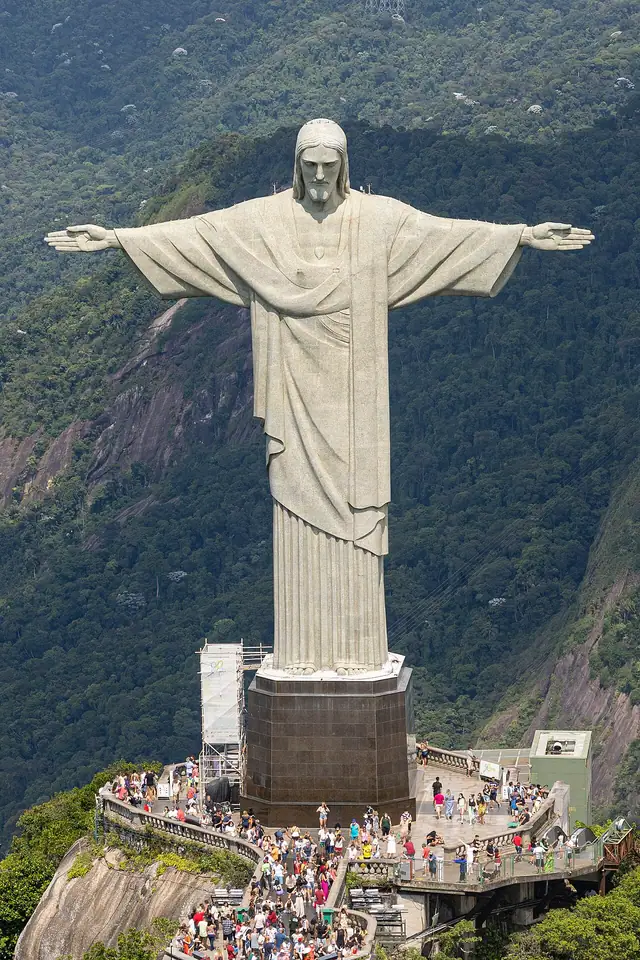
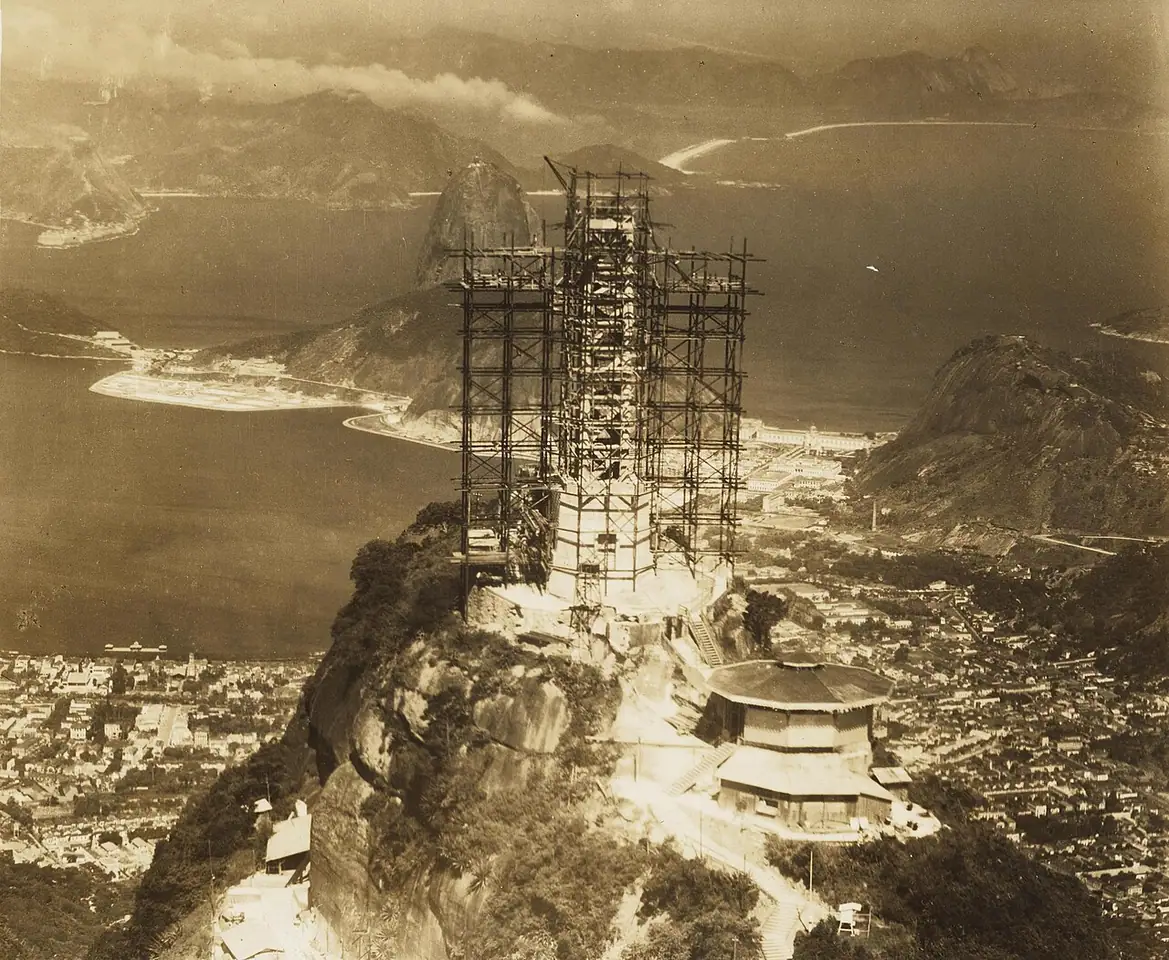 Then · c. 1930Now · TodayMove across the image to compare
Christ the Redeemer: how it was designed
- 01
Open arms instead of a cross
Early designs showed Christ holding a large cross and a globe. The final open-armed pose turns the whole figure into a cross and a gesture of embrace, readable from far below.
- 02
Art Deco simplicity
Long straight folds of the robe and a stylised face give a clean, geometric silhouette that works at a great distance and against the sky.
- 03
Concrete with a stone coat
Reinforced concrete, then a newer technology, was strong enough for the outstretched arms. A mosaic of thousands of small triangular soapstone tiles protects it; soapstone resists weather and is easy to carve.
Construction timeline
Catholic groups campaign and collect donations; Heitor da Silva Costa's design is chosen.
The foundation stone is laid during the independence centenary.
Construction on the summit; the head and hands, sculpted in France, are made in sections.
The statue is inaugurated.
A major restoration repairs the concrete and replaces worn tiles.
It becomes part of the UNESCO site 'Rio de Janeiro: Carioca Landscapes'.
How the design changed
Lightning repairs
Lightning has repeatedly chipped the fingers and head. Lightning rods were added and replaced, and the church keeps a stock of matching soapstone for repairs.
Easier to reach
Escalators and lifts were added in 2003, replacing the long climb up 220 steps to the base.
Who built it
Heitor da Silva Costa designed and directed construction; Paul Landowski sculpted the model in Paris, and the Romanian sculptor Gheorghe Leonida created the face. French engineer Albert Caquot advised on the reinforced-concrete structure. Workers and materials were carried up the mountain by the Corcovado rack railway.
Where it is
Corcovado mountain, Rio de Janeiro, Brazil · 22.9519° S, 43.2105° W · Open in OpenStreetMap. Nearest in this guide: Machu Picchu (3,279 km), Djenné Mosque (5,873 km), Moai (6,605 km).
 3,279 km5,873 km6,605 kmChrist the Redeemer
Drag to pan, use + and − or double-click to zoom, and tap any pin for a preview.
Built around the same time
| Monument | Country | Built | Gap |
|---|---|---|---|
| Great Mosque of Djenné | Mali | 1906–1907 (first mosque on the site 13th century) | 16 years earlier |
| Eiffel Tower | France | 28 January 1887 – 31 March 1889 | 35 years earlier |
| Sydney Opera House | Australia | 1959–1973 | 37 years later |
| Sagrada Família | Spain | 1882 – ongoing (central tower finished 2026) | 40 years earlier |
Christ the Redeemer: questions people ask
How tall is Christ the Redeemer?
The statue is 30 metres tall on an 8-metre pedestal, with arms spanning about 28 metres.
What is Christ the Redeemer made of?
Reinforced concrete, covered in a mosaic of thousands of small triangular soapstone tiles.
Who designed Christ the Redeemer?
Brazilian engineer Heitor da Silva Costa designed it, with French sculptor Paul Landowski, engineer Albert Caquot and Romanian sculptor Gheorghe Leonida, who made the face.
When was Christ the Redeemer built?
Between 1922 and 1931; it was inaugurated on 12 October 1931.
Sources & image credits
- UNESCO World Heritage Centre — Rio de Janeiro: Carioca Landscapes
- Wikipedia — Christ the Redeemer (statue)
- Santuário Cristo Redentor — official site
- Current photograph: Christ the Redeemer - Cristo Redentor.jpg by Arne Müseler, CC BY-SA 3.0 de — original on Wikimedia Commons · licence.
- Historic image: Cristo Redentor em construção (013RJ009013) (cropped).jpg by Núcleo de digitalização / IMS, Public domain — original on Wikimedia Commons.
- Coordinates from Wikidata. Images resized and converted to WebP; otherwise unaltered. Checked October 25, 2026.
More to wander into
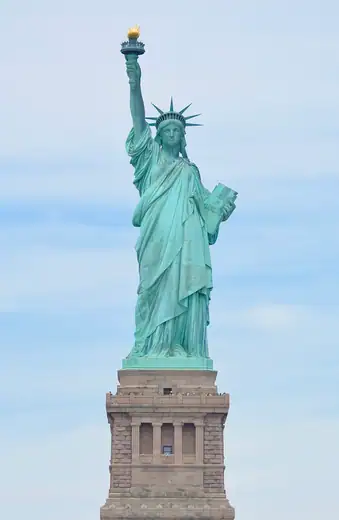
- World monument · 1876–1886 (dedicated 28 October 1886)Statue of LibertyA copper skin on Eiffel's iron skeleton, turned green by the sea air.
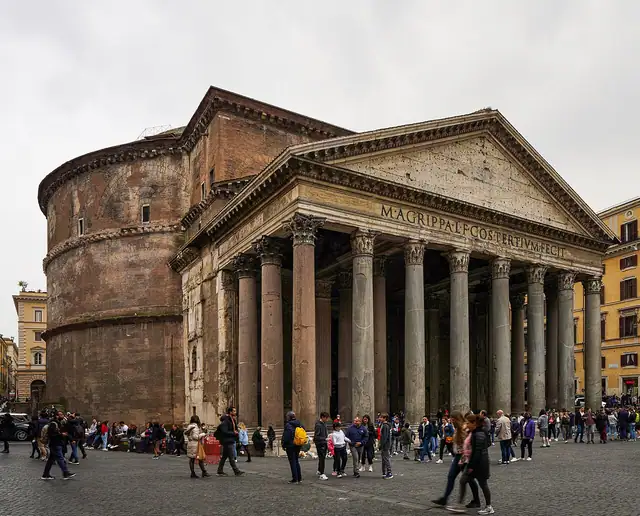
- World monument · c. 113–125 CEPantheonThe largest unreinforced concrete dome on Earth, open to the sky for 1,900 years.
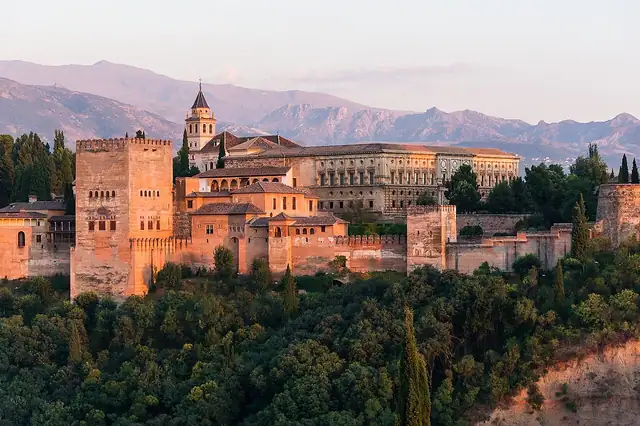
- World monument · 1238 – late 14th century (Nasrid palaces)AlhambraThe Nasrid palace where plaster, tile and water become poetry.
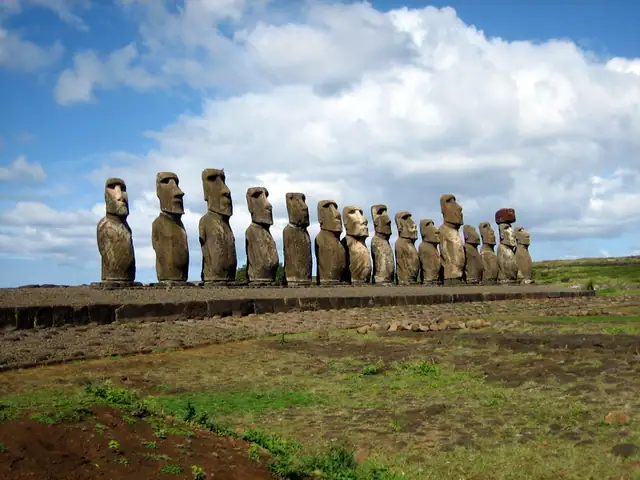
- World monument · c. 1250–1500 CE (most statues)Moai of Rapa NuiAncestor statues carved from a volcano, toppled, then raised again by cranes.
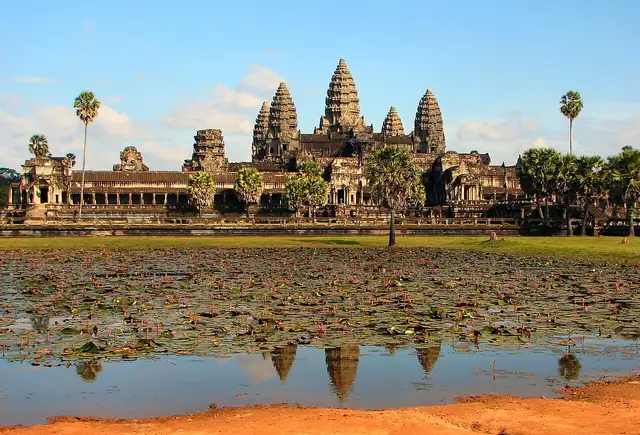
- World monument · c. 1113–1150 CEAngkor WatA model of the Hindu cosmos in stone, surrounded by a 190-metre moat.
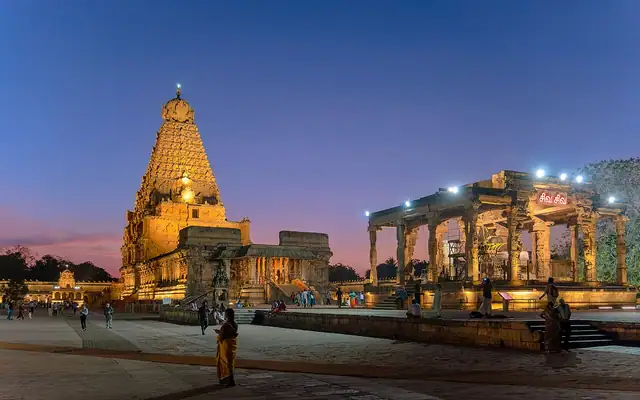
- World monument · c. 1003–1010 CEBrihadeeswarar Temple, ThanjavurRajaraja Chola's 66-metre granite tower, signed by its architect.
Get the ideas, not the noise.
Sign up with Google and we’ll send you short UX psychology tips by email — why people tap, stall and leave, and what to do about it. Unsubscribe anytime. Prefer something to keep? Get the free Laws of UX guide as a PDF.