 By
At a glance: Angkor Wat
- Location
- Siem Reap Province, Cambodia
- Built
- c. 1113–1150 CE
- Type
- Temple-mountain · Sacred
- Style
- Khmer, Angkor Wat style
- Commissioned by
- Khmer king Suryavarman II
- Architects & builders
- Not recorded
- Materials
- Sandstone over a laterite core
- Size
- Moat about 190 m wide enclosing roughly 1.5 × 1.3 km; central tower about 65 m high
- UNESCO
- Angkor (1992)
Angkor Wat: what it is
Angkor Wat was the state temple and probably the funerary temple of Suryavarman II, in the capital of the Khmer Empire. Unusually, it faces west — the direction associated with Vishnu and with death — rather than east.
It sits within a much larger landscape of temples, reservoirs and canals at Angkor, which at its height was one of the largest urban areas of the pre-industrial world.
Angkor Wat, then and now
Real images only: an earlier view and a recent photograph, each credited and linked to its original file. Switch between them or compare side by side.
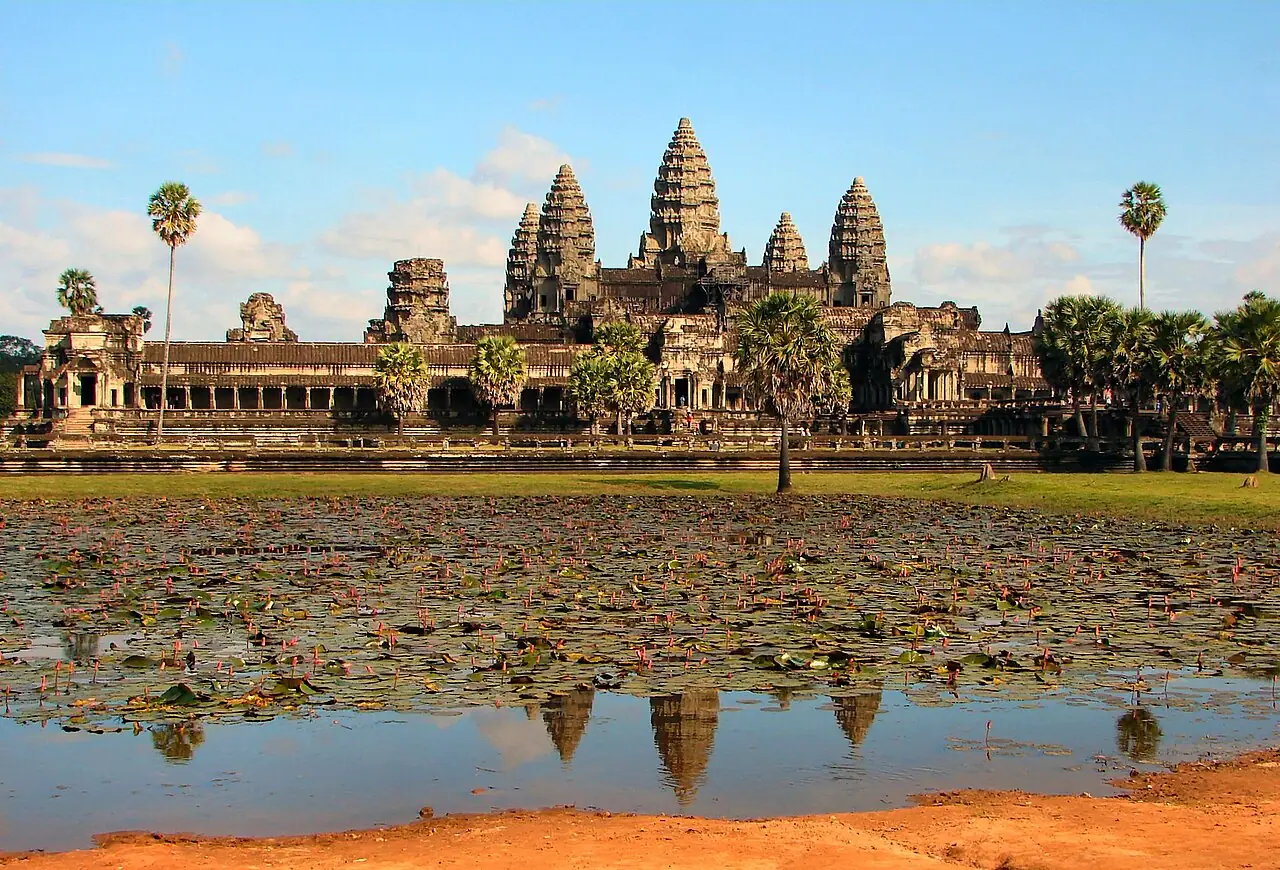
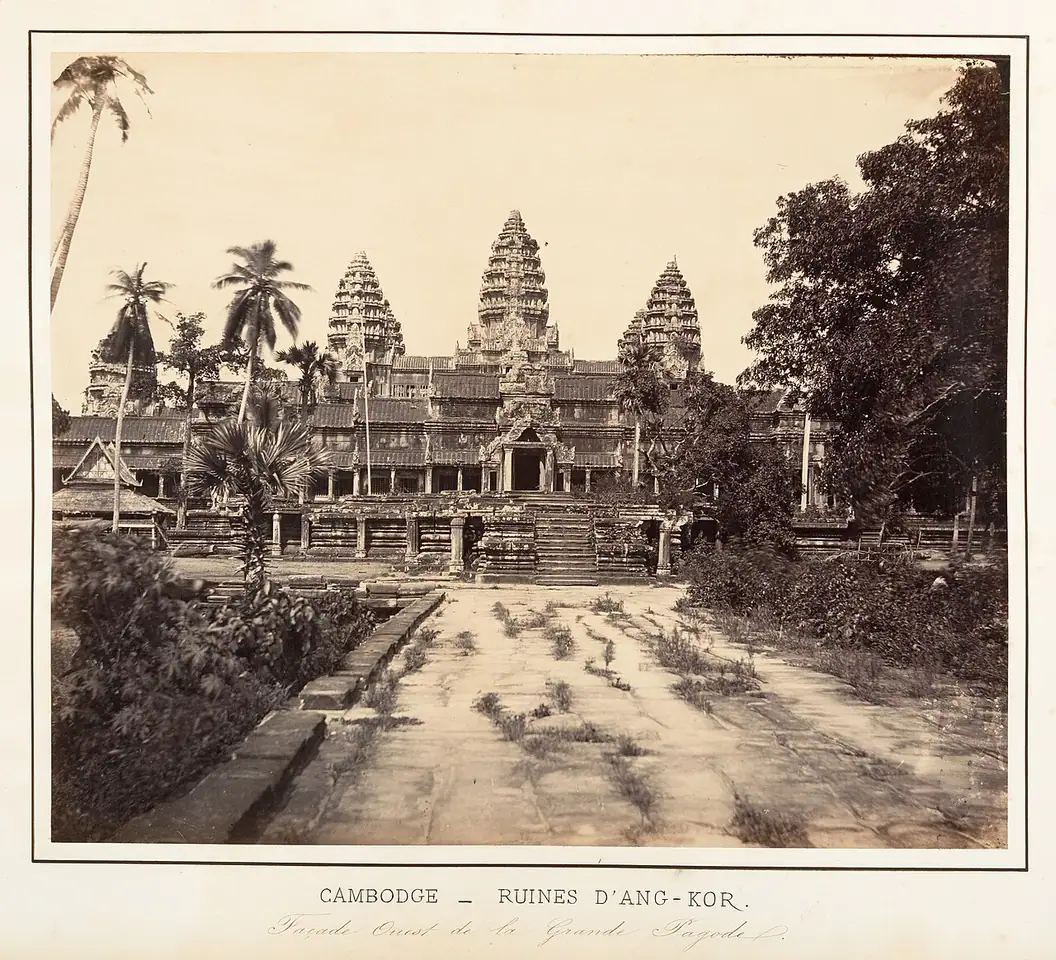 Then · 1866Now · TodayMove across the image to compare
Angkor Wat: how it was designed
- 01
Mount Meru at the centre
Five towers in a quincunx, the tallest in the middle, represent the peaks of Meru, home of the gods. Rising terraces and enclosures lead the visitor upward toward the centre.
- 02
Galleries of stone stories
The outer gallery carries some of the world's longest continuous bas-reliefs, including the Churning of the Ocean of Milk, about 49 metres long, and scenes of Suryavarman II's court.
- 03
Approach as experience
A causeway crosses the moat and leads through gateways that frame the towers. From the western entrance the five towers line up so that only three appear, and they reveal themselves as you walk.
- 04
Stone by canal
The sandstone was quarried on Phnom Kulen, about 40 km away. Research has traced a network of canals that likely floated the blocks most of the way.
Construction timeline
Suryavarman II comes to the throne and work begins.
Work stops around the time of the king's death; some reliefs are left unfinished.
Angkor Wat becomes a Theravada Buddhist temple, which it remains.
French naturalist Henri Mouhot visits; his posthumously published account popularises the site in Europe.
The École française d'Extrême-Orient begins clearance and conservation.
Angkor is inscribed by UNESCO and placed on the danger list, removed from it in 2004 after international restoration.
How the design changed
From Vishnu to the Buddha
The central sanctuary once held an image of Vishnu. Buddhist monks later walled up its doorways and placed standing Buddhas in them, and Buddha images fill the Gallery of a Thousand Buddhas.
Restored by many nations
After decades of civil war, teams from France, Japan, Germany, India and others have stabilised parts of the temple. Some early restorations used concrete that is now being replaced.
Who built it
Suryavarman II commissioned the temple. Khmer inscriptions do not name its architect, though some scholars associate the king's chief priest, Divakarapandita, with its planning. Tens of thousands of workers, artisans and elephants would have been needed over about 35 years.
Where it is
Siem Reap Province, Cambodia · 13.4125° N, 103.8667° E · Open in OpenStreetMap. Nearest in this guide: Shwedagon (910 km), Konark (2,024 km), Potala Palace (2,232 km).
 910 km2,024 km2,232 kmAngkor Wat
Drag to pan, use + and − or double-click to zoom, and tap any pin for a preview.
Built around the same time
| Monument | Country | Built | Gap |
|---|---|---|---|
| Great Zimbabwe | Zimbabwe | c. 11th–15th century CE | 13 years earlier |
| Notre-Dame de Paris | France | 1163–c. 1345; restored 1845–1864 and 2019–2024 | 50 years later |
| Leaning Tower of Pisa | Italy | 1173–1372 | 60 years later |
| Rock-Hewn Churches of Lalibela | Ethiopia | Late 12th – early 13th century (traditional dating) | 68 years later |
Angkor Wat: questions people ask
Who built Angkor Wat?
It was built for the Khmer king Suryavarman II in the first half of the 12th century. Its architect is not named in surviving inscriptions.
Why does Angkor Wat face west?
Most Khmer temples face east, but Angkor Wat faces west, a direction associated with Vishnu and with death, which suggests it was also a funerary temple.
Is Angkor Wat Hindu or Buddhist?
It was built as a Hindu temple to Vishnu and became a Theravada Buddhist temple from the late 13th or 14th century; it is still used by monks today.
Is Angkor Wat the largest religious monument in the world?
Yes. Including its moat and enclosure, it covers about 162 hectares, making it the largest religious monument in the world.
Sources & image credits
- UNESCO World Heritage Centre — Angkor
- Wikipedia — Angkor Wat
- APSARA National Authority — Angkor
- Current photograph: Angkor Wat.jpg by Bjørn Christian Tørrissen, CC BY-SA 4.0 — original on Wikimedia Commons · licence.
- Historic image: Façade Ouest de la Grande Pagode MET DP151650.jpg by Emile Gsell, CC0 — original on Wikimedia Commons · licence.
- Coordinates from Wikidata. Images resized and converted to WebP; otherwise unaltered. Checked October 25, 2026.
More to wander into
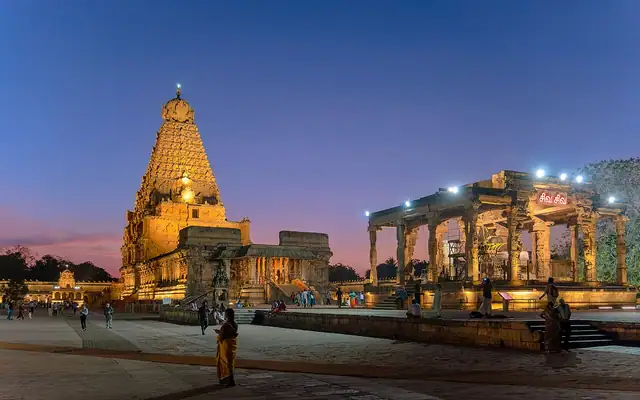
- World monument · c. 1003–1010 CEBrihadeeswarar Temple, ThanjavurRajaraja Chola's 66-metre granite tower, signed by its architect.
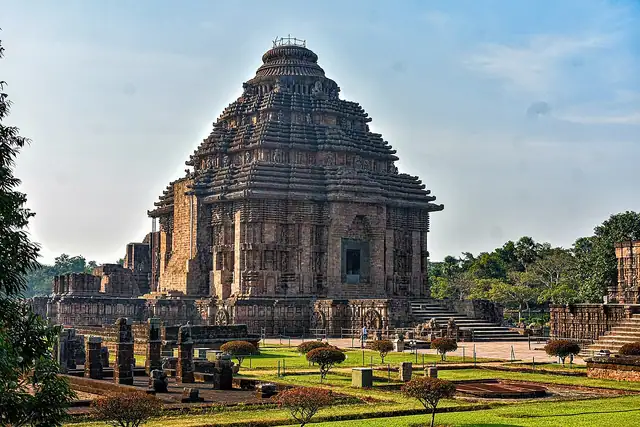
- World monument · c. 1250 CE (reign of Narasimhadeva I, 1238–1264)Konark Sun TempleThe sun god's chariot in stone, with wheels that work as sundials.
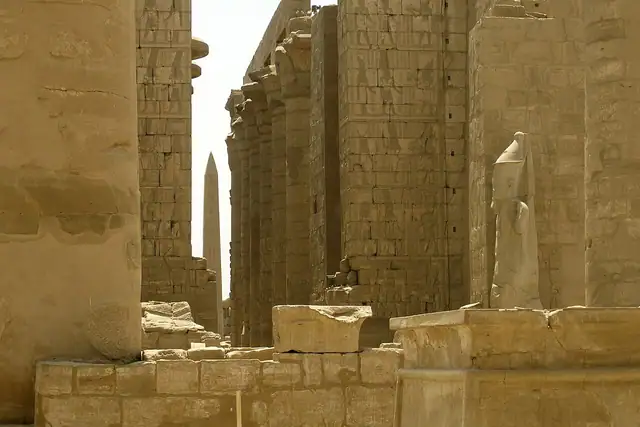
- World monument · c. 1971 BCE – 1st century BCEKarnak Temple ComplexA temple that grew for 2,000 years, with a forest of 134 stone columns.
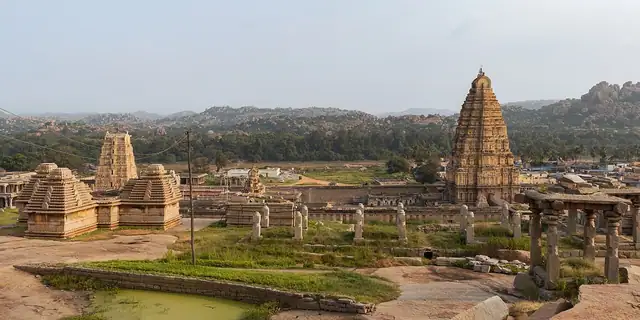
- World monument · Mainly 14th–16th century (Vijayanagara Empire, 1336–1565)Hampi (Group of Monuments)A sacked imperial capital of granite temples, stone chariots and singing pillars.
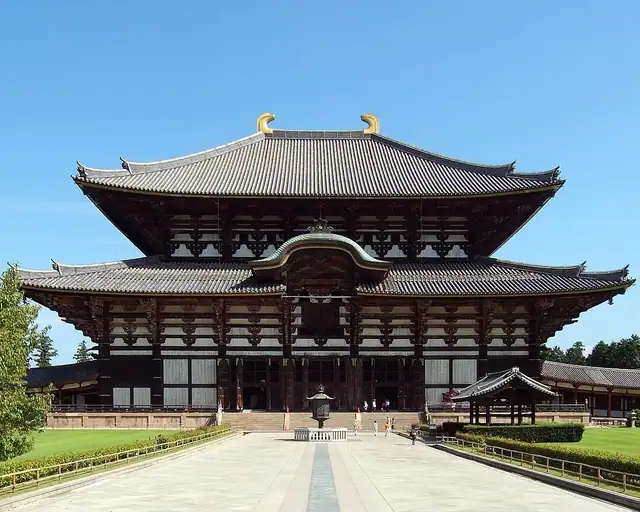
- World monument · 752 CE; hall rebuilt 1195 and 1709Tōdai-ji Great Buddha HallA giant bronze Buddha in a wooden hall rebuilt smaller after two fires.
- Architecture & engineeringRam Mandir architecture: the Nagara design, the stone, the foundation and the Surya Tilak, explainedRam Mandir architecture explained: a Nagara temple by the Sompura family, built of Rajasthan sandstone without steel, with a sunlight 'tilak' system.
Get the ideas, not the noise.
Sign up with Google and we’ll send you short UX psychology tips by email — why people tap, stall and leave, and what to do about it. Unsubscribe anytime. Prefer something to keep? Get the free Laws of UX guide as a PDF.