 By
At a glance: Konark Sun Temple
- Location
- Konark, Puri district, Odisha, India
- Built
- c. 1250 CE (reign of Narasimhadeva I, 1238–1264)
- Type
- Hindu temple to Surya · Sacred
- Style
- Kalinga (Odisha) architecture
- Commissioned by
- King Narasimhadeva I of the Eastern Ganga dynasty
- Architects & builders
- Not recorded
- Materials
- Khondalite, laterite and chlorite stone with iron beams
- Size
- 24 carved wheels about 3 m across; surviving hall about 30 m tall
Konark: what it is
Konark stood near the coast of the Bay of Bengal, where European sailors called it the 'Black Pagoda' and used it as a landmark. It was dedicated to Surya and laid out so the rising sun lit its eastern entrance.
What survives is the jagamohana, the audience hall in front of the sanctum. The sanctum tower, once perhaps around 60–70 metres tall, has fallen. The temple appears on the reverse of India's ₹10 note issued in 2018.
Konark, then and now
Real images only: an earlier view and a recent photograph, each credited and linked to its original file. Switch between them or compare side by side.
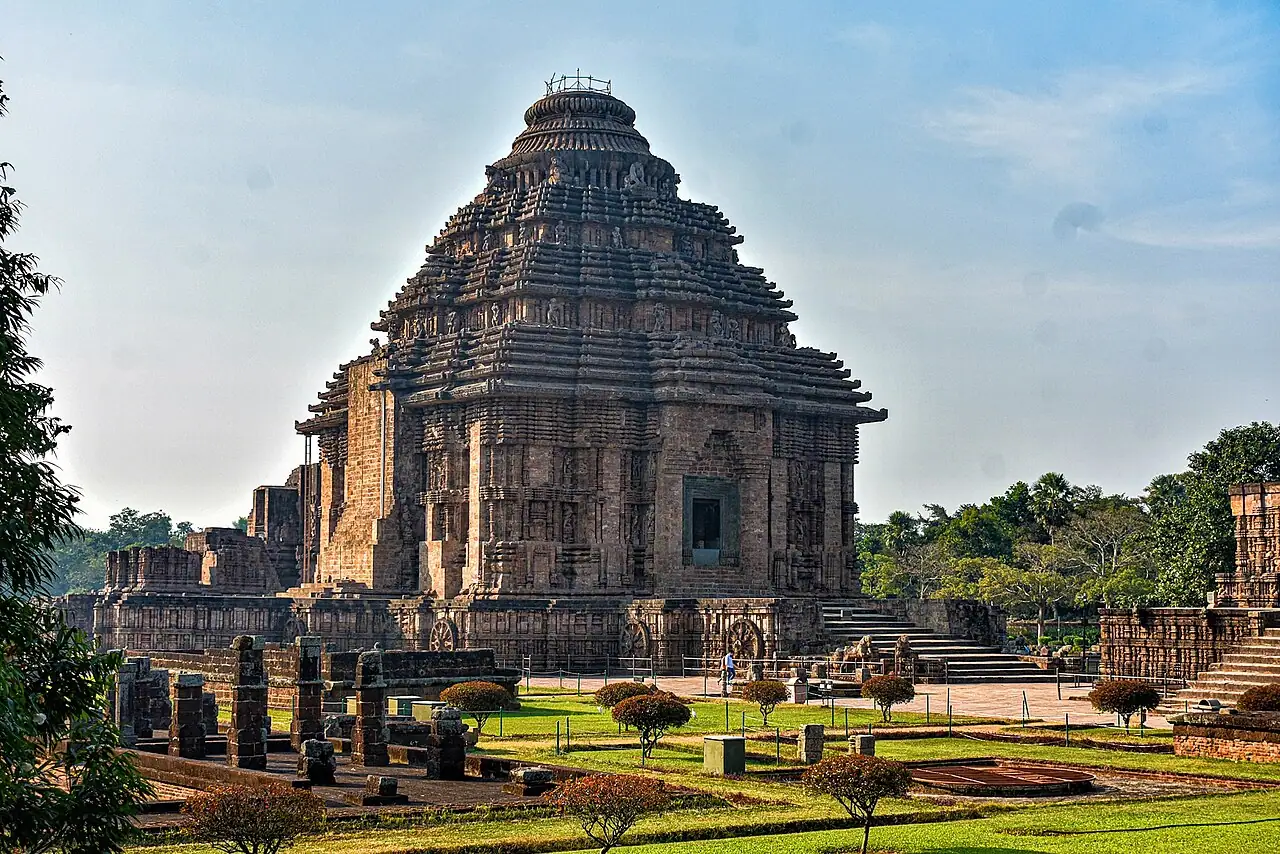
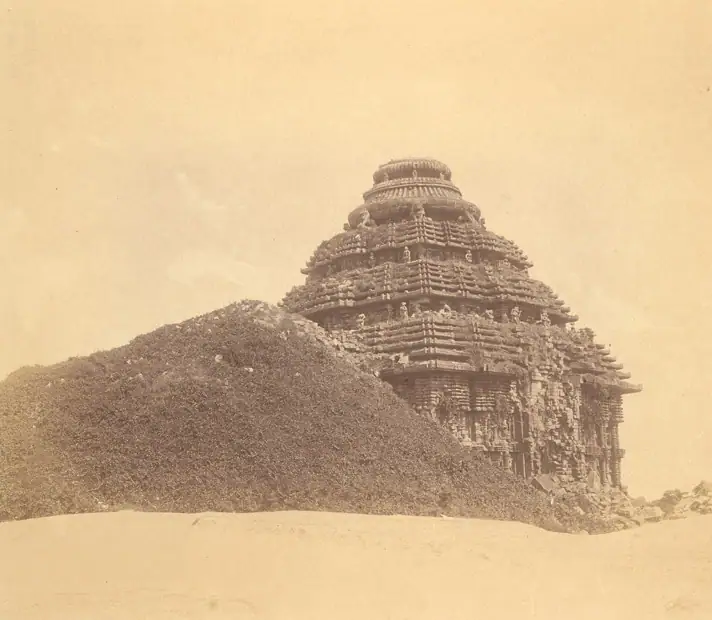 Then · c. 1890Now · TodayMove across the image to compare
Konark: how it was designed
- 01
A building that is a vehicle
The whole temple is shaped as a chariot: twelve pairs of wheels carved along the plinth and seven horses straining at the front, pulling the sun across the sky.
- 02
Wheels that tell time
Each wheel has eight major and eight minor spokes. Shadows cast by the spokes can be read to tell the time of day, and the 24 wheels are linked to the hours or the fortnights of the year.
- 03
Every surface carved
Musicians, dancers, animals, deities and scenes of daily life and love cover the walls in deep relief, an encyclopaedia of 13th-century Odisha.
- 04
Iron in the stone
Wrought-iron beams were used to reinforce the structure — an unusual technique that metallurgists have studied for its resistance to rust.
Construction timeline
Built under Narasimhadeva I.
The temple falls into disuse; the sanctum tower collapses.
The Aruna pillar from the entrance is moved to the Jagannath Temple at Puri.
The British administration fills the jagamohana with sand and seals its doors to prevent collapse.
Inscribed on the UNESCO World Heritage List.
The Archaeological Survey of India begins work to remove the sand and support the hall from inside.
How the design changed
A temple without its tower
Why the tower fell is debated — weak foundations on sandy soil, the removal of a lodestone in legend, or later damage — but its absence changed the temple's silhouette entirely.
Sand in, sand out
The sand that saved the hall in 1903 later settled and put stress on the walls. Engineers are now removing it and installing internal supports.
Who built it
Narasimhadeva I, who also fought campaigns against the Delhi Sultanate in Bengal, commissioned the temple. Palm-leaf manuscripts that are claimed to record its construction exist, but their authenticity is debated by historians.
Where it is
Konark, Puri district, Odisha, India · 19.8874° N, 86.0946° E · Open in OpenStreetMap. Nearest in this guide: Sanchi Stupa (951 km), Shwedagon (1,115 km), Hampi (1,139 km).
 951 km1,115 km1,139 kmKonark
Drag to pan, use + and − or double-click to zoom, and tap any pin for a preview.
Built around the same time
| Monument | Country | Built | Gap |
|---|---|---|---|
| Alhambra | Spain | 1238 – late 14th century (Nasrid palaces) | Same start |
| Moai of Rapa Nui | Chile | c. 1250–1500 CE (most statues) | 12 years later |
| Qutub Minar | India | c. 1199–1220; top rebuilt 1369 | 39 years earlier |
| Rock-Hewn Churches of Lalibela | Ethiopia | Late 12th – early 13th century (traditional dating) | 57 years earlier |
Konark: questions people ask
Who built the Konark Sun Temple?
King Narasimhadeva I of the Eastern Ganga dynasty built it around 1250 CE.
Why is Konark called the Black Pagoda?
European sailors gave it that name because its dark stone tower was a landmark from the sea, in contrast to the whitewashed Jagannath Temple at Puri.
Why was the Konark temple filled with sand?
In the early 1900s the British filled the surviving hall with sand and sealed it to stop it collapsing. The Archaeological Survey of India began removing the sand in 2022.
Which note has the Konark Sun Temple?
A motif of the Konark Sun Temple appears on the reverse of the ₹10 banknote issued by the Reserve Bank of India in 2018.
Sources & image credits
- UNESCO World Heritage Centre — Sun Temple, Konârak
- Wikipedia — Konark Sun Temple
- Odisha Bytes — ASI begins sand removal at Konark Sun Temple (2022)
- Current photograph: Konarka Temple.jpg by Subham9423, CC BY-SA 4.0 — original on Wikimedia Commons · licence.
- Historic image: SW View Konark 1890.jpg by William Henry Cornish, Public domain — original on Wikimedia Commons.
- Coordinates from Wikidata. Images resized and converted to WebP; otherwise unaltered. Checked October 25, 2026.
More to wander into
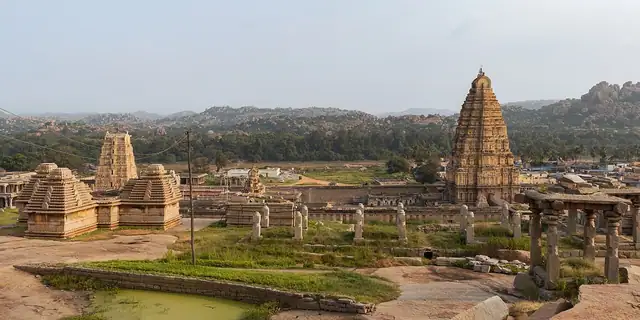
- World monument · Mainly 14th–16th century (Vijayanagara Empire, 1336–1565)Hampi (Group of Monuments)A sacked imperial capital of granite temples, stone chariots and singing pillars.
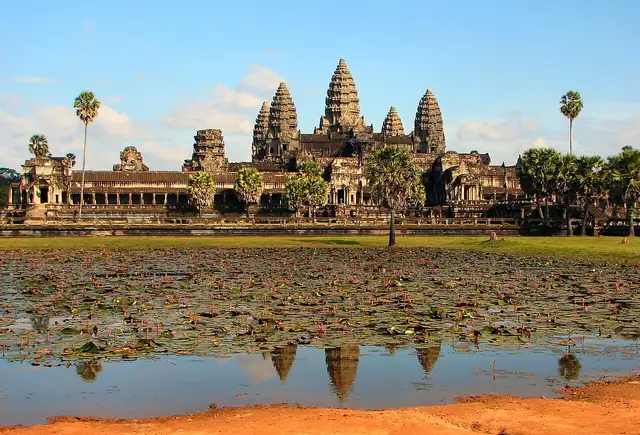
- World monument · c. 1113–1150 CEAngkor WatA model of the Hindu cosmos in stone, surrounded by a 190-metre moat.
- Architecture & engineeringRam Mandir architecture: the Nagara design, the stone, the foundation and the Surya Tilak, explainedRam Mandir architecture explained: a Nagara temple by the Sompura family, built of Rajasthan sandstone without steel, with a sunlight 'tilak' system.
- World monument · c. 1003–1010 CEBrihadeeswarar Temple, ThanjavurRajaraja Chola's 66-metre granite tower, signed by its architect.
- World monument · c. 1971 BCE – 1st century BCEKarnak Temple ComplexA temple that grew for 2,000 years, with a forest of 134 stone columns.
- World monument · c. 21st century BCEZiggurat of UrA 4,100-year-old Sumerian stepped platform for the moon god, rebuilt in parts in the 1980s.
Get the ideas, not the noise.
Sign up with Google and we’ll send you short UX psychology tips by email — why people tap, stall and leave, and what to do about it. Unsubscribe anytime. Prefer something to keep? Get the free Laws of UX guide as a PDF.