 By
At a glance: Brihadeeswarar Temple, Thanjavur
- Location
- Thanjavur, Tamil Nadu, India
- Built
- c. 1003–1010 CE
- Type
- Hindu temple · Sacred
- Style
- Dravidian, Chola period
- Commissioned by
- Chola emperor Rajaraja I
- Architects & builders
- Kunjara Mallan Raja Rama Perunthachan (named in temple inscriptions)
- Materials
- Granite
- Size
- Vimana (tower over the sanctum) about 66 m tall
Brihadeeswarar: what it is
Rajaraja I built the temple at the height of Chola power, as a royal shrine to Shiva and a statement of the empire's reach. It is still a working temple and, with two later Chola temples, forms the UNESCO site 'Great Living Chola Temples'.
The temple inverts the later South Indian pattern. Here the tower over the sanctum dominates and the gateways (gopurams) are smaller; in later temples the gateways grew huge and the central tower shrank.
Brihadeeswarar, then and now
Real images only: an earlier view and a recent photograph, each credited and linked to its original file. Switch between them or compare side by side.
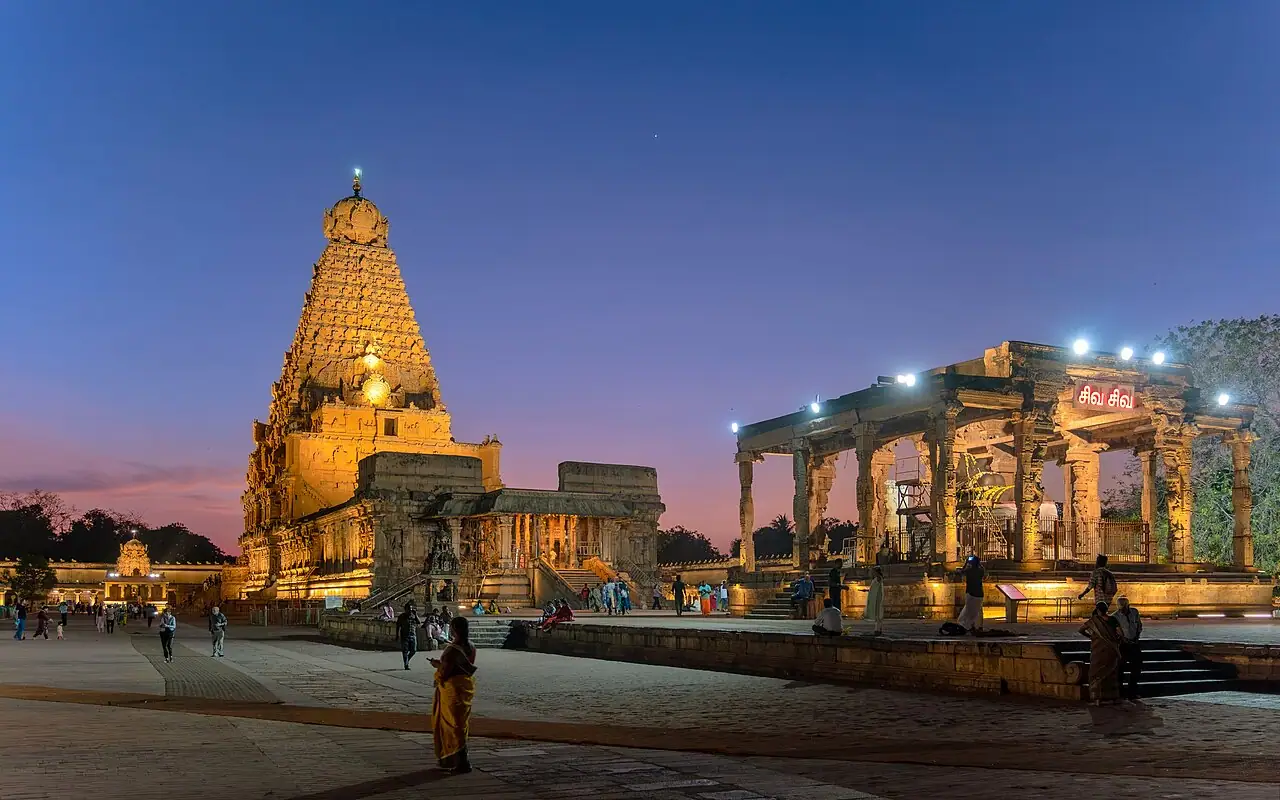
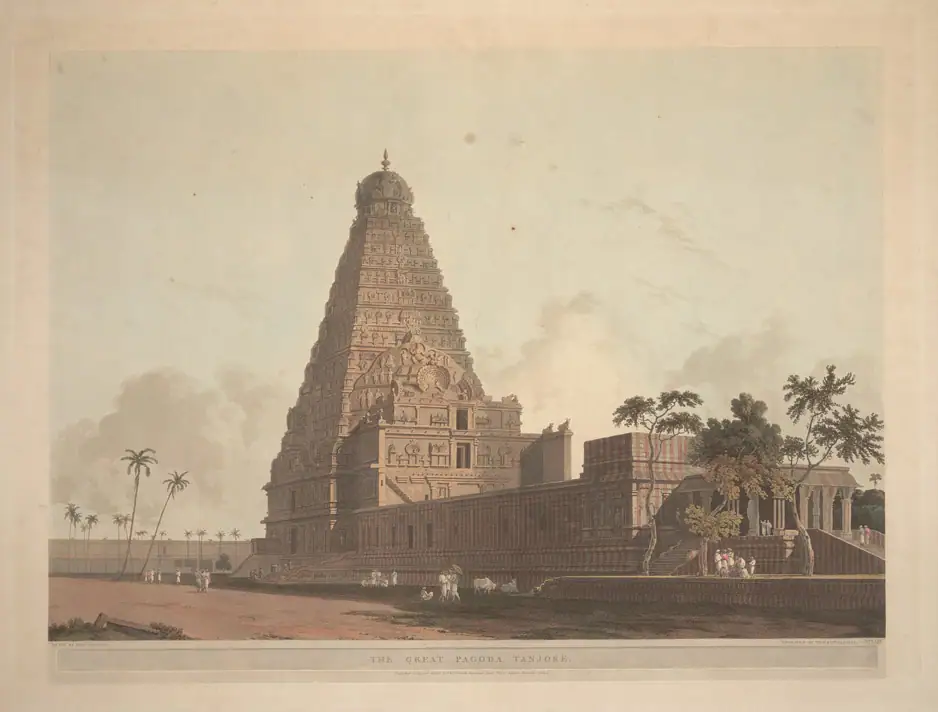 Then · 1798Now · TodayMove across the image to compare
Brihadeeswarar: how it was designed
- 01
A pyramid of granite
The vimana rises in diminishing tiers to a domed cupola. Its hollow interior reduces weight. The whole temple is granite, a hard stone with no quarries close to Thanjavur, so it had to be brought from a distance.
- 02
The tower comes first
The sanctum tower dwarfs the two entrance gateways. Later South Indian temples reversed this, with huge gopurams and modest central towers, which makes Thanjavur a landmark in the style's history.
- 03
Dance carved into stone
Panels in the upper corridor around the sanctum show 81 of the 108 karanas (poses) of Bharatanatyam, the earliest such series in stone. The same corridor holds Chola-era wall paintings.
- 04
A temple run like a city
Inscriptions on the base list hundreds of dancers, musicians, accountants and craftsmen employed by the temple, and the villages that paid for its upkeep — a rare record of how a medieval temple worked.
Construction timeline
Construction begins under Rajaraja I.
The temple is consecrated; the king records his gifts in inscriptions on its walls.
Nayaka rulers add the Nandi pavilion, the large stone Nandi and the Amman shrine.
The Maratha rulers of Thanjavur add the Subrahmanya and Ganesha shrines and repaint parts of the interior.
Chola frescoes are found beneath later Nayaka paintings in the inner corridor.
Inscribed by UNESCO in 1987; its 1,000th anniversary is celebrated in 2010.
How the design changed
Additions from three dynasties
The core is Chola, but much of what visitors walk past — the Nandi pavilion and several shrines — was added by Nayaka and Maratha rulers over the next 700 years.
Paintings over paintings
Nayaka-period artists painted over the Chola murals. Conservators have since separated some layers so both periods can be seen.
Who built it
Rajaraja I commissioned the temple and endowed it lavishly. Inscriptions name the architect Kunjara Mallan Raja Rama Perunthachan. The workforce included stonemasons, sculptors and engineers from across the Chola territories.
Where it is
Thanjavur, Tamil Nadu, India · 10.7831° N, 79.1325° E · Open in OpenStreetMap. Nearest in this guide: Hampi (583 km), Kailasa Temple (1,111 km), Konark (1,257 km).
 583 km1,111 km1,257 kmBrihadeeswarar
Drag to pan, use + and − or double-click to zoom, and tap any pin for a preview.
Built around the same time
| Monument | Country | Built | Gap |
|---|---|---|---|
| Great Zimbabwe | Zimbabwe | c. 11th–15th century CE | 97 years later |
| El Castillo, Chichen Itza | Mexico | c. 9th–11th century CE (outer pyramid) | 103 years earlier |
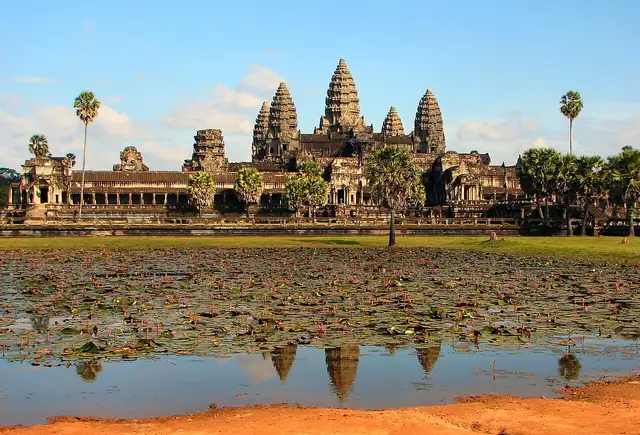
| Angkor Wat | Cambodia | c. 1113–1150 CE | 110 years later |
| Notre-Dame de Paris | France | 1163–c. 1345; restored 1845–1864 and 2019–2024 | 160 years later |
Brihadeeswarar: questions people ask
Who built the Brihadeeswarar Temple?
The Chola emperor Rajaraja I built it, completing it in 1010 CE. Its inscriptions name the architect Kunjara Mallan Raja Rama Perunthachan.
How tall is the Brihadeeswarar Temple?
Its vimana, the tower above the sanctum, is about 66 metres (216 feet) tall.
Does the Brihadeeswarar Temple's tower cast no shadow?
That is a popular myth. The tower does cast a shadow; at midday much of it simply falls on the tower's own broad base.
Is the Brihadeeswarar Temple a UNESCO site?
Yes. It was inscribed in 1987 and is part of the 'Great Living Chola Temples' with temples at Gangaikonda Cholapuram and Darasuram.
Sources & image credits
- UNESCO World Heritage Centre — Great Living Chola Temples
- Wikipedia — Brihadisvara Temple, Thanjavur
- Archaeological Survey of India — Trichy Circle
- Current photograph: Brihadisvara Temple during Maha Shivaratri-WUS03611 (edit).jpg by Original: Rainer Halama Derivative work: UnpetitproleX, CC BY-SA 4.0 — original on Wikimedia Commons · licence.
- Historic image: The Great Pagoda, Tanjore - British Library P959.jpg by Thomas Daniell / William Daniell, Public domain — original on Wikimedia Commons.
- Coordinates from Wikidata. Images resized and converted to WebP; otherwise unaltered. Checked October 25, 2026.
More to wander into
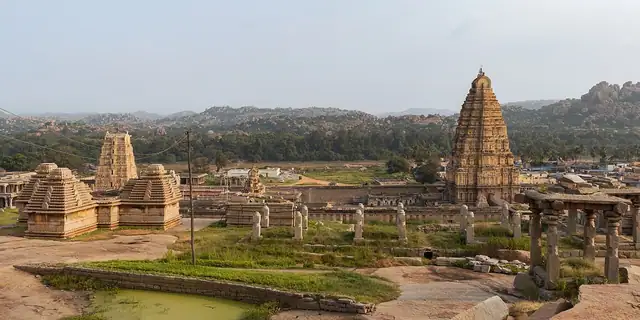
- World monument · Mainly 14th–16th century (Vijayanagara Empire, 1336–1565)Hampi (Group of Monuments)A sacked imperial capital of granite temples, stone chariots and singing pillars.
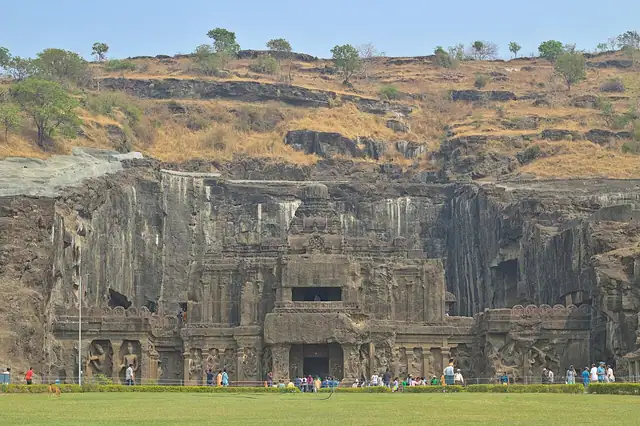
- World monument · 8th century CE (mainly under Krishna I, r. c. 756–773)Kailasa Temple, ElloraA complete temple carved downward out of one basalt hill.
- World monument · c. 1113–1150 CEAngkor WatA model of the Hindu cosmos in stone, surrounded by a 190-metre moat.
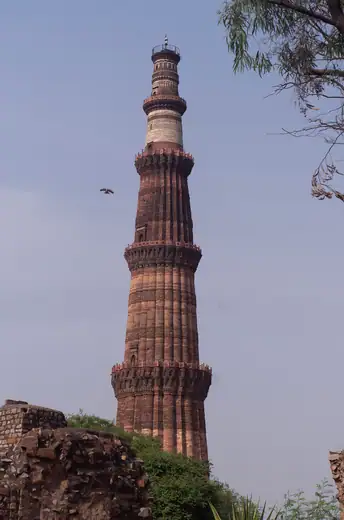
- World monument · c. 1199–1220; top rebuilt 1369Qutub MinarDelhi's fluted 72.5-metre tower, finished by three sultans over 170 years.
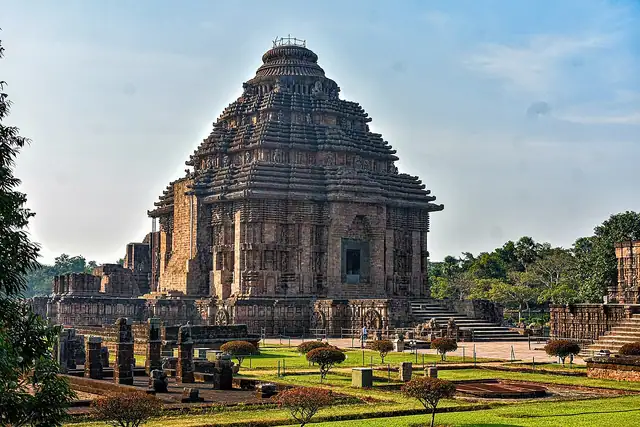
- World monument · c. 1250 CE (reign of Narasimhadeva I, 1238–1264)Konark Sun TempleThe sun god's chariot in stone, with wheels that work as sundials.
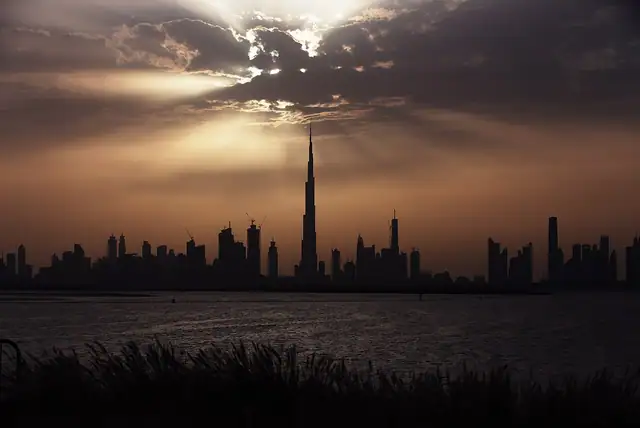
- World monument · 2004–2010 (opened 4 January 2010)Burj KhalifaAn 828-metre tower shaped to confuse the wind.
Get the ideas, not the noise.
Sign up with Google and we’ll send you short UX psychology tips by email — why people tap, stall and leave, and what to do about it. Unsubscribe anytime. Prefer something to keep? Get the free Laws of UX guide as a PDF.