 By
At a glance: El Castillo, Chichen Itza
- Location
- Yucatán, Mexico
- Built
- c. 9th–11th century CE (outer pyramid)
- Type
- Stepped pyramid temple (Temple of Kukulcán) · Sacred
- Style
- Maya, Terminal Classic to Early Postclassic
- Commissioned by
- Rulers of Chichen Itza
- Architects & builders
- Not recorded
- Materials
- Limestone
- Size
- About 30 m tall including the temple; base about 55 m a side
Chichen Itza: what it is
El Castillo stands at the centre of a great plaza, with the Great Ball Court to its west and a causeway leading to the Sacred Cenote, a natural sinkhole used for offerings. It was dedicated to Kukulcán, the feathered serpent deity.
The pyramid is built over at least two earlier ones. Excavators tunnelling inside in the 1930s found an older pyramid with a temple containing a red jaguar throne.
Chichen Itza, then and now
Real images only: an earlier view and a recent photograph, each credited and linked to its original file. Switch between them or compare side by side.
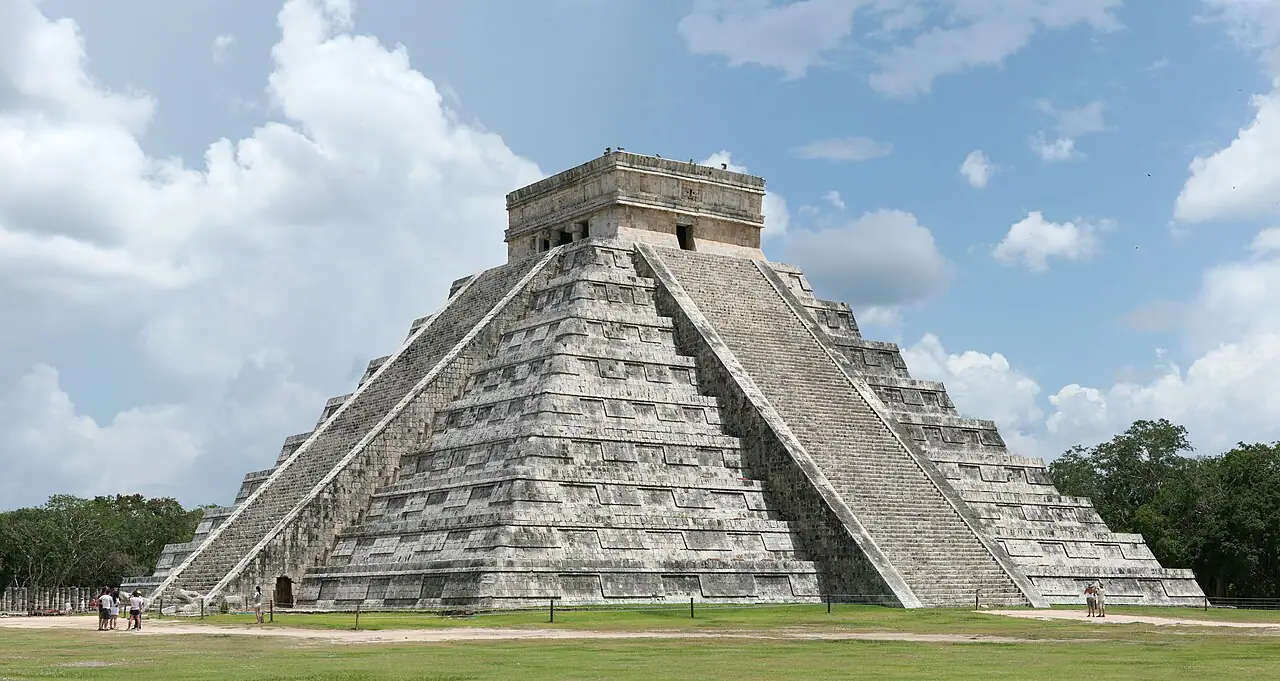
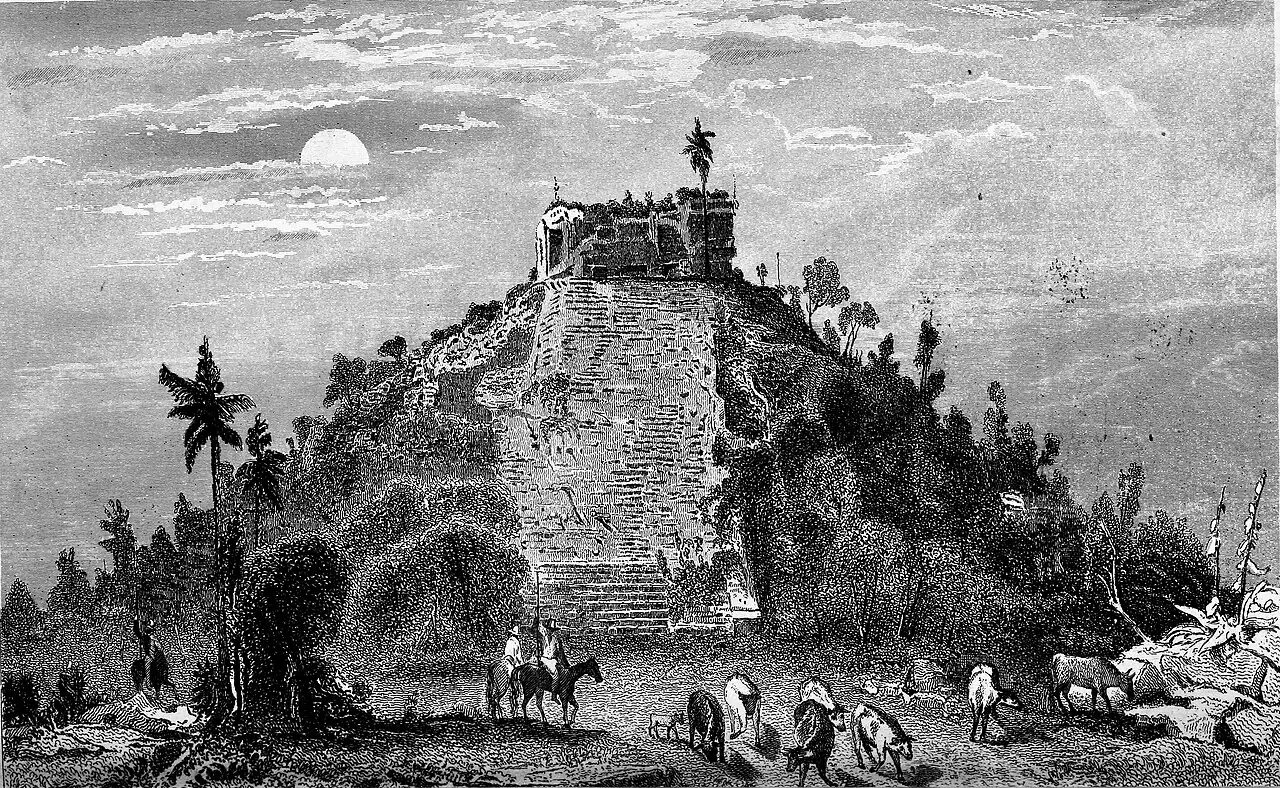 Then · 1843Now · TodayMove across the image to compare
Chichen Itza: how it was designed
- 01
A calendar in architecture
Nine stepped terraces on each side, split by the stairs into 18 sections, match the 18 months of the Maya solar calendar; the 91 steps on each of four stairs plus the platform make 365.
- 02
The descending serpent
At the spring and autumn equinoxes, the terraces' corners cast triangles of light on the north stair's balustrade, joining a stone serpent head at its foot. Whether this was exactly designed or a happy result is debated, but it draws huge crowds.
- 03
Nested pyramids
Maya rulers often encased old temples in new ones. Electrical resistivity surveys announced in 2016 suggest a third, smaller structure inside the second.
Construction timeline
Earlier structures are built on the site.
The outer pyramid seen today is completed.
John Lloyd Stephens and Frederick Catherwood publish detailed drawings of the pyramid.
Mexican archaeologists excavate the inner pyramid and its jaguar throne.
Chichen Itza is inscribed on the UNESCO World Heritage List.
Climbing the pyramid is banned to protect it.
How the design changed
Two faces restored
Only two of the four sides were fully restored in the 20th century; the other two show how the pyramid looked as a ruin, with stepped facing partly collapsed.
Built on water
Geophysical studies have found a water-filled cenote beneath the pyramid, which suggests the builders chose the spot for its sacred underground water.
Who built it
Chichen Itza was one of the largest Maya cities in its era, with strong links across Mesoamerica; its art mixes Maya and central Mexican styles. The pyramid's rulers and architects are not recorded in surviving inscriptions.
Where it is
Yucatán, Mexico · 20.6829° N, 88.5686° W · Open in OpenStreetMap. Nearest in this guide: Teotihuacan (1,078 km), Statue of Liberty (2,614 km), Machu Picchu (4,151 km).
 1,078 km2,614 km4,151 kmChichen Itza
Drag to pan, use + and − or double-click to zoom, and tap any pin for a preview.
Built around the same time
| Monument | Country | Built | Gap |
|---|---|---|---|
| Brihadeeswarar Temple, Thanjavur | India | c. 1003–1010 CE | 103 years later |
| Mosque–Cathedral of Córdoba | Spain | 785–988 (mosque); cathedral nave from 1523 | 115 years earlier |
| Borobudur | Indonesia | c. late 8th – early 9th century | 120 years earlier |
| Kailasa Temple, Ellora | India | 8th century CE (mainly under Krishna I, r. c. 756–773) | 144 years earlier |
Chichen Itza: questions people ask
How many steps does El Castillo have?
Each of the four stairways has 91 steps; together with the top platform they total 365, the number of days in the solar year.
What happens at Chichen Itza on the equinox?
In the late afternoon around the spring and autumn equinoxes, sunlight creates a pattern of triangles on the north staircase that looks like a serpent descending to the stone head at its base.
Is there a pyramid inside El Castillo?
Yes. An earlier pyramid lies inside, excavated in the 1930s, and surveys in 2016 suggested a third, even older structure within that.
Can you climb Chichen Itza?
No. Climbing El Castillo has been prohibited since 2006 to protect the structure.
Sources & image credits
- UNESCO World Heritage Centre — Pre-Hispanic City of Chichen-Itza
- Wikipedia — El Castillo, Chichen Itza
- Current photograph: Chichen Itza 3.jpg by Daniel Schwen, CC BY-SA 4.0 — original on Wikimedia Commons · licence.
- Historic image: Chichen Itza - Incidents of Travel in Yucatan 1843 - El Castillo.jpg by Frederick Catherwood, Public domain — original on Wikimedia Commons.
- Coordinates from Wikidata. Images resized and converted to WebP; otherwise unaltered. Checked October 25, 2026.
More to wander into
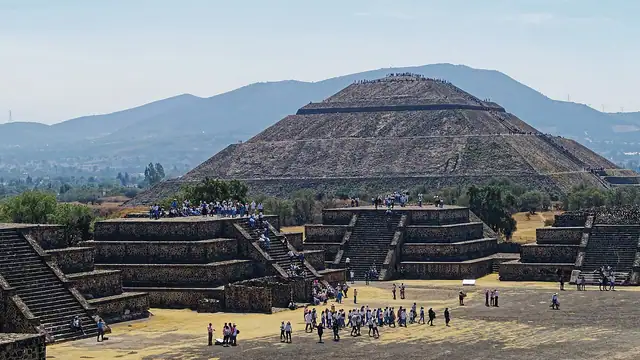
- World monument · c. 100–250 CEPyramid of the Sun, TeotihuacanThe great pyramid of a planned grid city, reshaped by a 1900s restoration.
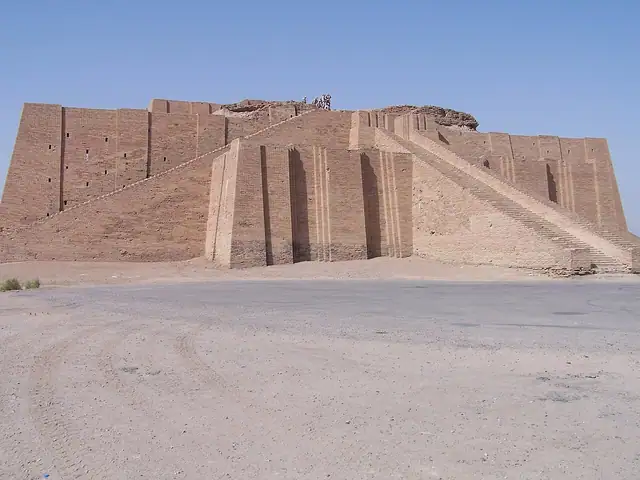
- World monument · c. 21st century BCEZiggurat of UrA 4,100-year-old Sumerian stepped platform for the moon god, rebuilt in parts in the 1980s.
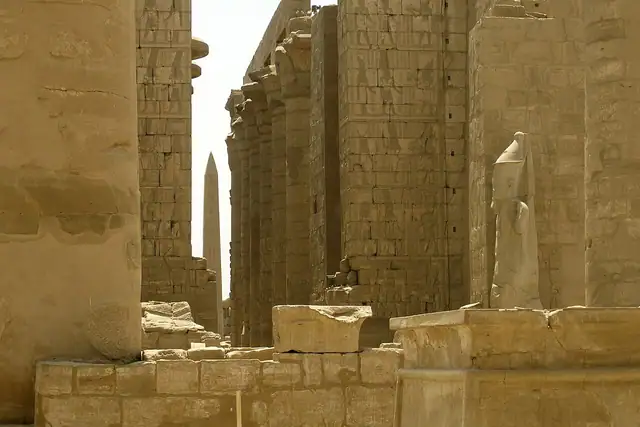
- World monument · c. 1971 BCE – 1st century BCEKarnak Temple ComplexA temple that grew for 2,000 years, with a forest of 134 stone columns.
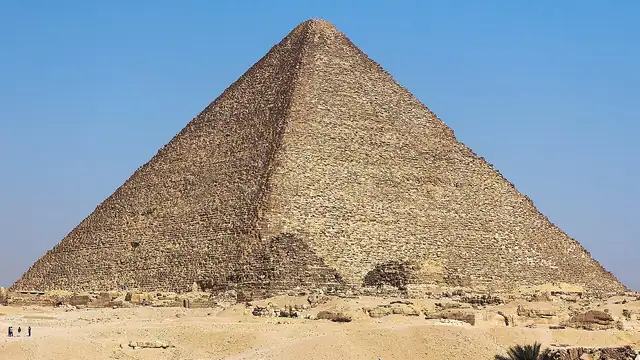
- World monument · c. 2600–2560 BCEGreat Pyramid of GizaKhufu's tomb, the tallest structure on Earth for almost 4,000 years.
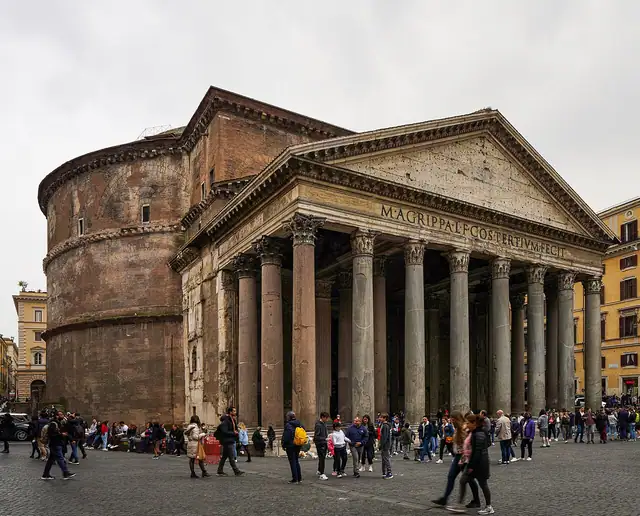
- World monument · c. 113–125 CEPantheonThe largest unreinforced concrete dome on Earth, open to the sky for 1,900 years.
- World monument · 1581–1604; rebuilt 1764; gilded early 19th centuryGolden Temple (Harmandir Sahib)A temple in a pool, with four open doors and steps that lead down, not up.

Get the ideas, not the noise.
Sign up with Google and we’ll send you short UX psychology tips by email — why people tap, stall and leave, and what to do about it. Unsubscribe anytime. Prefer something to keep? Get the free Laws of UX guide as a PDF.