 By
At a glance: Great Pyramid of Giza
- Location
- Giza, near Cairo, Egypt
- Built
- c. 2600–2560 BCE
- Type
- Royal tomb · Royal
- Style
- Old Kingdom true pyramid
- Commissioned by
- Pharaoh Khufu, Fourth Dynasty
- Architects & builders
- Attributed to Hemiunu, Khufu's vizier
- Materials
- Limestone core, fine Tura limestone casing, Aswan granite chambers
- Size
- Originally about 146.6 m tall; base about 230 m a side
Great Pyramid: what it is
The Great Pyramid is the oldest of the Seven Wonders of the Ancient World and the only one still standing. It was built for Khufu, second king of Egypt's Fourth Dynasty, at the peak of a century of experiments in pyramid building that began with Djoser's step pyramid.
What you see today is the stepped core. The smooth outer skin of white Tura limestone was stripped in the Middle Ages, which also took away the top few metres; the pyramid now stands about 138.5 metres tall.
Great Pyramid, then and now
Real images only: an earlier view and a recent photograph, each credited and linked to its original file. Switch between them or compare side by side.
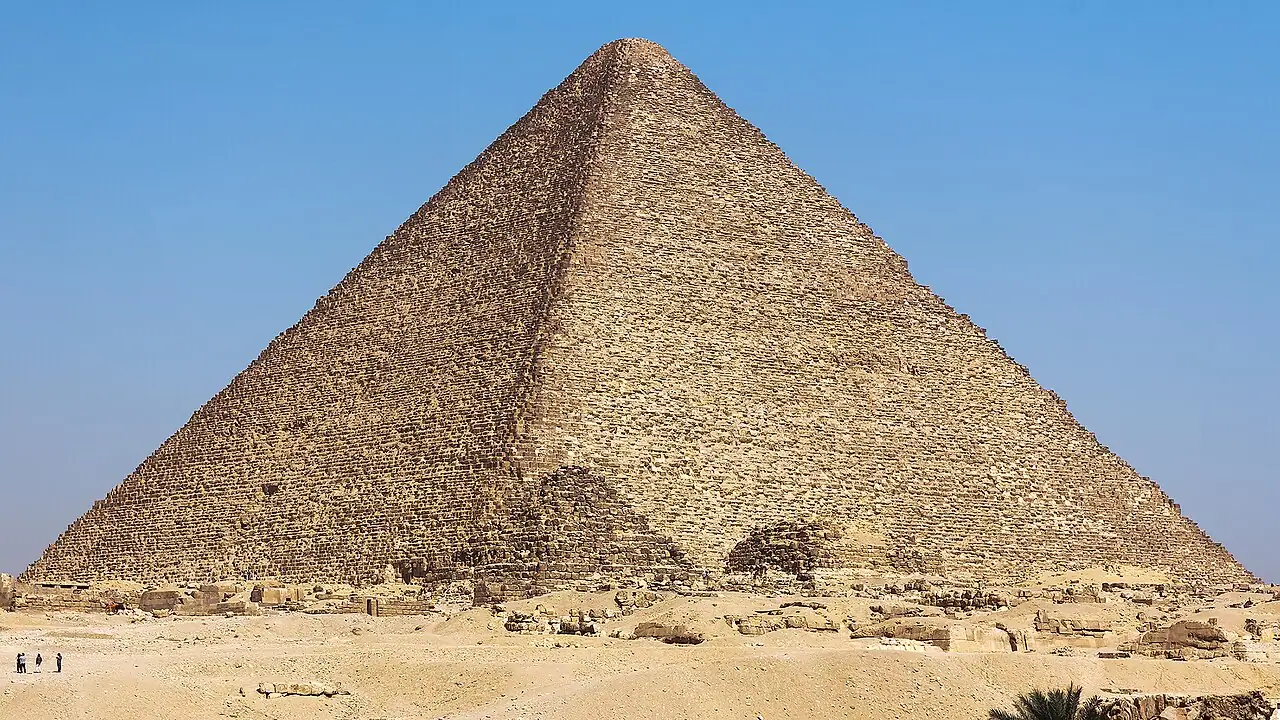
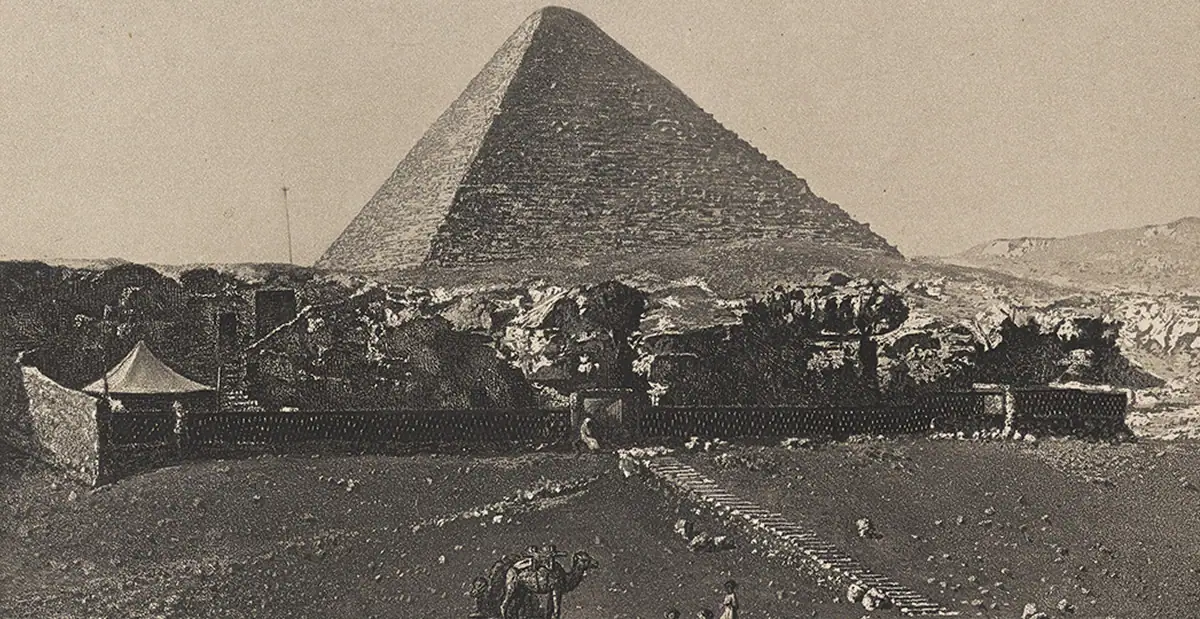 Then · 1839Now · TodayMove across the image to compare
Great Pyramid: how it was designed
- 01
Precision on a huge scale
The base covers about 5.3 hectares and is almost perfectly level and square. Its sides are aligned to true north, south, east and west with remarkable accuracy, probably by sighting stars.
- 02
Three chambers and a gallery
A descending passage leads to an unfinished chamber cut into the bedrock. An ascending passage opens into the Grand Gallery, a corbelled hall about 8.6 metres high, which leads to the granite King's Chamber.
- 03
Engineering the weight
Above the King's Chamber, five stacked compartments topped by a pointed roof of limestone beams spread the load of the masonry above — an early solution to building a void under millions of tonnes of stone.
- 04
A shining surface
The casing stones were cut so finely that the pyramid would have looked like a single smooth, bright form. A few casing blocks still survive at the base.
Construction timeline
Work begins early in Khufu's reign on the Giza plateau.
The pyramid is finished; Khafre's and Menkaure's pyramids follow nearby.
Caliph al-Ma'mun's workers tunnel into the north face — the entrance most visitors still use.
Casing stones are removed for building in Cairo, after an earthquake in 1303 loosened many.
Papyri found at Wadi al-Jarf, the oldest inscribed papyri known, record an official named Merer shipping Tura limestone for Khufu's pyramid.
The ScanPyramids project detects a large void above the Grand Gallery and confirms a hidden corridor behind the north face.
How the design changed
From white to gold-brown
Losing its casing changed the pyramid's look completely: from a smooth, glowing geometric form to the stepped, weathered profile we know.
A new way in
The original entrance on the north face was sealed. Visitors today enter through the tunnel forced in the 9th century, then join the original ascending passage.
Who built it
Ancient sources and later tradition name Hemiunu, Khufu's vizier and a relative, as the overseer of the work. Excavations of a workers' town south of the plateau show that the builders were organised, fed and paid crews of Egyptians, not slaves, and their own tombs lie nearby. The Wadi al-Jarf papyri give a rare first-hand logbook of the logistics.
Where it is
Giza, near Cairo, Egypt · 29.9792° N, 31.1342° E · Open in OpenStreetMap. Nearest in this guide: Petra (416 km), Karnak (497 km), Abu Simbel (851 km).
 416 km497 km851 kmGreat Pyramid
Drag to pan, use + and − or double-click to zoom, and tap any pin for a preview.
Great Pyramid: questions people ask
When was the Great Pyramid built?
It was built during the reign of Khufu, around 2600–2560 BCE. Most Egyptologists date its completion to about 2560 BCE.
How tall is the Great Pyramid?
It was originally about 146.6 metres (481 feet) tall. After losing its casing and capstone it now stands about 138.5 metres.
Who built the Great Pyramid?
Organised crews of paid Egyptian workers built it for Pharaoh Khufu, with the vizier Hemiunu traditionally credited as overseer. Workers' tombs and a workers' town have been excavated at Giza.
Why was the Great Pyramid white?
It was cased in polished white Tura limestone. Most of the casing was removed in the Middle Ages for building in Cairo, exposing the rougher core blocks.
Sources & image credits
- UNESCO World Heritage Centre — Memphis and its Necropolis
- Wikipedia — Great Pyramid of Giza
- ScanPyramids mission — Discovery of a big void (Nature, 2017)
- Current photograph: Great Pyramid of Giza - Pyramid of Khufu.jpg by Douwe C. van der Zee, CC BY-SA 4.0 — original on Wikimedia Commons · licence.
- Historic image: Great Pyramid 20 November 1839.jpg by Frédéric Goupil-Fesquet, Public domain — original on Wikimedia Commons.
- Coordinates from Wikidata. Images resized and converted to WebP; otherwise unaltered. Checked October 25, 2026.
More to wander into
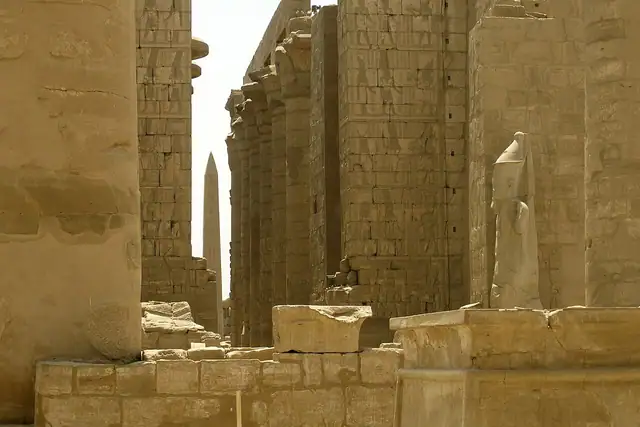
- World monument · c. 1971 BCE – 1st century BCEKarnak Temple ComplexA temple that grew for 2,000 years, with a forest of 134 stone columns.
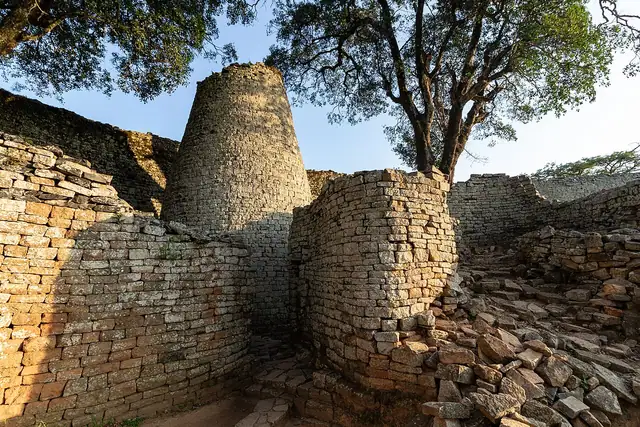
- World monument · c. 11th–15th century CEGreat ZimbabweMortarless granite walls of an African kingdom, once falsely credited to outsiders.
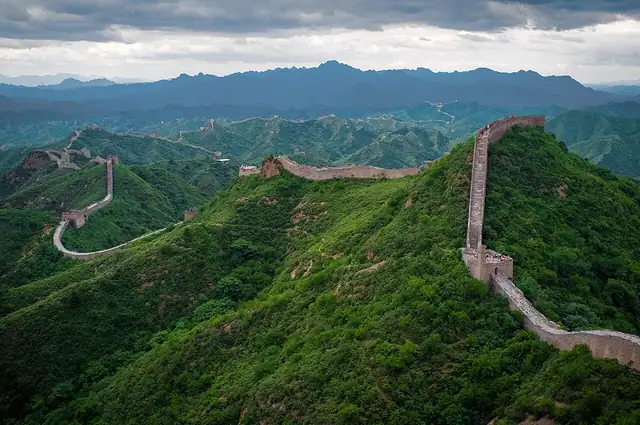
- World monument · 7th century BCE – 1644 CE (most visible parts Ming, 1368–1644)Great Wall of ChinaTwo thousand years of walls, from rammed earth to Ming brick.
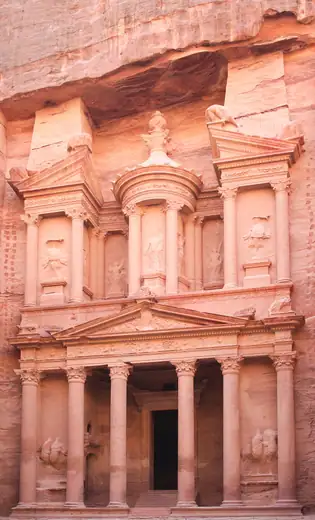
- World monument · Al-Khazneh: about the 1st century CEPetra — Al-Khazneh (the Treasury)A royal tomb carved top-down into a rose-red cliff, at the end of a narrow gorge.
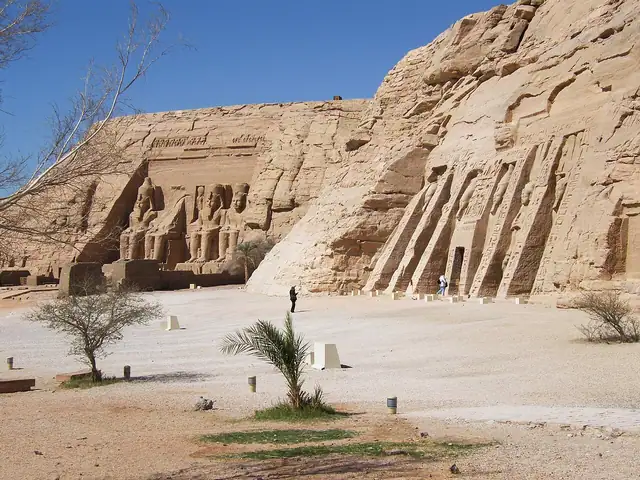
- World monument · c. 1264–1244 BCE; moved 1964–1968Abu Simbel TemplesRamesses II's cliff temples, sawn into blocks and rebuilt on higher ground in the 1960s.
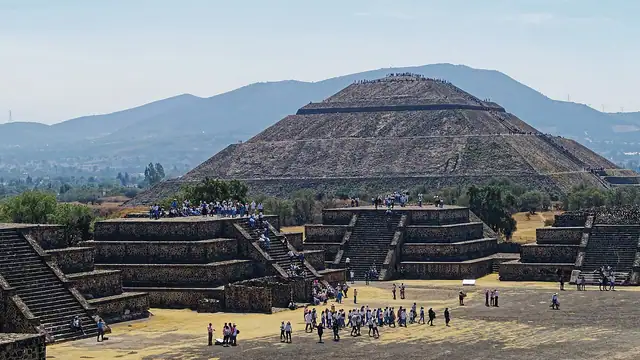
- World monument · c. 100–250 CEPyramid of the Sun, TeotihuacanThe great pyramid of a planned grid city, reshaped by a 1900s restoration.
Get the ideas, not the noise.
Sign up with Google and we’ll send you short UX psychology tips by email — why people tap, stall and leave, and what to do about it. Unsubscribe anytime. Prefer something to keep? Get the free Laws of UX guide as a PDF.