 By
At a glance: Stonehenge
- Location
- Wiltshire, England, United Kingdom
- Built
- c. 3000–1600 BCE (in stages)
- Type
- Prehistoric stone circle · Sacred
- Style
- Neolithic and Bronze Age megalithic
- Commissioned by
- Neolithic farming communities of southern Britain
- Architects & builders
- Not recorded
- Materials
- Sarsen sandstone; Welsh bluestones; Scottish Altar Stone
- Size
- Largest sarsens about 7 m tall and over 25 tonnes
Stonehenge: what it is
Stonehenge began around 3000 BCE as a circular ditch and bank. About 500 years later the famous stones went up: an outer ring of sarsen uprights capped by a continuous ring of lintels, enclosing a horseshoe of five giant trilithons, with smaller bluestones set among them.
It is one of the most studied monuments in the world, yet nothing written by its builders survives. What we know comes from excavation, radiocarbon dating and, recently, chemical studies that traced individual stones to their quarries.
Stonehenge, then and now
Real images only: an earlier view and a recent photograph, each credited and linked to its original file. Switch between them or compare side by side.
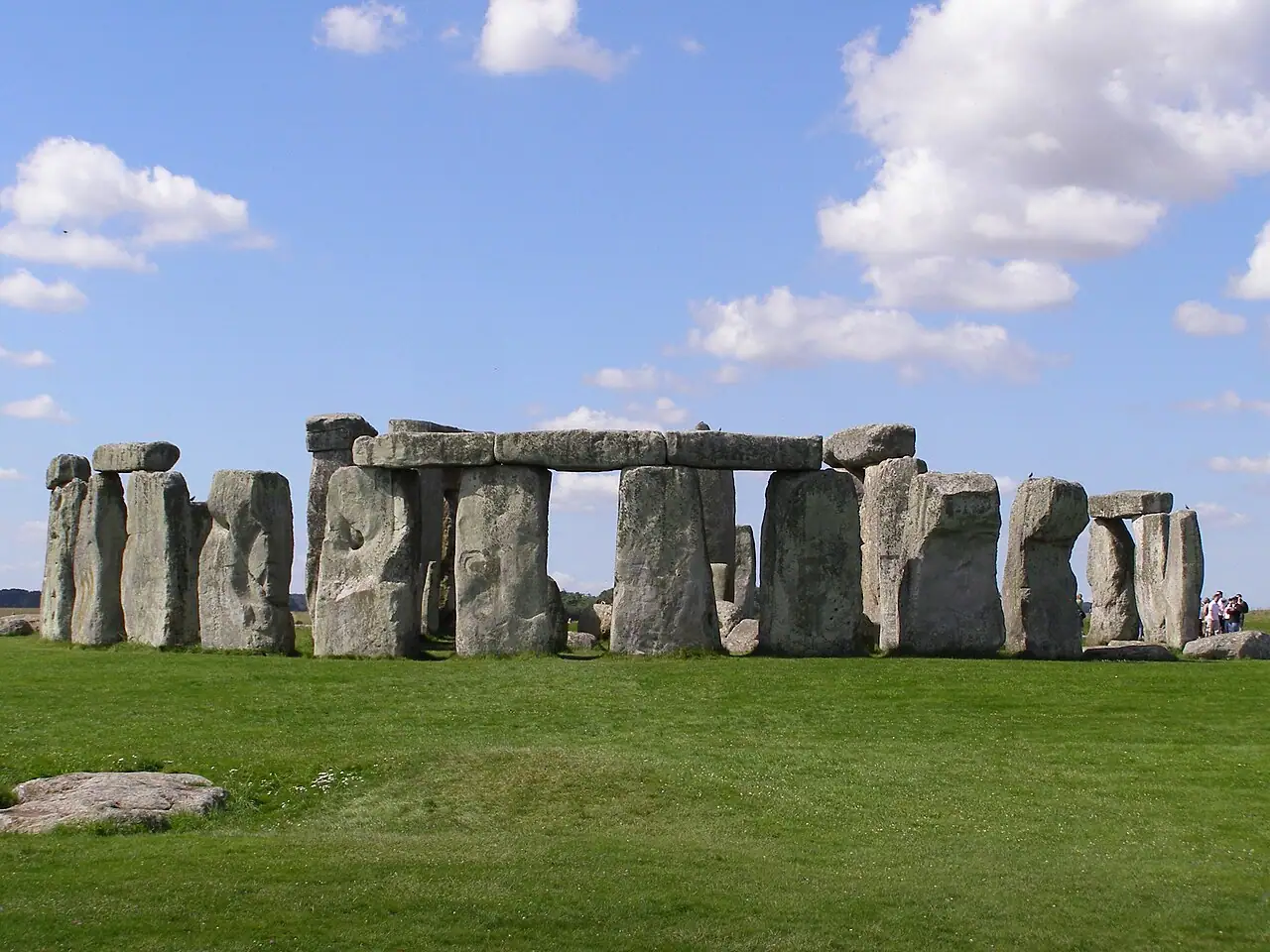
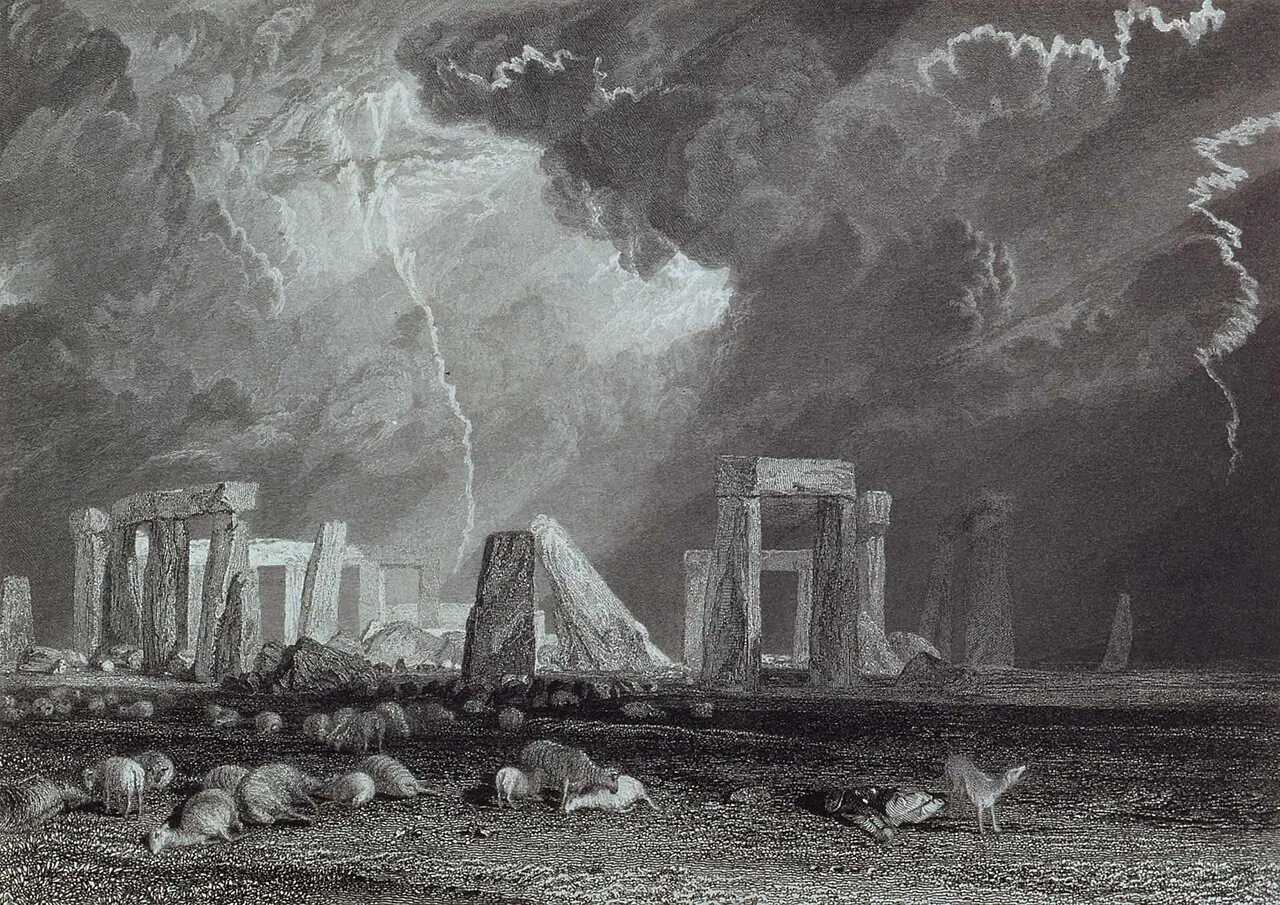 Then · 1829Now · TodayMove across the image to compare
Stonehenge: how it was designed
- 01
Stone built like timber
The lintels sit on the uprights with mortise-and-tenon joints and lock to each other with tongue-and-groove joints — techniques borrowed from carpentry. It is a timber building translated into stone.
- 02
Shaped to look right
The lintels are gently curved to follow the circle, and the uprights taper slightly, so the ring reads as continuous from the ground. The best-dressed faces point toward the centre and the solstice axis.
- 03
An axis on the sky
The monument's main axis runs north-east to south-west: toward sunrise at the summer solstice and sunset at the winter solstice. The Avenue, an earthwork path, approaches along the same line.
- 04
Stones from three regions
Research published in 2020 traced most sarsens to West Woods, about 25 km north. The bluestones came from the Preseli Hills in Wales, and a 2024 study traced the six-tonne Altar Stone to north-east Scotland.
Construction timeline
A circular ditch and bank are dug; pits around the edge (the Aubrey Holes) may have held the first bluestones.
The sarsen circle and trilithon horseshoe are raised; bluestones are set inside.
The bluestones are rearranged several times into the circle and oval seen today.
A trilithon falls in 1797; an outer sarsen and its lintel fall in 1900.
Leaning stones are straightened and fallen ones re-erected, several set in concrete.
A new visitor centre opens 2.5 km away and the road beside the stones is closed and grassed over.
How the design changed
Re-erected in the 20th century
Several stones you see standing were put back in place between 1901 and 1964. The work is documented and the stones are original, but their exact positions are partly the work of 20th-century engineers.
The setting given back
For decades a road ran a few metres from the Heel Stone. Closing it in 2013 restored the monument's link to its ancient Avenue.
Who built it
Stonehenge was built by Neolithic farming communities and finished in the Early Bronze Age, over roughly 1,500 years. Excavations at nearby Durrington Walls found a large settlement and evidence of feasting that many archaeologists link to the builders. No names, plans or written records exist.
Where it is
Wiltshire, England, United Kingdom · 51.1789° N, 1.8261° W · Open in OpenStreetMap. Nearest in this guide: Mont-Saint-Michel (284 km), Eiffel Tower (391 km), Notre-Dame (395 km).
 284 km391 km395 kmStonehenge
Drag to pan, use + and − or double-click to zoom, and tap any pin for a preview.
Stonehenge: questions people ask
How old is Stonehenge?
Its earliest phase, a circular ditch and bank, dates to about 3000 BCE. The large sarsen stones were raised around 2500 BCE, and the bluestones were rearranged until about 1600 BCE.
Where did the Stonehenge stones come from?
Most sarsens came from West Woods, about 25 km north. The smaller bluestones came from the Preseli Hills in Wales, about 240 km away, and the Altar Stone from north-east Scotland.
Why is Stonehenge aligned with the solstices?
Its main axis points to midsummer sunrise and midwinter sunset, which suggests the builders used it to mark the turning points of the year. Its exact purpose is still debated.
Were the Stonehenge stones moved in modern times?
Yes. Fallen and leaning stones were re-erected or straightened in campaigns between 1901 and 1964, and some were set in concrete. The stones are original.
Sources & image credits
- UNESCO World Heritage Centre — Stonehenge, Avebury and Associated Sites
- Wikipedia — Stonehenge
- English Heritage — Stonehenge history and research
- Current photograph: Stonehenge2007 07 30.jpg by garethwiscombe, CC BY 2.0 — original on Wikimedia Commons · licence.
- Historic image: Robert Wallis Stonehenge.jpg by Robert William Wallis / J. M. W. Turner, Public domain — original on Wikimedia Commons.
- Coordinates from Wikidata. Images resized and converted to WebP; otherwise unaltered. Checked October 25, 2026.
More to wander into
- World monument · c. 11th–15th century CEGreat ZimbabweMortarless granite walls of an African kingdom, once falsely credited to outsiders.
- World monument · c. 1971 BCE – 1st century BCEKarnak Temple ComplexA temple that grew for 2,000 years, with a forest of 134 stone columns.
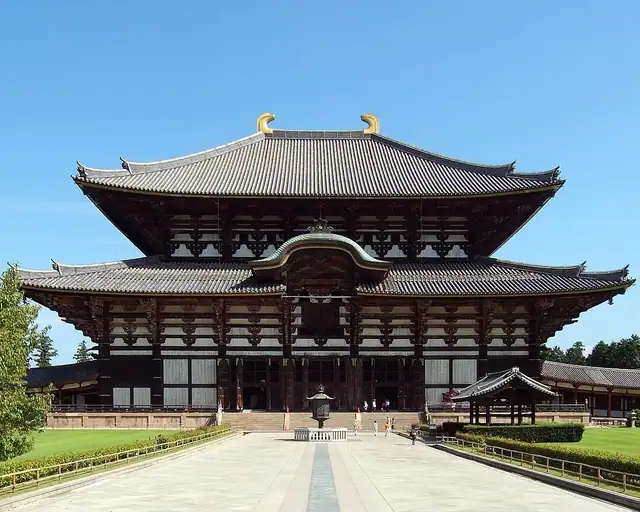
- World monument · 752 CE; hall rebuilt 1195 and 1709Tōdai-ji Great Buddha HallA giant bronze Buddha in a wooden hall rebuilt smaller after two fires.
- World monument · 2004–2010 (opened 4 January 2010)Burj KhalifaAn 828-metre tower shaped to confuse the wind.
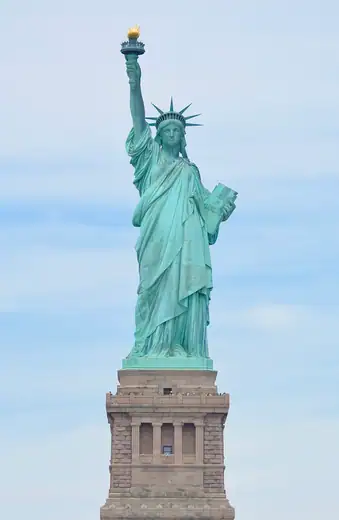
- World monument · 1876–1886 (dedicated 28 October 1886)Statue of LibertyA copper skin on Eiffel's iron skeleton, turned green by the sea air.
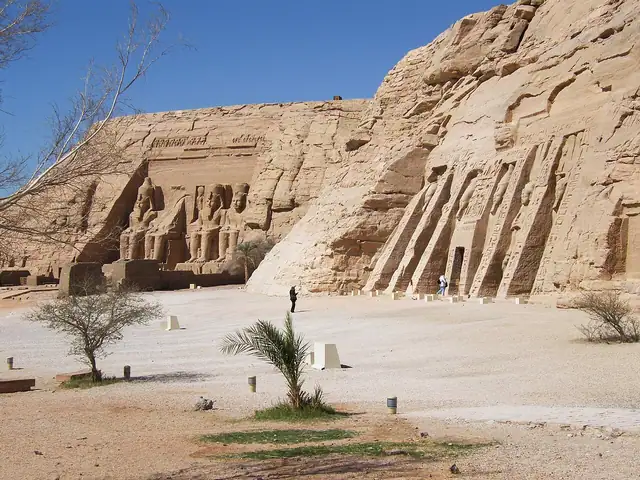
- World monument · c. 1264–1244 BCE; moved 1964–1968Abu Simbel TemplesRamesses II's cliff temples, sawn into blocks and rebuilt on higher ground in the 1960s.

Get the ideas, not the noise.
Sign up with Google and we’ll send you short UX psychology tips by email — why people tap, stall and leave, and what to do about it. Unsubscribe anytime. Prefer something to keep? Get the free Laws of UX guide as a PDF.