 By
At a glance: Abu Simbel Temples
- Location
- Aswan Governorate, Nubia, Egypt
- Built
- c. 1264–1244 BCE; moved 1964–1968
- Type
- Rock-cut temples · Sacred
- Style
- New Kingdom Egyptian
- Commissioned by
- Pharaoh Ramesses II
- Architects & builders
- Not recorded; relocation by an international team for UNESCO
- Materials
- Sandstone cliff, carved in place
- Size
- Four seated colossi about 20 m tall; façade about 33 m high
Abu Simbel: what it is
The Great Temple was dedicated to Amun, Ra-Horakhty and Ptah, and to the deified Ramesses II himself. The smaller temple honours Hathor and Ramesses' chief wife Nefertari, whose statues on the façade stand as tall as the king's — unusual in Egyptian art.
Placed at Egypt's southern frontier in Nubia, the temples were a statement of power to anyone travelling down the Nile. Over the centuries sand buried them until the Swiss explorer Johann Ludwig Burckhardt saw the top of the façade in 1813.
Abu Simbel, then and now
Real images only: an earlier view and a recent photograph, each credited and linked to its original file. Switch between them or compare side by side.
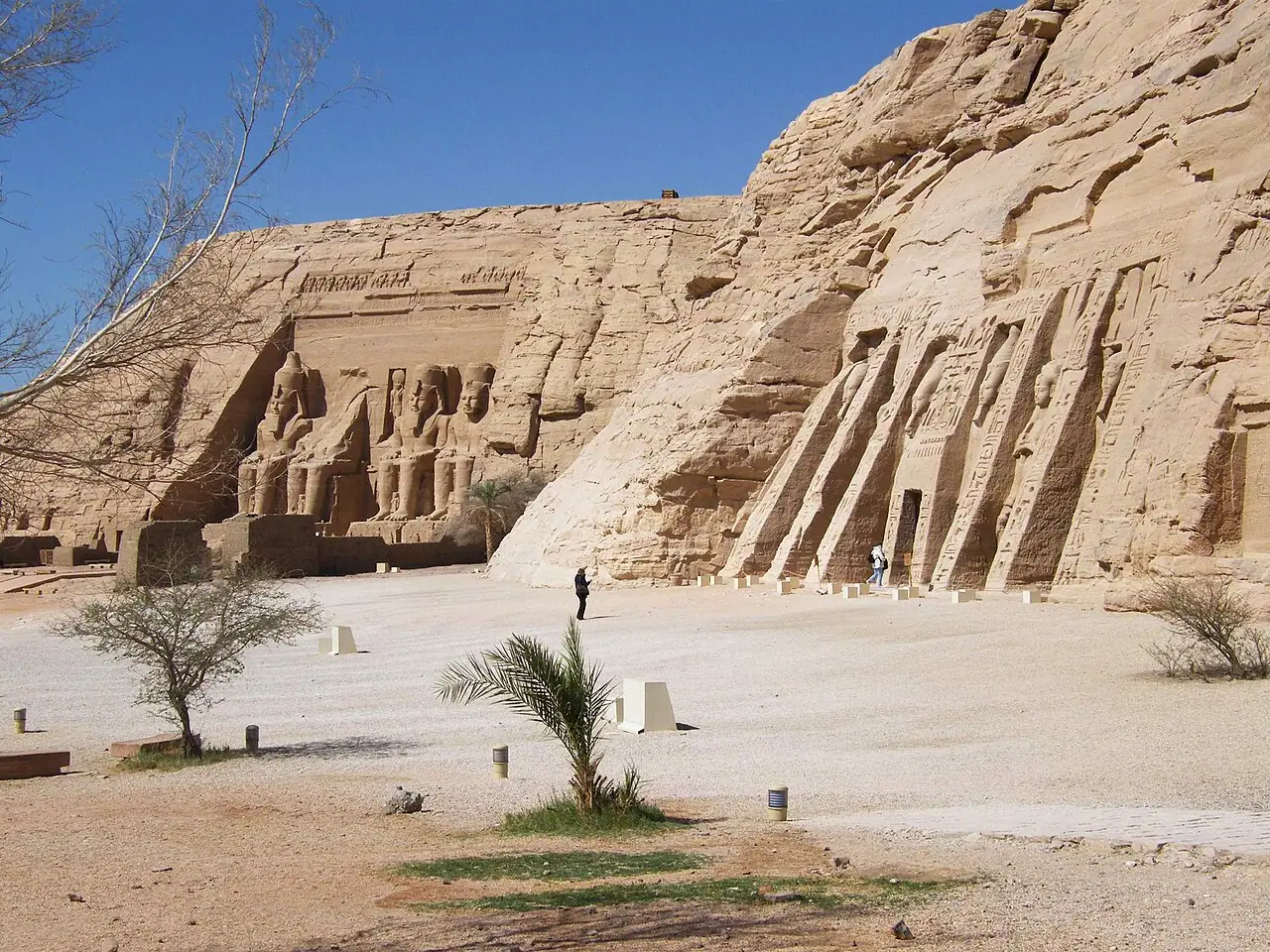
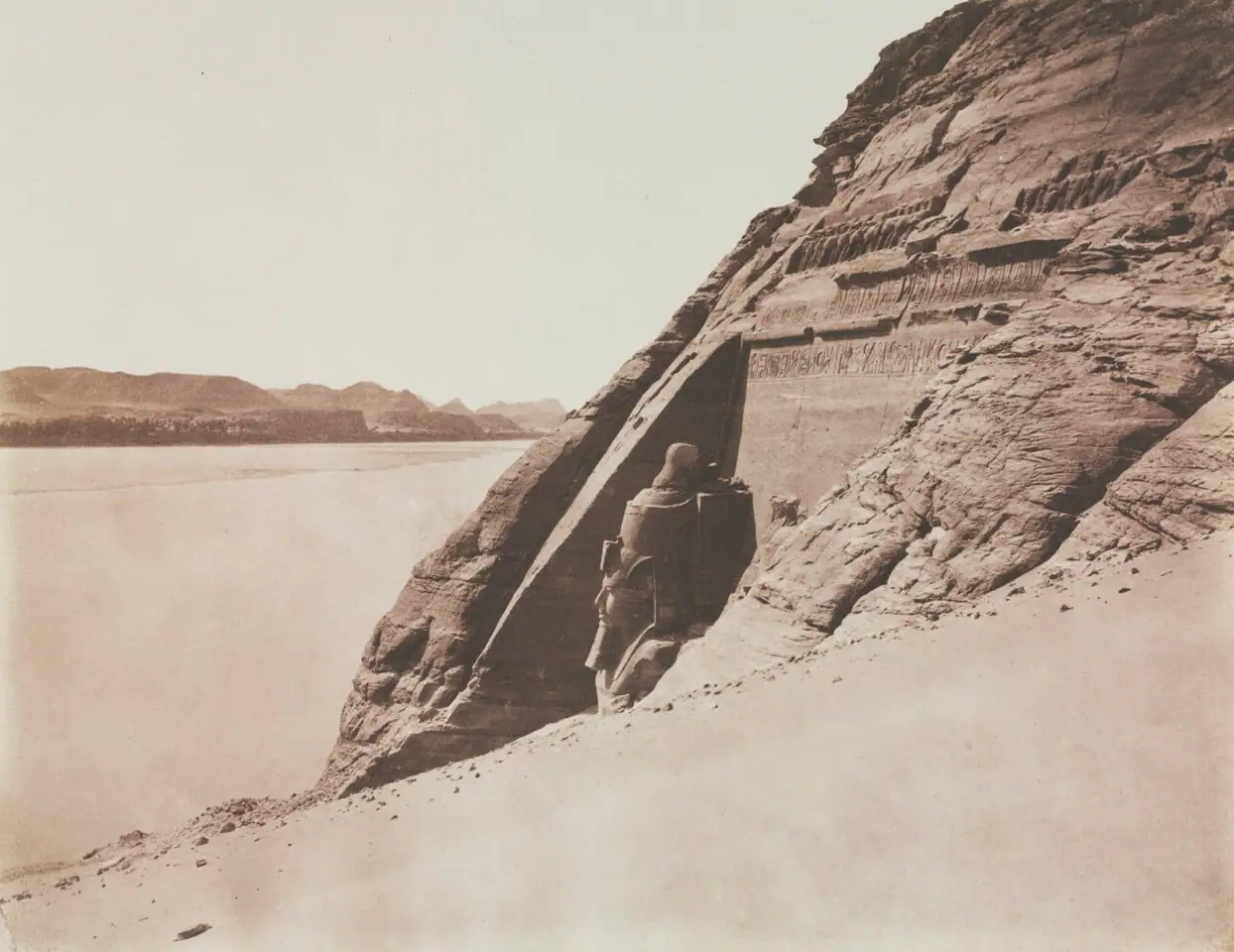 Then · 1851Now · TodayMove across the image to compare
Abu Simbel: how it was designed
- 01
A temple cut, not built
The whole temple, from colossi to sanctuary, was carved out of the living sandstone cliff, running about 60 metres into the rock through two pillared halls lined with statues of Ramesses as Osiris.
- 02
A sunbeam on a schedule
Twice a year, around 22 February and 22 October, the rising sun shines down the axis and lights three of the four statues in the sanctuary. Ptah, a god linked to the underworld, stays in shadow.
- 03
Scale as message
The colossi are about 20 metres tall. Smaller figures of the royal family stand between their legs, keeping the king's body the dominant form on the façade.
- 04
Battle reliefs inside
The main hall's walls show Ramesses at the Battle of Kadesh, one of the most detailed battle records to survive from the ancient world.
Construction timeline
Work begins early in Ramesses II's reign.
The temples are completed; an earthquake soon after breaks one of the colossi.
Burckhardt sees the half-buried façade.
Giovanni Battista Belzoni clears enough sand to enter the Great Temple.
An international UNESCO campaign cuts the temples into blocks and rebuilds them 65 m higher and about 200 m back from the river.
Inscribed with the other Nubian monuments on the UNESCO World Heritage List.
How the design changed
A mountain made of concrete
The rebuilt temples sit inside an artificial hill supported by a large reinforced-concrete dome, built so the interiors and façades look as they did in the original cliff.
The sun arrives a day later
Moving the temple shifted its orientation slightly: the solar alignment days now fall about one day later than in antiquity.
The broken colossus left as found
The second colossus from the left lost its head and torso in ancient times. The relocation team kept the fallen pieces where they lay rather than restoring the figure.
Who built it
The temples were carved by royal workshops for Ramesses II, who ruled for about 66 years and built more than any other pharaoh. The relocation was one of the largest engineering rescues in history, led by an international consortium of firms and funded through a UNESCO appeal backed by around 50 countries.
Where it is
Aswan Governorate, Nubia, Egypt · 22.3369° N, 31.6256° E · Open in OpenStreetMap. Nearest in this guide: Karnak (390 km), Great Pyramid (851 km), Petra (966 km).
 390 km851 km966 kmAbu Simbel
Drag to pan, use + and − or double-click to zoom, and tap any pin for a preview.
Abu Simbel: questions people ask
Why was Abu Simbel moved?
The Aswan High Dam would have flooded the temples under Lake Nasser. Between 1964 and 1968 they were cut into blocks and rebuilt 65 metres higher on an artificial hill.
When does the sun light up Abu Simbel?
Around 22 February and 22 October each year the rising sun shines into the sanctuary and lights the statues of Amun, Ra-Horakhty and Ramesses II.
How tall are the statues at Abu Simbel?
The four seated statues of Ramesses II on the Great Temple's façade are each about 20 metres tall.
Who built Abu Simbel?
Pharaoh Ramesses II commissioned both temples in the 13th century BCE. The smaller one honours his queen Nefertari and the goddess Hathor.
Sources & image credits
- UNESCO World Heritage Centre — Nubian Monuments from Abu Simbel to Philae
- Wikipedia — Abu Simbel
- Wikipedia — International Campaign to Save the Monuments of Nubia
- Current photograph: Ramsis, Aswan Governorate, Egypt - panoramio.jpg by youssef_alam, CC BY 3.0 — original on Wikimedia Commons · licence.
- Historic image: Félix Teynard - Large Speos - View taken from the Sand Slope (Temple of Ramesses II), Abu S - 1992.234 - Cleveland Museum of Art.tif by Félix Teynard, CC0 — original on Wikimedia Commons · licence.
- Coordinates from Wikidata. Images resized and converted to WebP; otherwise unaltered. Checked October 25, 2026.
More to wander into
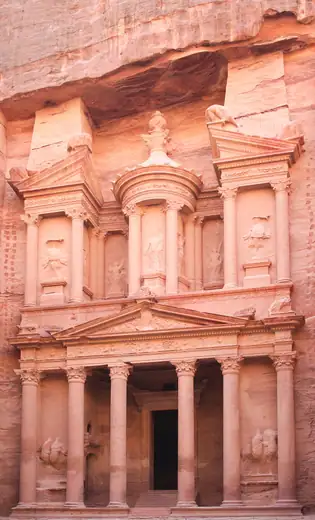
- World monument · Al-Khazneh: about the 1st century CEPetra — Al-Khazneh (the Treasury)A royal tomb carved top-down into a rose-red cliff, at the end of a narrow gorge.
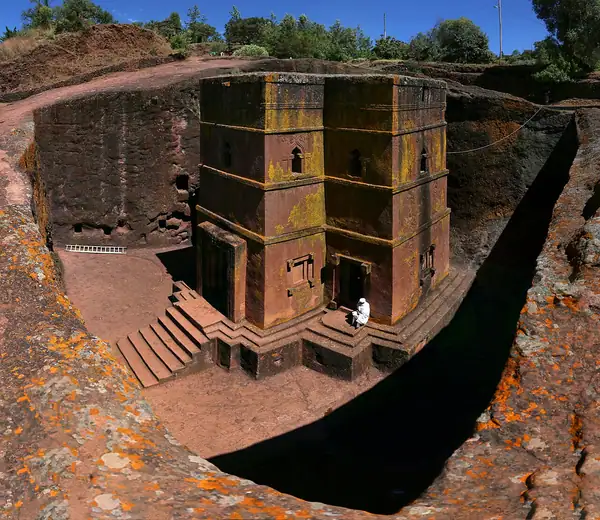
- World monument · Late 12th – early 13th century (traditional dating)Rock-Hewn Churches of LalibelaChurches carved down into the ground, still in daily use after 800 years.
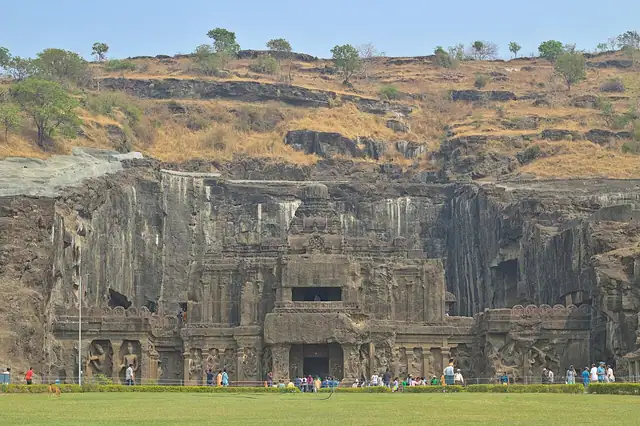
- World monument · 8th century CE (mainly under Krishna I, r. c. 756–773)Kailasa Temple, ElloraA complete temple carved downward out of one basalt hill.
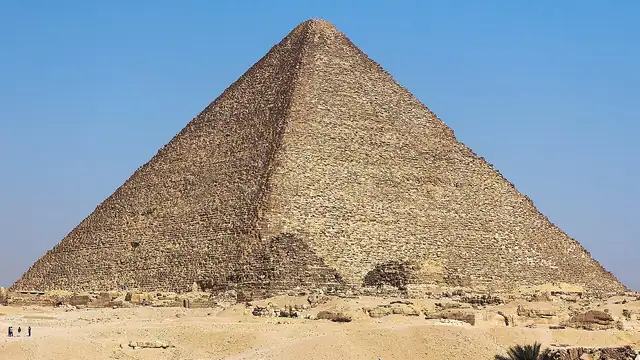
- World monument · c. 2600–2560 BCEGreat Pyramid of GizaKhufu's tomb, the tallest structure on Earth for almost 4,000 years.
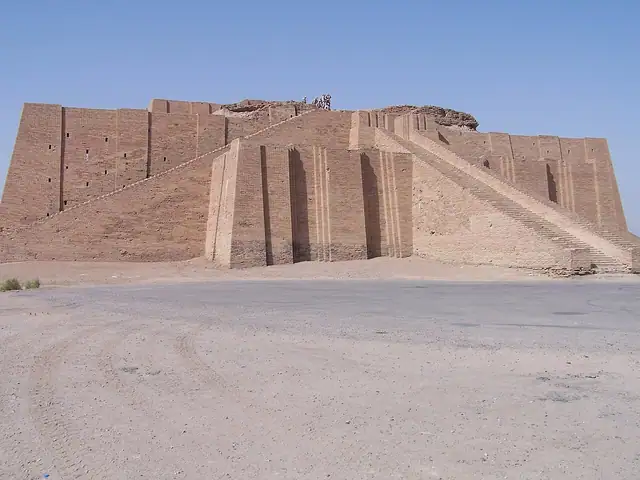
- World monument · c. 21st century BCEZiggurat of UrA 4,100-year-old Sumerian stepped platform for the moon god, rebuilt in parts in the 1980s.
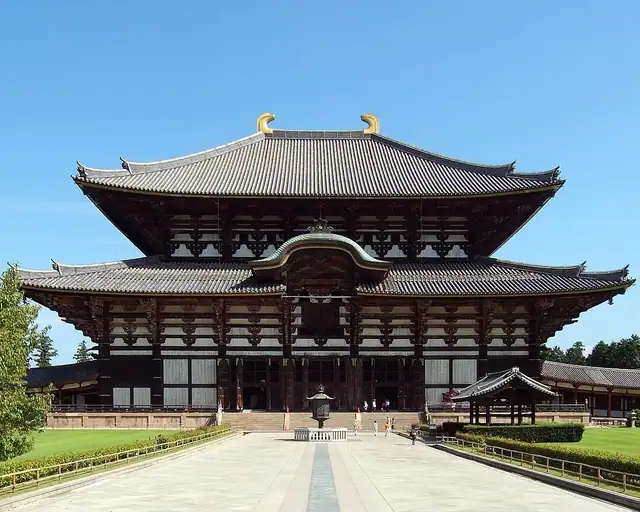
- World monument · 752 CE; hall rebuilt 1195 and 1709Tōdai-ji Great Buddha HallA giant bronze Buddha in a wooden hall rebuilt smaller after two fires.
Get the ideas, not the noise.
Sign up with Google and we’ll send you short UX psychology tips by email — why people tap, stall and leave, and what to do about it. Unsubscribe anytime. Prefer something to keep? Get the free Laws of UX guide as a PDF.