 By
At a glance: Kailasa Temple, Ellora
- Location
- Ellora, Chhatrapati Sambhajinagar district, Maharashtra, India
- Built
- 8th century CE (mainly under Krishna I, r. c. 756–773)
- Type
- Monolithic rock-cut temple (Cave 16) · Sacred
- Style
- Dravidian, Rashtrakuta period
- Commissioned by
- Rashtrakuta king Krishna I
- Architects & builders
- Not recorded
- Materials
- Carved from a single basalt hillside
- Size
- Main shrine about 30 m tall, in a pit cut over 30 m deep
- UNESCO
- Ellora Caves (1983)
Kailasa Temple: what it is
Ellora's 34 caves, carved between about the 6th and 10th centuries, include Buddhist, Hindu and Jain monuments side by side. Kailasa is the most ambitious: instead of tunnelling into the cliff, the builders cut three trenches into the hillside and freed a huge block, which they carved into a free-standing temple.
The result is a full Dravidian temple complex — gateway, Nandi pavilion, assembly hall and towered sanctuary — standing in a courtyard surrounded by sheer rock walls and cloisters.
Kailasa Temple, then and now
Real images only: an earlier view and a recent photograph, each credited and linked to its original file. Switch between them or compare side by side.
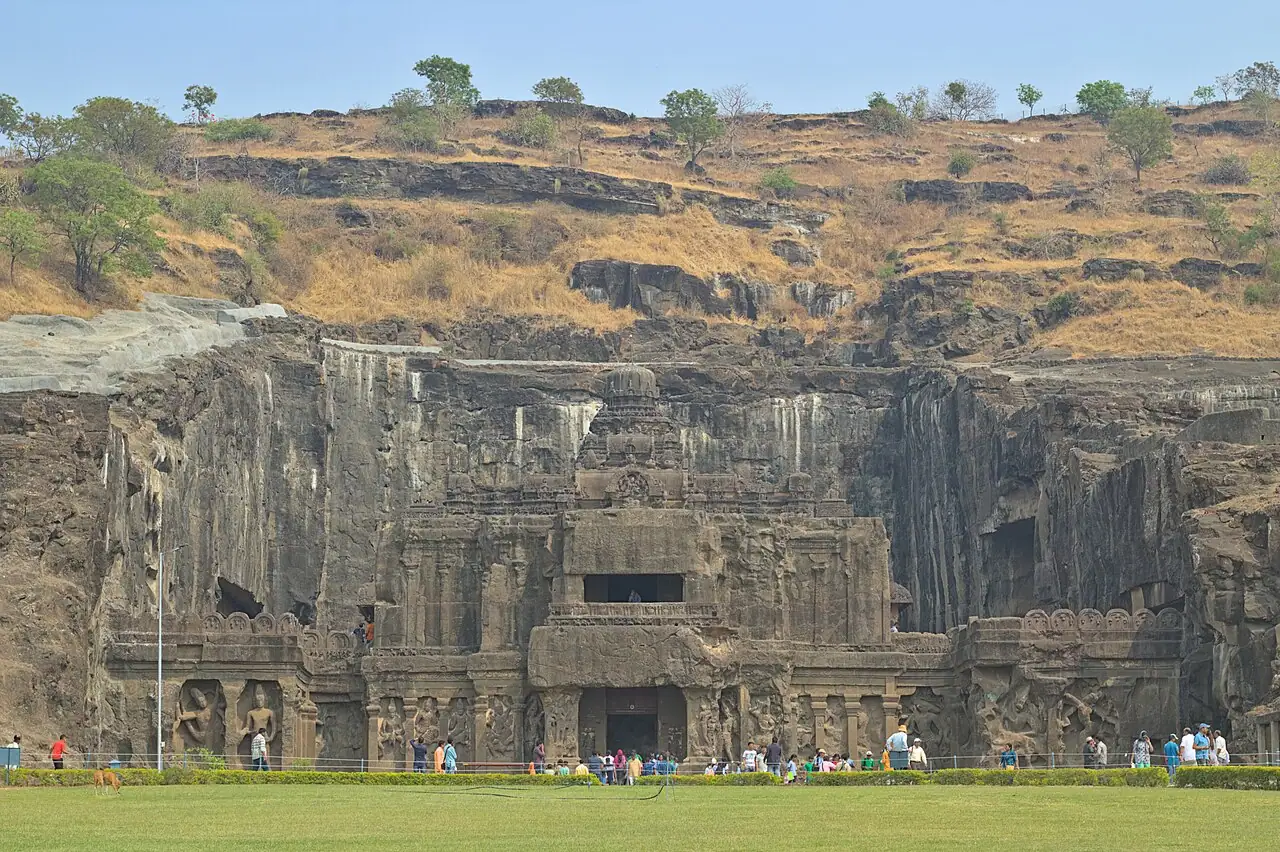
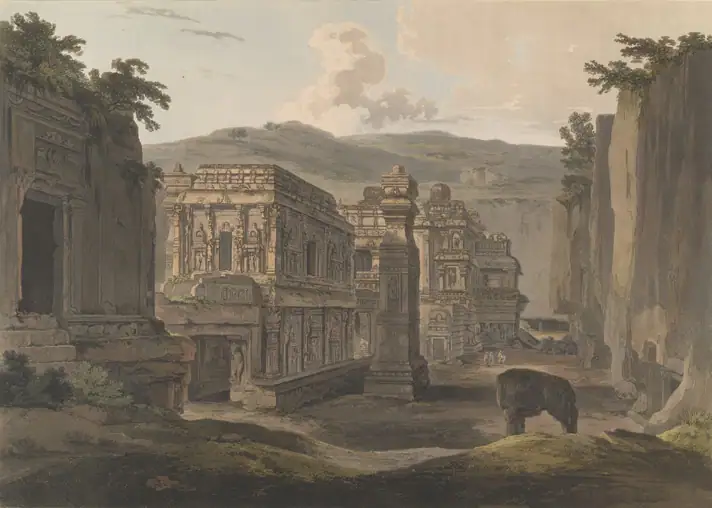 Then · 1803Now · TodayMove across the image to compare
Kailasa Temple: how it was designed
- 01
Subtraction, not construction
Every element was produced by removing rock. There was no way to add a stone later, so the plan had to be fixed before cutting began and mistakes could not be corrected.
- 02
Mount Kailash in stone
The towered shrine rises in diminishing tiers like a mountain, and traces show it was once covered in white plaster, to resemble the snowy peak of Shiva's home.
- 03
A two-storey plan
The temple stands on a high plinth carved with elephants and lions that appear to carry it. The upper level holds the halls and shrine, linked by rock bridges to the Nandi pavilion and gateway.
- 04
Sculpture as architecture
Panels show scenes from the Ramayana and Mahabharata and a famous relief of Ravana shaking Mount Kailash, carved deep enough to read from across the courtyard.
Construction timeline
Most of the temple is carved under Krishna I; a copper-plate inscription is generally linked to this work.
Subsidiary shrines and side galleries are added by later Rashtrakuta rulers.
Thomas Daniell publishes aquatints based on drawings by James Wales, bringing Ellora to European attention.
The Ellora Caves are inscribed on the UNESCO World Heritage List.
How the design changed
White mountain to dark rock
The plaster and paint that once covered the temple have mostly gone, leaving the dark basalt we see today. Fragments of painting survive on ceilings in the upper halls.
Weathered, not rebuilt
Because it is carved from one rock, Kailasa cannot be rebuilt. Conservation focuses on drainage, cracks and protecting the sculpture from water.
Who built it
The Rashtrakuta dynasty, which ruled much of the Deccan from the 8th to the 10th century, sponsored the work. The architects are unknown, but the design draws on the Virupaksha temple at Pattadakal, built by the Chalukyas whom the Rashtrakutas had displaced, suggesting craftsmen from that tradition were involved.
Where it is
Ellora, Chhatrapati Sambhajinagar district, Maharashtra, India · 20.0239° N, 75.1792° E · Open in OpenStreetMap. Nearest in this guide: Sanchi Stupa (466 km), Hampi (539 km), Taj Mahal (847 km).
 466 km539 km847 kmKailasa Temple
Drag to pan, use + and − or double-click to zoom, and tap any pin for a preview.
Built around the same time
| Monument | Country | Built | Gap |
|---|---|---|---|
| Tōdai-ji Great Buddha Hall | Japan | 752 CE; hall rebuilt 1195 and 1709 | 11 years earlier |
| Borobudur | Indonesia | c. late 8th – early 9th century | 24 years later |
| Mosque–Cathedral of Córdoba | Spain | 785–988 (mosque); cathedral nave from 1523 | 29 years later |
| Mont-Saint-Michel | France | 708–1521; spire 1897 | 48 years earlier |
Kailasa Temple: questions people ask
How was the Kailasa Temple carved?
Builders cut three deep trenches into a basalt hillside to isolate a block of rock, then carved the temple from the top down, removing stone rather than adding it.
Who built the Kailasa Temple at Ellora?
It was carved mainly under the Rashtrakuta king Krishna I in the 8th century CE. The names of its architects and carvers are not recorded.
Is Kailasa the largest monolithic temple?
Yes. It is generally described as the largest monolithic rock-cut temple in the world.
Which god is the Kailasa Temple dedicated to?
It is dedicated to Shiva and represents Mount Kailash, his mythological home in the Himalayas.
Sources & image credits
- UNESCO World Heritage Centre — Ellora Caves
- Wikipedia — Kailasa Temple, Ellora
- Archaeological Survey of India — Ellora Caves
- Current photograph: Ellora Cave 16 Kailasa Temple.jpg by Shishirdasika, CC BY-SA 4.0 — original on Wikimedia Commons · licence.
- Historic image: S.W. view of Kailasa by Thomas Daniell and James Wales, 1803.jpg by Thomas Daniell / After James Wales, Public domain — original on Wikimedia Commons.
- Coordinates from Wikidata. Images resized and converted to WebP; otherwise unaltered. Checked October 25, 2026.
More to wander into
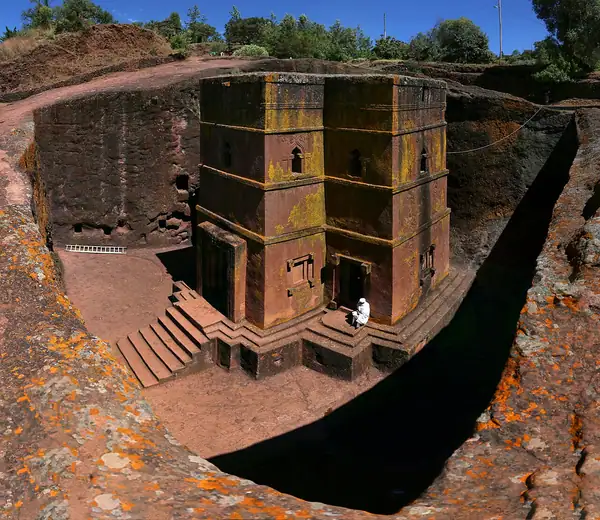
- World monument · Late 12th – early 13th century (traditional dating)Rock-Hewn Churches of LalibelaChurches carved down into the ground, still in daily use after 800 years.
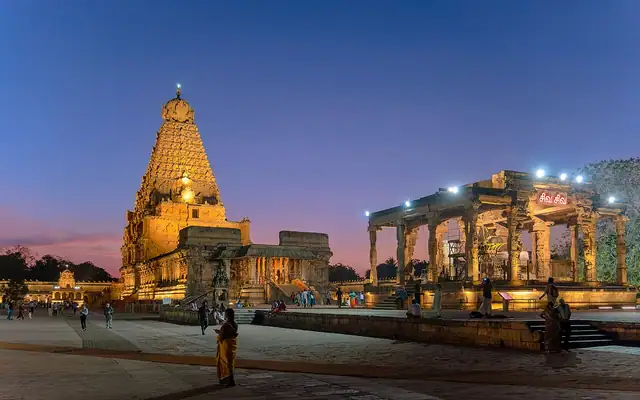
- World monument · c. 1003–1010 CEBrihadeeswarar Temple, ThanjavurRajaraja Chola's 66-metre granite tower, signed by its architect.
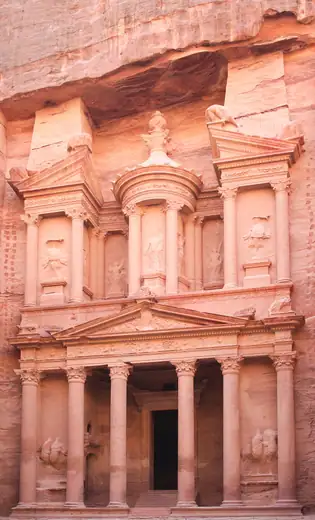
- World monument · Al-Khazneh: about the 1st century CEPetra — Al-Khazneh (the Treasury)A royal tomb carved top-down into a rose-red cliff, at the end of a narrow gorge.
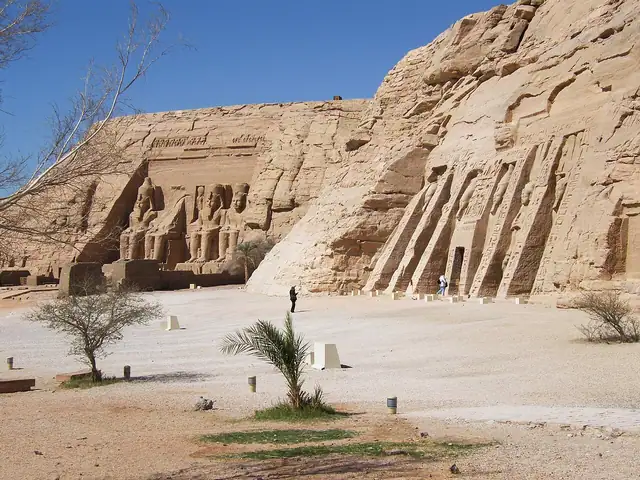
- World monument · c. 1264–1244 BCE; moved 1964–1968Abu Simbel TemplesRamesses II's cliff temples, sawn into blocks and rebuilt on higher ground in the 1960s.
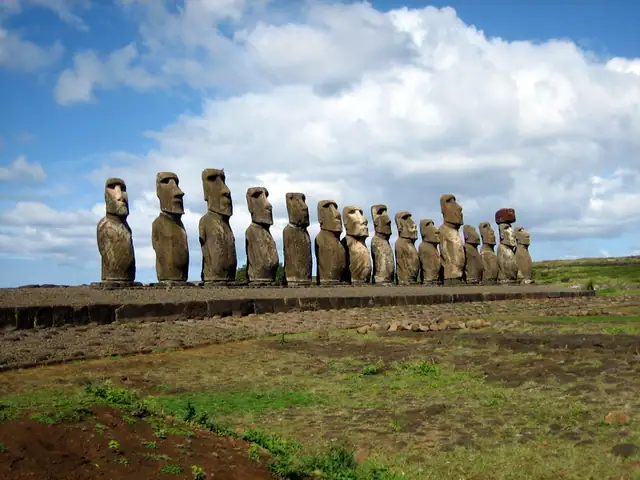
- World monument · c. 1250–1500 CE (most statues)Moai of Rapa NuiAncestor statues carved from a volcano, toppled, then raised again by cranes.
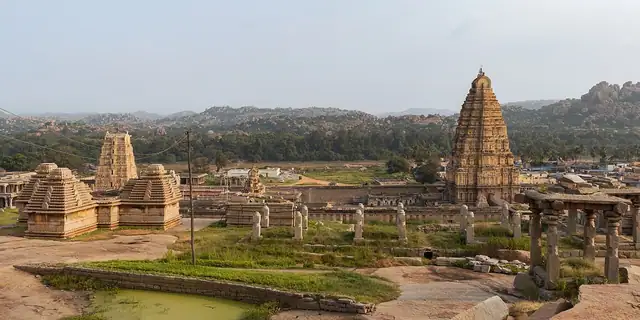
- World monument · Mainly 14th–16th century (Vijayanagara Empire, 1336–1565)Hampi (Group of Monuments)A sacked imperial capital of granite temples, stone chariots and singing pillars.
Get the ideas, not the noise.
Sign up with Google and we’ll send you short UX psychology tips by email — why people tap, stall and leave, and what to do about it. Unsubscribe anytime. Prefer something to keep? Get the free Laws of UX guide as a PDF.