 By
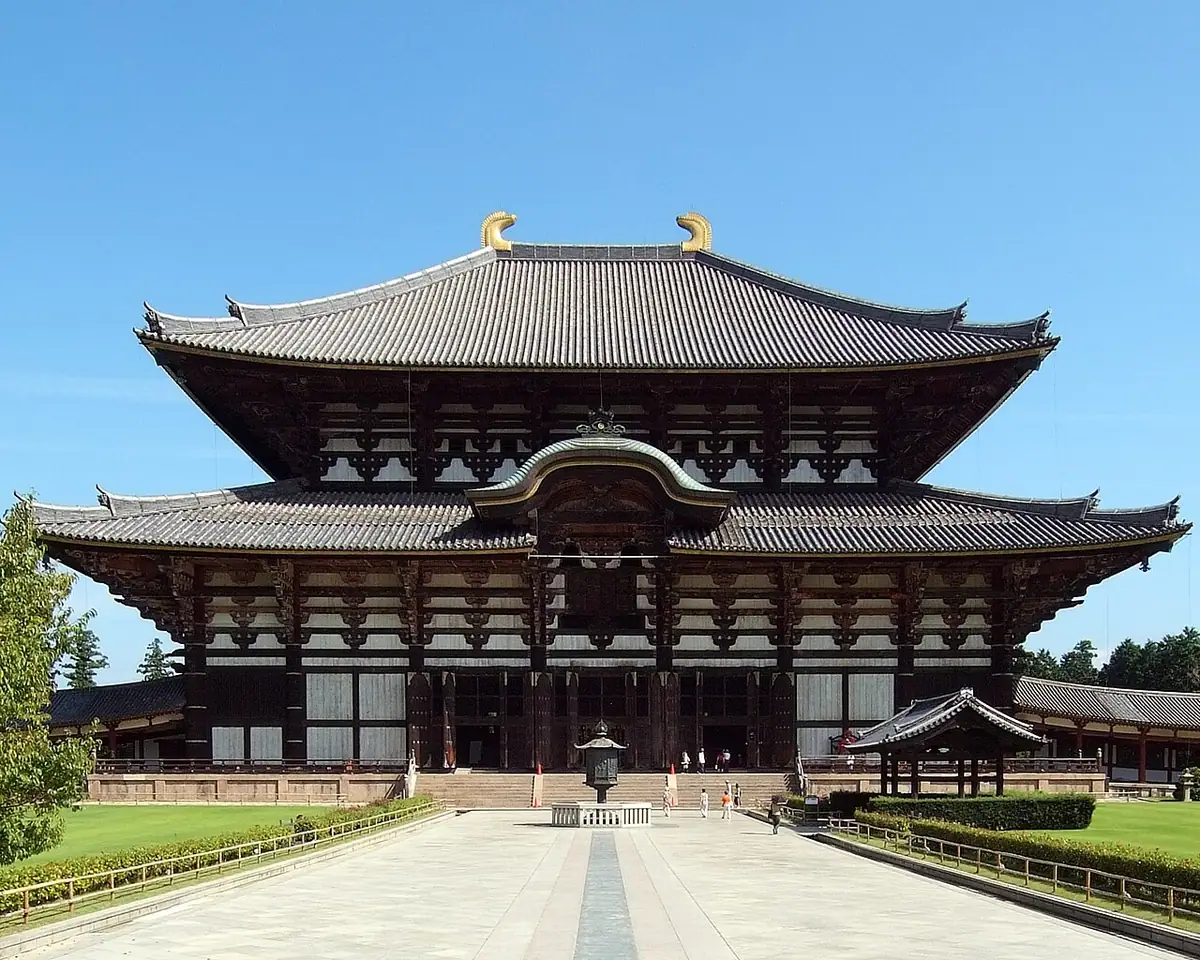
At a glance: Tōdai-ji Great Buddha Hall
- Location
- Nara, Japan
- Built
- 752 CE; hall rebuilt 1195 and 1709
- Type
- Buddhist temple hall · Sacred
- Style
- Japanese Buddhist; 1709 hall in Edo-period style
- Commissioned by
- Emperor Shōmu
- Architects & builders
- Original Buddha cast under Kuninaka no Kimimaro; 1195 rebuilding led by the monk Chōgen
- Materials
- Timber hall; bronze Buddha
- Size
- Hall about 57 m wide and 49 m tall; Buddha about 15 m tall
Tōdai-ji: what it is
Emperor Shōmu ordered the Great Buddha in 743, during epidemics and unrest, as the head temple of a network of provincial temples. Casting it consumed much of Japan's bronze output, and its eye-opening ceremony in 752 drew monks from as far as India.
The hall that covers it is the temple's defining building. Its history — built huge, burned, rebuilt in a new style, burned again, rebuilt smaller — is a short history of Japanese timber architecture.
Tōdai-ji: how it was designed
- 01
A building sized to a statue
The hall exists to enclose the Buddha. Its height and the opening in the façade let the Buddha's face be seen from the entrance at festival times.
- 02
Timber at its limit
Spanning such a hall in wood needs enormous columns. For the 1709 rebuilding, single trees large enough could not be found, so columns were made by binding smaller timbers around a core.
- 03
A new style from China
Chōgen's 1195 rebuilding introduced the Daibutsuyō ('Great Buddha style'), with bracket arms inserted through the columns. The Great South Gate (Nandaimon) survives from that time.
Construction timeline
Emperor Shōmu issues the decree for the Great Buddha.
The eye-opening ceremony dedicates the Buddha; the original hall is completed soon after.
The hall burns during the Genpei War.
The monk Chōgen completes the rebuilding in the new Daibutsuyō style.
The hall burns again in fighting between warlords.
The present hall is completed, about 57 m wide instead of the original 86 m.
A Meiji-era restoration reinforces the roof with steel trusses.
How the design changed
A third narrower
Lack of large timber and funds meant the 1709 hall was built with seven bays across instead of eleven. Its height was kept, so its proportions differ from the original.
A patched Buddha
The statue was damaged in both fires. Its head dates from the Edo period and parts of the body from the 12th century; only portions of the original 8th-century bronze survive.
Who built it
Emperor Shōmu commissioned it; the monk Gyōki raised support across the country, and the sculptor Kuninaka no Kimimaro oversaw the casting. After the fire of 1180 the monk Chōgen led the rebuilding, working with the Chinese caster Chen Heqing; the 1709 hall was funded largely through the shogunate and public donations.
Where it is
Nara, Japan · 34.6892° N, 135.8397° E · Open in OpenStreetMap. Nearest in this guide: Himeji Castle (106 km), Great Wall (1,810 km), Forbidden City (1,811 km).
 106 km1,810 km1,811 kmTōdai-ji
Drag to pan, use + and − or double-click to zoom, and tap any pin for a preview.
Built around the same time
| Monument | Country | Built | Gap |
|---|---|---|---|
| Kailasa Temple, Ellora | India | 8th century CE (mainly under Krishna I, r. c. 756–773) | 11 years later |
| Borobudur | Indonesia | c. late 8th – early 9th century | 35 years later |
| Mont-Saint-Michel | France | 708–1521; spire 1897 | 37 years earlier |
| Mosque–Cathedral of Córdoba | Spain | 785–988 (mosque); cathedral nave from 1523 | 40 years later |
Tōdai-ji: questions people ask
How big is the Great Buddha at Tōdai-ji?
The seated bronze Buddha is about 15 metres tall and is one of the largest bronze statues in Japan.
Is Tōdai-ji the largest wooden building in the world?
Its Great Buddha Hall was long called the largest wooden building in the world and remains one of the largest, even though the 1709 rebuild is smaller than the original.
Why was Tōdai-ji rebuilt?
The hall burned in 1180 and again in 1567 during civil wars. It was rebuilt in 1195 and, in its present form, in 1709.
When was Tōdai-ji built?
It was founded in the 740s under Emperor Shōmu; the Great Buddha was dedicated in 752.
Sources & image credits
- UNESCO World Heritage Centre — Historic Monuments of Ancient Nara
- Wikipedia — Tōdai-ji
- Tōdai-ji — official site
- Current photograph: Tōdai-ji Kon-dō.jpg by Wiiii, CC BY-SA 3.0 — original on Wikimedia Commons · licence.
- Coordinates from Wikidata. Images resized and converted to WebP; otherwise unaltered. Checked October 25, 2026.
More to wander into
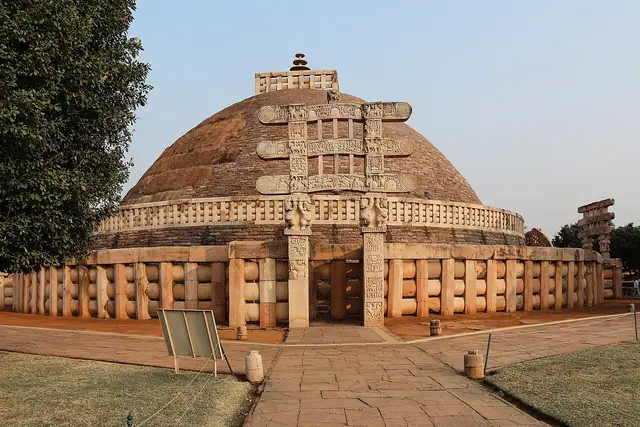
- World monument · 3rd century BCE – 1st century CEGreat Stupa at SanchiAshoka's stupa, with four gateways that tell the Buddha's story without showing him.
- World monument · Founded c. 6th–10th century CE; present form 1775Shwedagon PagodaA 99-metre stupa wrapped in gold, rebuilt after every earthquake.
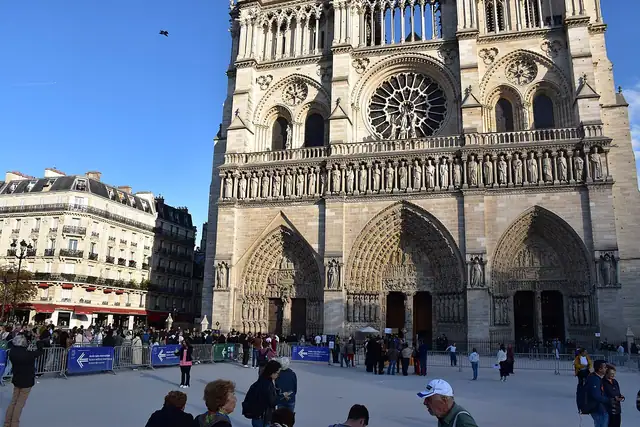
- World monument · 1163–c. 1345; restored 1845–1864 and 2019–2024Notre-Dame de ParisA Gothic cathedral restored in the 1800s and rebuilt after the 2019 fire.
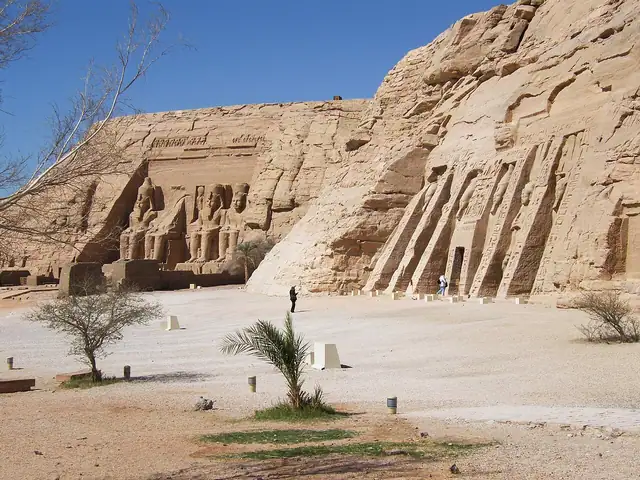
- World monument · c. 1264–1244 BCE; moved 1964–1968Abu Simbel TemplesRamesses II's cliff temples, sawn into blocks and rebuilt on higher ground in the 1960s.
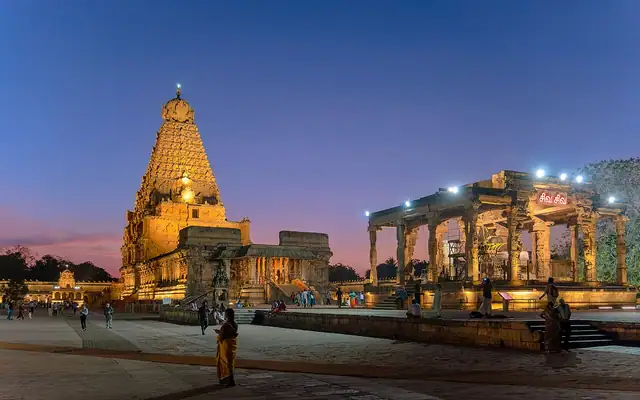
- World monument · c. 1003–1010 CEBrihadeeswarar Temple, ThanjavurRajaraja Chola's 66-metre granite tower, signed by its architect.
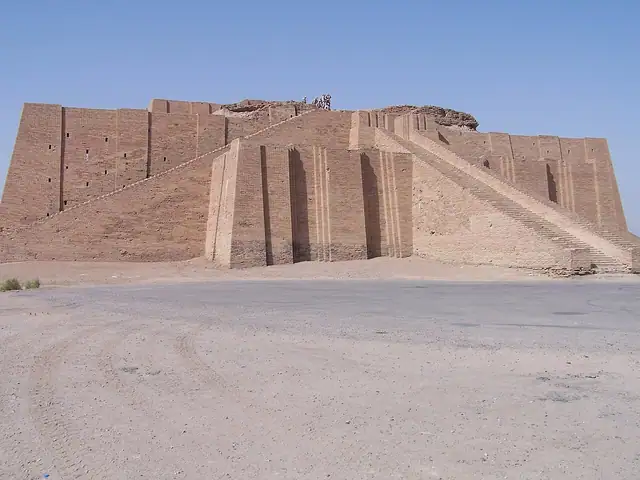
- World monument · c. 21st century BCEZiggurat of UrA 4,100-year-old Sumerian stepped platform for the moon god, rebuilt in parts in the 1980s.

Get the ideas, not the noise.
Sign up with Google and we’ll send you short UX psychology tips by email — why people tap, stall and leave, and what to do about it. Unsubscribe anytime. Prefer something to keep? Get the free Laws of UX guide as a PDF.