 By
At a glance: Mont-Saint-Michel
- Location
- Normandy, France
- Built
- 708–1521; spire 1897
- Type
- Abbey on a tidal island · Sacred
- Style
- Romanesque and Gothic
- Commissioned by
- Bishop Aubert of Avranches; Benedictine monks; the dukes of Normandy and kings of France
- Architects & builders
- Not recorded for most phases; spire and statue by Victor Petitgrand and Emmanuel Frémiet (1897)
- Materials
- Granite
- Size
- About 92 m from the rock base to the tip of the statue
Mont-Saint-Michel: what it is
The Mont rises about 80 metres from tidal flats at the mouth of the Couesnon river, where tides are among the strongest in Europe. Pilgrims crossed the sands at low tide to reach the shrine of the Archangel Michael.
During the Hundred Years' War the fortified Mont never fell to the English. After the Revolution the abbey became a prison until 1863, and was restored as a monument from 1874.
Mont-Saint-Michel, then and now
Real images only: an earlier view and a recent photograph, each credited and linked to its original file. Switch between them or compare side by side.
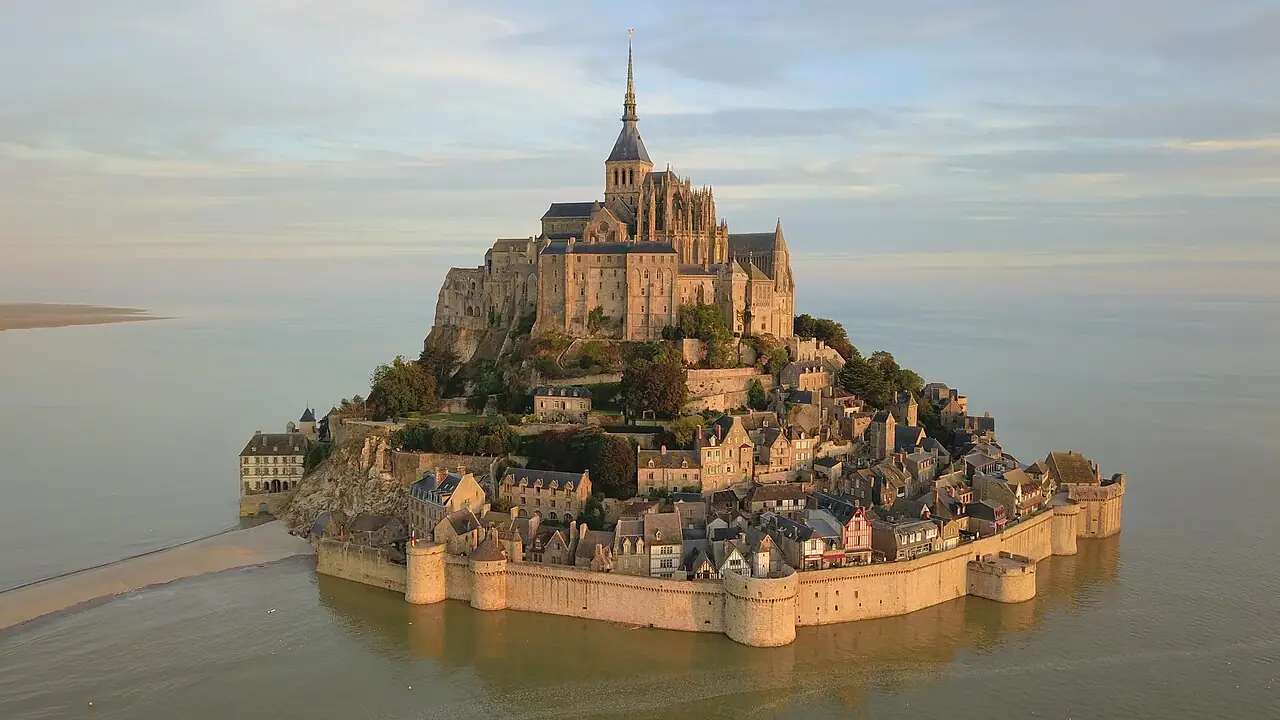
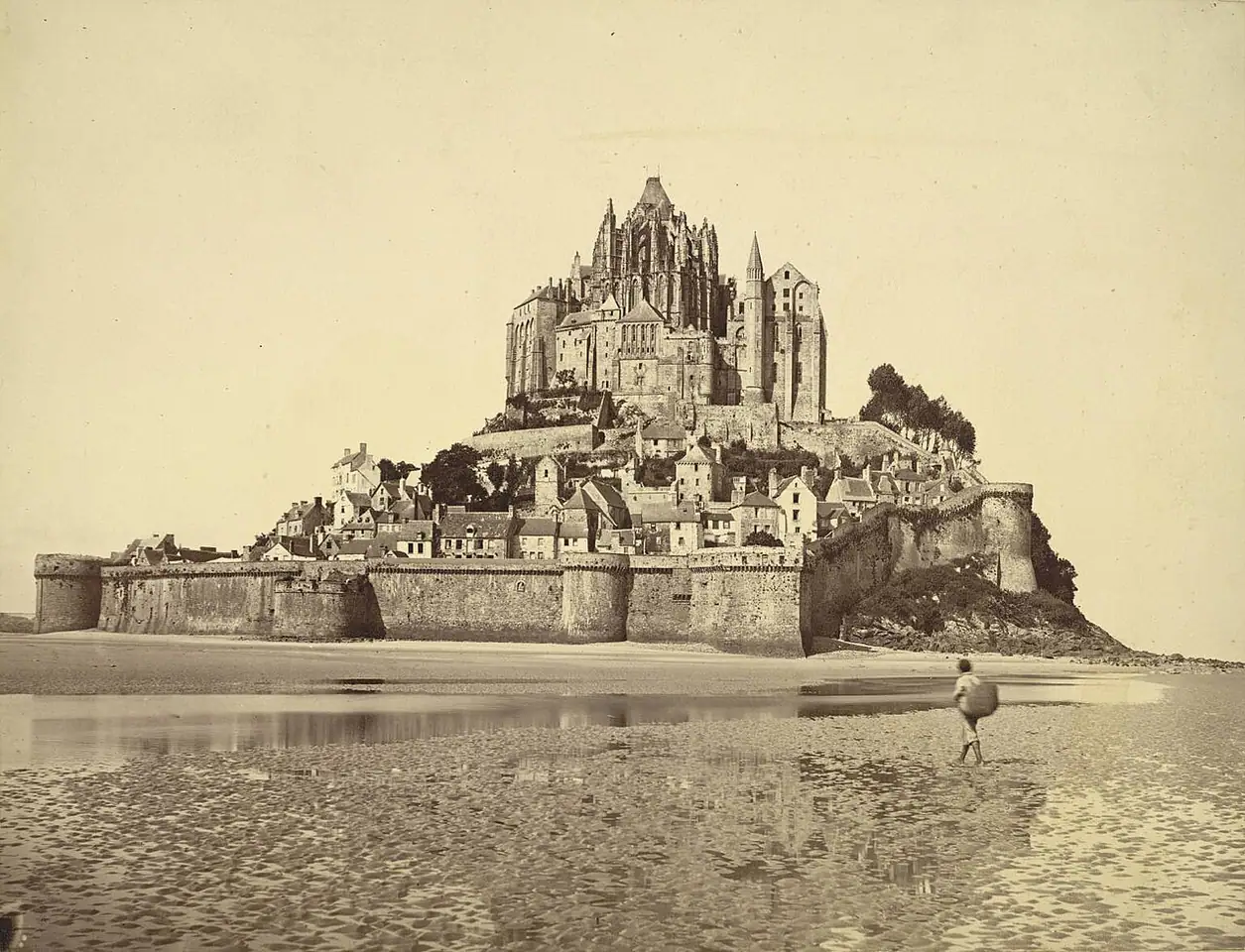 Then · c. 1865Now · TodayMove across the image to compare
Mont-Saint-Michel: how it was designed
- 01
A church on a pyramid of crypts
The summit was too small for a large church, so builders created a platform of crypts and walls around the peak, and set the abbey church on top.
- 02
The Merveille
On the steep north side, three storeys of Gothic halls stack one above another — almonry and storeroom, then guest hall and knights' hall, then refectory and cloister — a feat of building on a slope.
- 03
A town that spirals up
The village winds up the rock inside ramparts, so the whole Mont reads as a single pyramid from the base to the gilded statue of St Michael.
Construction timeline
Bishop Aubert of Avranches builds an oratory after visions of the Archangel Michael.
Benedictine monks settle on the Mont.
A Romanesque abbey church is built on the summit.
The Gothic Merveille is built on the north side.
The Romanesque choir, collapsed in 1421, is rebuilt in Flamboyant Gothic style.
A neo-Gothic spire with Emmanuel Frémiet's gilded statue of St Michael is added.
A light bridge replaces the 1879 causeway; a dam on the Couesnon flushes silt from the bay.
How the design changed
Two churches in one
The abbey church has a Romanesque nave and a later Gothic choir, so its two halves show four centuries of change in a single building.
Island lost and regained
The 1879 causeway let sediment build up and threatened to join the Mont to the mainland. The project completed in 2015 restored the tidal flow so it is again surrounded by water at high spring tides.
Who built it
Bishop Aubert founded the sanctuary; Benedictine abbots led the medieval building campaigns, supported by the dukes of Normandy and the French crown. The 19th-century restoration was led by architects including Édouard Corroyer and Victor Petitgrand.
Where it is
Normandy, France · 48.6358° N, 1.5103° W · Open in OpenStreetMap. Nearest in this guide: Eiffel Tower (280 km), Stonehenge (284 km), Notre-Dame (284 km).
 280 km284 km284 kmMont-Saint-Michel
Drag to pan, use + and − or double-click to zoom, and tap any pin for a preview.
Built around the same time
| Monument | Country | Built | Gap |
|---|---|---|---|
| Tōdai-ji Great Buddha Hall | Japan | 752 CE; hall rebuilt 1195 and 1709 | 37 years later |
| Kailasa Temple, Ellora | India | 8th century CE (mainly under Krishna I, r. c. 756–773) | 48 years later |
| Borobudur | Indonesia | c. late 8th – early 9th century | 72 years later |
| Mosque–Cathedral of Córdoba | Spain | 785–988 (mosque); cathedral nave from 1523 | 77 years later |
Mont-Saint-Michel: questions people ask
When was Mont-Saint-Michel built?
A chapel was founded in 708; the abbey church was begun in 1023, the Gothic Merveille built in 1211–1228 and the choir finished in 1521. The spire was added in 1897.
Is Mont-Saint-Michel an island?
It is a tidal island. Since the 2014 bridge replaced the old causeway, it is surrounded by water at the highest spring tides.
Who lives on Mont-Saint-Michel?
Only a few dozen permanent residents, plus a small community of monks and nuns who maintain religious life in the abbey.
What is the Merveille at Mont-Saint-Michel?
A three-storey Gothic building on the north side of the abbey, built 1211–1228, containing halls, a refectory and the cloister.
Sources & image credits
- UNESCO World Heritage Centre — Mont-Saint-Michel and its Bay
- Wikipedia — Mont-Saint-Michel
- Centre des monuments nationaux — Abbaye du Mont-Saint-Michel
- Current photograph: Mont-Saint-Michel vu du ciel.jpg by Amaustan, CC BY-SA 4.0 — original on Wikimedia Commons · licence.
- Historic image: Mont Saint-Michel, General View of Eastern side of Islet (3486761446).jpg by Cornell University Library, No restrictions — original on Wikimedia Commons · licence.
- Coordinates from Wikidata. Images resized and converted to WebP; otherwise unaltered. Checked October 25, 2026.
More to wander into
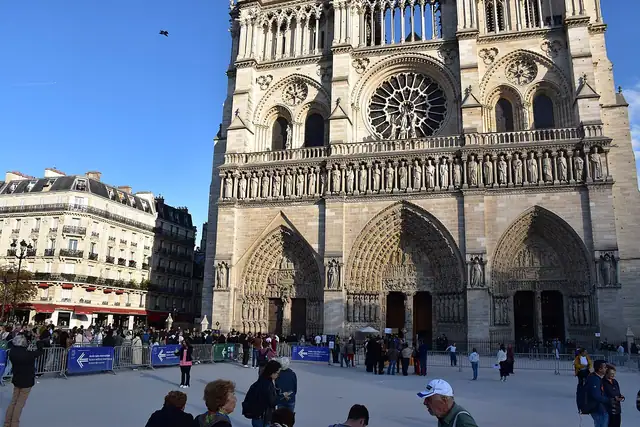
- World monument · 1163–c. 1345; restored 1845–1864 and 2019–2024Notre-Dame de ParisA Gothic cathedral restored in the 1800s and rebuilt after the 2019 fire.
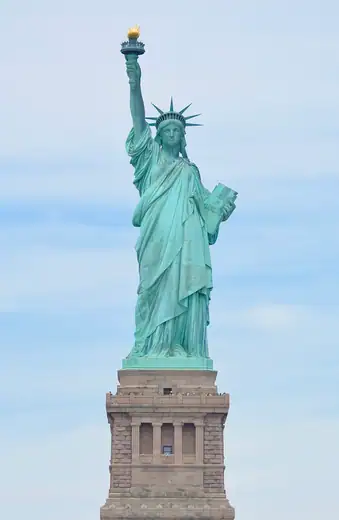
- World monument · 1876–1886 (dedicated 28 October 1886)Statue of LibertyA copper skin on Eiffel's iron skeleton, turned green by the sea air.
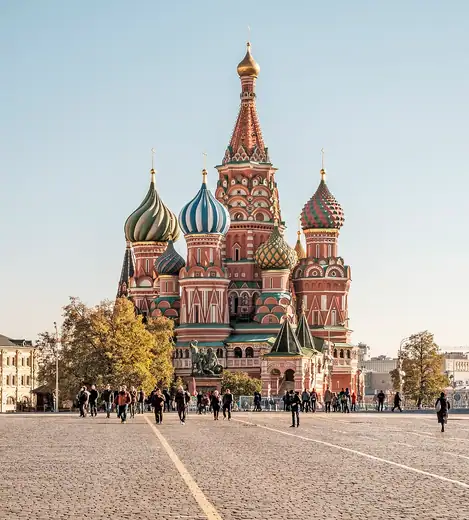
- World monument · 1555–1561Saint Basil's CathedralNine chapels in one, painted into a riot of colour a century after it was built.
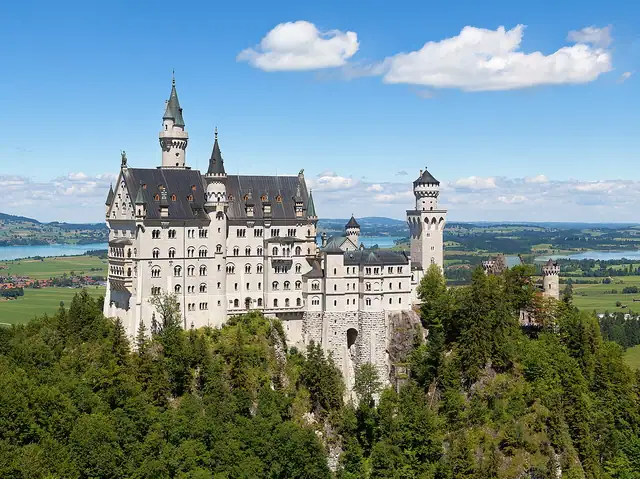
- World monument · 1869–1886 (never completed)Neuschwanstein CastleA king's medieval fantasy with central heating, designed by a stage painter.
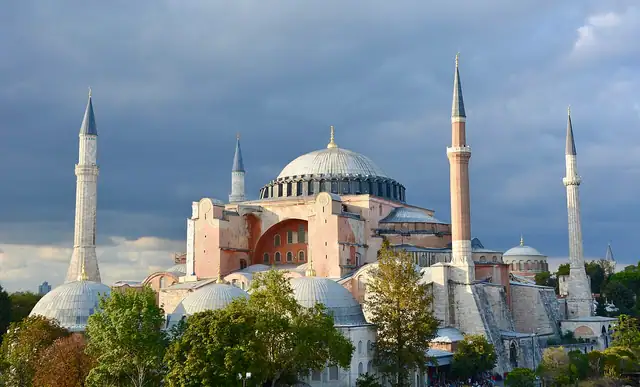
- World monument · 532–537 CEHagia SophiaJustinian's cathedral whose dome seems to float on a ring of light.
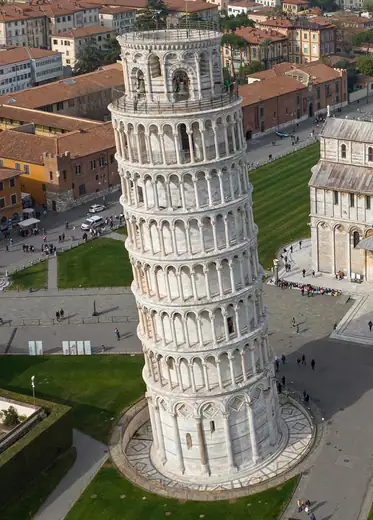
- World monument · 1173–1372Leaning Tower of PisaA bell tower that began to lean in 1178 and was built curved to compensate.
Get the ideas, not the noise.
Sign up with Google and we’ll send you short UX psychology tips by email — why people tap, stall and leave, and what to do about it. Unsubscribe anytime. Prefer something to keep? Get the free Laws of UX guide as a PDF.