 By
At a glance: Notre-Dame de Paris
- Location
- Île de la Cité, Paris, France
- Built
- 1163–c. 1345; restored 1845–1864 and 2019–2024
- Type
- Cathedral · Sacred
- Style
- French Gothic
- Commissioned by
- Bishop Maurice de Sully and the Diocese of Paris
- Architects & builders
- Jean de Chelles, Pierre de Montreuil and others; restoration by Lassus and Viollet-le-Duc
- Materials
- Limestone, oak roof frame, lead roofing
- Size
- Towers 69 m; spire 96 m
Notre-Dame: what it is
Bishop Maurice de Sully began the cathedral to replace older churches on the Île de la Cité. Work moved from the choir in the east to the west façade, with the towers finished around 1250 and the chapels between the buttresses added later.
By the 1800s the cathedral was badly damaged by neglect and the French Revolution. Victor Hugo's 1831 novel helped spark a campaign that led to a long restoration by Jean-Baptiste Lassus and Eugène Viollet-le-Duc.
Notre-Dame, then and now
Real images only: an earlier view and a recent photograph, each credited and linked to its original file. Switch between them or compare side by side.
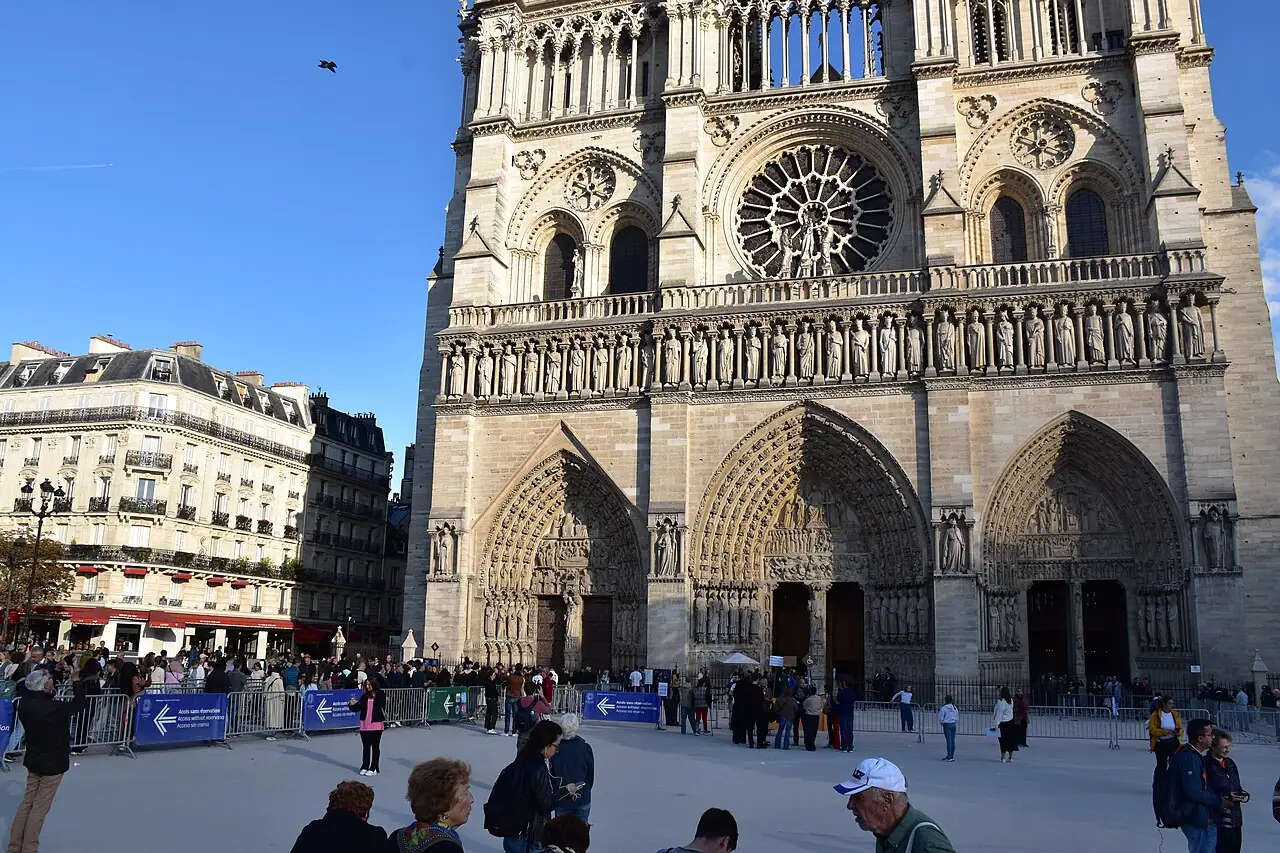
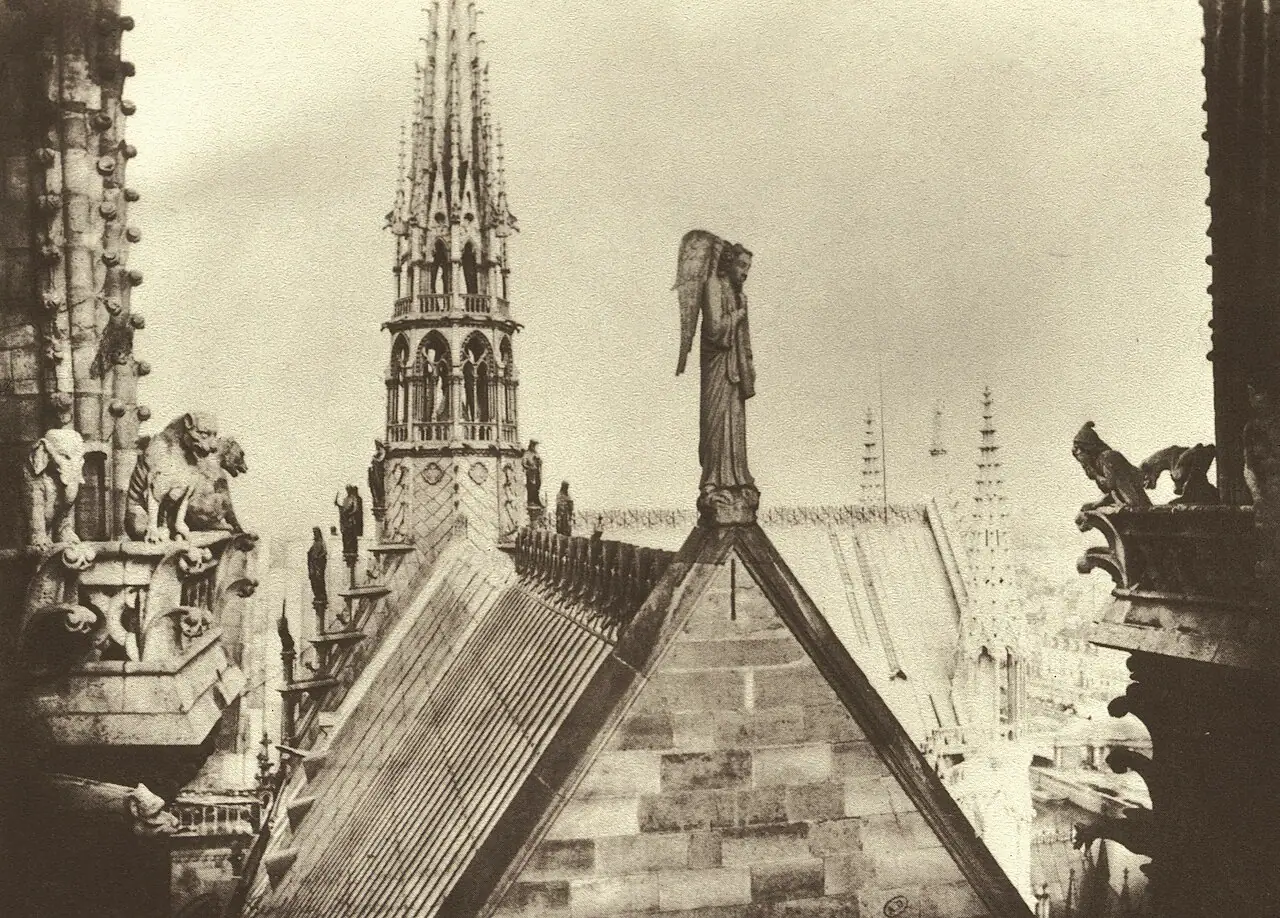 Then · 1865Now · TodayMove across the image to compare
Notre-Dame: how it was designed
- 01
Flying buttresses
External arches carry the thrust of the high vaults out to piers beyond the walls. Freed from holding the vaults up, the walls could become thin frames for glass.
- 02
Rose windows
The north and south transept roses, made in the mid-13th century, are each about 13 metres across, with tracery radiating from the centre like spokes.
- 03
A façade of proportions
The west front is divided into three portals, a gallery of kings, a rose window and twin towers, ordered by horizontal bands that give it calm, balanced proportions.
- 04
The forest
The medieval roof frame was made from oak trees felled in the 12th–13th centuries, so dense it was nicknamed 'the forest'. It burned in 2019 and was rebuilt in oak using traditional joinery.
Construction timeline
Construction begins; the choir is completed by about 1182.
The west façade and towers are built.
New transept façades and rose windows by Jean de Chelles and Pierre de Montreuil.
Revolutionaries behead the statues of the Gallery of Kings, mistaking them for French kings.
Lassus and Viollet-le-Duc restore the cathedral; a new spire is completed in 1859.
Fire destroys the roof frame and spire.
The restored cathedral reopens, with the spire rebuilt to Viollet-le-Duc's design.
How the design changed
A 19th-century spire, rebuilt
The original 13th-century spire was removed in 1786. Viollet-le-Duc designed a new, taller one in 1859. After the 2019 fire, France chose to rebuild it exactly to his design.
Chimeras and kings
Many of the famous grotesque chimeras on the gallery and the kings on the façade were made in the 1800s restoration rather than in the Middle Ages.
Who built it
Maurice de Sully launched the project; the first master masons are unknown. Jean de Chelles and Pierre de Montreuil are documented for the transepts. The 2019–2024 restoration employed some 2,000 craftspeople, including carpenters, stonemasons, roofers and glass restorers.
Where it is
Île de la Cité, Paris, France · 48.8530° N, 2.3498° E · Open in OpenStreetMap. Nearest in this guide: Eiffel Tower (4 km), Mont-Saint-Michel (284 km), Stonehenge (395 km).
 4 km284 km395 kmNotre-Dame
Drag to pan, use + and − or double-click to zoom, and tap any pin for a preview.
Built around the same time
| Monument | Country | Built | Gap |
|---|---|---|---|
| Leaning Tower of Pisa | Italy | 1173–1372 | 10 years later |
| Rock-Hewn Churches of Lalibela | Ethiopia | Late 12th – early 13th century (traditional dating) | 18 years later |
| Qutub Minar | India | c. 1199–1220; top rebuilt 1369 | 36 years later |
| Angkor Wat | Cambodia | c. 1113–1150 CE | 50 years earlier |
Notre-Dame: questions people ask
When was Notre-Dame built?
Construction started in 1163 and the cathedral was essentially complete by around 1345, with major restorations in 1845–1864 and after the 2019 fire.
When did Notre-Dame reopen after the fire?
It reopened on 7–8 December 2024, five years after the fire of 15 April 2019.
Is Notre-Dame's spire original?
No. The medieval spire was removed in 1786. The spire before the fire was designed by Viollet-le-Duc in 1859, and it was rebuilt to that design after 2019.
What are flying buttresses?
Arched supports outside the walls that transfer the push of the stone vaults to outer piers, allowing thinner walls and larger windows.
Sources & image credits
- UNESCO World Heritage Centre — Paris, Banks of the Seine
- Wikipedia — Notre-Dame de Paris
- Rebâtir Notre-Dame de Paris — the restoration authority
- Current photograph: West facade of Notre-Dame de Paris in 2025 - 003.jpg by Wyslijp16, CC BY 4.0 — original on Wikimedia Commons · licence.
- Historic image: The new spire of Notre Dame de Paris, 1865.jpg by Charles Marville, Public domain — original on Wikimedia Commons.
- Coordinates from Wikidata. Images resized and converted to WebP; otherwise unaltered. Checked October 25, 2026.
More to wander into
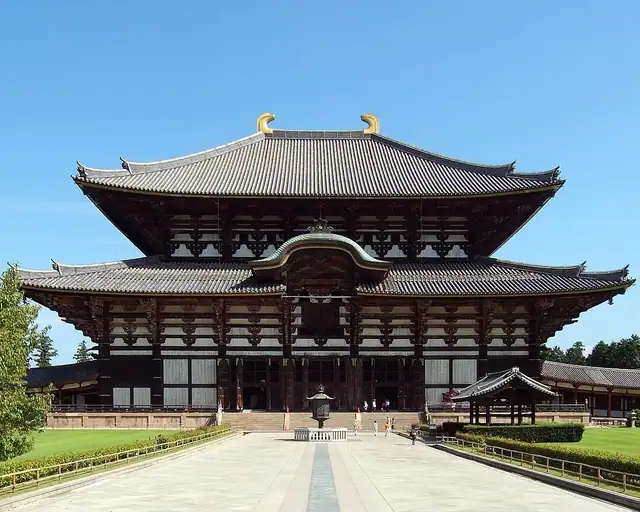
- World monument · 752 CE; hall rebuilt 1195 and 1709Tōdai-ji Great Buddha HallA giant bronze Buddha in a wooden hall rebuilt smaller after two fires.
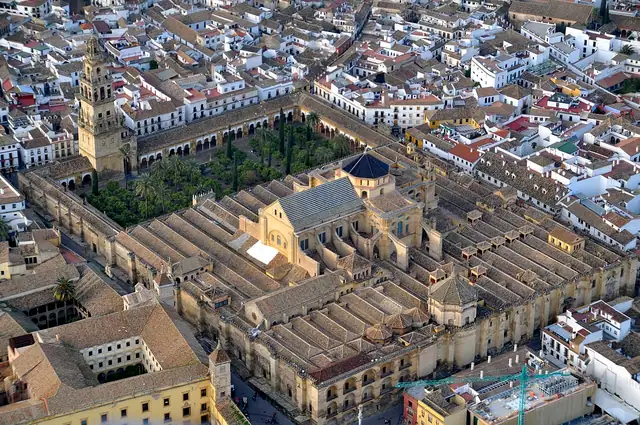
- World monument · 785–988 (mosque); cathedral nave from 1523Mosque–Cathedral of CórdobaA forest of striped double arches, with a cathedral built in its middle.
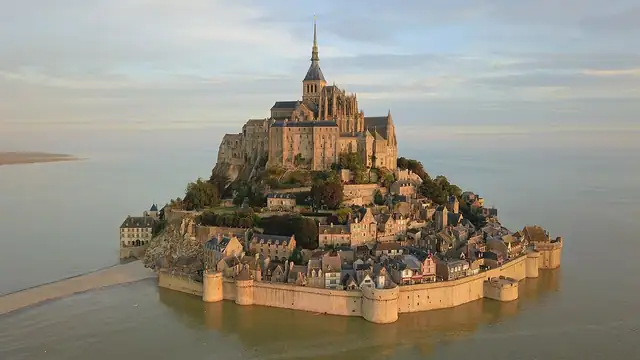
- World monument · 708–1521; spire 1897Mont-Saint-MichelAn abbey stacked on a rock in the sea, made an island again in 2014.
- World monument · 1555–1561Saint Basil's CathedralNine chapels in one, painted into a riot of colour a century after it was built.
- World monument · Founded c. 6th–10th century CE; present form 1775Shwedagon PagodaA 99-metre stupa wrapped in gold, rebuilt after every earthquake.
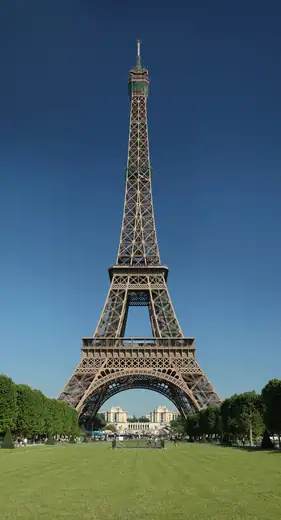
- World monument · 28 January 1887 – 31 March 1889Eiffel TowerA temporary 1889 iron tower that radio and Parisians decided to keep.


Get the ideas, not the noise.
Sign up with Google and we’ll send you short UX psychology tips by email — why people tap, stall and leave, and what to do about it. Unsubscribe anytime. Prefer something to keep? Get the free Laws of UX guide as a PDF.