Anchoring Effect
Also known as Anchoring bias
The first number or piece of information people see becomes a reference point that strongly influences how they judge everything after it.
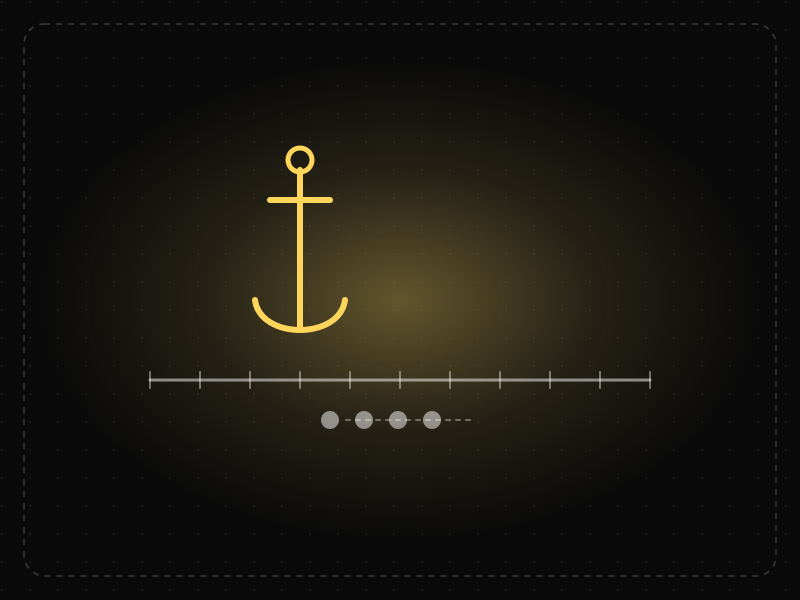
See it in action
The same screen without and with Anchoring Effect. Watch both sides play out, then compare the outcome.
With nothing to compare against, ₹999 is judged against “zero” and feels steep.
Seen after a relevant, honest reference, the same ₹999 is judged as good value.
What to watch: the first number on screen becomes the yardstick for the next one.
Lead with a truthful, relevant reference — the cost of the alternative, the full plan, the time saved.
Invent inflated “was” prices or fake anchors; it's deceptive and erodes trust.
Key takeaways
- The first price or option shown frames how the rest are perceived.
- Order plans and options deliberately.
- Anchors work even when people know they're arbitrary — use them honestly.
Quick facts
- Also known as
- Anchoring bias
- Described by
- Amos Tversky & Daniel Kahneman
- Year
- 1974
- Category
- Decision-making
- Related laws
- Framing Effect, Cognitive Bias, Choice Overload, Decoy Effect
Anchoring Effect explained
The anchoring effect is the tendency to rely heavily on the first piece of information encountered (the anchor) when making judgements. Later estimates are adjusted from that starting point, but usually not enough.
Anchors can be numbers, prices, ratings or even unrelated values. Once set, they shape what people consider reasonable.
In products, anchors appear in pricing, discounts, suggested amounts, default quantities and the first option users see.
Where it comes from
Demonstrated by Amos Tversky and Daniel Kahneman in their 1974 Science paper: participants' estimates of the share of African countries in the United Nations were pulled toward an obviously random number from a wheel of fortune.
How it shows up in apps
Pricing pages, upgrade prompts and in-app purchase lists are all read relative to their first or highest number.
Anchoring Effect examples
Showing the annual plan's original price struck through next to the discounted price makes the discount feel more substantial than showing the discounted price alone.
Crossed-out prices
Showing an original price next to a sale price anchors shoppers on the higher figure, making the discount feel more valuable.
Suggested donation amounts
Donation forms that pre-fill suggested amounts anchor what donors give, which is why the order and values of suggestions matter.
Enterprise plan first
Some pricing pages list the most expensive plan first, making mid-tier plans feel more affordable by comparison.
How to apply Anchoring Effect
- Be deliberate about the first number or option users see.
- Use honest reference points such as genuine previous prices or annual equivalents.
- Order pricing and suggested amounts with anchoring in mind.
- Provide context to help users judge value independently.
- Avoid inflated reference prices, which are deceptive and may be illegal.
Want Anchoring Effect checked in your own product? Our saas ux audit evaluates it alongside the other principles that shape how users decide, onboard and stay.
Common mistakes
- Using fake original prices to inflate discounts.
- Anchoring users on unrealistic expectations, such as optimistic delivery times.
- Ignoring anchors created unintentionally, like a high default quantity.
How to measure it
Test different anchor values or orderings and measure selected plans, average order value or donation size. Track refunds and complaints to ensure anchoring is not creating regret.
Frequently asked questions
What is Anchoring Effect?
The first number or piece of information people see becomes a reference point that strongly influences how they judge everything after it.
Where does Anchoring Effect come from?
Demonstrated by Amos Tversky and Daniel Kahneman in their 1974 Science paper: participants' estimates of the share of African countries in the United Nations were pulled toward an obviously random number from a wheel of fortune.
How does Anchoring Effect apply to app design?
Pricing pages, upgrade prompts and in-app purchase lists are all read relative to their first or highest number.
Who discovered the anchoring effect?
Amos Tversky and Daniel Kahneman described it in their 1974 paper on judgement under uncertainty.
How is anchoring used on pricing pages?
Showing a higher-priced plan or original price first sets a reference point that makes other options feel like better value.
How do you measure Anchoring Effect in a product?
Test different anchor values or orderings and measure selected plans, average order value or donation size. Track refunds and complaints to ensure anchoring is not creating regret.
Sources
- Tversky, A. & Kahneman, D. (1974). Judgment under uncertainty: Heuristics and biases. Science, 185(4157). Find on Google Scholar ↗
Related laws
 Decision-making
Framing Effect
The same information leads to different decisions depending on how it is presented — for example, as a gain or as a loss.
 Decision-making
Cognitive Bias
A cognitive bias is a systematic error in thinking — a mental shortcut that predictably skews how people perceive information and make decisions.
 Decision-making
Choice Overload
When people face too many options, deciding becomes harder and less satisfying — and they are more likely to choose nothing at all.
 Decision-making
Decoy Effect
Adding a third option that is clearly worse than one choice but similar in price makes that choice look more attractive.
Anchoring Effect in practice
- Career guidesData-driven decision-making for managers and team leads in 2027: how employers test it and how to get better at itData-driven decision-making for managers, team leads and founders in 2027: framing questions, choosing metrics, weighing evidence, how it's tested and a plan.
- Making moneyApp monetization strategies that don't annoy users — designed with behavioural scienceMonetize your app without wrecking retention: value-first paywalls, honest trials, rewarded ads, anchoring and decoy pricing done ethically, and what to avoid.
- Career guidesHow to get a UX designer job in 2027: the hiring playbook, from the other side of the deskHow to get a UX designer job in 2027: what recruiters screen for, the interview loop, a portfolio that survives a 30-second look, pay and a 12-week plan.
- Making moneyIn-app purchase pricing: how top apps set their prices, and how to set yoursIn-app purchase pricing explained: regional prices for India, store price points, tiers and bundles, anchoring and decoys, trials and how to test prices safely.
- Career guidesStatistical reasoning at work in 2027: base rates, bias and misleading numbers — how employers test judgement with dataStatistical reasoning skills for analysts and managers in 2027: base rates, sampling bias, Simpson's paradox, risk, how employers test it and a plan.
- Career guidesCognitive bias at work in 2027: anchoring, availability, confirmation bias, overconfidence, sunk cost and groupthink, how they distort hiring, forecasts and decisions, and practical ways to reduce themCognitive bias at work in 2027: anchoring, availability, confirmation bias, overconfidence, sunk cost, groupthink and practical debiasing habits.
Certifications that test it
- Free certification · UX/UI, Design, Research & CreativeUX Research CertificationCertifies that you can plan, run and synthesize user research that changes decisions — method choice, recruiting, interviewing, usability testing, surveys and analysis.
- Free certification · UX/UI, Design, Research & CreativeBehavioral Design CertificationCertifies that you can apply behavioral psychology and behavioral economics to product design ethically — motivation, decision architecture, habits and the laws of UX.
- Free certification · Digital Marketing, SEO, AEO & GrowthConversion Rate Optimization (CRO) CertificationCertifies that you can find and fix conversion leaks with evidence — funnel analysis, research, hypothesis design, A/B testing and landing-page and checkout UX.
- Free skill test · 10 minCognitive Bias TestA 10-minute test of cognitive biases: how anchoring, loss aversion, defaults, decoys and framing shape users' choices, and how confirmation bias, sunk costs and the planning fallacy distort team decisions.



Get the ideas, not the noise.
Sign up with Google and we’ll send you short UX psychology tips by email — why people tap, stall and leave, and what to do about it. Unsubscribe anytime. Prefer something to keep? Get the free Laws of UX guide as a PDF.