Social Proof
When people are uncertain, they look to what others like them are doing to decide what's right.
See it in action
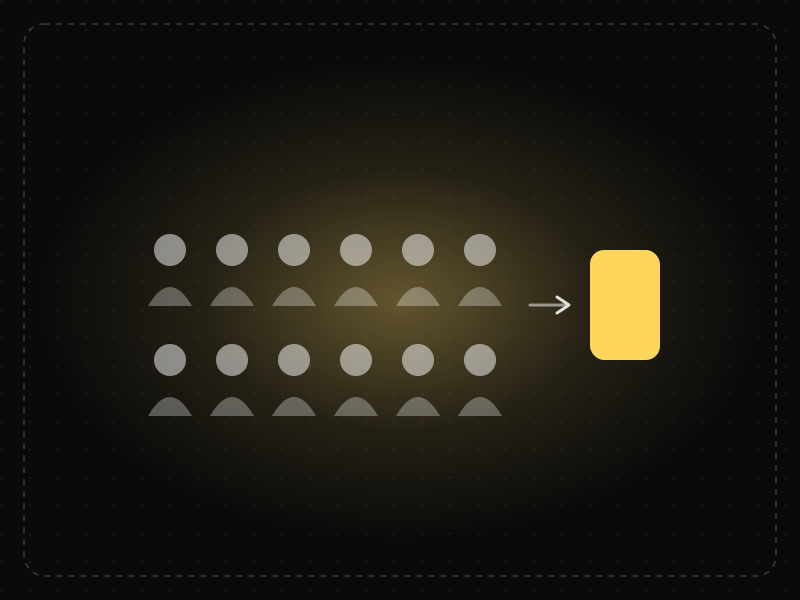
The same screen without and with Social Proof. Watch both sides play out, then compare the outcome.
Uncertain visitors have no signal that people like them have tried — and kept — the product.
Seeing that thousands of similar teams use and rate it, people take the leap.
What to watch: the avatars and numbers arriving right next to the call to action.
Show real, specific, recent proof from people like the visitor, close to the decision.
Fabricate counts, reviews or “X just bought” pop-ups.
Key takeaways
- Show real usage, ratings and testimonials at moments of uncertainty.
- Similar others are more persuasive than large anonymous numbers.
- Fake or inflated social proof destroys trust once noticed.
Quick facts
- Also known as
- —
- Described by
- Robert Cialdini
- Year
- 1984
- Category
- Decision-making
- Related laws
- Scarcity Effect, Reciprocity, Cognitive Bias, Authority Bias
Social Proof explained
Social proof is the tendency to look to other people's behaviour to decide what is correct, especially when we are uncertain. If many others are doing something, it feels safer and more acceptable to do it too.
Social proof is strongest when the others are similar to us, when there are many of them, or when they are experts or trusted figures.
In digital products, reviews, ratings, user counts, testimonials, customer logos and activity indicators all act as social proof, reducing perceived risk and helping people decide.
Where it comes from
Named and popularised by psychologist Robert Cialdini in Influence (1984), building on earlier conformity research such as Solomon Asch's line-judgment experiments in the 1950s.
How it shows up in apps
App store ratings, 'popular with people like you' labels, and testimonials near sign-up and paywalls reduce uncertainty at decision points.
Social Proof examples
A meditation app's paywall shows 'Rated 4.8 by 120,000 people' with three short reviews from new users, right above the start-trial button.
Ratings and reviews
Product pages with star ratings and written reviews give shoppers evidence from other buyers, which typically increases conversion compared with pages that have none.
Customer logos
B2B websites show logos of well-known customers to signal that similar companies trust the product.
Most popular labels
Labelling a plan as 'Most popular' tells uncertain buyers what others choose, making that option feel like a safe default.
How to apply Social Proof
- Show genuine reviews, ratings and testimonials near decision points.
- Use social proof from people similar to your target users.
- Include specific details (names, roles, results) to make testimonials credible.
- Show social proof where uncertainty is highest, such as pricing and sign-up.
- Never fabricate reviews, numbers or activity.
Want Social Proof checked in your own product? Our saas ux audit evaluates it alongside the other principles that shape how users decide, onboard and stay.
Common mistakes
- Fake reviews or inflated user counts, which are unethical and illegal in many markets.
- Showing low numbers ('3 people bought this') that undermine credibility.
- Generic testimonials that do not address real concerns.
How to measure it
A/B test the presence, placement and type of social proof and measure conversion. Track how review volume and rating influence add-to-cart or sign-up rates.
Frequently asked questions
What is Social Proof?
When people are uncertain, they look to what others like them are doing to decide what's right.
Where does Social Proof come from?
Named and popularised by psychologist Robert Cialdini in Influence (1984), building on earlier conformity research such as Solomon Asch's line-judgment experiments in the 1950s.
How does Social Proof apply to app design?
App store ratings, 'popular with people like you' labels, and testimonials near sign-up and paywalls reduce uncertainty at decision points.
Who coined the term social proof?
Psychologist Robert Cialdini popularised the term in his 1984 book Influence: The Psychology of Persuasion.
What are examples of social proof on websites?
Reviews, star ratings, testimonials, case studies, customer logos, user counts, trust badges and 'most popular' labels.
How do you measure Social Proof in a product?
A/B test the presence, placement and type of social proof and measure conversion. Track how review volume and rating influence add-to-cart or sign-up rates.
Sources
- Cialdini, R. B. (1984). Influence: The Psychology of Persuasion. William Morrow. Find on Google Scholar ↗
- Asch, S. E. (1956). Studies of independence and conformity. Psychological Monographs, 70(9). Find on Google Scholar ↗
Related laws
 Decision-making
Scarcity Effect
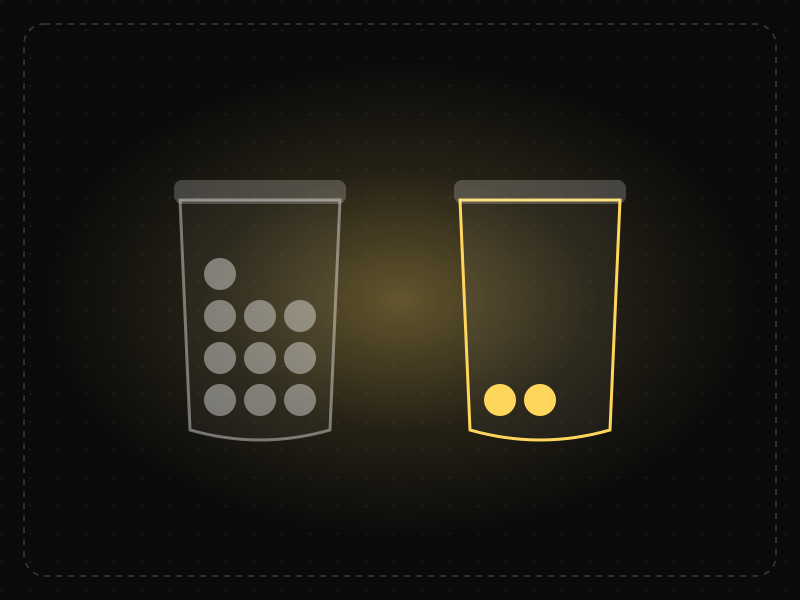
People value things more when they seem rare, limited or about to become unavailable.
 Motivation & emotion
Reciprocity
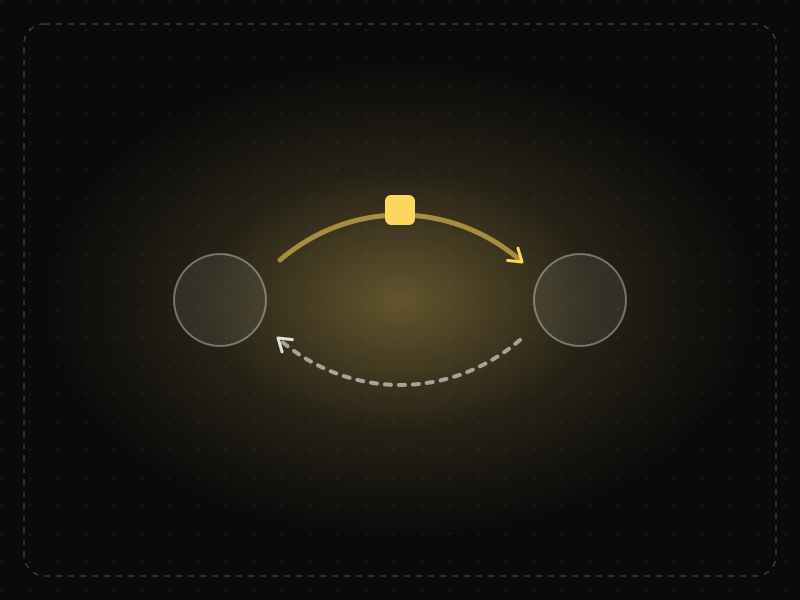
People feel a strong urge to return favors, so giving value first makes users more willing to give back — attention, data or payment.
 Decision-making
Cognitive Bias
A cognitive bias is a systematic error in thinking — a mental shortcut that predictably skews how people perceive information and make decisions.
 Decision-making
Authority Bias
People give more weight to information and recommendations from perceived experts and authorities, and are more likely to follow them.
Social Proof in practice
- App developmentHow much does it cost to build an app like Instagram?An Instagram-like photo app costs ₹20–60 lakh in India; with Reels, Stories and DMs, ₹70 lakh–₹1.5 crore. The full feature and running-cost math.
- Design historyOld website designs: what Google, Amazon, Yahoo, YouTube and Facebook looked like at launchSee old website designs from the first web page (1991) to Google, Amazon, YouTube and Flipkart at launch, with Wayback Machine links and what each one teaches.
- Career guidesUX psychology skills employers want in 2027: attention, memory, perception, decision-making and how designers apply them without manipulationUX psychology skills employers want in 2027: attention, memory, perception, decision-making, Hick's and Fitts's laws, cognitive load and ethics.
- Career guidesCognitive bias at work in 2027: anchoring, availability, confirmation bias, overconfidence, sunk cost and groupthink, how they distort hiring, forecasts and decisions, and practical ways to reduce themCognitive bias at work in 2027: anchoring, availability, confirmation bias, overconfidence, sunk cost, groupthink and practical debiasing habits.
- Career guidesDecision-making skills at work in 2027: framing decisions, setting criteria, weighing options, deciding at the right speed, involving the right people, avoiding bias, committing and learning from decisionsDecision-making skills at work in 2027: framing, criteria, weighing options, right speed, involving people, avoiding bias, committing and learning.
- Career guidesHow to get a UX designer job in 2027: the hiring playbook, from the other side of the deskHow to get a UX designer job in 2027: what recruiters screen for, the interview loop, a portfolio that survives a 30-second look, pay and a 12-week plan.


Certifications that test it
- Free certification · UX/UI, Design, Research & CreativeBehavioral Design CertificationCertifies that you can apply behavioral psychology and behavioral economics to product design ethically — motivation, decision architecture, habits and the laws of UX.
- Free certification · Digital Marketing, SEO, AEO & GrowthConversion Rate Optimization (CRO) CertificationCertifies that you can find and fix conversion leaks with evidence — funnel analysis, research, hypothesis design, A/B testing and landing-page and checkout UX.
- Free certification · Digital Marketing, SEO, AEO & GrowthApp Store Optimization (ASO) CertificationCertifies that you can grow app installs organically — keyword research and metadata, store creative, ratings and reviews, and store experiments, localisation and in-app events on the App Store and Google Play.
- Free certification · Digital Marketing, SEO, AEO & GrowthGrowth Marketing CertificationCertifies that you can grow a product sustainably — acquisition channels and unit economics, lifecycle and retention marketing, growth loops and virality, and experiments and attribution.




Get the ideas, not the noise.
Sign up with Google and we’ll send you short UX psychology tips by email — why people tap, stall and leave, and what to do about it. Unsubscribe anytime. Prefer something to keep? Get the free Laws of UX guide as a PDF.