Authority Bias
Also known as Authority principle
People give more weight to information and recommendations from perceived experts and authorities, and are more likely to follow them.

See it in action
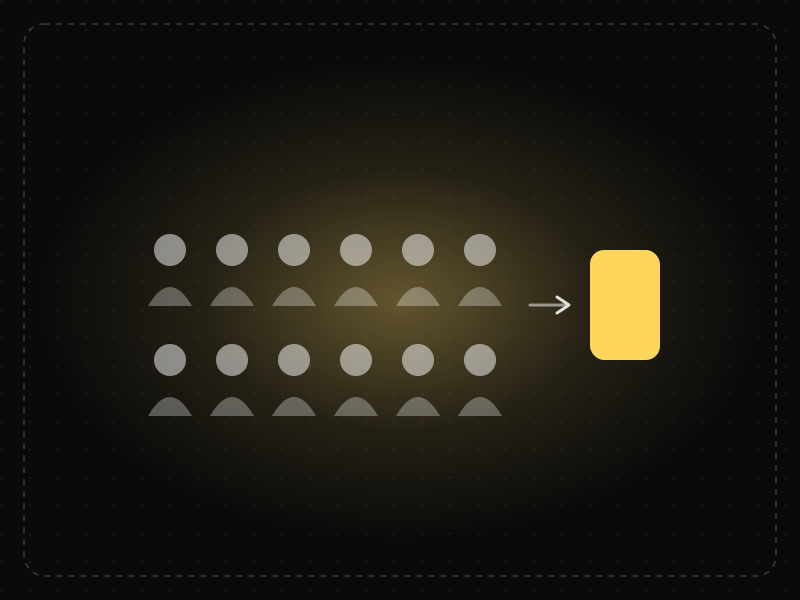
The same screen without and with Authority Bias. Watch both sides play out, then compare the outcome.
A bold claim with no credible source makes a sensitive step feel risky.
Recognised certifications and independent reviewers lend real authority to the claim.
What to watch: the badges arrive and confidence rises before the button is even tapped.
Cite real experts, certifications and independent reviews — and link to the evidence.
Use fake badges, borrowed logos or white-coat imagery to imply endorsement you don't have.
Key takeaways
- Show genuine credentials, certifications and expert endorsements where trust matters.
- Use authority signals near high-risk decisions such as payments and health choices.
- Never fake authority; it destroys trust and may be illegal.
Quick facts
- Also known as
- Authority principle
- Described by
- Stanley Milgram
- Year
- 1963
- Category
- Decision-making
- Related laws
- Social Proof, Cognitive Bias, Aesthetic-Usability Effect
Authority Bias explained
Authority bias is the tendency to trust and follow people or institutions seen as experts. It saves effort: instead of evaluating every claim, we rely on those who appear to know best.
Signals of authority include titles, credentials, uniforms, official logos, certifications and recognition by trusted sources.
In digital products, authority reduces perceived risk, but it must be genuine. Fake badges or misleading endorsements are deceptive.
Where it comes from
Stanley Milgram's obedience experiments in the 1960s showed how strongly people defer to authority figures. Robert Cialdini later identified authority as one of the core principles of influence.
How it shows up in apps
Security badges, certifications, expert reviews, press mentions and professional credentials reduce uncertainty in high-stakes decisions such as health, finance and security.
Authority Bias examples
A telehealth app shows each doctor's qualifications, licence and years of experience on their profile. Patients book more confidently and fewer abandon at the booking step.
Security certifications
Payment pages that show recognised security and compliance badges reassure users about entering card details.
Expert content
Health and finance apps that show content reviewed by named experts are perceived as more trustworthy.
Press mentions
Start-ups display logos of well-known publications that covered them to build credibility with new visitors.
How to apply Authority Bias
- Show genuine credentials and certifications where trust is needed.
- Attribute content to qualified experts with names and roles.
- Use authority signals near high-risk decisions.
- Keep authority claims accurate and verifiable.
- Combine authority with transparency about how recommendations are made.
Want Authority Bias checked in your own product? Our saas ux audit evaluates it alongside the other principles that shape how users decide, onboard and stay.
Common mistakes
- Displaying fake or irrelevant badges.
- Overusing authority claims so they feel like marketing.
- Implying endorsements that do not exist.
How to measure it
A/B test authority signals on high-stakes pages and measure conversion, abandonment and trust survey responses.
Frequently asked questions
What is Authority Bias?
People give more weight to information and recommendations from perceived experts and authorities, and are more likely to follow them.
Where does Authority Bias come from?
Stanley Milgram's obedience experiments in the 1960s showed how strongly people defer to authority figures. Robert Cialdini later identified authority as one of the core principles of influence.
How does Authority Bias apply to app design?
Security badges, certifications, expert reviews, press mentions and professional credentials reduce uncertainty in high-stakes decisions such as health, finance and security.
Is authority one of Cialdini's principles of influence?
Yes. Authority is one of the principles described in Robert Cialdini's book Influence: The Psychology of Persuasion.
How do websites use authority bias?
Through certifications, expert endorsements, credentials, press mentions and official partnerships.
How do you measure Authority Bias in a product?
A/B test authority signals on high-stakes pages and measure conversion, abandonment and trust survey responses.
Sources
- Milgram, S. (1963). Behavioral study of obedience. Journal of Abnormal and Social Psychology, 67(4). Find on Google Scholar ↗
- Cialdini, R. B. (1984). Influence: The Psychology of Persuasion. William Morrow. Find on Google Scholar ↗
Related laws
 Decision-making
Social Proof
When people are uncertain, they look to what others like them are doing to decide what's right.
 Decision-making
Cognitive Bias
A cognitive bias is a systematic error in thinking — a mental shortcut that predictably skews how people perceive information and make decisions.
 Perception
Aesthetic-Usability Effect
People perceive attractive interfaces as easier to use — and are more forgiving of their flaws — than plain ones with the same functionality.
Authority Bias in practice
- Career guidesUX psychology skills employers want in 2027: attention, memory, perception, decision-making and how designers apply them without manipulationUX psychology skills employers want in 2027: attention, memory, perception, decision-making, Hick's and Fitts's laws, cognitive load and ethics.
- Career guidesLeadership skills for 2027: setting direction, building trust, communicating vision, developing people, making decisions, leading change, psychological safety and leading without a titleLeadership skills for 2027: direction, trust, communicating vision, developing people, decisions, leading change and leading without a title.
- Career guidesProduct design science in 2027: how designers, PMs and founders use the laws of UX and behavioural science to make product decisions employers trustProduct design science in 2027: how designers, PMs, founders and marketers use the laws of UX and behavioural science to make better product decisions.
- Career guidesCognitive bias at work in 2027: anchoring, availability, confirmation bias, overconfidence, sunk cost and groupthink, how they distort hiring, forecasts and decisions, and practical ways to reduce themCognitive bias at work in 2027: anchoring, availability, confirmation bias, overconfidence, sunk cost, groupthink and practical debiasing habits.
- Career guidesDecision-making skills at work in 2027: framing decisions, setting criteria, weighing options, deciding at the right speed, involving the right people, avoiding bias, committing and learning from decisionsDecision-making skills at work in 2027: framing, criteria, weighing options, right speed, involving people, avoiding bias, committing and learning.
- Career guidesResearch literacy for 2027 careers: reading studies and reports critically, study designs, sample size and bias, correlation vs causation, statistical significance, replication, and using research to make decisionsResearch literacy for 2027 careers: reading studies critically, study designs, samples and bias, correlation vs causation, significance and replication.
Certifications that test it
- Free certification · UX/UI, Design, Research & CreativeUX Research CertificationCertifies that you can plan, run and synthesize user research that changes decisions — method choice, recruiting, interviewing, usability testing, surveys and analysis.
- Free certification · UX/UI, Design, Research & CreativeBehavioral Design CertificationCertifies that you can apply behavioral psychology and behavioral economics to product design ethically — motivation, decision architecture, habits and the laws of UX.
- Free certification · AI & Generative AIAI UX Design CertificationCertifies that you can design AI-powered products people trust — setting expectations, conversational and agent UX, handling errors and uncertainty, and responsible AI.
- Free certification · Product, Project Management & Business AnalysisDesign Leadership CertificationCertifies that you can lead design — build and grow teams, set design strategy, run design operations, measure design's impact and influence the business.
- Free certification · AI & Generative AIPrompt Engineering CertificationCertifies that you can get reliable results from large language models — prompt fundamentals, structure and reasoning, prompting for real product work, and evaluation, safety and reliability.
- Free certification · AI & Generative AIAI Product Manager CertificationCertifies that you can manage AI products — finding the right AI opportunities, data, models and evaluation, AI UX, trust and safety, and shipping, cost and operations.
Get the ideas, not the noise.
Sign up with Google and we’ll send you short UX psychology tips by email — why people tap, stall and leave, and what to do about it. Unsubscribe anytime. Prefer something to keep? Get the free Laws of UX guide as a PDF.