 By
At a glance: Göbekli Tepe
- Location
- Şanlıurfa Province, Turkey
- Built
- c. 9600–8200 BCE
- Type
- Megalithic enclosures · Sacred
- Style
- Pre-Pottery Neolithic
- Commissioned by
- Hunter-gatherer communities of Upper Mesopotamia
- Architects & builders
- Not recorded
- Materials
- Local limestone pillars set in stone walls
- Size
- T-shaped pillars up to about 5.5 m tall; enclosures 10–30 m across
- UNESCO
- Göbekli Tepe (2018)
Göbekli Tepe: what it is
Göbekli Tepe ("Potbelly Hill" in Turkish) is an artificial mound about 15 metres high on a limestone ridge near Şanlıurfa. Inside it are round and oval enclosures, each ringed by a stone wall with pillars set into it, and a pair of taller pillars standing free in the centre.
Its builders were not farmers. They lived at the very start of the Neolithic, when people in the region were only beginning to cultivate wild cereals. The site upended an old assumption — that monuments come after agriculture — and archaeologists still debate exactly how it was used.
Göbekli Tepe, then and now
Real images only: an earlier view and a recent photograph, each credited and linked to its original file. Switch between them or compare side by side.
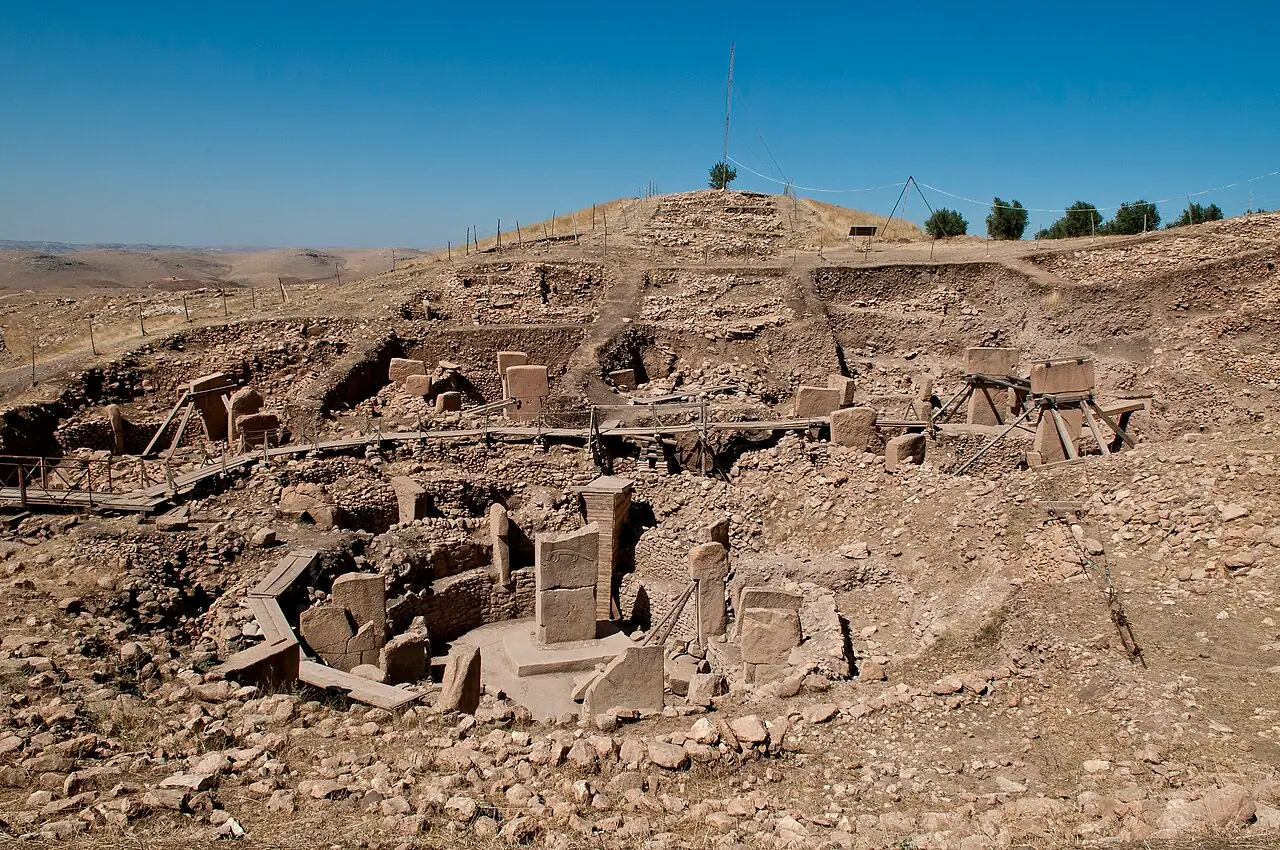
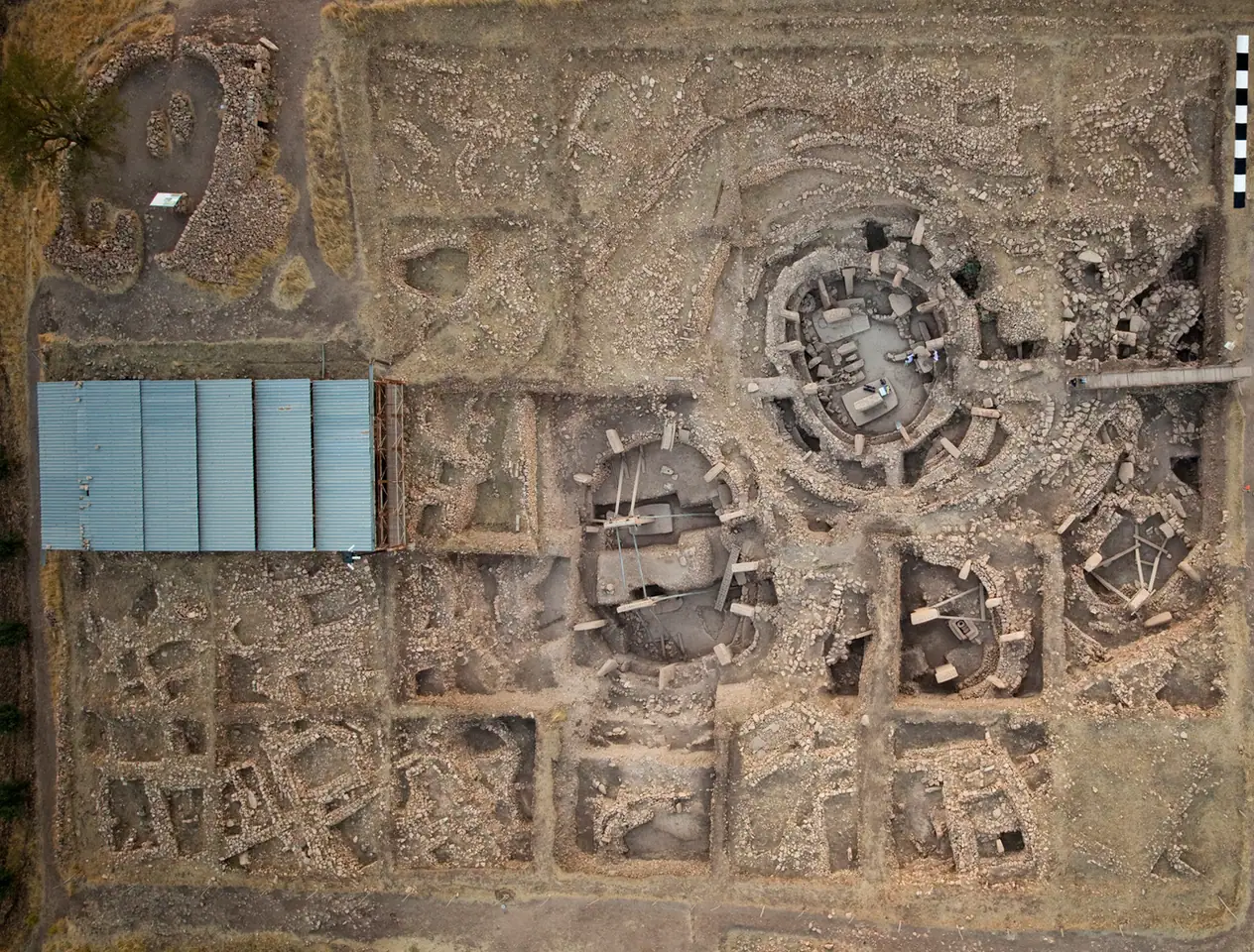 Then · From above, 2019Now · 2011Move across the image to compare
Göbekli Tepe: how it was designed
- 01
The T-shaped pillar is a body
The central pillars are not abstract posts. Carved arms run down their sides, hands meet above a belt, and some wear a fox-pelt loincloth. The T-shaped top reads as a head seen from the side. They are among the earliest large depictions of the human form.
- 02
A ring with two figures at its heart
Each main enclosure follows the same plan: a wall with radial pillars facing inward, and two larger pillars in the middle — in Enclosure D they reach about 5.5 metres. The repetition shows a shared design idea rather than one-off building.
- 03
Relief carving as a visual language
Foxes, boars, snakes, cranes, vultures and scorpions are carved in relief on the pillars, often in the same positions. Whether they are clan emblems, myths or warnings is unknown, but the consistency suggests a recognised symbolic system.
- 04
Quarried on site
Unfinished pillars still lie in the quarries on the plateau around the mound, so the builders cut, shaped and moved stones weighing several tonnes without metal tools or draught animals.
Construction timeline
The earliest large round enclosures (Layer III) are built, with the biggest central pillars.
Later phases (Layer II) add smaller rectangular buildings with shorter pillars before the site goes out of use.
A survey by Istanbul and Chicago universities records the mound but reads the broken slabs as a medieval cemetery.
Klaus Schmidt of the German Archaeological Institute and the Şanlıurfa Museum begin excavation and recognise the pillars as Neolithic.
Two large protective roofs are built over the main excavation area.
Inscribed on the UNESCO World Heritage List.
How the design changed
From grand circles to small rooms
Over about 1,400 years the architecture shrank. The early enclosures with five-metre pillars gave way to rectangular rooms with pillars around 1.5 metres high — a sign that how the community used the site changed over time.
Covered for the first time in 11,000 years
Excavation exposed limestone that had been buried for millennia, so the site now sits under membrane roofs on steel frames designed to keep rain and sun off the pillars without resting on the ruins.
Who built it
No names survive. The builders were Pre-Pottery Neolithic hunter-gatherers of Upper Mesopotamia. Large-scale gatherings would have been needed to quarry and raise the pillars, and finds of animal bone and ground cereal point to feasting at the site. The modern story belongs to Klaus Schmidt (1953–2014), who led the excavation for nearly two decades.
Where it is
Şanlıurfa Province, Turkey · 37.2231° N, 38.9225° E · Open in OpenStreetMap. Nearest in this guide: Petra (831 km), Hagia Sophia (955 km), Ziggurat of Ur (959 km).
 831 km955 km959 kmGöbekli Tepe
Drag to pan, use + and − or double-click to zoom, and tap any pin for a preview.
Göbekli Tepe: questions people ask
How old is Göbekli Tepe?
Its oldest enclosures date to about 9600 BCE, roughly 11,600 years ago, and building continued until about 8200 BCE. It is the oldest known monumental architecture in the world.
Who built Göbekli Tepe?
Hunter-gatherer communities of the early Neolithic in Upper Mesopotamia built it. No individual builders are known; the site predates writing by more than 6,000 years.
Is Göbekli Tepe older than Stonehenge and the pyramids?
Yes. Göbekli Tepe's first enclosures are about 6,500 years older than the first phase of Stonehenge and about 7,000 years older than the Great Pyramid of Giza.
Can you visit Göbekli Tepe?
Yes. The site is open to visitors near Şanlıurfa in south-east Turkey, with a visitor centre and walkways around the main enclosures under the protective roofs.
Sources & image credits
- UNESCO World Heritage Centre — Göbekli Tepe
- Wikipedia — Göbekli Tepe
- German Archaeological Institute — The Tepe Telegrams (Göbekli Tepe research project)
- Current photograph: Göbekli Tepe, Urfa.jpg by Teomancimit, CC BY-SA 3.0 — original on Wikimedia Commons · licence.
- Historic image: The archaeological site of Göbekli Tepe - main excavation area (rotated 270 deg).png by German Archaeological Institute, photo E. Kücük., CC BY 4.0 — original on Wikimedia Commons · licence.
- Coordinates from Wikidata. Images resized and converted to WebP; otherwise unaltered. Checked October 25, 2026.
More to wander into
- History50 of the world's greatest monuments: how they were designed, built and changedA design history of 50 famous monuments, from 11,600-year-old Göbekli Tepe to the Burj Khalifa: who built them, when and how they changed, with a map.
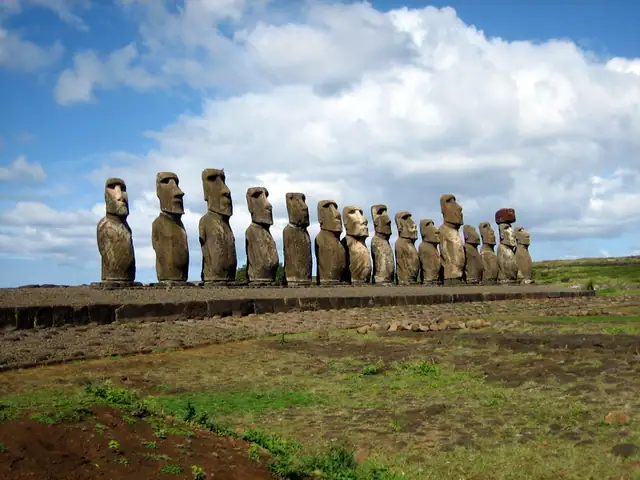
- World monument · c. 1250–1500 CE (most statues)Moai of Rapa NuiAncestor statues carved from a volcano, toppled, then raised again by cranes.
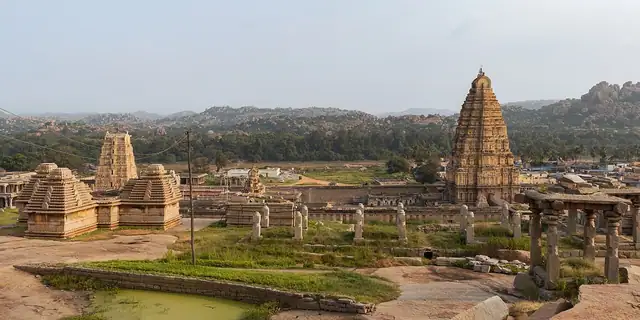
- World monument · Mainly 14th–16th century (Vijayanagara Empire, 1336–1565)Hampi (Group of Monuments)A sacked imperial capital of granite temples, stone chariots and singing pillars.
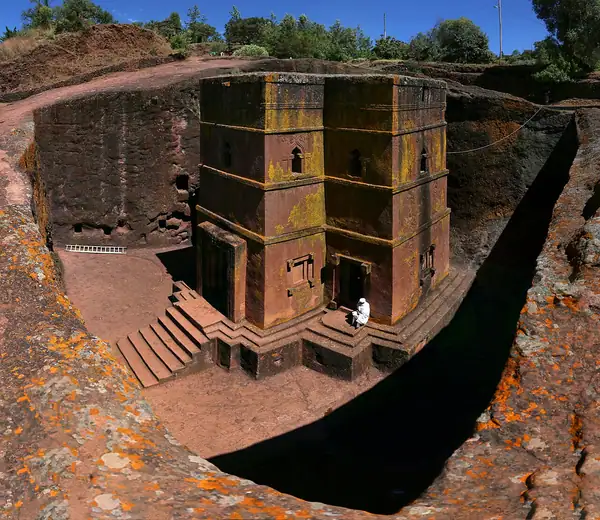
- World monument · Late 12th – early 13th century (traditional dating)Rock-Hewn Churches of LalibelaChurches carved down into the ground, still in daily use after 800 years.
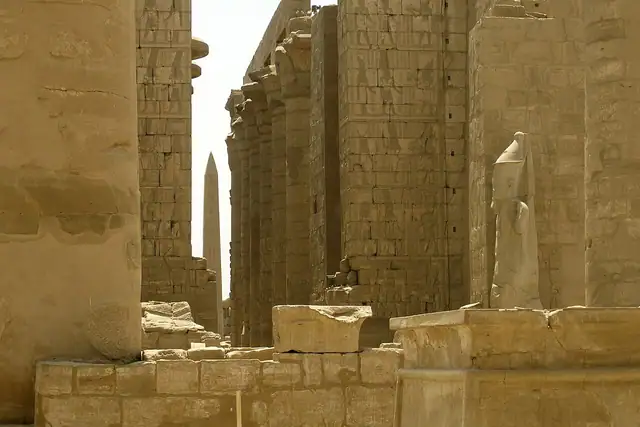
- World monument · c. 1971 BCE – 1st century BCEKarnak Temple ComplexA temple that grew for 2,000 years, with a forest of 134 stone columns.
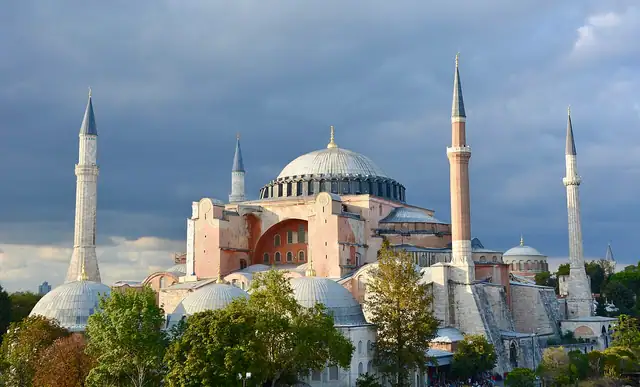
- World monument · 532–537 CEHagia SophiaJustinian's cathedral whose dome seems to float on a ring of light.

Get the ideas, not the noise.
Sign up with Google and we’ll send you short UX psychology tips by email — why people tap, stall and leave, and what to do about it. Unsubscribe anytime. Prefer something to keep? Get the free Laws of UX guide as a PDF.