 By
At a glance: Rock-Hewn Churches of Lalibela
- Location
- Amhara Region, Ethiopia
- Built
- Late 12th – early 13th century (traditional dating)
- Type
- Monolithic rock-cut churches · Sacred
- Style
- Ethiopian Orthodox, Zagwe dynasty
- Commissioned by
- King Gebre Mesqel Lalibela
- Architects & builders
- Not recorded
- Materials
- Carved into volcanic tuff
- Size
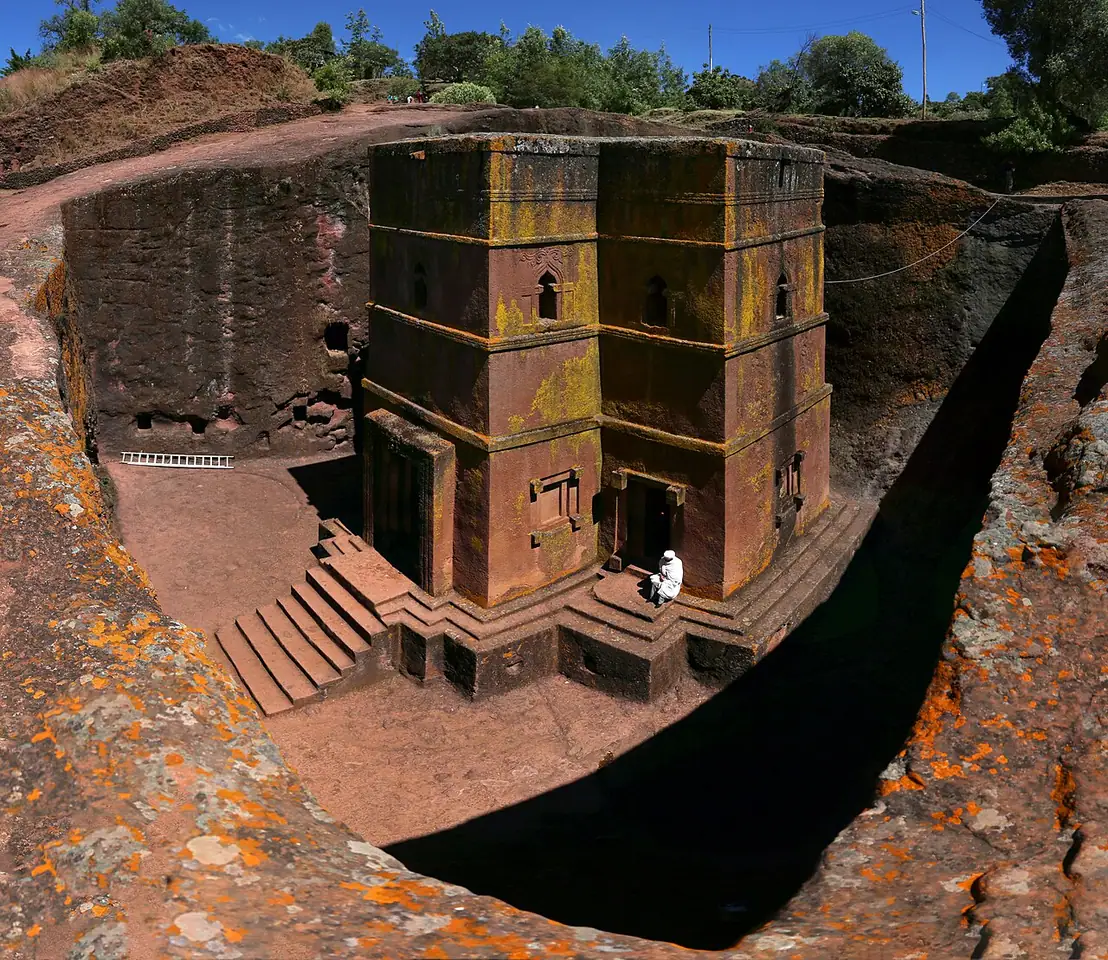
- Bete Giyorgis about 12 m deep, high and wide
Lalibela: what it is
Tradition says King Lalibela wanted to create a 'New Jerusalem' after Muslim conquests made pilgrimage to the Holy Land difficult. A stream on the site is named the Jordan, and areas carry names from Jerusalem.
The churches form two main groups linked by trenches and tunnels, with Bete Giyorgis standing apart. Some archaeologists argue parts of the complex predate Lalibela and were later converted to churches.
Lalibela: how it was designed
- 01
Carved, not built
Masons cut trenches into the rock to isolate a block, then hollowed it out and carved windows, doors, columns and roofs from the same mass — like Ellora's Kailasa temple, but to an entirely Christian plan.
- 02
Echoes of Aksum
Window shapes and the stepped 'monkey-head' details imitate the timber-and-stone walls of older Aksumite buildings, translated into carved rock.
- 03
A cross from above
Bete Giyorgis is a Greek cross in plan, with three nested crosses carved on its flat roof at ground level, so it reads as a cross when seen from above.
Construction timeline
Traditional reign of King Gebre Mesqel Lalibela, credited with the churches.
The Portuguese priest Francisco Álvares visits and describes the churches.
Among the first 12 sites inscribed on the UNESCO World Heritage List.
Large temporary steel-and-membrane shelters are built over five churches to keep rain off.
How the design changed
Under umbrellas
The soft tuff absorbs rainwater, which has cracked walls and faded painted interiors. The shelters built in 2008 were meant to be temporary, and their long-term effect is debated.
A living site
Unlike most ancient monuments, Lalibela has never stopped being used: priests, deacons and pilgrims still gather here, especially at Genna (Ethiopian Christmas).
Who built it
Ethiopian tradition credits King Lalibela, with a legend that angels carved by night what men carved by day. Archaeological work suggests the complex was carved in several phases, possibly over a longer period than one reign.
Where it is
Amhara Region, Ethiopia · 12.0294° N, 39.0404° E · Open in OpenStreetMap. Nearest in this guide: Abu Simbel (1,390 km), Karnak (1,663 km), Petra (2,068 km).
 1,390 km1,663 km2,068 kmLalibela
Drag to pan, use + and − or double-click to zoom, and tap any pin for a preview.
Built around the same time
| Monument | Country | Built | Gap |
|---|---|---|---|
| Leaning Tower of Pisa | Italy | 1173–1372 | 8 years earlier |
| Notre-Dame de Paris | France | 1163–c. 1345; restored 1845–1864 and 2019–2024 | 18 years earlier |
| Qutub Minar | India | c. 1199–1220; top rebuilt 1369 | 18 years later |
| Konark Sun Temple | India | c. 1250 CE (reign of Narasimhadeva I, 1238–1264) | 57 years later |
Lalibela: questions people ask
Who built the churches of Lalibela?
Ethiopian tradition credits King Gebre Mesqel Lalibela of the Zagwe dynasty, who reigned around 1181–1221. Some archaeologists think parts are older.
How were the Lalibela churches made?
Masons cut deep trenches into volcanic rock to free a block, then carved and hollowed it into a church, removing stone rather than building.
How many churches are at Lalibela?
There are eleven rock-hewn churches, in two main groups plus the separate cross-shaped Bete Giyorgis.
Are Lalibela's churches still used?
Yes. They are active Ethiopian Orthodox churches and a major pilgrimage site, especially at Ethiopian Christmas in January.
Sources & image credits
- UNESCO World Heritage Centre — Rock-Hewn Churches, Lalibela
- Wikipedia — Rock-Hewn Churches, Lalibela
- Current photograph: Lalibela, san giorgio, esterno 24.jpg by Sailko, CC BY 3.0 — original on Wikimedia Commons · licence.
- Coordinates from Wikidata. Images resized and converted to WebP; otherwise unaltered. Checked October 25, 2026.
More to wander into
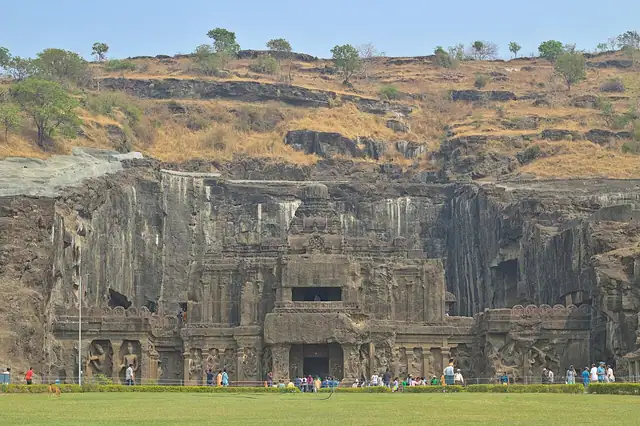
- World monument · 8th century CE (mainly under Krishna I, r. c. 756–773)Kailasa Temple, ElloraA complete temple carved downward out of one basalt hill.
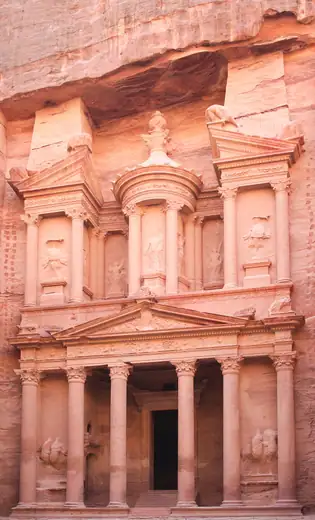
- World monument · Al-Khazneh: about the 1st century CEPetra — Al-Khazneh (the Treasury)A royal tomb carved top-down into a rose-red cliff, at the end of a narrow gorge.
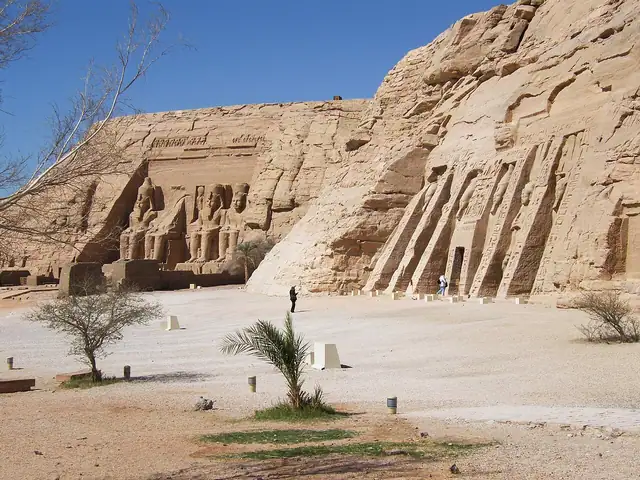
- World monument · c. 1264–1244 BCE; moved 1964–1968Abu Simbel TemplesRamesses II's cliff temples, sawn into blocks and rebuilt on higher ground in the 1960s.
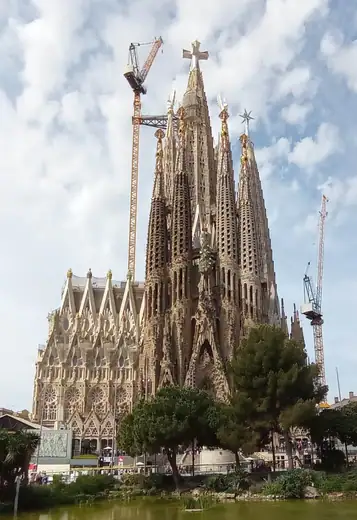
- World monument · 1882 – ongoing (central tower finished 2026)Sagrada FamíliaGaudí's unfinished basilica, now the world's tallest church after 144 years.
- World monument · c. 1250–1500 CE (most statues)Moai of Rapa NuiAncestor statues carved from a volcano, toppled, then raised again by cranes.
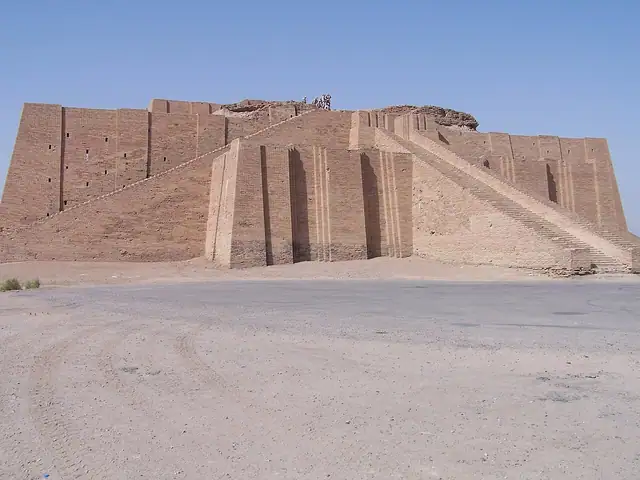
- World monument · c. 21st century BCEZiggurat of UrA 4,100-year-old Sumerian stepped platform for the moon god, rebuilt in parts in the 1980s.

Get the ideas, not the noise.
Sign up with Google and we’ll send you short UX psychology tips by email — why people tap, stall and leave, and what to do about it. Unsubscribe anytime. Prefer something to keep? Get the free Laws of UX guide as a PDF.