Loss Aversion
Losses feel more powerful than equivalent gains — in many studies roughly twice as strong — so people work harder to avoid losing something than to gain it.
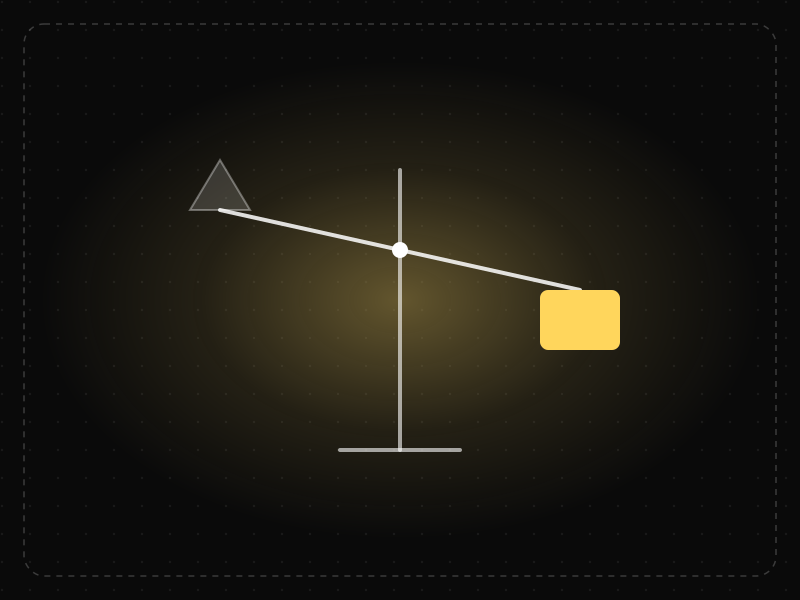
See it in action
The same screen without and with Loss Aversion. Watch both sides play out, then compare the outcome.
A gain of ₹500 feels pleasant but easy to postpone.
The same ₹500 framed as something already theirs to lose weighs roughly twice as much.
What to watch: identical value, but the loss frame fills the impact meter about twice as far.
Show honestly what people already have and stand to lose (saved work, earned credit, progress).
Invent losses, guilt-trip on cancel screens or threaten things that won't really happen.
Key takeaways
- Show users what they'd lose by leaving, not only what they'd gain by staying.
- Protect what users have built: streaks, saved items, progress.
- Use honestly — manufactured fear of loss erodes trust.
Quick facts
- Also known as
- —
- Described by
- Daniel Kahneman & Amos Tversky
- Year
- 1979
- Category
- Decision-making
- Related laws
- Endowment Effect, Framing Effect, Default Effect, Hyperbolic Discounting
Loss Aversion explained
Loss aversion is the tendency to feel the pain of losing something more strongly than the pleasure of gaining something of equal value. Research suggests losses can feel roughly twice as powerful as equivalent gains.
This shapes how people respond to offers, trials, cancellations and changes. People work harder to avoid losing what they have than to gain something new.
Product teams can use loss aversion to help users keep things they value, such as progress or data, but it can easily become manipulative when used to create fear.
Where it comes from
A central idea of prospect theory, published by Daniel Kahneman and Amos Tversky in 1979; their 1992 cumulative prospect theory estimated losses weigh about twice as much as gains. Kahneman received the 2002 Nobel Prize in Economics partly for this work.
How it shows up in apps
Retention and cancellation flows, streaks and trial-ending reminders all hinge on loss aversion. Users are more motivated by keeping their progress or data than by abstract new benefits.
Loss Aversion examples
A trial-ending email that says 'Keep your 14 saved workouts and your 9-day streak' converts better than one listing premium features.
Streaks
Learning and fitness apps use streaks so that missing a day feels like losing something, motivating daily practice.
Trial endings
Software trials that let users experience premium features first make losing them at the end of the trial feel like a loss, which can increase upgrades.
Cancellation summaries
Showing users what they will lose when they cancel (saved data, history, preferences) can prompt reconsideration, but it must remain honest and easy to proceed.
How to apply Loss Aversion
- Frame benefits in terms of what users keep or protect where it is genuine.
- Let users experience value before asking them to commit.
- Make it easy to recover progress or data, reducing the fear of loss.
- Avoid exaggerated threats and fake losses.
- Respect user decisions; make cancellation straightforward.
Want Loss Aversion checked in your own product? Our retention & churn audit evaluates it alongside the other principles that shape how users decide, onboard and stay.
Common mistakes
- Using loss-framed scare tactics that damage trust.
- Making streaks so punishing that one missed day causes users to quit entirely.
- Hiding cancellation behind loss messages and obstacles.
How to measure it
A/B test gain-framed versus loss-framed messages and measure both conversion and longer-term outcomes like retention and satisfaction. Track churn after streak breaks to see whether loss aversion is motivating or discouraging users.
Frequently asked questions
What is Loss Aversion?
Losses feel more powerful than equivalent gains — in many studies roughly twice as strong — so people work harder to avoid losing something than to gain it.
Where does Loss Aversion come from?
A central idea of prospect theory, published by Daniel Kahneman and Amos Tversky in 1979; their 1992 cumulative prospect theory estimated losses weigh about twice as much as gains. Kahneman received the 2002 Nobel Prize in Economics partly for this work.
How does Loss Aversion apply to app design?
Retention and cancellation flows, streaks and trial-ending reminders all hinge on loss aversion. Users are more motivated by keeping their progress or data than by abstract new benefits.
Who discovered loss aversion?
Daniel Kahneman and Amos Tversky described it as part of prospect theory in 1979.
Are streaks an example of loss aversion?
Yes. A streak turns consistency into something users own, so missing a day feels like a loss they want to avoid.
How do you measure Loss Aversion in a product?
A/B test gain-framed versus loss-framed messages and measure both conversion and longer-term outcomes like retention and satisfaction. Track churn after streak breaks to see whether loss aversion is motivating or discouraging users.
Sources
- Kahneman, D. & Tversky, A. (1979). Prospect theory: An analysis of decision under risk. Econometrica, 47(2). Find on Google Scholar ↗
- Tversky, A. & Kahneman, D. (1992). Advances in prospect theory: Cumulative representation of uncertainty. Journal of Risk and Uncertainty, 5(4). Find on Google Scholar ↗
Related laws
 Motivation & emotion
Endowment Effect
People value things more once they feel they own them — including progress, content and customizations inside an app.
 Decision-making
Framing Effect
The same information leads to different decisions depending on how it is presented — for example, as a gain or as a loss.
 Decision-making
Default Effect
People tend to stick with the pre-selected option, so defaults strongly shape what most users end up choosing.
 Decision-making
Hyperbolic Discounting
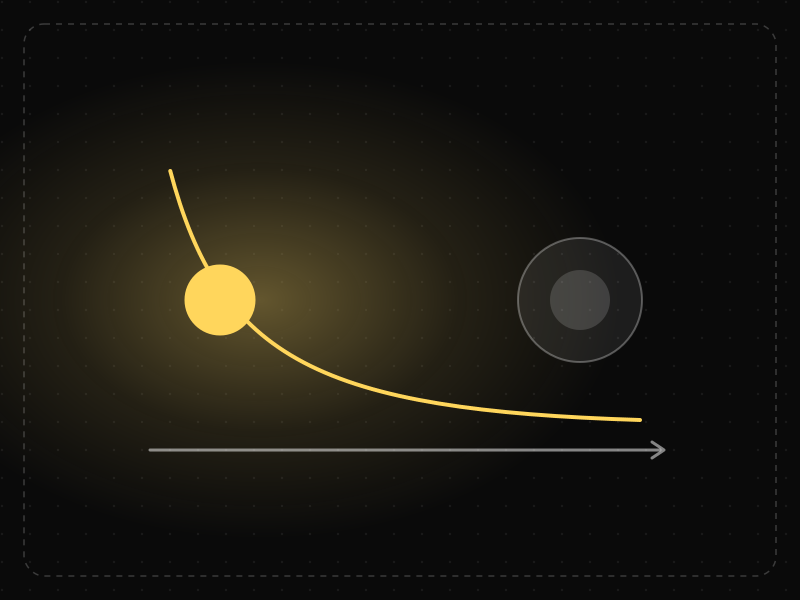
People prefer smaller rewards now over larger rewards later, and this preference is strongest for rewards that are immediate.
Loss Aversion in practice
- Tech explained12 famous product failures, from New Coke to Quibi, and the design lesson each one teachesTwelve famous product failures, from New Coke and Google Glass to Quibi, Juicero and the Tata Nano: what happened, how long each lasted and the lesson in each.
- Making moneyApp monetization strategies that don't annoy users — designed with behavioural scienceMonetize your app without wrecking retention: value-first paywalls, honest trials, rewarded ads, anchoring and decoy pricing done ethically, and what to avoid.
- Career guidesResearch literacy for 2027 careers: reading studies and reports critically, study designs, sample size and bias, correlation vs causation, statistical significance, replication, and using research to make decisionsResearch literacy for 2027 careers: reading studies critically, study designs, samples and bias, correlation vs causation, significance and replication.
- Career guidesDecision-making skills at work in 2027: framing decisions, setting criteria, weighing options, deciding at the right speed, involving the right people, avoiding bias, committing and learning from decisionsDecision-making skills at work in 2027: framing, criteria, weighing options, right speed, involving people, avoiding bias, committing and learning.
- Career guidesProduct design science in 2027: how designers, PMs and founders use the laws of UX and behavioural science to make product decisions employers trustProduct design science in 2027: how designers, PMs, founders and marketers use the laws of UX and behavioural science to make better product decisions.
- Career guidesUX psychology skills employers want in 2027: attention, memory, perception, decision-making and how designers apply them without manipulationUX psychology skills employers want in 2027: attention, memory, perception, decision-making, Hick's and Fitts's laws, cognitive load and ethics.



Certifications that test it
- Free certification · UX/UI, Design, Research & CreativeUX Writing & Content Design CertificationCertifies that you can write interface copy that helps people act — microcopy, errors, onboarding, voice and tone, content structure and testing words.
- Free certification · UX/UI, Design, Research & CreativeBehavioral Design CertificationCertifies that you can apply behavioral psychology and behavioral economics to product design ethically — motivation, decision architecture, habits and the laws of UX.
- Free certification · Digital Marketing, SEO, AEO & GrowthConversion Rate Optimization (CRO) CertificationCertifies that you can find and fix conversion leaks with evidence — funnel analysis, research, hypothesis design, A/B testing and landing-page and checkout UX.
- Free certification · Product, Project Management & Business AnalysisUser Onboarding & Retention CertificationCertifies that you can turn sign-ups into retained users — activation and aha moments, onboarding patterns, habit and engagement design, and churn reduction and win-back.
- Free skill test · 10 minCognitive Bias TestA 10-minute test of cognitive biases: how anchoring, loss aversion, defaults, decoys and framing shape users' choices, and how confirmation bias, sunk costs and the planning fallacy distort team decisions.


Get the ideas, not the noise.
Sign up with Google and we’ll send you short UX psychology tips by email — why people tap, stall and leave, and what to do about it. Unsubscribe anytime. Prefer something to keep? Get the free Laws of UX guide as a PDF.