Law of Uniform Connectedness
Elements that are visually connected — by lines, colors or shared frames — are perceived as more related than elements with no connection.

See it in action
The same screen without and with Law of Uniform Connectedness. Watch both sides play out, then compare the outcome.
Status dots look like scattered decoration; people can't tell how far along their order is.
One connecting line turns four dots into a single journey with a clear “you are here”.
What to watch: the line drawing in — the connection is stronger than colour, size or spacing.
Connect related items with a line or shared frame (steppers, timelines, linked fields).
Leave sequential steps as unconnected icons next to unrelated decoration.
Key takeaways
- Use connecting lines, shared backgrounds or frames to show relationships.
- Connection is a stronger grouping cue than proximity or similarity.
- Steppers and timelines rely on it to show sequence.
Quick facts
- Also known as
- —
- Described by
- Stephen Palmer & Irvin Rock
- Year
- 1994
- Category
- Perception
Law of Uniform Connectedness explained
The Law of Uniform Connectedness states that elements that are visually connected (by lines, arrows, shared backgrounds or frames) are perceived as more related than elements with no connection.
Connection is one of the strongest grouping cues. A line between two items overrides proximity and similarity: even distant, different-looking elements read as a pair once they are joined.
Interfaces use connectedness in steppers, timelines, flow diagrams, tabs attached to their panels and toggle groups to show relationships and sequence.
Where it comes from
Introduced by Stephen Palmer and Irvin Rock in 1994 as a fundamental principle of perceptual organization.
How it shows up in apps
Progress steppers, timelines and connected toggles show users how steps or options relate. Without a visual connection, multi-step flows feel like disconnected screens.
Law of Uniform Connectedness examples
An onboarding stepper links its four steps with a line that fills in as each is completed, making both sequence and progress obvious.
Progress steppers
Checkout steppers connect each step with a line, showing that the steps form one sequence and making the current position clear.
Segmented controls
Joining options in a single connected bar tells users they are mutually exclusive choices of the same setting.
Selected tabs
A selected tab that visually merges with the panel below it shows that the content belongs to that tab.
How to apply Law of Uniform Connectedness
- Use lines, connectors or shared containers to show sequence and relationships.
- Visually attach tabs to their panels and tooltips to their triggers.
- Use connected button groups for options that belong to the same setting.
- Keep connectors subtle so they clarify relationships without dominating the layout.
- Avoid connecting elements that are not truly related.
Want Law of Uniform Connectedness checked in your own product? Our mobile app ux audit evaluates it alongside the other principles that shape how users decide, onboard and stay.
Common mistakes
- Decorative lines that accidentally connect unrelated content.
- Timelines or steppers without connectors, which makes order unclear.
- Overusing connectors so that diagrams look like a tangle.
How to measure it
Ask users in tests to describe how parts of a screen relate, or to identify the current step in a process. Errors in understanding sequence or grouping indicate where connection cues are missing or misleading.
Frequently asked questions
What is Law of Uniform Connectedness?
Elements that are visually connected — by lines, colors or shared frames — are perceived as more related than elements with no connection.
Where does Law of Uniform Connectedness come from?
Introduced by Stephen Palmer and Irvin Rock in 1994 as a fundamental principle of perceptual organization.
How does Law of Uniform Connectedness apply to app design?
Progress steppers, timelines and connected toggles show users how steps or options relate. Without a visual connection, multi-step flows feel like disconnected screens.
Who proposed the Law of Uniform Connectedness?
Stephen Palmer and Irvin Rock proposed it in 1994 as a fundamental principle of perceptual grouping.
Is uniform connectedness stronger than proximity?
Research suggests it is: connected elements are seen as a group even when unconnected elements are closer together.
How do you measure Law of Uniform Connectedness in a product?
Ask users in tests to describe how parts of a screen relate, or to identify the current step in a process. Errors in understanding sequence or grouping indicate where connection cues are missing or misleading.
Sources
- Palmer, S. & Rock, I. (1994). Rethinking perceptual organization: The role of uniform connectedness. Psychonomic Bulletin & Review, 1(1). Find on Google Scholar ↗
Related laws
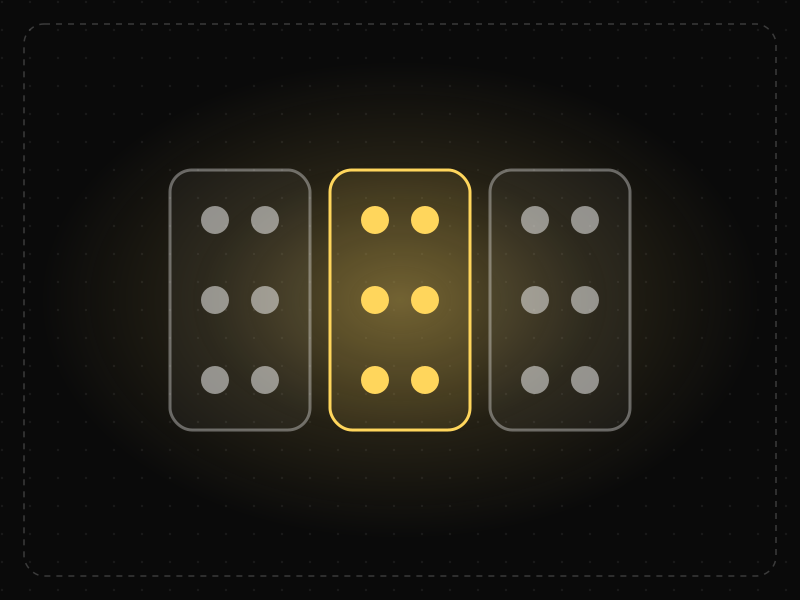 Perception
Law of Common Region
Elements that sit inside the same clearly bounded area are perceived as a group, even if they are not otherwise similar.
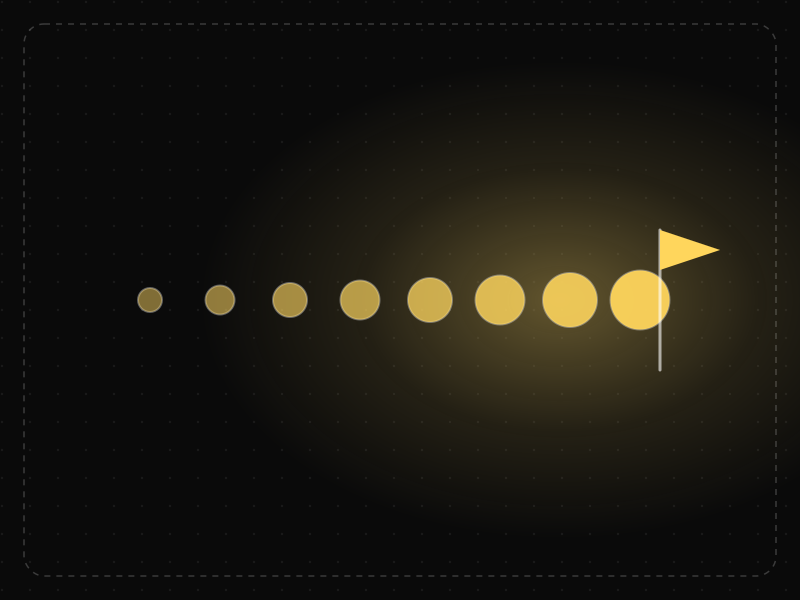 Motivation & emotion
Goal-Gradient Effect
People speed up their effort as they get closer to a goal, so visible progress — even artificial head starts — increases completion.
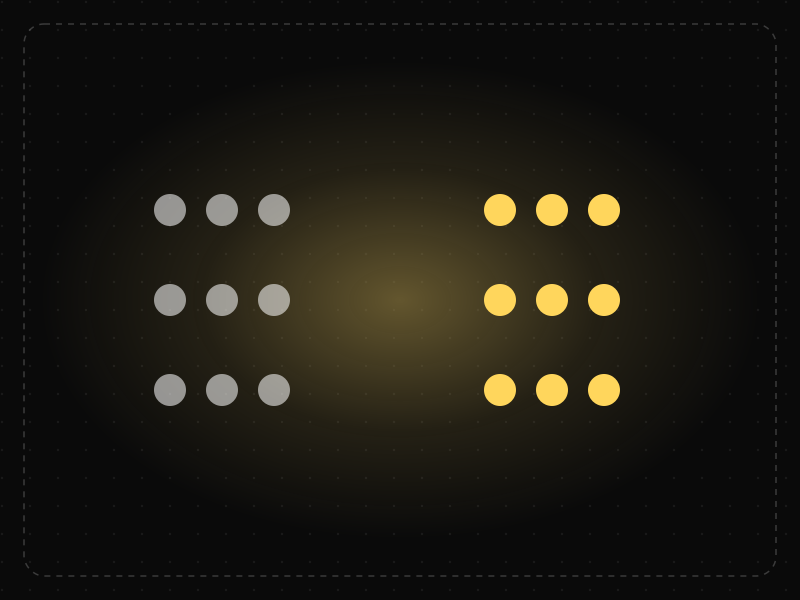 Perception
Law of Proximity
Objects that are close to each other are perceived as belonging together, so spacing alone can communicate structure.
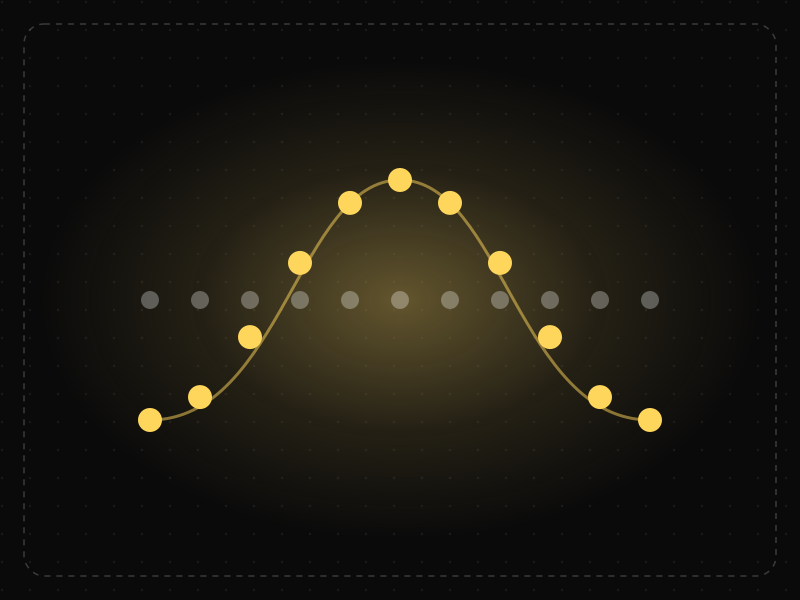 Perception
Law of Continuity
The eye follows smooth lines and curves, so elements arranged along a line or path are perceived as related and in sequence.
Law of Uniform Connectedness in practice
- Career guidesUX psychology skills employers want in 2027: attention, memory, perception, decision-making and how designers apply them without manipulationUX psychology skills employers want in 2027: attention, memory, perception, decision-making, Hick's and Fitts's laws, cognitive load and ethics.
- UI/UX designColour psychology in design: what the research supports, and how to use colour in appsColour psychology in app design without the myths: what research supports, cultural meanings in India, colour for hierarchy and state, and contrast.
- Making moneyApp monetization strategies that don't annoy users — designed with behavioural scienceMonetize your app without wrecking retention: value-first paywalls, honest trials, rewarded ads, anchoring and decoy pricing done ethically, and what to avoid.
- How to make an appHow to design an app in Figma: a beginner's tutorialDesign your first app in Figma: frames, a simple style system, auto layout, components, a clickable prototype and a clean developer handoff. Free-plan friendly.
- UI/UX designLaws of UX explained: Hick's law, Fitts's law and Jakob's law, with app examplesThe three most-used laws of UX explained with app examples: Hick's law (choices), Fitts's law (target size and distance) and Jakob's law (familiarity).
- Architecture & engineeringThe best airports in the world in 2026, and the design science that makes them easy to useThe best airports in the world in 2026, led by Singapore Changi, and the design behind them: wayfinding, short walks, daylight and the psychology of waiting.


Get the ideas, not the noise.
Sign up with Google and we’ll send you short UX psychology tips by email — why people tap, stall and leave, and what to do about it. Unsubscribe anytime. Prefer something to keep? Get the free Laws of UX guide as a PDF.