Law of Common Fate
Also known as Gestalt principle of common fate
Elements that move or change together in the same direction are perceived as a group, even if they look different or are far apart.
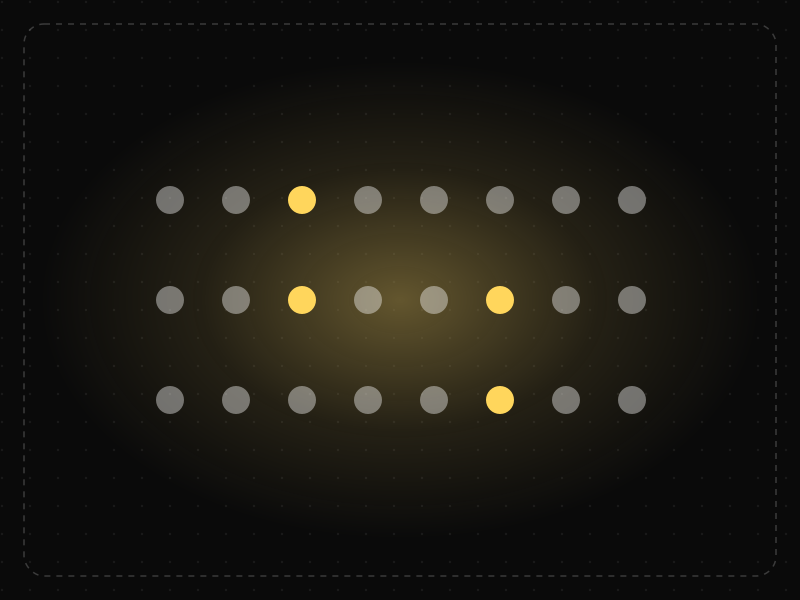
See it in action
The same screen without and with Law of Common Fate. Watch both sides play out, then compare the outcome.
Only the dragged photo moves; it's unclear the other two are coming along until they silently vanish.
The three selected photos lift and travel as one, so everyone sees exactly what's being moved.
What to watch: elements that move in the same direction at the same time are instantly read as one group.
Animate related items together (multi-select drags, expanding sections, shared transitions).
Move unrelated things in sync, or move only part of a group during a bulk action.
Key takeaways
- Animate related elements together to show they belong to the same group.
- Use shared motion to show what will be affected by an action.
- Unrelated elements moving together create false relationships.
Quick facts
- Also known as
- Gestalt principle of common fate
- Described by
- Max Wertheimer
- Year
- 1923
- Category
- Perception
- Related laws
- Law of Similarity, Law of Uniform Connectedness, Doherty Threshold
Law of Common Fate explained
The Law of Common Fate states that elements moving in the same direction or changing at the same time are perceived as a group. Shared motion is a strong grouping cue, even stronger than similarity or proximity.
Our visual system evolved to detect objects moving together, such as an animal moving through grass. That sensitivity makes motion one of the fastest ways to communicate relationships.
In interfaces, motion can show what belongs together, what changed and what will be affected, but only if it is used purposefully.
Where it comes from
Common fate is one of the original Gestalt grouping principles described by Max Wertheimer in 1923. He observed that elements moving in the same direction at the same speed are perceived as a unit, much like a flock of birds.
How it shows up in apps
Motion design uses common fate to explain structure: items that slide in together form a group, selected items that move together during drag-and-drop read as one set, and parallax layers show depth.
Law of Common Fate examples
When a user selects five photos and drags them to an album, all five thumbnails move together under the finger, making it clear that the whole selection is being moved.
Multi-select drag
File managers and photo apps move all selected items together during a drag, showing that they form a single group.
Expanding sections
When an accordion expands, all its child items animate in together, so users understand they belong to the opened section.
Live updates
Dashboards that highlight all affected values at the same moment after a filter change show which numbers depend on that filter.
How to apply Law of Common Fate
- Animate related elements together with the same timing and direction.
- Use motion to show the effect of actions on groups.
- Keep animation subtle and purposeful.
- Respect reduced-motion preferences.
- Avoid moving unrelated elements together.
Want Law of Common Fate checked in your own product? Our mobile app ux audit evaluates it alongside the other principles that shape how users decide, onboard and stay.
Common mistakes
- Animating everything at once, which removes meaning from motion.
- Using slow or excessive motion that delays users.
- Ignoring users who prefer reduced motion.
How to measure it
In usability tests, ask users what changed or what will be affected by an action. Measure error rates in drag-and-drop and bulk actions, and check that animations do not slow task completion.
Frequently asked questions
What is Law of Common Fate?
Elements that move or change together in the same direction are perceived as a group, even if they look different or are far apart.
Where does Law of Common Fate come from?
Common fate is one of the original Gestalt grouping principles described by Max Wertheimer in 1923. He observed that elements moving in the same direction at the same speed are perceived as a unit, much like a flock of birds.
How does Law of Common Fate apply to app design?
Motion design uses common fate to explain structure: items that slide in together form a group, selected items that move together during drag-and-drop read as one set, and parallax layers show depth.
What is an example of common fate?
A flock of birds flying in the same direction is perceived as a single group. In apps, selected items moving together during a drag are seen as one set.
Is common fate only about motion?
Mostly, but it also applies to elements that change together, such as items that light up or update at the same moment.
How do you measure Law of Common Fate in a product?
In usability tests, ask users what changed or what will be affected by an action. Measure error rates in drag-and-drop and bulk actions, and check that animations do not slow task completion.
Sources
- Wertheimer, M. (1923). Untersuchungen zur Lehre von der Gestalt II. Psychologische Forschung, 4. Find on Google Scholar ↗
Related laws
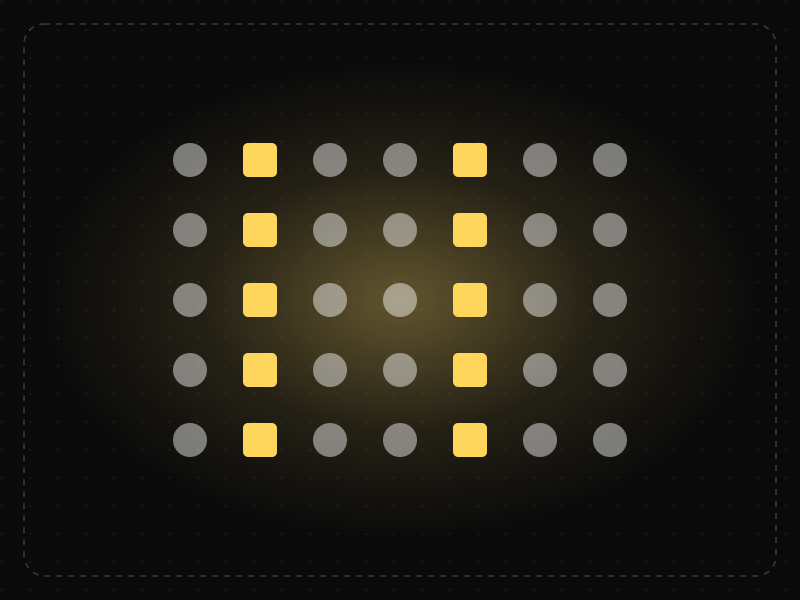 Perception
Law of Similarity
Elements that look alike — in color, shape, size or style — are perceived as related or as having the same function.
 Perception
Law of Uniform Connectedness
Elements that are visually connected — by lines, colors or shared frames — are perceived as more related than elements with no connection.
 Interaction & speed
Doherty Threshold
Productivity and engagement rise sharply when a system responds in under about 400 milliseconds, so neither the user nor the computer is left waiting on the other.
Law of Common Fate in practice
- Career guidesUX psychology skills employers want in 2027: attention, memory, perception, decision-making and how designers apply them without manipulationUX psychology skills employers want in 2027: attention, memory, perception, decision-making, Hick's and Fitts's laws, cognitive load and ethics.
- UI/UX designLaws of UX explained: Hick's law, Fitts's law and Jakob's law, with app examplesThe three most-used laws of UX explained with app examples: Hick's law (choices), Fitts's law (target size and distance) and Jakob's law (familiarity).
- UI/UX designUI vs UX design: what's the difference, and which career fits you?UI vs UX design explained: what each covers, the skills and tools, how they work together, salaries in India and how to choose between the two careers.
- Everyday design scienceWhy the human body is shaped the way it is: the design logic behind every partWhy is every body part shaped the way it is? Domes protect, tubes carry, folds add surface, levers move. The design logic of 164 parts, and which can be moved.
- Making moneyApp monetization strategies that don't annoy users — designed with behavioural scienceMonetize your app without wrecking retention: value-first paywalls, honest trials, rewarded ads, anchoring and decoy pricing done ethically, and what to avoid.
- App marketing & ASO50 push notification examples that actually get clicked — and why they work50 push notification examples for onboarding, habits, commerce, money, social, learning and win-back — with the principle behind each one.

Certifications that test it

Get the ideas, not the noise.
Sign up with Google and we’ll send you short UX psychology tips by email — why people tap, stall and leave, and what to do about it. Unsubscribe anytime. Prefer something to keep? Get the free Laws of UX guide as a PDF.