 By
At a glance: Golden Temple (Harmandir Sahib)
- Location
- Amritsar, Punjab, India
- Built
- 1581–1604; rebuilt 1764; gilded early 19th century
- Type
- Gurdwara (Sikh temple) · Sacred
- Style
- Sikh architecture, blending Mughal and Rajput elements
- Commissioned by
- Guru Arjan; later Maharaja Ranjit Singh
- Architects & builders
- Designed under Guru Arjan; builders not recorded
- Materials
- Brick and marble, upper storeys covered in gilded copper
- Size
- Two-storey shrine at the centre of a square sacred pool
- UNESCO
- Not a World Heritage Site
Golden Temple: what it is
Guru Ram Das, the fourth Sikh Guru, excavated the sacred pool (Amrit Sarovar) that gave Amritsar its name. His son Guru Arjan built the temple at its centre and installed the Adi Granth, the Sikh scripture, in 1604.
The temple complex also includes the Akal Takht, the seat of Sikh temporal authority, and the langar, a free community kitchen that serves tens of thousands of meals a day to anyone who comes.
Golden Temple, then and now
Real images only: an earlier view and a recent photograph, each credited and linked to its original file. Switch between them or compare side by side.
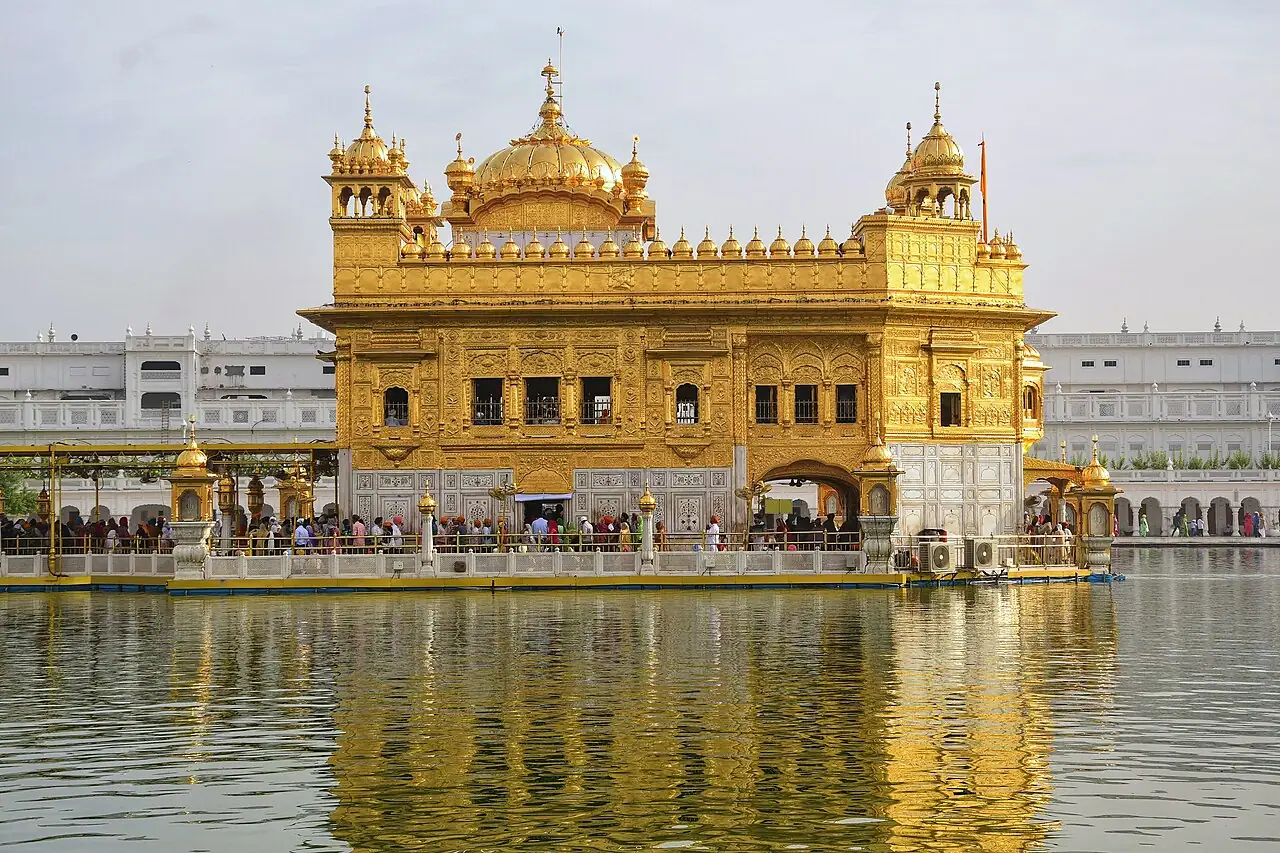
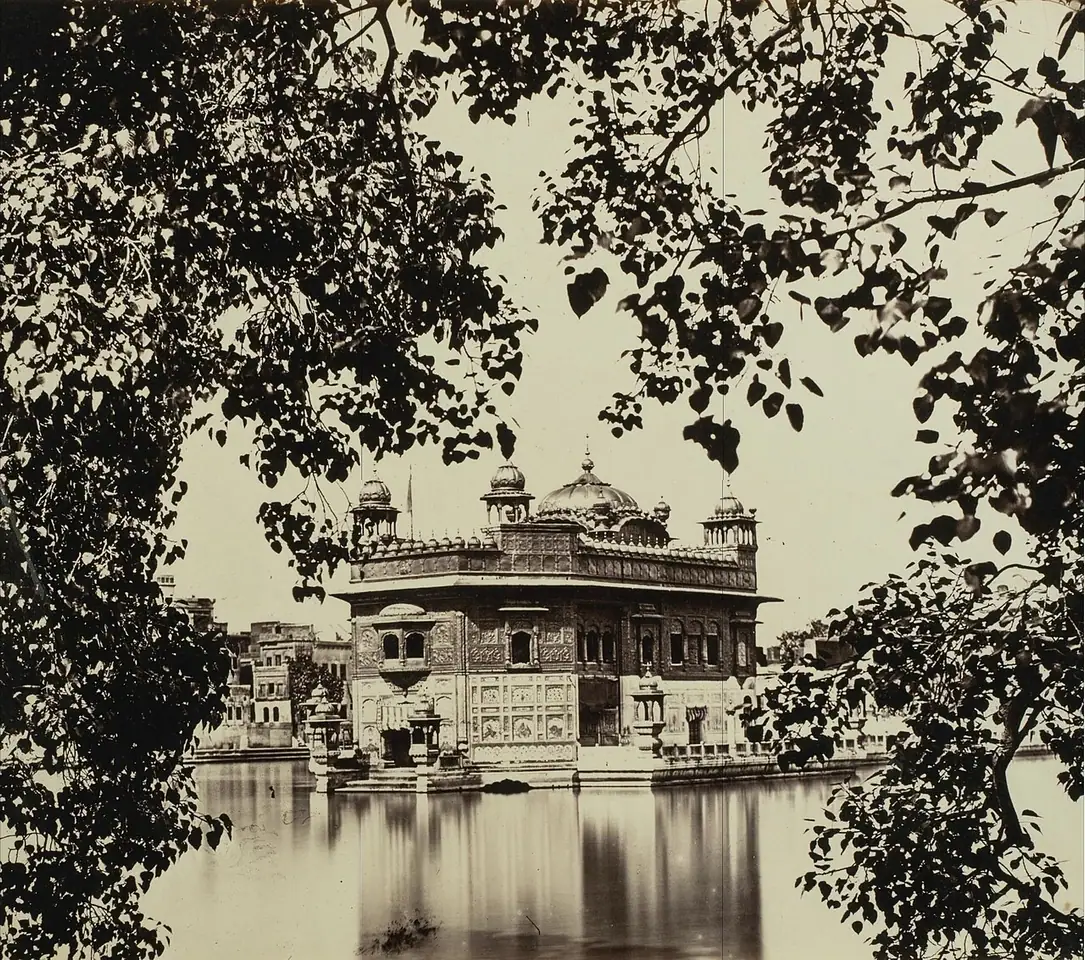 Then · 1859Now · TodayMove across the image to compare
Golden Temple: how it was designed
- 01
Four doors for everyone
Unlike many temples with a single entrance, the Harmandir has a door on each side, signalling that people of every caste, faith and direction are welcome.
- 02
Stepping down
The temple sits lower than the surrounding walkway, so worshippers descend to enter — an architectural expression of humility.
- 03
A temple on water
The two-storey shrine stands on a platform in the middle of the pool, reached by a single causeway, and is mirrored in the water all around.
- 04
Gold over marble
The lower storey is white marble inlaid with floral pietra dura; the upper storeys and dome are covered in gilded copper plates.
Construction timeline
Guru Ram Das begins excavating the sacred pool.
Guru Arjan builds the Harmandir Sahib and installs the Adi Granth in 1604.
Afghan forces of Ahmad Shah Durrani desecrate the temple and, in 1762, blow it up.
Sikh leaders begin rebuilding it.
Maharaja Ranjit Singh covers the upper storeys in gilded copper and adds marble work, giving it the name Golden Temple.
The complex is damaged in Operation Blue Star; the Akal Takht is later rebuilt.
How the design changed
From white to gold
Before Ranjit Singh's patronage the temple was not gilded. The gold that defines it today dates from the early 1800s, and was renewed in the 1990s.
A wider setting
The marble walkway (parikrama) around the pool and the surrounding buildings have been rebuilt and widened over time to handle growing numbers of pilgrims.
Who built it
Guru Arjan designed and built the original temple; a popular tradition says the Sufi saint Mian Mir laid its foundation stone, though historians debate this. The 1764 rebuilding was led by the Sikh misls (confederacies), and Maharaja Ranjit Singh funded its gilding.
Where it is
Amritsar, Punjab, India · 31.6200° N, 74.8767° E · Open in OpenStreetMap. Nearest in this guide: Qutub Minar (410 km), Taj Mahal (582 km), Sanchi Stupa (948 km).
 410 km582 km948 kmGolden Temple
Drag to pan, use + and − or double-click to zoom, and tap any pin for a preview.
Built around the same time
| Monument | Country | Built | Gap |
|---|---|---|---|
| Himeji Castle | Japan | 1601–1609 (earlier fort from 1346) | 20 years later |
| Saint Basil's Cathedral | Russia | 1555–1561 | 26 years earlier |
| Taj Mahal | India | 1632–1653 (mausoleum c. 1643) | 51 years later |
| Potala Palace | China | 1645–1694 (site used from the 7th century) | 64 years later |
Golden Temple: questions people ask
Who built the Golden Temple?
Guru Arjan, the fifth Sikh Guru, built it, completing it in 1604. It was rebuilt from 1764 and gilded under Maharaja Ranjit Singh in the early 19th century.
Why does the Golden Temple have four doors?
The four entrances symbolise openness to people of all backgrounds and directions, a core Sikh principle.
Is the Golden Temple made of real gold?
Its upper storeys and dome are covered in copper plates overlaid with gold leaf, first applied under Ranjit Singh and renewed in the 1990s.
How many people eat at the Golden Temple langar?
The free community kitchen serves tens of thousands of people a day, and more on festival days, all volunteer-run.
Sources & image credits
- Wikipedia — Golden Temple
- Shiromani Gurdwara Parbandhak Committee — Sri Harmandir Sahib
- Current photograph: The Golden Temple of Amrithsar 7.jpg by Shagil Kannur, CC BY-SA 4.0 — original on Wikimedia Commons · licence.
- Historic image: Photograph of the Golden Temple in Amritsar, Punjab, by Felice Beato, circa October 1859.jpg by Felice Beato, Public domain — original on Wikimedia Commons.
- Coordinates from Wikidata. Images resized and converted to WebP; otherwise unaltered. Checked October 25, 2026.
More to wander into
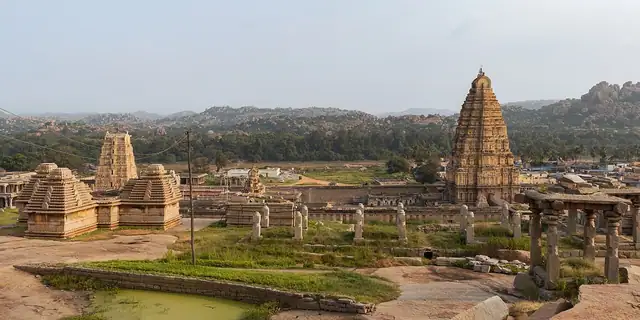
- World monument · Mainly 14th–16th century (Vijayanagara Empire, 1336–1565)Hampi (Group of Monuments)A sacked imperial capital of granite temples, stone chariots and singing pillars.
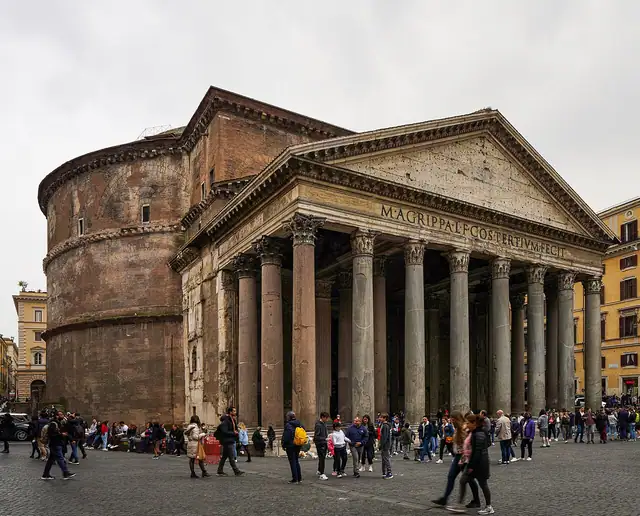
- World monument · c. 113–125 CEPantheonThe largest unreinforced concrete dome on Earth, open to the sky for 1,900 years.
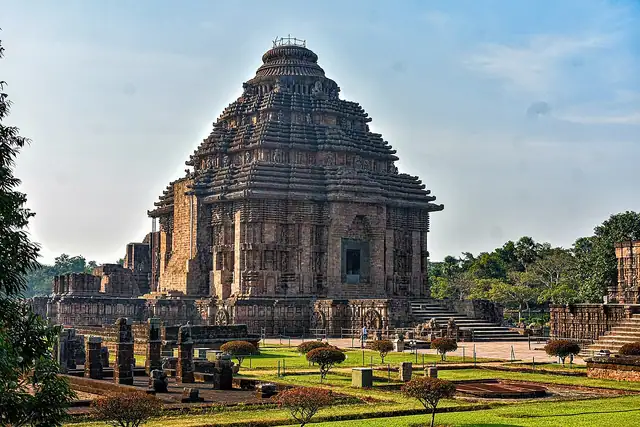
- World monument · c. 1250 CE (reign of Narasimhadeva I, 1238–1264)Konark Sun TempleThe sun god's chariot in stone, with wheels that work as sundials.
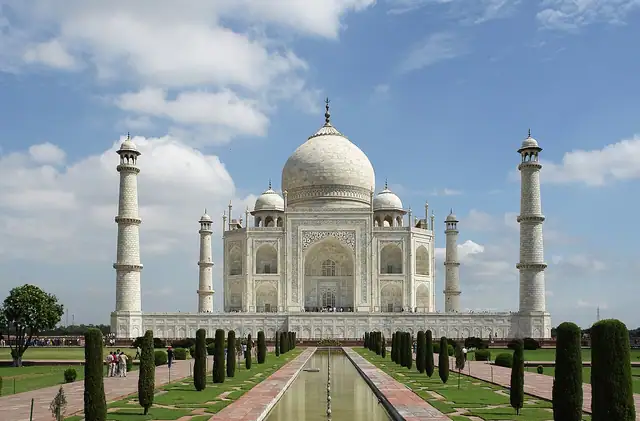
- World monument · 1632–1653 (mausoleum c. 1643)Taj MahalShah Jahan's marble tomb for Mumtaz Mahal, ruled by perfect symmetry.
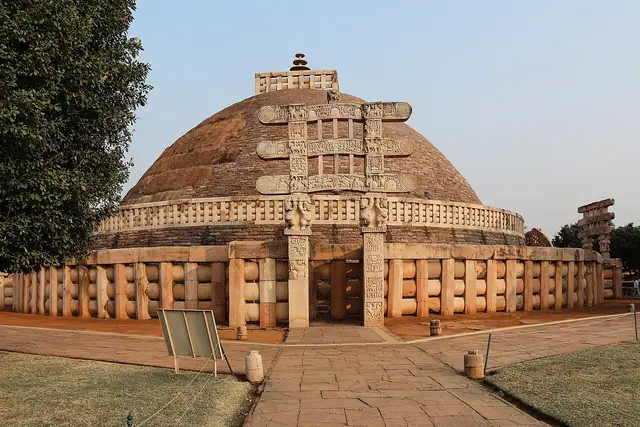
- World monument · 3rd century BCE – 1st century CEGreat Stupa at SanchiAshoka's stupa, with four gateways that tell the Buddha's story without showing him.
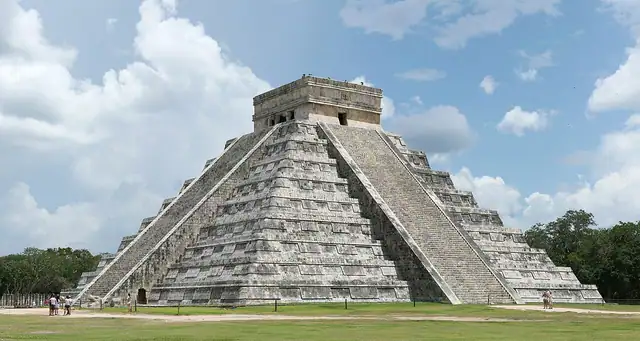
- World monument · c. 9th–11th century CE (outer pyramid)El Castillo, Chichen ItzaA Maya pyramid that counts the year and casts a serpent shadow at the equinox.
Get the ideas, not the noise.
Sign up with Google and we’ll send you short UX psychology tips by email — why people tap, stall and leave, and what to do about it. Unsubscribe anytime. Prefer something to keep? Get the free Laws of UX guide as a PDF.