Reciprocity
Also known as Reciprocity principle
People feel a strong urge to return favors, so giving value first makes users more willing to give back — attention, data or payment.
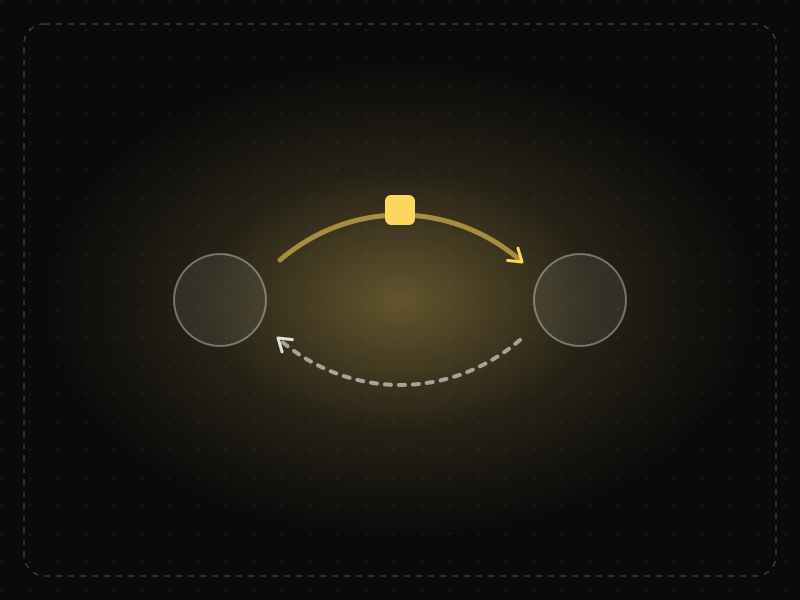
See it in action
The same screen without and with Reciprocity. Watch both sides play out, then compare the outcome.
Asking before giving anything feels like a toll booth — many leave.
After getting real value for free, people are glad to give an email in return.
What to watch: the order: value first, then a small, related ask.
Give something genuinely useful upfront, then make a proportionate ask.
Use “free” gifts to create guilt or obligation for unrelated, bigger asks.
Key takeaways
- Deliver real value before asking for sign-up, permissions or payment.
- Unexpected, personal gestures create the strongest response.
- Asking too early, before giving anything, breaks the exchange.
Quick facts
- Also known as
- Reciprocity principle
- Described by
- Alvin Gouldner; popularised by Robert Cialdini
- Year
- 1960
- Category
- Motivation & emotion
- Related laws
- Social Proof, Fogg Behavior Model, Endowment Effect
Reciprocity explained
Reciprocity is the social norm of responding to a positive action with another positive action. When someone gives us something, we feel an obligation to give something back.
In digital products, giving users real value first (free tools, useful content, generous trials) increases their willingness to sign up, share information or pay.
Reciprocity works best when the initial gift is genuine and unconditional. If it feels like a trick, it creates resentment instead of goodwill.
Where it comes from
Studied by Dennis Regan in a 1971 experiment where participants bought more raffle tickets from someone who had first given them an unrequested soft drink, and popularised by Robert Cialdini as one of his six principles of influence (1984).
How it shows up in apps
Letting users experience the product before an account wall, or delivering a useful result before a paywall, makes later asks feel fair.
Reciprocity examples
A photo app lets users edit and export one photo for free before asking them to create an account — and more of them sign up.
Free tools and content
Companies offer free calculators, templates or guides that solve real problems, building goodwill that makes visitors more open to their paid products.
Value before sign-up
Apps that let users try core features before creating an account give value first, which increases sign-up rates when the account prompt appears.
Referral rewards
Referral programmes that reward both the referrer and the new user tap into reciprocity on both sides.
How to apply Reciprocity
- Give users meaningful value before asking for anything.
- Make the first interaction helpful, not transactional.
- Ask for something small and reasonable after delivering value.
- Personalise gifts and help where possible.
- Be genuine; avoid gifts that are just bait for aggressive upselling.
Want Reciprocity checked in your own product? Our retention & churn audit evaluates it alongside the other principles that shape how users decide, onboard and stay.
Common mistakes
- Gating all value behind sign-up or payment.
- Giving low-quality freebies that reflect poorly on the brand.
- Asking for too much in return immediately.
How to measure it
Compare sign-up, share and conversion rates when users receive value first versus when they are asked first. Track the quality and retention of users acquired through free value.
Frequently asked questions
What is Reciprocity?
People feel a strong urge to return favors, so giving value first makes users more willing to give back — attention, data or payment.
Where does Reciprocity come from?
Studied by Dennis Regan in a 1971 experiment where participants bought more raffle tickets from someone who had first given them an unrequested soft drink, and popularised by Robert Cialdini as one of his six principles of influence (1984).
How does Reciprocity apply to app design?
Letting users experience the product before an account wall, or delivering a useful result before a paywall, makes later asks feel fair.
Is reciprocity one of Cialdini's principles?
Yes. Reciprocity is one of the principles of influence described by Robert Cialdini in Influence: The Psychology of Persuasion.
How can SaaS products use reciprocity?
By offering genuinely useful free tools, content or trials before asking users to sign up or pay.
How do you measure Reciprocity in a product?
Compare sign-up, share and conversion rates when users receive value first versus when they are asked first. Track the quality and retention of users acquired through free value.
Sources
- Regan, D. T. (1971). Effects of a favor and liking on compliance. Journal of Experimental Social Psychology, 7(6). Find on Google Scholar ↗
- Cialdini, R. B. (1984). Influence: The Psychology of Persuasion. William Morrow. Find on Google Scholar ↗
Related laws
 Decision-making
Social Proof
When people are uncertain, they look to what others like them are doing to decide what's right.
 Motivation & emotion
Fogg Behavior Model
A behavior happens when motivation, ability and a prompt come together at the same moment (B = MAP); if one is missing, the behavior doesn't happen.
 Motivation & emotion
Endowment Effect
People value things more once they feel they own them — including progress, content and customizations inside an app.
Reciprocity in practice
- App marketing & ASO25 referral program examples from top apps — and the design behind each25 referral program examples — Dropbox, Google Pay (Tez), Harry's, Robinhood and more — grouped by reward type, with the design lessons and India-specific tips.
- Making moneyApp monetization strategies that don't annoy users — designed with behavioural scienceMonetize your app without wrecking retention: value-first paywalls, honest trials, rewarded ads, anchoring and decoy pricing done ethically, and what to avoid.
- Career guidesUX psychology skills employers want in 2027: attention, memory, perception, decision-making and how designers apply them without manipulationUX psychology skills employers want in 2027: attention, memory, perception, decision-making, Hick's and Fitts's laws, cognitive load and ethics.
- UI/UX designOnboarding screen examples: 40 patterns that get users to value faster40 app onboarding examples and patterns — welcome, sign-up, personalisation, permissions, empty states and first success — and why each works.
- Making moneySubscription vs one-time purchase: which makes more money for your app?Subscription vs one-time purchase for apps: lifetime value maths, when each wins, hybrid models, store fees and what Indian users prefer.
- Architecture & engineeringUNESCO World Heritage Sites in India: all 45, with a map, dates and what makes each one specialIndia has 45 UNESCO World Heritage Sites as of 2026, after Sarnath: 37 cultural, 7 natural, 1 mixed. All of them on one map, with dates and design notes.
Certifications that test it
- Free certification · UX/UI, Design, Research & CreativeBehavioral Design CertificationCertifies that you can apply behavioral psychology and behavioral economics to product design ethically — motivation, decision architecture, habits and the laws of UX.
- Free certification · Digital Marketing, SEO, AEO & GrowthGrowth Marketing CertificationCertifies that you can grow a product sustainably — acquisition channels and unit economics, lifecycle and retention marketing, growth loops and virality, and experiments and attribution.
Get the ideas, not the noise.
Sign up with Google and we’ll send you short UX psychology tips by email — why people tap, stall and leave, and what to do about it. Unsubscribe anytime. Prefer something to keep? Get the free Laws of UX guide as a PDF.