Curiosity Gap
Also known as Information gap theory
When people notice a gap between what they know and what they want to know, curiosity motivates them to close it.
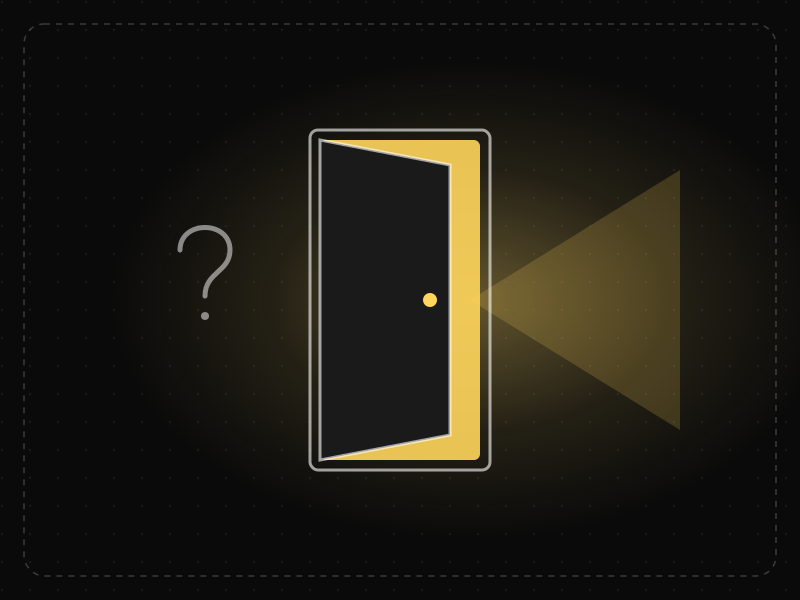
See it in action
The same screen without and with Curiosity Gap. Watch both sides play out, then compare the outcome.
A generic statement closes the loop before it opens; there's no reason to tap.
A concrete hint at something people want to know invites the tap — and the report delivers it.
What to watch: the same report; only the gap between what's shown and what's promised changes.
Tease specific, relevant information and always pay it off on the next screen.
Use clickbait that over-promises; broken curiosity gaps destroy trust fast.
Key takeaways
- Teasing valuable information motivates users to take the next step.
- The gap must feel small enough to close and worth closing.
- Always deliver on the promise; clickbait destroys trust.
Quick facts
- Also known as
- Information gap theory
- Described by
- George Loewenstein
- Year
- 1994
- Category
- Motivation & emotion
- Related laws
- Zeigarnik Effect, Variable Reward, Goal-Gradient Effect
Curiosity Gap explained
Curiosity is triggered when people become aware of something they do not know but would like to. The gap creates tension that motivates action to resolve it.
The effect is strongest when people already know a little about the topic and the missing piece feels attainable.
In products, curiosity gaps can draw users into onboarding, encourage exploration and highlight value, but only if the reward lives up to the promise.
Where it comes from
Economist and psychologist George Loewenstein proposed the information gap theory of curiosity in 1994. He argued that curiosity arises when attention is drawn to a gap in knowledge, producing a feeling of deprivation that people want to resolve.
How it shows up in apps
Previews, teasers, progress reveals and personalised insights create curiosity gaps that encourage sign-up, engagement and exploration.
Curiosity Gap examples
A personality quiz app shows users a partial result ('You are one of three types...') and invites them to answer two more questions to reveal their full profile. Completion rises because the gap feels small and worth closing.
Personalised insights
Apps that tease a personalised insight before sign-up ('See how your spending compares') motivate users to create an account.
Locked previews
Content platforms show the beginning of an article or video and invite users to continue, drawing them into the full experience.
Feature teasers
Products hint at what users can unlock next, encouraging them to explore deeper features.
How to apply Curiosity Gap
- Reveal part of a valuable outcome to motivate the next step.
- Keep the gap small and the next step easy.
- Make sure the payoff is genuinely valuable.
- Use curiosity to guide users toward meaningful features.
- Avoid misleading headlines and teasers.
Want Curiosity Gap checked in your own product? Our retention & churn audit evaluates it alongside the other principles that shape how users decide, onboard and stay.
Common mistakes
- Clickbait that fails to deliver, eroding trust.
- Creating gaps that require too much effort to close.
- Hiding essential information behind teasers.
How to measure it
Measure click-through and completion rates for teaser-based steps, and track satisfaction and retention to make sure curiosity leads to value rather than disappointment.
Frequently asked questions
What is Curiosity Gap?
When people notice a gap between what they know and what they want to know, curiosity motivates them to close it.
Where does Curiosity Gap come from?
Economist and psychologist George Loewenstein proposed the information gap theory of curiosity in 1994. He argued that curiosity arises when attention is drawn to a gap in knowledge, producing a feeling of deprivation that people want to resolve.
How does Curiosity Gap apply to app design?
Previews, teasers, progress reveals and personalised insights create curiosity gaps that encourage sign-up, engagement and exploration.
What is the information gap theory?
George Loewenstein's 1994 theory that curiosity arises when people notice a gap between what they know and what they want to know.
How can onboarding use the curiosity gap?
By teasing a personalised result or valuable insight that users unlock by completing a few easy steps.
How do you measure Curiosity Gap in a product?
Measure click-through and completion rates for teaser-based steps, and track satisfaction and retention to make sure curiosity leads to value rather than disappointment.
Sources
- Loewenstein, G. (1994). The psychology of curiosity: A review and reinterpretation. Psychological Bulletin, 116(1). Find on Google Scholar ↗
Related laws
 Motivation & emotion
Zeigarnik Effect
People remember unfinished or interrupted tasks better than completed ones, and feel a pull to return and complete them.
 Motivation & emotion
Variable Reward
Rewards that come unpredictably are more engaging than predictable ones, because anticipation of what might come next keeps people returning.
 Motivation & emotion
Goal-Gradient Effect
People speed up their effort as they get closer to a goal, so visible progress — even artificial head starts — increases completion.
Curiosity Gap in practice
- Career guidesUX psychology skills employers want in 2027: attention, memory, perception, decision-making and how designers apply them without manipulationUX psychology skills employers want in 2027: attention, memory, perception, decision-making, Hick's and Fitts's laws, cognitive load and ethics.
- UI/UX designUI vs UX design: what's the difference, and which career fits you?UI vs UX design explained: what each covers, the skills and tools, how they work together, salaries in India and how to choose between the two careers.
- Career guidesHow to get a behavioral design job in 2027: applying behavioural science to products ethically — friction, defaults, motivation and testingHow to get a behavioral design job in 2027: behavioural science for products, friction, defaults, motivation, ethics, dark pattern rules and testing.
- Product managementProduct metrics every PM must know — definitions, formulas and when to use themThe product metrics every PM must know — acquisition, activation, engagement, retention, revenue and quality — with formulas, pitfalls and a metric tree.
- History50 of the world's greatest monuments: how they were designed, built and changedA design history of 50 famous monuments, from 11,600-year-old Göbekli Tepe to the Burj Khalifa: who built them, when and how they changed, with a map.
- Career guidesInformation architecture skills employers want in 2027: organising content, navigation, labels, taxonomies, card sorting and tree testingInformation architecture skills employers want in 2027: content inventories, navigation, labelling, taxonomies, card sorting, tree testing and search.

Get the ideas, not the noise.
Sign up with Google and we’ll send you short UX psychology tips by email — why people tap, stall and leave, and what to do about it. Unsubscribe anytime. Prefer something to keep? Get the free Laws of UX guide as a PDF.