Peak-End Rule
People judge an experience mostly by how they felt at its most intense moment and at its end, not by the average of every moment.
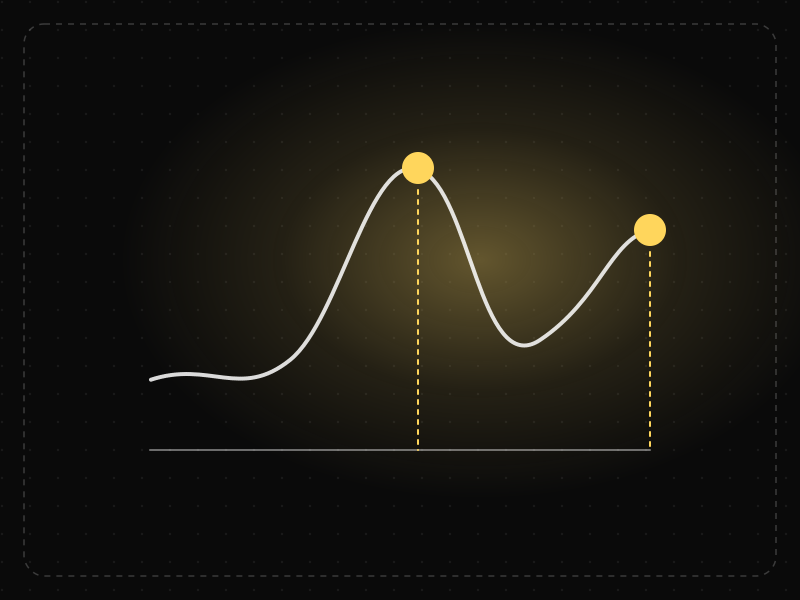
See it in action
The same screen without and with Peak-End Rule. Watch both sides play out, then compare the outcome.
A smooth ride spoiled by a surprise fee at the end is remembered as a bad experience.
The middle is unchanged, but a delightful peak and a clean ending set the memory.
What to watch: only the peak and the final moment change — and the remembered score follows them.
Design the best moment and the final moment deliberately (confirmations, receipts, offboarding).
End with friction, upsells or surprises — or ignore the middle entirely.
Key takeaways
- Design deliberate high points into key journeys.
- End flows on a positive, clear note — the last screen shapes the memory.
- Identify and soften the worst moment; negative peaks are remembered too.
Quick facts
- Also known as
- —
- Described by
- Daniel Kahneman & Barbara Fredrickson
- Year
- 1993
- Category
- Motivation & emotion
- Related laws
- Aesthetic-Usability Effect, Zeigarnik Effect, Serial Position Effect
Peak-End Rule explained
The peak-end rule states that people judge an experience largely by how they felt at its most intense point (the peak) and at its end, rather than by the average of every moment.
This means that a single frustrating moment or a disappointing ending can colour how users remember an entire journey, while a delightful high point and a satisfying finish can make an imperfect experience feel good in retrospect.
For product teams, it means identifying the emotional peaks and endings of key journeys (onboarding, purchases, support interactions, cancellations) and designing them deliberately.
Where it comes from
Daniel Kahneman, Barbara Fredrickson, Charles Schreiber and Donald Redelmeier showed in 1993 that people preferred to repeat a longer cold-water trial that ended slightly less unpleasantly over a shorter one — evidence that memory weighs peaks and endings, not duration.
How it shows up in apps
Users decide whether to come back based on remembered experiences. A frustrating error at the worst moment, or an anticlimactic ending to onboarding, can outweigh many smooth steps.
Peak-End Rule examples
After a user completes their first workout, a fitness app shows a celebratory summary and their streak — a positive peak and ending that make the session memorable.
Celebrating completion
Apps that show a celebratory animation when a user finishes a lesson, completes a goal or sends their first invoice create a positive peak at a meaningful moment.
Order confirmation
A clear, reassuring confirmation screen with delivery details and next steps ends a checkout on a high note, reducing buyer anxiety.
Graceful cancellation
A simple, respectful cancellation flow leaves users with a better final impression than an obstructive one, making them more likely to return or recommend the product.
How to apply Peak-End Rule
- Map the emotional highs and lows of your key journeys with research.
- Design moments of delight at meaningful achievements.
- Make the end of every journey (confirmation, completion, offboarding) clear and positive.
- Prioritise fixing the most painful moments, since negative peaks are remembered strongly.
- Follow up after key tasks with useful next steps rather than abrupt endings.
Want Peak-End Rule checked in your own product? Our retention & churn audit evaluates it alongside the other principles that shape how users decide, onboard and stay.
Common mistakes
- Ignoring endings such as confirmations, receipts and offboarding.
- Adding delight to trivial moments while severe pain points remain.
- Making cancellation difficult, which leaves a lasting negative memory.
How to measure it
Collect satisfaction or NPS feedback at the end of key journeys and correlate it with specific moments using journey analytics and session recordings. Compare retrospective ratings before and after redesigning peak moments and endings.
Frequently asked questions
What is Peak-End Rule?
People judge an experience mostly by how they felt at its most intense moment and at its end, not by the average of every moment.
Where does Peak-End Rule come from?
Daniel Kahneman, Barbara Fredrickson, Charles Schreiber and Donald Redelmeier showed in 1993 that people preferred to repeat a longer cold-water trial that ended slightly less unpleasantly over a shorter one — evidence that memory weighs peaks and endings, not duration.
How does Peak-End Rule apply to app design?
Users decide whether to come back based on remembered experiences. A frustrating error at the worst moment, or an anticlimactic ending to onboarding, can outweigh many smooth steps.
Who discovered the peak-end rule?
Daniel Kahneman and colleagues described it in 1993 research where people judged unpleasant experiences mainly by their worst moment and their ending.
How can apps use the peak-end rule?
By creating positive peaks at moments of achievement, fixing the worst pain points and ending journeys with clear, reassuring confirmations.
How do you measure Peak-End Rule in a product?
Collect satisfaction or NPS feedback at the end of key journeys and correlate it with specific moments using journey analytics and session recordings. Compare retrospective ratings before and after redesigning peak moments and endings.
Sources
- Kahneman, D., Fredrickson, B. L., Schreiber, C. A. & Redelmeier, D. A. (1993). When more pain is preferred to less: Adding a better end. Psychological Science, 4(6). Find on Google Scholar ↗
- Redelmeier, D. A. & Kahneman, D. (1996). Patients' memories of painful medical treatments. Pain, 66(1). Find on Google Scholar ↗
Related laws
 Perception
Aesthetic-Usability Effect
People perceive attractive interfaces as easier to use — and are more forgiving of their flaws — than plain ones with the same functionality.
 Motivation & emotion
Zeigarnik Effect
People remember unfinished or interrupted tasks better than completed ones, and feel a pull to return and complete them.
 Memory & attention
Serial Position Effect
People best remember the first and last items in a series and tend to forget the ones in the middle.
Peak-End Rule in practice
- App marketing & ASOHow to get app reviews and ratings legitimately — timing, prompts and repliesHow to get more app reviews legitimately: ask at the right moment with the official in-app prompts, reply to reviews, fix what users report.
- Career guidesHow to get a behavioral design job in 2027: applying behavioural science to products ethically — friction, defaults, motivation and testingHow to get a behavioral design job in 2027: behavioural science for products, friction, defaults, motivation, ethics, dark pattern rules and testing.
- Everyday design scienceWhy is the keyboard QWERTY? What the patents, telegraphs and typing data actually showKeyboards are QWERTY because of an 1870s typewriter, not a plan to slow typists. What patents, telegraph history and 136 million keystrokes reveal about it.
- Career guidesUser onboarding and retention skills employers want in 2027: activation and aha moments, onboarding patterns, habit design, churn reduction and win-backUser onboarding and retention skills employers want in 2027: activation, aha moments, onboarding patterns, habit design, cohorts, churn reduction and win-back.
- HistoryThe world's 38 biggest languages, and the design of how they're writtenAll 38 languages with 50 million+ speakers (Ethnologue 2026): speakers, history, scripts, numerals and 'How are you?' in each — with every figure sourced.
- Everyday design scienceWhy the human body is shaped the way it is: the design logic behind every partWhy is every body part shaped the way it is? Domes protect, tubes carry, folds add surface, levers move. The design logic of 164 parts, and which can be moved.

Certifications that test it
- Free certification · UX/UI, Design, Research & CreativeUX Design CertificationCertifies that you can take a product problem from user need to a tested, usable flow — research, information architecture, interaction design and usability evaluation.
- Free certification · UX/UI, Design, Research & CreativeProduct Design CertificationCertifies end-to-end product design: framing problems against business goals, designing and shipping solutions with engineering, and measuring their impact.
- Free certification · UX/UI, Design, Research & CreativeUX Research CertificationCertifies that you can plan, run and synthesize user research that changes decisions — method choice, recruiting, interviewing, usability testing, surveys and analysis.
- Free certification · AI & Generative AIAI UX Design CertificationCertifies that you can design AI-powered products people trust — setting expectations, conversational and agent UX, handling errors and uncertainty, and responsible AI.
- Free certification · Product, Project Management & Business AnalysisProduct Manager CertificationCertifies that you can run product well — discovery, strategy and prioritization, metrics, delivery with design and engineering, and launch.
- Free certification · Product, Project Management & Business AnalysisDesign Leadership CertificationCertifies that you can lead design — build and grow teams, set design strategy, run design operations, measure design's impact and influence the business.






Get the ideas, not the noise.
Sign up with Google and we’ll send you short UX psychology tips by email — why people tap, stall and leave, and what to do about it. Unsubscribe anytime. Prefer something to keep? Get the free Laws of UX guide as a PDF.