 By
At a glance: Statue of Liberty
- Location
- Liberty Island, New York Harbor, United States
- Built
- 1876–1886 (dedicated 28 October 1886)
- Type
- Colossal statue · Statue
- Style
- Neoclassical
- Commissioned by
- The people of France, as a gift to the United States
- Architects & builders
- Sculptor Frédéric Auguste Bartholdi; frame by Gustave Eiffel; pedestal by Richard Morris Hunt
- Materials
- Copper sheets on an iron frame; granite and concrete pedestal
- Size
- Statue about 46 m; 93 m from ground to torch
- UNESCO
- Statue of Liberty (1984)
Statue of Liberty: what it is
The idea came from French supporters of liberty and the Union cause, marking the centenary of American independence. France paid for the statue; Americans raised money for the pedestal, helped by Joseph Pulitzer's newspaper campaign.
The statue was built in Paris, shipped to New York in 350 pieces packed in 214 crates in 1885, and reassembled on the star-shaped walls of Fort Wood.
Statue of Liberty, then and now
Real images only: an earlier view and a recent photograph, each credited and linked to its original file. Switch between them or compare side by side.
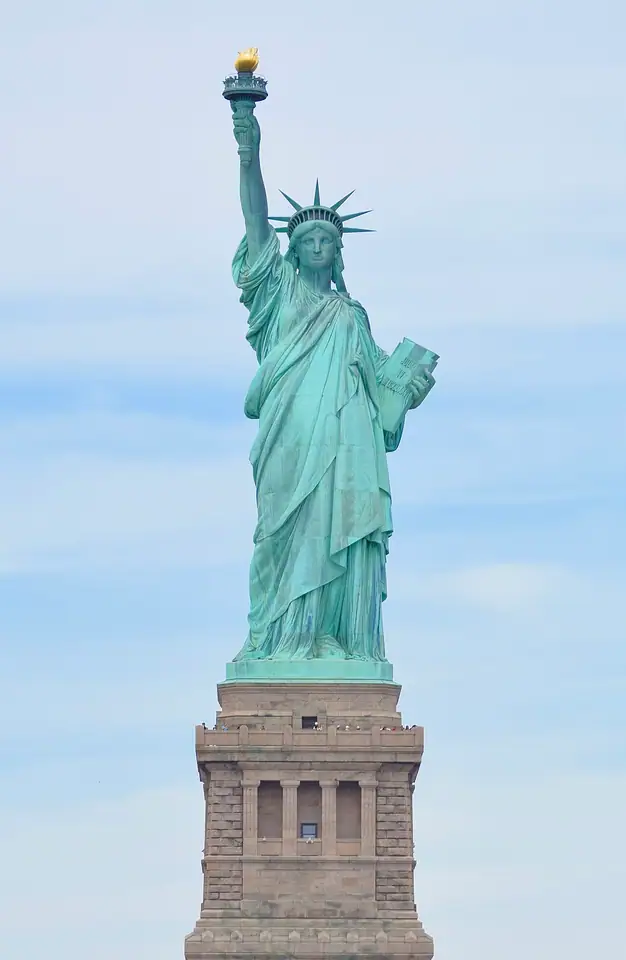
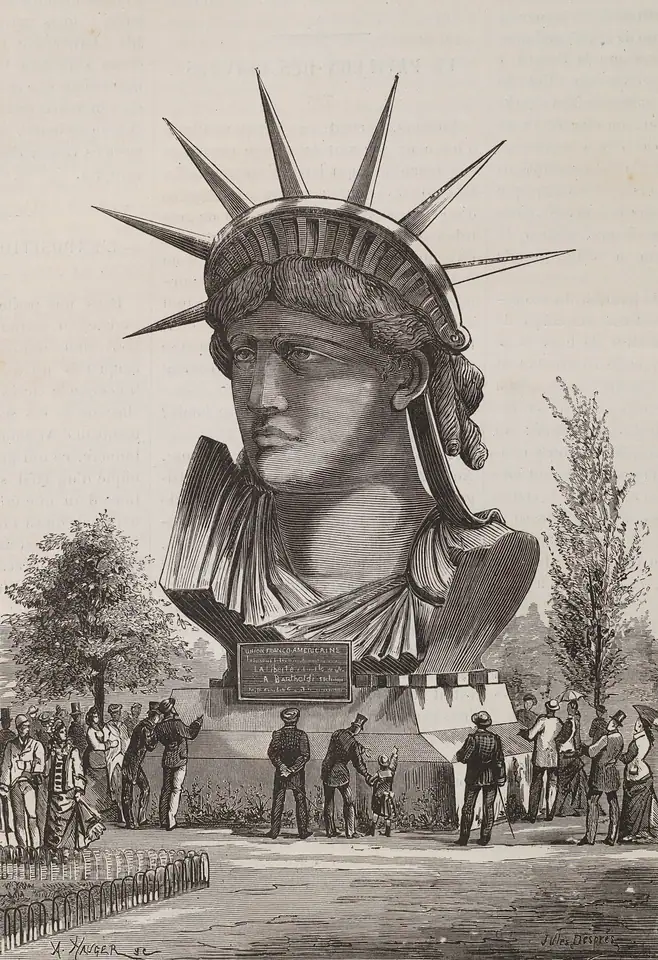 Then · 1878Now · TodayMove across the image to compare
Statue of Liberty: how it was designed
- 01
A skin, not a solid
The figure is made of about 300 copper sheets only about 2.4 mm thick, hammered by hand over wooden moulds (repoussé) and riveted together.
- 02
An iron skeleton that flexes
Eiffel designed a central iron pylon with a secondary frame, to which the skin is attached by flexible iron straps. The skin can move with heat and wind without tearing.
- 03
Symbols in the form
Liberty holds a tablet inscribed July IV MDCCLXXVI (4 July 1776), a broken chain lies at her feet, and the seven rays of her crown are often read as the seven seas and continents.
Construction timeline
The arm and torch are displayed at the Centennial Exhibition in Philadelphia.
The head is shown at the Paris World's Fair.
Eiffel takes over the internal structure after Eugène Viollet-le-Duc's death in 1879.
The statue arrives in New York in pieces.
The statue is dedicated.
A major restoration replaces the torch and much of the internal iron; UNESCO inscription in 1984.
How the design changed
Copper to green
The statue was reddish-brown copper in 1886. Exposure to air and seawater produced the green patina by about 1906, which now protects the metal underneath.
A new torch
The original torch was altered with glass windows in 1916, which let water in. It was replaced in 1986 with a copper flame covered in gold leaf; the original is displayed in the museum on the island.
Who built it
Bartholdi spent about two decades on the project. Viollet-le-Duc planned the first internal support before his death; Eiffel's engineering made it work. Workshops of Gaget, Gauthier et Cie in Paris made the copper sheets.
Where it is
Liberty Island, New York Harbor, United States · 40.6892° N, 74.0444° W · Open in OpenStreetMap. Nearest in this guide: Chichen Itza (2,614 km), Teotihuacan (3,314 km), Stonehenge (5,473 km).
 2,614 km3,314 km5,473 kmStatue of Liberty
Drag to pan, use + and − or double-click to zoom, and tap any pin for a preview.
Built around the same time
| Monument | Country | Built | Gap |
|---|---|---|---|
| Sagrada Família | Spain | 1882 – ongoing (central tower finished 2026) | 6 years later |
| Neuschwanstein Castle | Germany | 1869–1886 (never completed) | 7 years earlier |
| Eiffel Tower | France | 28 January 1887 – 31 March 1889 | 11 years later |
| Great Mosque of Djenné | Mali | 1906–1907 (first mosque on the site 13th century) | 30 years later |
Statue of Liberty: questions people ask
Who designed the Statue of Liberty?
French sculptor Frédéric Auguste Bartholdi designed it; Gustave Eiffel engineered the internal frame and Richard Morris Hunt designed the pedestal.
Why is the Statue of Liberty green?
It is made of copper, which reacted with air and seawater to form a green patina within about 20–30 years of its dedication.
How tall is the Statue of Liberty?
The statue is about 46 metres from heel to torch; with the pedestal and foundation it is about 93 metres from the ground.
When was the Statue of Liberty given to the US?
It was dedicated on 28 October 1886, a gift from the people of France to commemorate American independence.
Sources & image credits
- UNESCO World Heritage Centre — Statue of Liberty
- Wikipedia — Statue of Liberty
- US National Park Service — Statue of Liberty National Monument
- Current photograph: Front view of Statue of Liberty (cropped).jpg by AskALotl, CC0 — original on Wikimedia Commons · licence.
- Historic image: Tête de la statue colossale de la Liberté, dans le parc du Champ-de-Mars.jpg by Despres, Jules (creator) Hauger, A. (creator), Public domain — original on Wikimedia Commons.
- Coordinates from Wikidata. Images resized and converted to WebP; otherwise unaltered. Checked October 25, 2026.
More to wander into
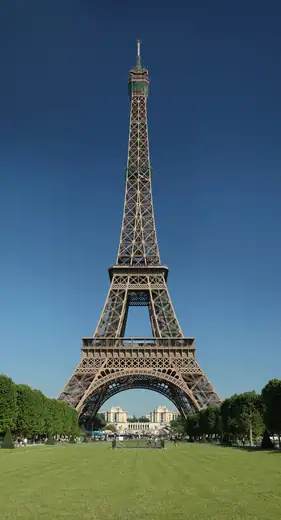
- World monument · 28 January 1887 – 31 March 1889Eiffel TowerA temporary 1889 iron tower that radio and Parisians decided to keep.
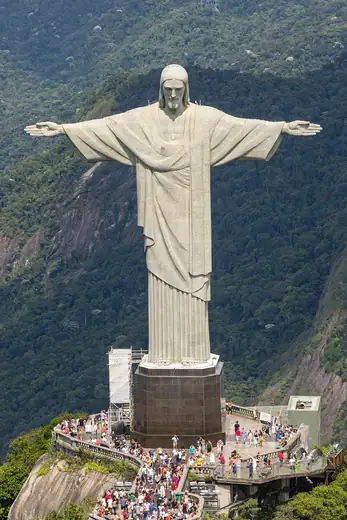
- World monument · 1922–1931Christ the RedeemerA concrete Christ in a coat of soapstone tiles, arms open 700 metres above Rio.
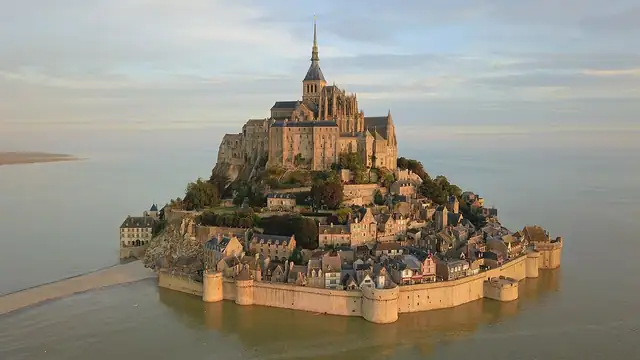
- World monument · 708–1521; spire 1897Mont-Saint-MichelAn abbey stacked on a rock in the sea, made an island again in 2014.
- World monument · 2004–2010 (opened 4 January 2010)Burj KhalifaAn 828-metre tower shaped to confuse the wind.
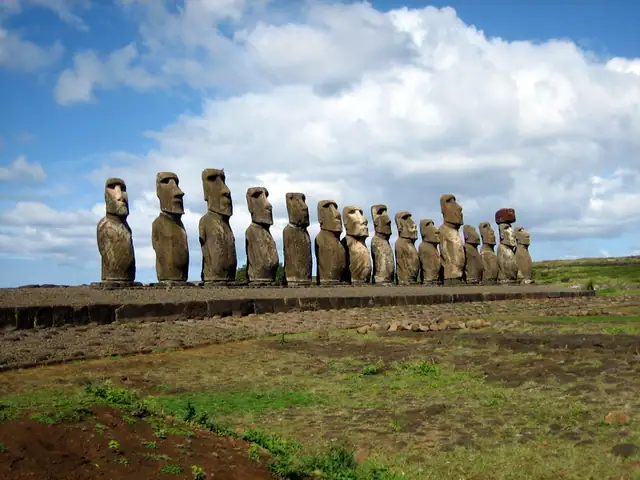
- World monument · c. 1250–1500 CE (most statues)Moai of Rapa NuiAncestor statues carved from a volcano, toppled, then raised again by cranes.
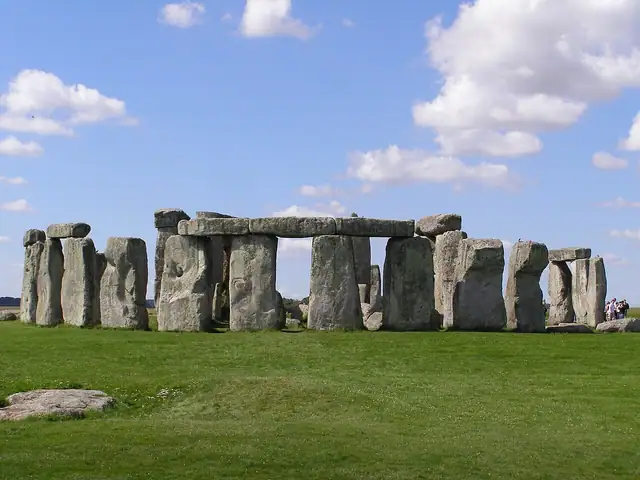
- World monument · c. 3000–1600 BCE (in stages)StonehengeA Neolithic stone circle aligned on the solstices, its stones locked with carpentry joints.

Get the ideas, not the noise.
Sign up with Google and we’ll send you short UX psychology tips by email — why people tap, stall and leave, and what to do about it. Unsubscribe anytime. Prefer something to keep? Get the free Laws of UX guide as a PDF.