 By
Quick answer: What are the best alternatives to Crunchbase?
- Tracxn Lite — free with usage limits; startups, investors and funding rounds.
- Owler Community — free forever for light company and competitor research; Pro is $39 a month.
- SEC EDGAR — free US filings, including Form D notices that companies file when they raise money.
- Apollo — a free plan for founders and early teams doing sales prospecting.
- PitchBook (price on request) and Dealroom (from €250 a seat a month) — the deepest investor data.
- Wellfound, Product Hunt and Science of Apps Launchpad — free places for founders to be found.
Key takeaways
- Crunchbase itself starts at $49 a month (Pro, billed annually in the first year) or $99 month to month, and its pricing page lists no free plan.
- Free alternatives cover most early needs: Tracxn Lite and Owler for company lookups, SEC EDGAR for US fundraising filings, Apollo for contacts.
- PitchBook and Dealroom are built for investors and corporate teams; Dealroom's minimum is three seats billed annually.
- Founders who want to be discovered need a product page, not a funding database entry: Wellfound for hiring, Product Hunt for a launch, a permanent Launchpad profile for search.
- Pick by the job: discovery, investor research or sales prospecting. No single tool is best at all three.
Crunchbase is where most people start when they want to look up a startup, a funding round or an investor. It's also no longer cheap for occasional use: its pricing page lists no free plan, and Pro starts at $49 a month. The good news is that "Crunchbase" covers three different jobs, and each has a strong alternative, several of them free. This guide sorts nine of them by that job: finding startup and funding data, researching companies and competitors, and prospecting for sales, plus three free places for founders who want to be found. We checked every price on the vendor's own page on 17 November 2026. Jump to the comparison table, which one to choose or the free stack.
Nine Crunchbase alternatives, free and paid
 List free
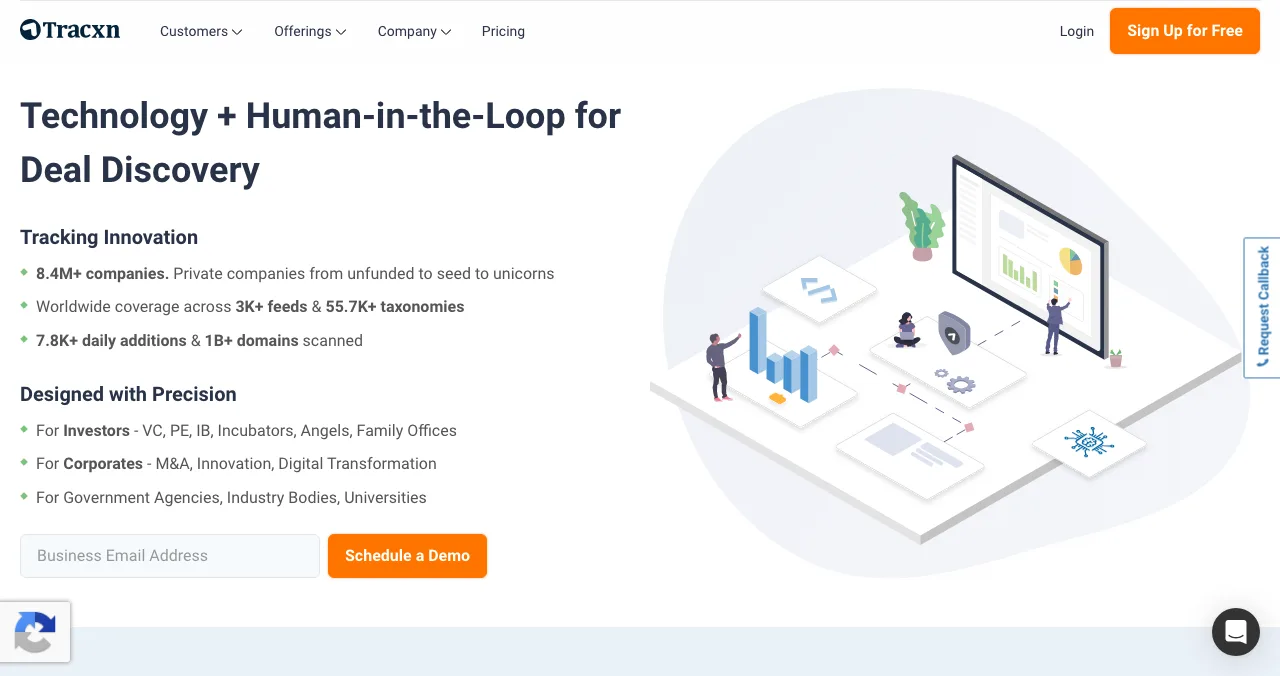
Tracxn Best free
Startups, investors and funding rounds, with a free Lite plan.
Free LitePremium on request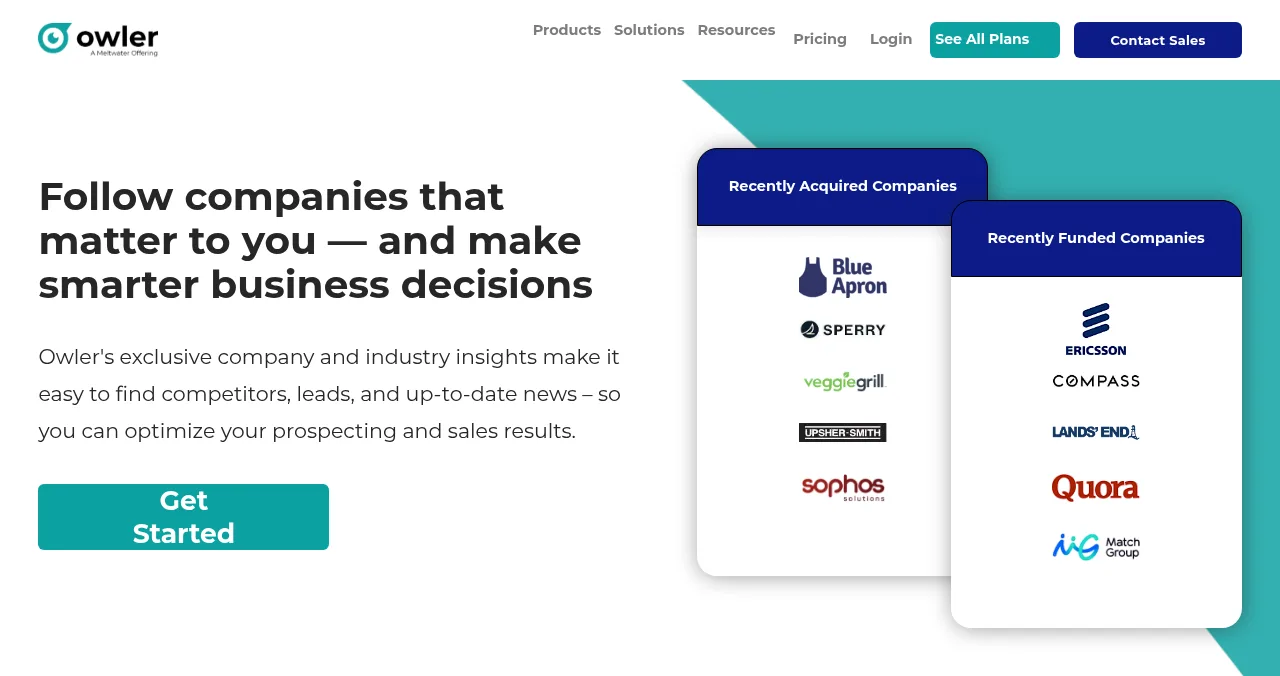
Owler
Company and competitor research, free for light use.
Free foreverPro $39/mo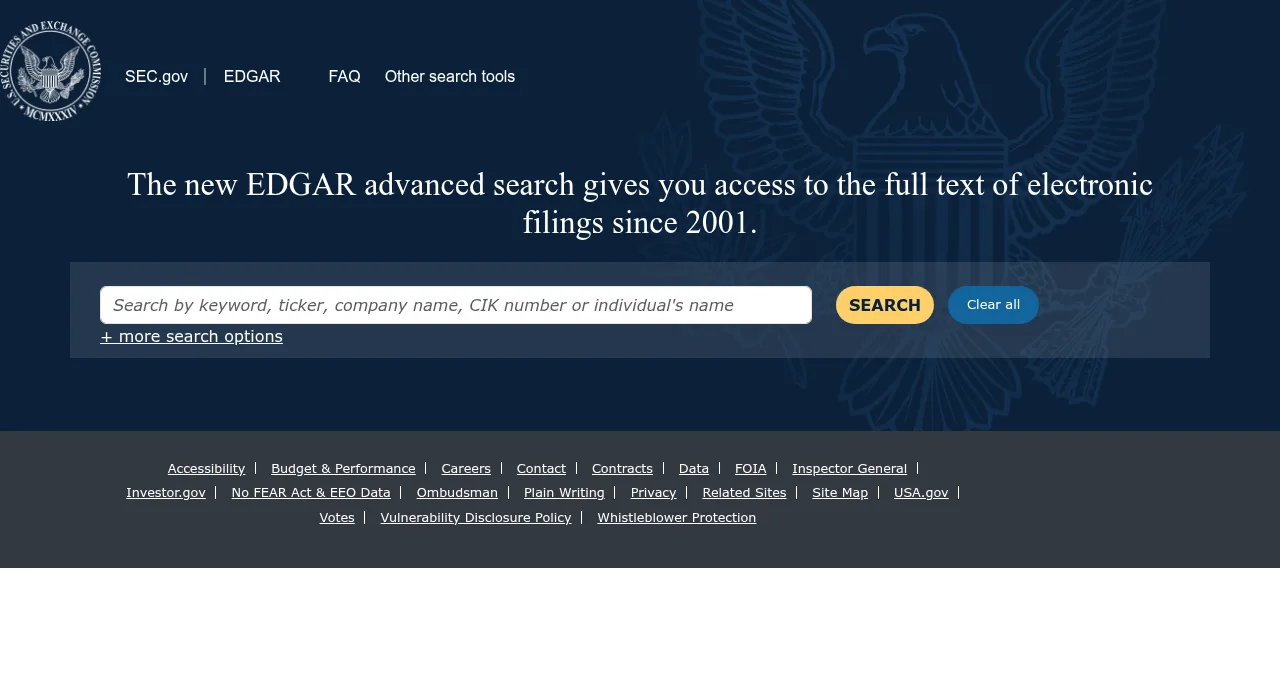
SEC EDGAR
Official US filings, including Form D fundraising notices.
FreeUS companies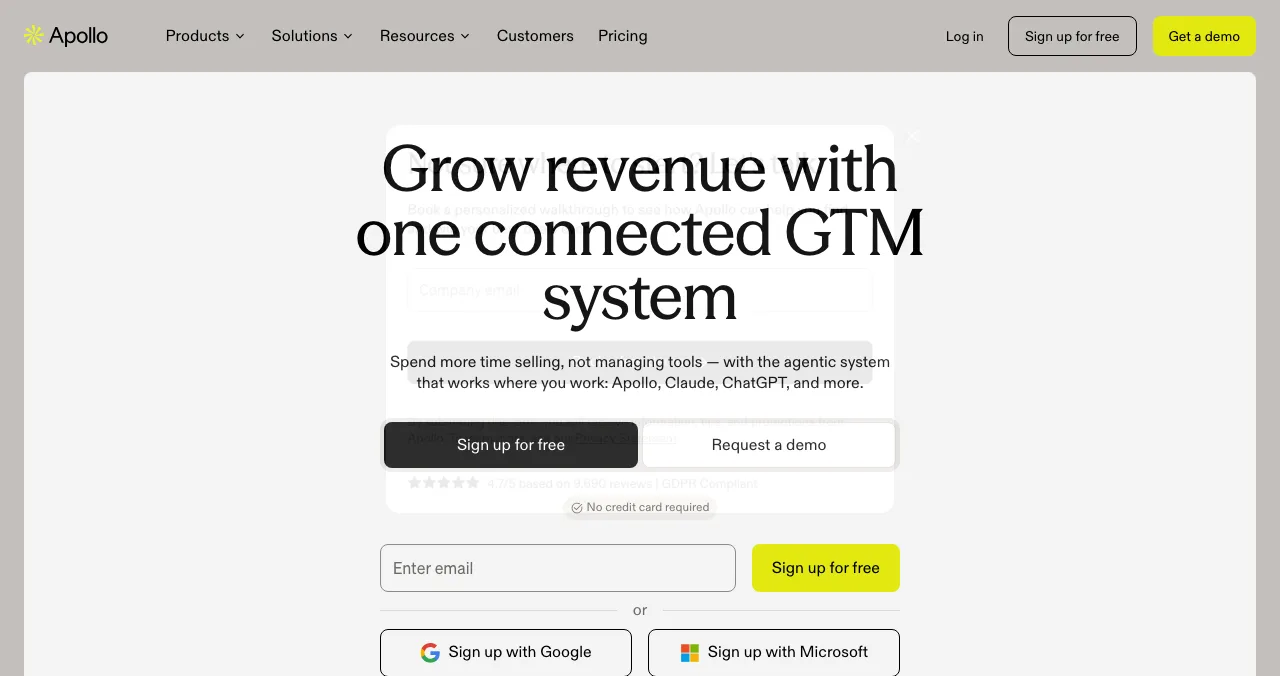
Apollo
Contacts and company data for sales prospecting.
Free planPaid tiers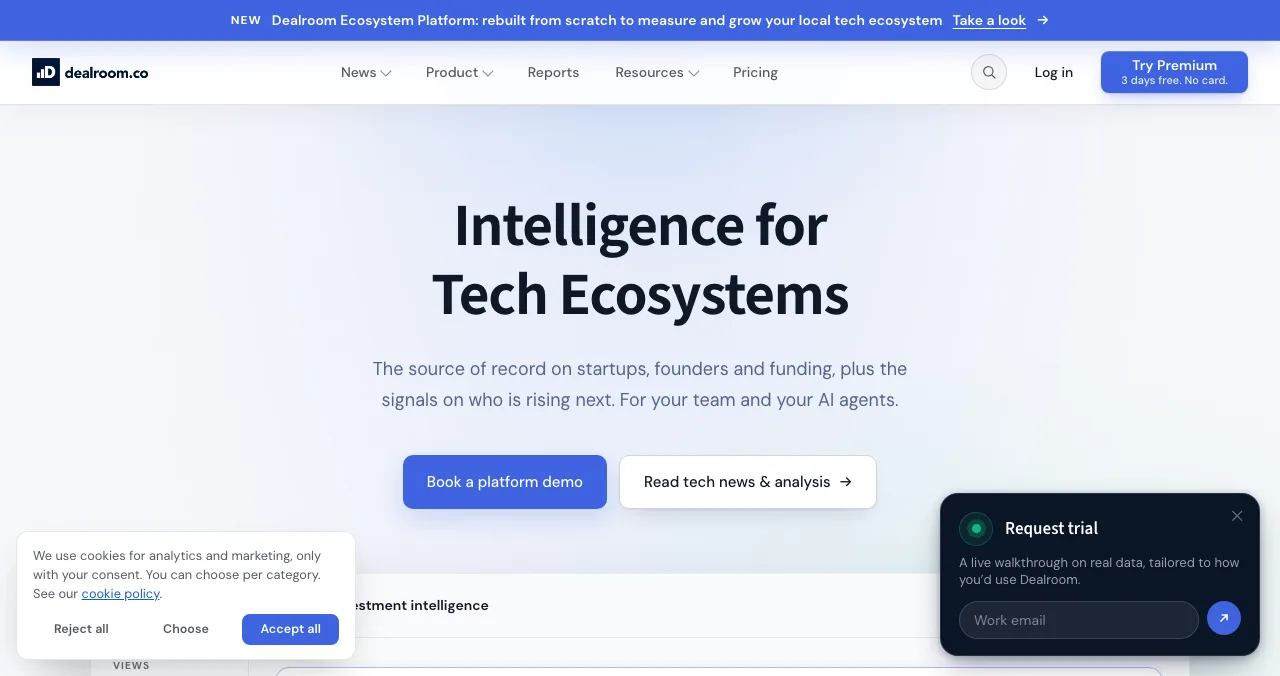
Dealroom
Ecosystem, startup and funding data for teams.
From €250/seat/mo3-seat minimum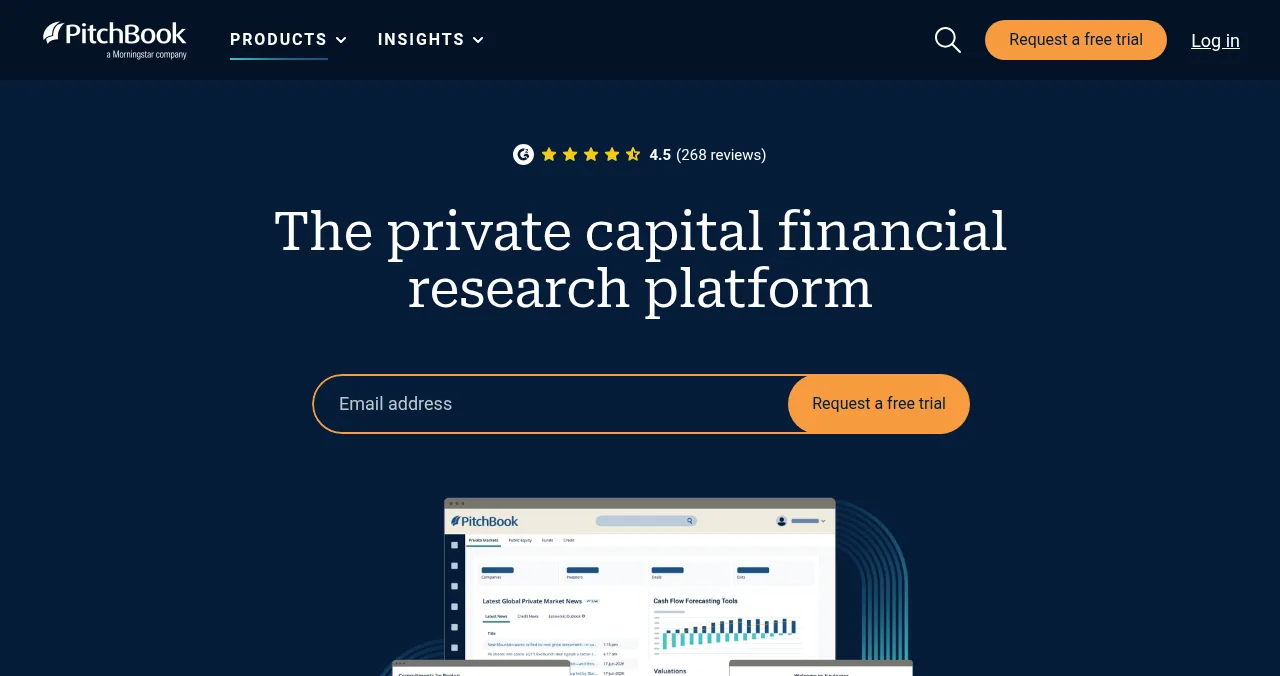
PitchBook
The deepest private capital data and research.
Price on requestInvestor-grade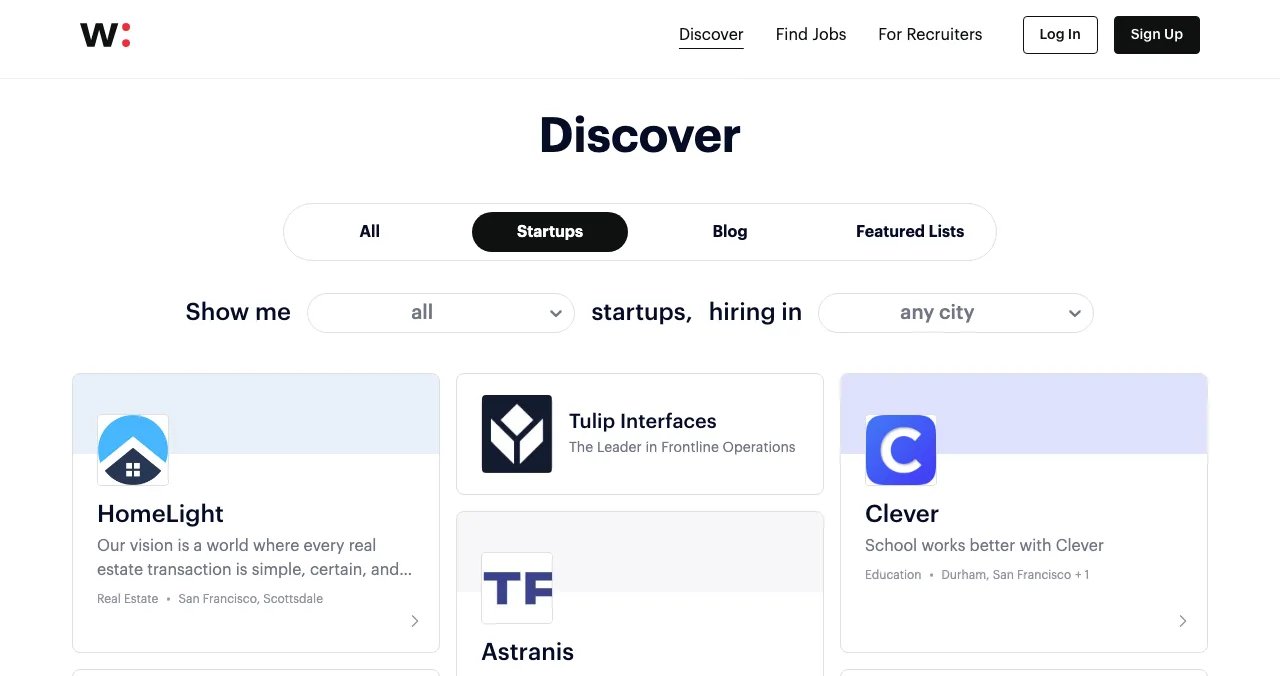
Wellfound
Browse startups and their open jobs.
Free to browseHiring-focused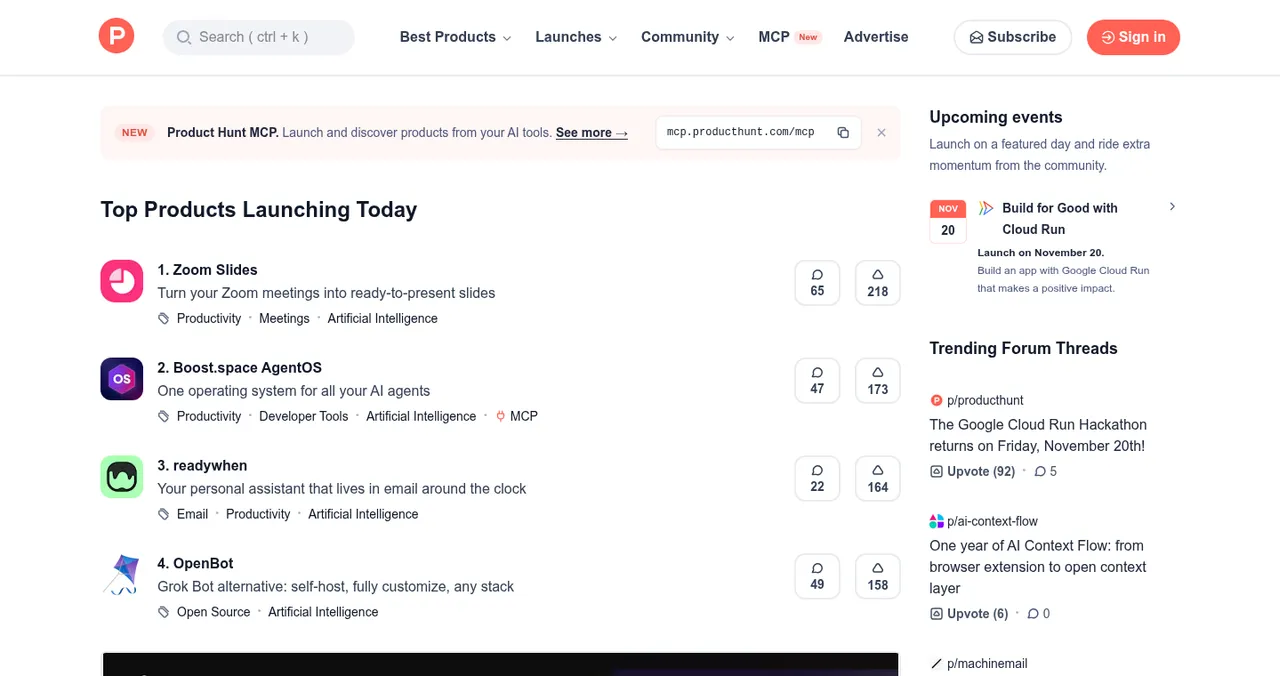
Product Hunt
Discover new products the day they launch.
FreeLaunch day
Science of Apps Launchpad
Be found by your product, not your funding round.
Free foreverPermanent profile
Crunchbase alternatives compared
The right alternative depends on the job. Here's what each one costs and what it's best at.
| Tool | Best for | Free option | Paid from | Who it suits |
|---|---|---|---|---|
| Crunchbase (for reference) | Startup and funding lookups | Free trial only | $49/mo billed annually (first year), $99 month to month | Founders, sales, small funds |
| Tracxn | Startup discovery by sector | Lite, with usage limits | Premium on request | Investors, corporate development |
| Owler | Company and competitor research | Community, free forever | $39/mo billed annually | Founders, sales, marketers |
| SEC EDGAR | US fundraising and company filings | Entirely free | — | Anyone researching US companies |
| Apollo | Sales prospecting | Free plan | Paid plans on its pricing page | Founders and sales teams |
| Dealroom | Ecosystem and funding data | 3-day trial | €250/seat/mo, 3 seats minimum | Investors, governments, corporates |
| PitchBook | Private capital research | — | Price on request | Investment firms, banks |
| Wellfound | Startups and jobs | Free to browse | — | Job seekers, hiring founders |
| Product Hunt | New product discovery | Free | — | Early adopters, founders |
| Science of Apps Launchpad | Being found by your product | Free, forever | Optional product reports | Founders |
Table: Crunchbase alternatives compared by job, free option and starting price (checked on each vendor's page, 17 Nov 2026)
What does Crunchbase cost now?
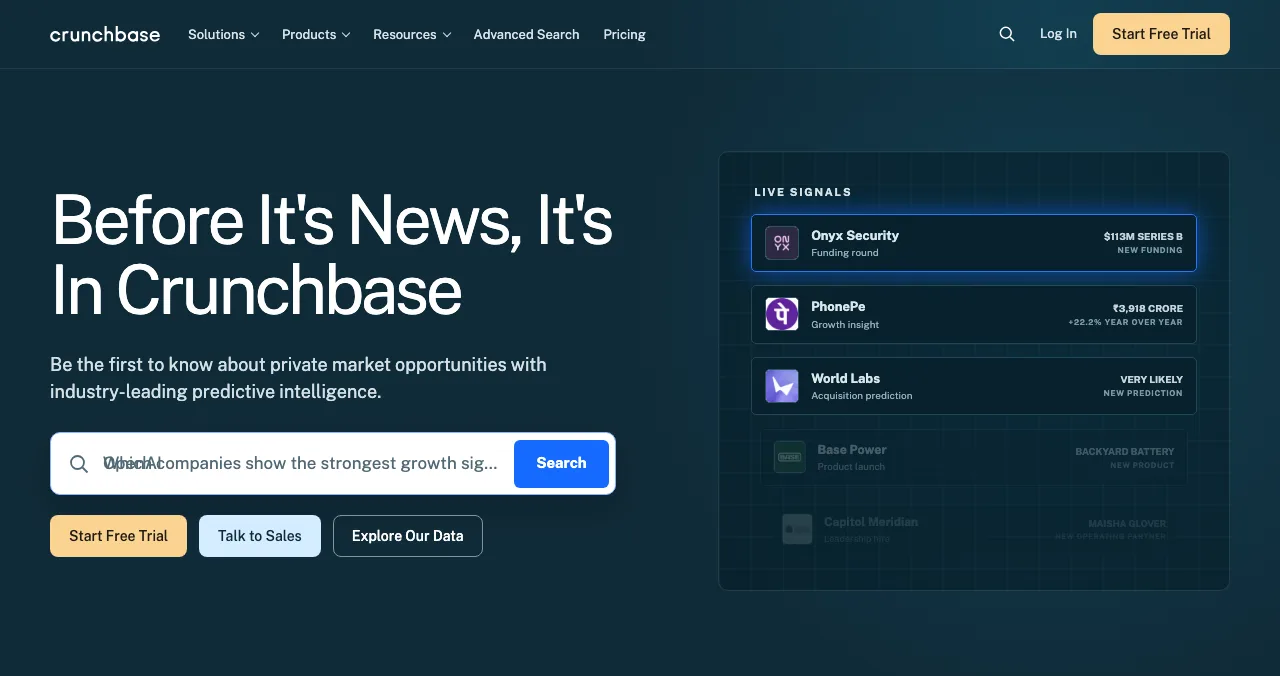
Crunchbase now sells itself as private-market data "for you and your agent", with AI search and an MCP connection for tools like ChatGPT and Claude. Its pricing page, checked on 17 November 2026, lists:
- Pro: $49 a month billed annually for the first year (normally $79), or $99 billed monthly, with a free trial. One seat, 2,000 export rows a month.
- Business: from $199 a month billed annually, for teams, with CRM integrations and 5,000 export rows a month.
- Custom Data Solutions: API, bulk data and warehouse delivery, priced by sales.
There's no free plan on that page. If you only look up a company now and then, one of the free options below will do.
Free Crunchbase alternatives
1. Tracxn: the best free alternative for startup data
- Free plan
- Lite, usage limits
- Coverage
- 8.4M+ companies (its figure)
- Investors
- 292K+ (its figure)
- Premium
- Contact sales
Tracxn tracks private companies by sector and business model, and its Lite plan is free with no credit card, "subjected to usage limits". Its pricing page lists 8.4M+ companies, 292K+ investors and 2M+ funding rounds.
- Free: company profiles, funding rounds and investors, plus a taste of premium features such as exports, reports and alerts, within limits.
- Premium: unrestricted access, a team plan, custom reports, a deal-flow CRM and 24x7 support, priced by sales.
- Strength: fine-grained sector taxonomies and strong coverage of emerging markets, including India.
Best for: founders and analysts who need occasional startup and funding lookups without paying.
2. Owler: free company and competitor research
- Free plan
- Community, forever
- Free limits
- 5 companies followed
- Pro
- $39/mo billed annually
- Data
- Competitors, funding, news
Owler is built for keeping tabs on companies: competitors, funding, acquisitions and leadership changes.
- Community (free forever): follow up to five companies, standard search, and limited profile views and alerts.
- Pro ($39 a month, billed annually): unlimited profiles and follows, a competitor graph, advanced search and real-time insights.
- Strength: competitor lists and news alerts, which Crunchbase doesn't focus on.
Best for: founders watching a handful of competitors, and sales or marketing teams tracking accounts.
3. SEC EDGAR: free, official US fundraising filings
- Cost
- Free
- Covers
- US SEC filings
- Search
- Full text since 2001
- Useful for
- Form D fundraising notices
Much of the funding data in paid databases starts as public filings. US companies raising money through private, exempt offerings typically file a Form D with the SEC, and EDGAR lets anyone search filings for free. Its full text search covers electronic filings since 2001.
- What you get: the company's name and address, its executives and the amount offered and sold, straight from the filing.
- Limits: US companies only, raw filings rather than tidy profiles, and not every round is filed the same way.
Best for: checking a US startup's fundraising at the source, at no cost.
4. Apollo: a free plan for sales prospecting
- Free plan
- Yes, no time limit
- Paid plans
- Basic, Professional, Custom
- Built for
- Outbound sales
- Includes
- Contacts, sequences, CRM tools
If you use Crunchbase to build lead lists, Apollo is the more direct tool. Its pricing page describes the Free plan as suited to "founders and early-stage teams" exploring Apollo or with light usage, and when a paid trial ends you can drop to the free plan with no time limit.
- Paid plans: Basic for individual sellers, Professional for full-time reps with more credits and AI features, and Custom for larger teams.
- Strength: contact details, email sequences and deal tracking in one place.
Best for: founders doing their own outbound sales.
Paid alternatives for investor-grade data
5. Dealroom: ecosystem and funding data for teams
- Premium
- €250/seat/month
- Premium Plus
- €325/seat/month
- Minimum
- 3 seats, billed annually
- Trial
- 3 days, no card
Dealroom is widely used by investors, corporates and governments that map startup ecosystems. Its pricing is per seat and public:
- Premium: €250 per seat a month (10,000 export credits per seat).
- Premium Plus: €325 per seat a month, with contacts and an MCP connection for AI tools like Claude.
- Rules: billed annually, minimum three seats; the per-seat rate falls as the team grows. A three-day trial needs no card.
Best for: teams that need ecosystem-level data, especially in Europe.
6. PitchBook: the deepest private capital data
- Price
- On request
- Built for
- Investors, banks, corporates
- Covers
- Private capital markets
- Includes
- Analyst research
PitchBook is the reference tool for venture capital, private equity and M&A professionals. It doesn't publish prices: its pricing page asks for your details and a sales team quotes you. Plans include analyst research, a mobile app and Excel and PowerPoint plug-ins.
Best for: investment firms and corporate development teams. For most founders it's more than they need.
Free places for founders to be found
If you're a founder searching "Crunchbase alternatives", you may not want to research startups at all. You may want yours to be found. Databases list rounds; these three put your product in front of people.
7. Wellfound: startups and their jobs
Wellfound (formerly AngelList Talent) lets anyone browse startups and their open roles, filtered by sector and city. Job seekers use it to find startups to join, so a complete company profile helps you hire and makes your startup discoverable to candidates.
Best for: startups that are hiring.
8. Product Hunt: be discovered on launch day
Product Hunt is free to launch on and gives your product a permanent page after its launch day. Early adopters and investors browse it daily. See our free launch sites guide for its rules.
Best for: a one-day spotlight for a polished product.
9. Science of Apps Launchpad: be found by your product
- Cost
- Free, forever
- Ranking
- Relevance, never payment
- Visible for
- Permanent
- Included
- Your product tested, with a report
A Launchpad profile is a permanent, free page about your product that people find by the problem it solves, written to rank on Google and to be quoted by AI assistants. It's ranked by relevance, editorial picks and community interest, never payment. Once your listing is live, Science of Apps also tests your product end to end, in a real browser on desktop and mobile with experts reviewing the screens behind your login, and hands you a detailed report on what to fix.
- Areas of your product tested
- 22
- Automatic measurements, desktop and mobile
- 39
- Expert checks behind your login
- 74
- Verdicts that rank what to fix first
- 5
Best for: founders who want a canonical page that customers, journalists and investors find by searching for what the product does.
Which Crunchbase alternative should you choose?
| If you need to… | Use | Free start |
|---|---|---|
| Look up a startup's funding now and then | Tracxn Lite | Yes |
| Watch a handful of competitors | Owler Community | Yes |
| Verify a US company's fundraising | SEC EDGAR | Yes |
| Build lead lists and send outreach | Apollo | Yes |
| Map an ecosystem as a team | Dealroom | 3-day trial |
| Run diligence at an investment firm | PitchBook | No |
| Get your own startup found | Science of Apps Launchpad, Product Hunt, Wellfound | Yes |
Table: Which Crunchbase alternative to use, by job
A free research stack that covers most of Crunchbase
You can cover most early-stage research without a subscription:

- Find startups in a sector — browse Tracxn Lite by sector and business model.
- Check funding at the source — search SEC EDGAR for a US company's Form D filings.
- Track competitors — follow up to five on Owler Community and get news alerts.
- Find the right person — use Apollo's free plan to find contacts at a target company.
- See what's launching — browse Product Hunt and Wellfound weekly for new startups.
Mistakes when choosing a startup database

- Paying for depth you won't use — PitchBook-level data is built for investment firms, not occasional lookups
- Treating database figures as audited — funding and headcount numbers are estimates unless they come from filings
- Ignoring seat minimums — Dealroom bills a minimum of three seats annually
- Using a funding database to be discovered — customers search for the problem you solve, not your round
- Forgetting free filings — US Form D notices are public and free on EDGAR
Ready to be found?
Research tools help you find other companies. If you want customers, investors and journalists to find yours, give them one permanent page about what your product does.
How we compared these tools
We grouped the tools founders and analysts most often name as Crunchbase competitors by the job they do, then read each vendor's own pricing or plan page on 17 November 2026 for its free option, starting price and limits. Coverage figures (such as Tracxn's company counts) are the vendors' own. We didn't include tools whose pricing or plans we couldn't open on the day. Prices change, so check each page before you buy.
Science of Apps runs one of the services listed. It isn't a data tool, and we've described it only by what it does.
Key terms, defined
- Startup database: a service that profiles private companies, their funding rounds, investors and people.
- Form D: a notice US companies file with the SEC when they raise money through certain exempt private offerings.
- Seat: one named user on a subscription; team tools often price per seat.
- MCP: Model Context Protocol, a way for AI assistants such as Claude or ChatGPT to query a data service directly.
- Sales prospecting: finding and contacting potential customers; tools like Apollo are built for it.
Frequently asked questions
Is there a free alternative to Crunchbase?
Yes. Tracxn's Lite plan is free with usage limits and covers startups, investors and funding rounds. Owler's Community plan is free forever for light company research. SEC EDGAR is free and shows US fundraising filings such as Form D. Apollo has a free plan for sales prospecting. None matches every Crunchbase feature, but together they cover most early-stage needs.
What is better, PitchBook or Crunchbase?
PitchBook goes deeper on private capital: funds, deals, valuations and analyst research for investors and corporate teams, with pricing on request. Crunchbase is cheaper and simpler: Pro starts at $49 a month billed annually. If you're a founder or a small team, Crunchbase or a free alternative is usually enough; investment firms tend to need PitchBook-level data.
How much does Crunchbase cost in 2027?
On its pricing page in November 2026, Crunchbase Pro was $49 a month billed annually for the first year (normally $79) or $99 billed monthly, with a free trial. Business started at $199 a month billed annually, and custom data solutions are priced by sales. The pricing page lists no free plan.
What are Crunchbase's main competitors?
For investor data: PitchBook, Dealroom, Tracxn and CB Insights. For company and competitor research: Owler. For sales prospecting: Apollo and ZoomInfo. For startup discovery and hiring: Wellfound. Each one competes with a different part of Crunchbase.
Is Tracxn better than Crunchbase?
Tracxn is strong on sector taxonomies and emerging markets including India, and its Lite plan is free with limits. Crunchbase is better known and has a self-serve Pro plan. Try Tracxn Lite first for free; if you hit its limits, compare its Premium quote with Crunchbase Pro.
How can my startup get found without paying for a database?
Funding databases list companies by rounds and investors. To be found by customers, publish a permanent product page that ranks for the problem you solve, such as a free Science of Apps Launchpad profile, launch on Product Hunt, and keep a complete Wellfound profile if you're hiring. Make sure your own site's About page clearly states what you do.
Is Dealroom free?
No. Dealroom's pricing page lists Premium at €250 per seat per month and Premium Plus at €325, billed annually with a minimum of three seats, plus custom Enterprise plans. It offers a three-day free trial with no card required.
Sources
- Crunchbase — Product pricing: Pro, Business and Custom Data Solutions (checked 17 Nov 2026)
- Tracxn — Pricing: Lite and Premium (checked 17 Nov 2026)
- Dealroom — Pricing per seat (checked 17 Nov 2026)
- PitchBook — Pricing (checked 17 Nov 2026)
- Owler — Plans: Community, Pro and Enterprise (checked 17 Nov 2026)
- Apollo.io — Pricing and plans (checked 17 Nov 2026)
- U.S. Securities and Exchange Commission — EDGAR full text search
- Wellfound — Discover startups
- Product Hunt Help Center — How Product Hunt works (2026)
- Science of Apps — Launchpad: launch your product free
- Checked November 17, 2026. Figures that change — fees, salaries, prices — are reviewed every six months; if something is out of date, tell us.
Where to go from here
- Top 5 websites to launch your startup free — where to launch once you're ready to be found
- Best websites to launch an AI startup — AI directories and their real fees
- How startup valuation works — what the funding numbers in these databases mean
- Science of Apps - LaunchpadThe 14 best Product Hunt alternatives in 2027, free and paid, with each site's real rules and feesThe 14 best Product Hunt alternatives for 2027, free and paid: Uneed, Peerlist, DevHunt, Fazier, Microlaunch and more, with fees and rules checked.
- Science of Apps - LaunchpadThe top 5 websites to launch your startup for free, checked against each site's own rulesThe 5 best free websites to launch a startup: Science of Apps Launchpad, Product Hunt, Show HN, Uneed and Peerlist, with costs, rules and who each one suits.
- CertificationsThe best Coursera alternativesLooking for sites like Coursera? Compare 12 alternatives on price, certificates and course quality, including free options.
- Science of Apps - LaunchpadThe best websites to launch an AI startup or AI tool, with what each one really costsWhere to launch an AI tool in 2027: free launch sites, AI directories and their real fees (TAAFT, Toolify, AIxploria), and which to use first.
- CertificationsThe best Udemy alternativesThe 10 best Udemy alternatives for learners who want recognized certificates, better structure or lower prices.
- Making moneyFreelance app developer guide: how to land your first client and price your workBecome a freelance app developer: pick a niche, build proof, find your first client, price fixed-scope projects, write a solid contract and get paid safely.



Get the ideas, not the noise.
Sign up with Google and we’ll send you short UX psychology tips by email — why people tap, stall and leave, and what to do about it. Unsubscribe anytime. Prefer something to keep? Get the free Laws of UX guide as a PDF.
Launch day ends. Your listing shouldn't.
Funding databases describe your rounds. A free Launchpad profile describes your product, ranks for the problem it solves, and comes with your product tested end to end and a detailed report on what to fix.