 By
Quick answer: What are the best websites to launch a startup for free?
- Science of Apps Launchpad — free forever; a permanent listing, plus a full test of your product and a detailed report.
- Product Hunt — free; launches go live at 12:01 AM Pacific and can be scheduled up to 30 days ahead.
- Hacker News (Show HN) — free; only for things people can try, not landing pages.
- Uneed — free waiting line with a date at least 50 days out; paid options to launch sooner.
- Peerlist Launchpad — weekly launches every Monday from a verified, individual profile.
Key takeaways
- Only one of the five also tests your product: Science of Apps runs listed products through a full investigation and hands you a detailed report on what to fix, free to start.
- Five strong launch sites are still free in 2027; BetaList, once the classic free option, now charges every submission.
- Launch-day sites (Product Hunt, Uneed, Peerlist) give a spike; a permanent, searchable listing keeps sending visitors after the spike ends.
- Every one of these sites bans asking for upvotes. Ask people to try the product and comment instead.
- Match the site to the product: Show HN for things developers can run, Product Hunt for a polished global launch, Peerlist for builders.
- Launch on all five in one week, with one permanent profile as the page everything links back to.
You shipped. The product works, the landing page is live, and now you need people to see it, without an ad budget. The good news: the best launch sites in 2027 still cost nothing. The catch: they work very differently. Some give you one loud day, some reward patience, and one of the old favourites quietly started charging. We checked each site's own help pages on 16 November 2026, so every rule and price below is current, and sourced. Short on time? Jump to the comparison table, which site to use first or the one-week launch plan.
The five best free places to launch your startup
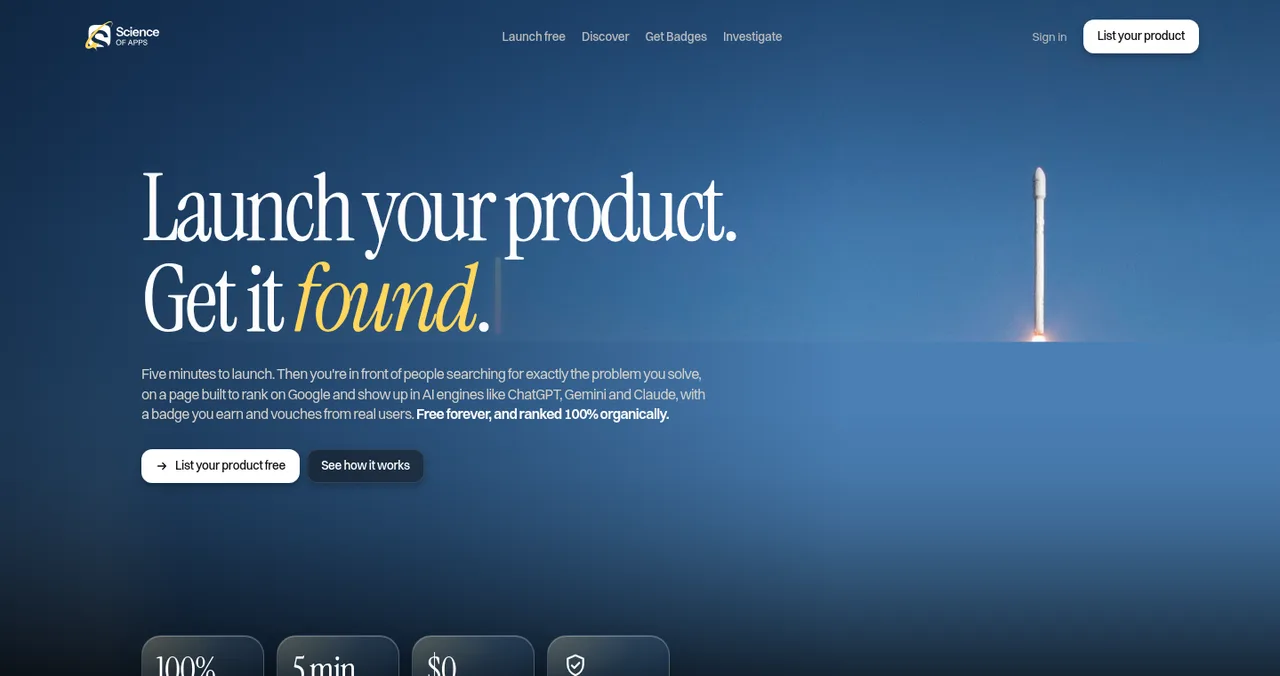 Launch free
Science of Apps Launchpad Top pick
A permanent listing, plus a full test of your product and a detailed report.
Free foreverPermanent listing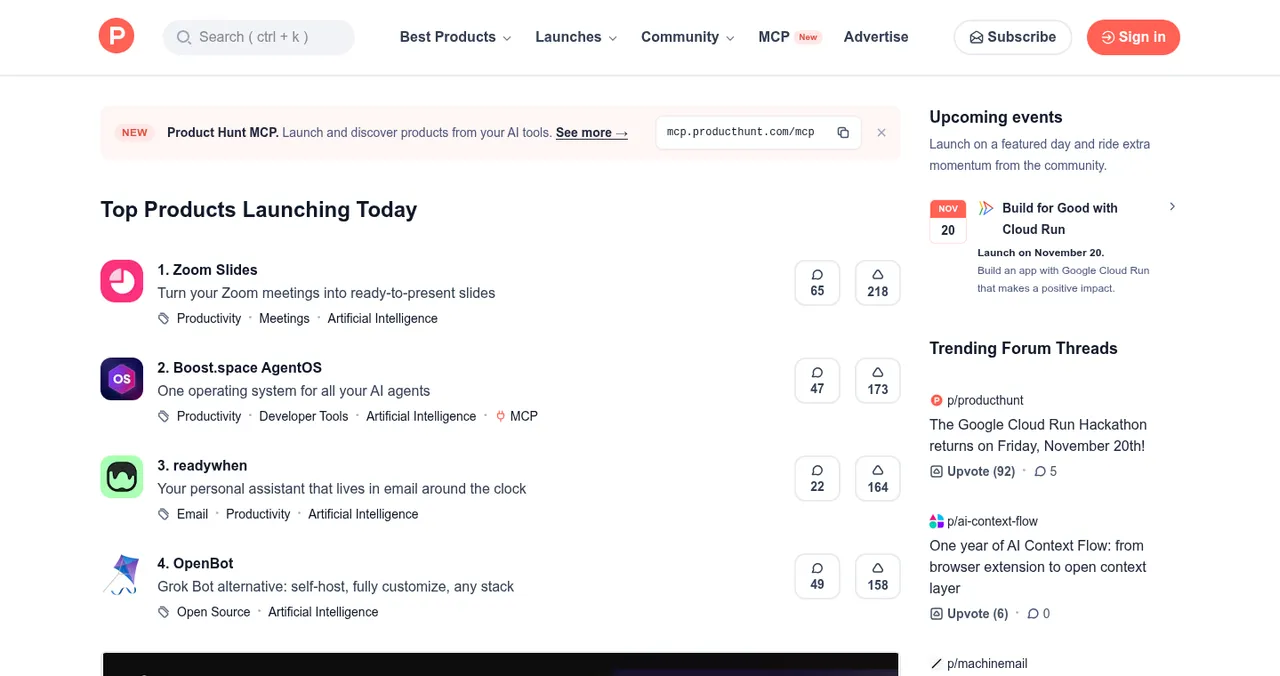
Product Hunt
The biggest single launch day, booked up to 30 days ahead.
FreeLive at 12:01 AM PT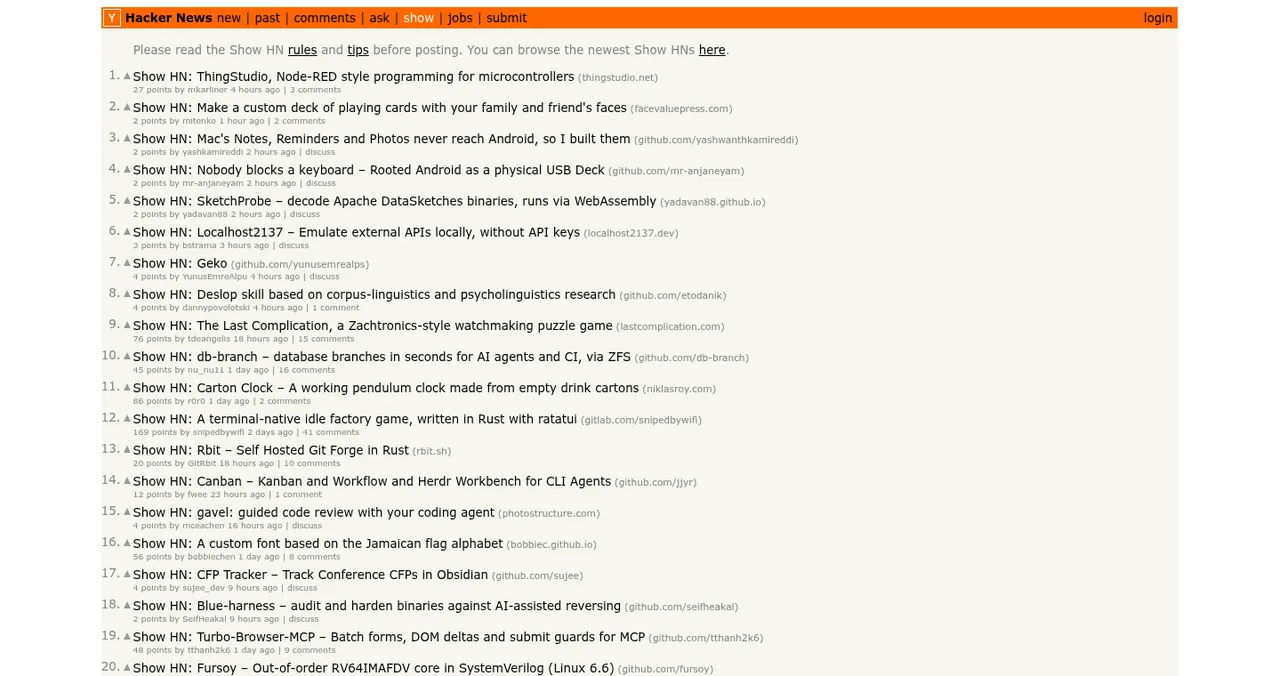
Hacker News (Show HN)
For developer and technical products people can try right away.
FreeNo landing pages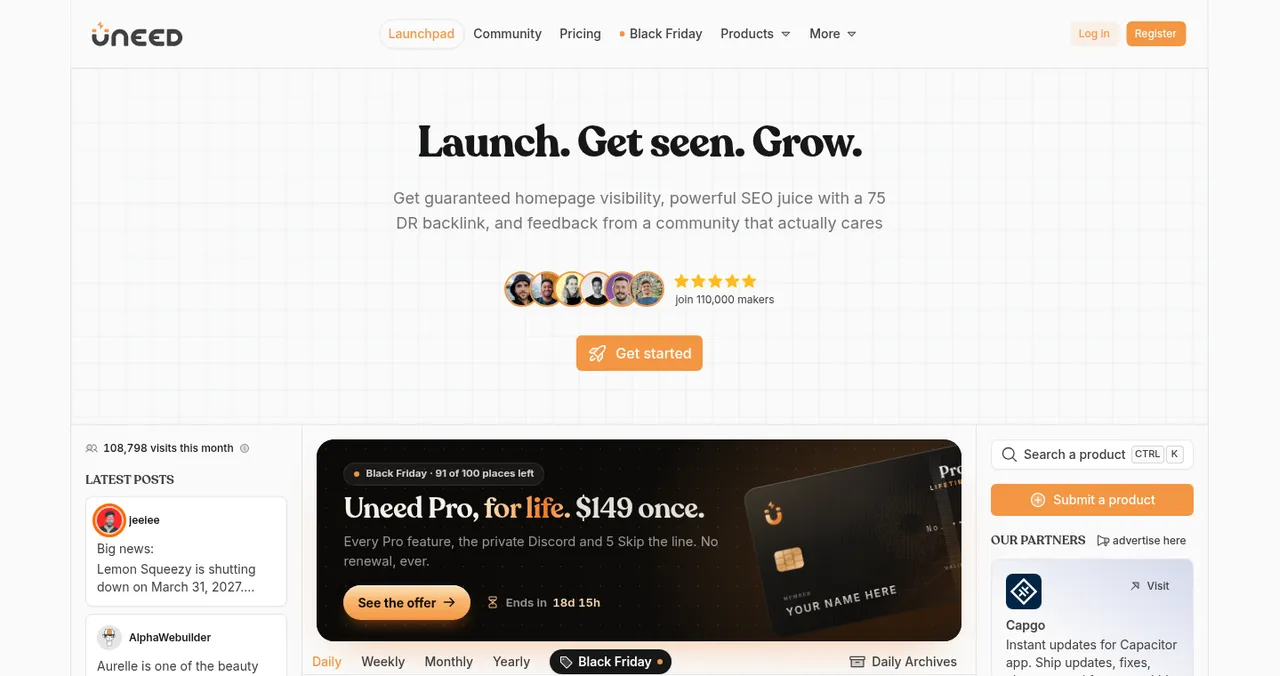
Uneed
A daily launch whose leaderboards keep counting after the day.
Free waiting line50+ days out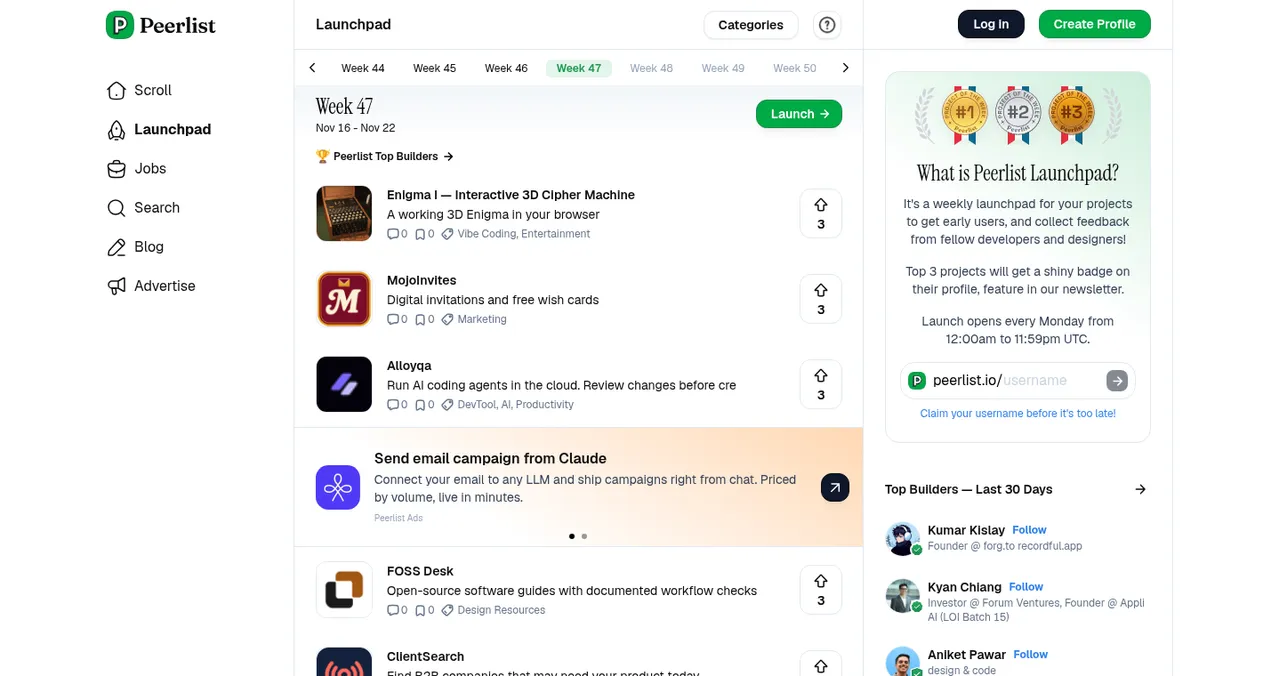
Peerlist Launchpad
A week-long launch for verified builders, opening every Monday.
FreeEvery Monday
The 5 best free websites to launch a startup, at a glance
All five are free to launch on. The difference is how they rank you and how long you stay visible.
| Site | Cost to launch | How it ranks you | How long you stay visible | Best for |
|---|---|---|---|---|
| Science of Apps Launchpad | Free, forever | Relevance, editorial picks and community interest; never payment | Permanent profile | A permanent home, plus a full test of your product and a detailed report |
| Product Hunt | Free | Upvotes, comments and other signals; homepage is hand-picked | One launch day, then a permanent product page | The biggest single launch day |
| Hacker News (Show HN) | Free | Points from the community | Hours on the Show page | Things developers can try |
| Uneed | Free (waiting line) | Daily, weekly, monthly and yearly leaderboards | Permanent if you reach 10 upvotes | A daily launch without a launch-day race |
| Peerlist Launchpad | No fee in its launch guide | Upvotes are "a small variable" in a wider ranking | One week (Monday launch) | Builders and side projects |
Table: The five best free startup launch sites compared (rules checked 16 Nov 2026)
1. Science of Apps Launchpad: a free listing, plus your product tested
- Cost
- Free, forever
- Time to launch
- About 2 minutes
- Ranking
- Relevance, never payment
- Visible for
- Permanent
- Included
- A full product test and report
Most launches spike for a day and fade. Science of Apps Launchpad gives your product a permanent public profile with your own link, built to rank on Google and show up in AI engines like ChatGPT, Gemini and Claude.
- Cost: free to list, forever. Science of Apps earns money only from optional paid product investigations, and payment never affects ranking.
- How it ranks you: by relevance to what people search for, editorial selection and genuine community interest (vouches and follows). People find you by the problem they have, not by launch date.
- What you get: a profile with screenshots, video and links, a Featured badge when you go live, and further badges you earn: Verified (confirm a work email on your domain), Community favourite, Editor's pick and more, each linking back so anyone can check it.
- Time: about two minutes to create the listing in six steps; every listing is checked automatically and reviewed by a person, usually within a day.
Best for: a canonical page every other launch can link to, and founders who want to know what to fix. It accepts startups, SaaS, mobile apps, AI products, developer tools, browser extensions, games and open-source projects.
The difference: your product, tested end to end
Every other site on this list sends you visitors. Science of Apps also tests the product they land on, thoroughly, and hands you a detailed report. Once your listing is live, your product is put through a full investigation: it is loaded in a real browser on desktop and mobile, measured automatically, and then the screens behind your login are reviewed by experts, area by area, the way your users will meet them.
- Areas of your product tested, from search result to settings
- 22
- Automatic measurements, desktop and mobile
- 39
- Expert checks on the screens behind your login
- 74
- Verdicts that rank what to fix first
- 5
What gets tested
Your product is tested across the whole journey a user takes, in the order they take it.
Arrive
First impression
How findable you are on Google, AI assistants and social feeds; your landing page, pricing, trust and privacy signals; and speed and stability.
Join
The first few minutes
Sign-up, sign-in and account recovery, and onboarding to the first moment of value.
Use
The everyday job
Your home screen, the core task flow end to end, dashboards, search and navigation, microcopy, and empty, loading and error states.
Pay
Where value turns into revenue
The paywall and upgrade, and checkout and payments.
Stay
What brings people back
Notifications, account and profile, settings and preferences, and help and support.
Every screen
Judged throughout
Accessibility to WCAG 2.2, and visual design and consistency.
The areas are tailored to what you make: fintech products are also tested on KYC and money movement, AI products on prompt and output trust, and games on first-time play and the store.

What the report gives you
Evidence for every finding
Each one is backed by a measurement or pinned to the exact screen it came from. Nothing is opinion without proof.
A verdict and a next step
Every finding is rated Good, Needs improvement, Needs to be fixed, Critical or Recommendation, with what to do about it, so your team knows what to fix first.
The reason behind it
Each finding cites the principle at work, from the 60 Laws of UX, Nielsen's 10 usability heuristics and WCAG 2.2, so your team learns why, not just what.
Checked by people
Every report is fact-checked against the evidence, and a Science of Apps analyst approves, edits or rejects findings before they reach you.
Private by default
Reports are seen only by your team and never affect your listing's ranking.
| Free | Economy report | Premium report | |
|---|---|---|---|
| What's tested | Landing page, discoverability and speed | Your store listing and homepage, screen by screen | Every area of the product that can be reached |
| 60 Laws of UX | — | A scorecard, and the laws costing you most | All 60, each with the evidence and a fix |
| Beyond the screens | — | Customers, reviews and competitors at a glance | Flows mapped before and after, plus 8 strategy chapters |
| What to do next | Quick fixes | The short list of fixes worth most | A scored backlog and a 90-day roadmap |
| Format | Branded PDF | A4 PDF, about 40 pages | A4 PDF, about 95 pages |
| Delivered | Once your listing is live | Within 3 hours | Within 24 hours |
Table: Science of Apps product reports compared (checked on the Launchpad pricing page, 16 Nov 2026)
Make your product live. Get it diagnosed today.
List your product free, and once it's live, order the report that fits your stage: a sharp look at what new customers see, or the full diagnosis with a plan to fix it.

 Economy
See what new customers see
- Store listing and homepage, screen by screen
- Scorecard against 60 Laws of UX
- Customers, competitors and the fixes worth most
PremiumThe full diagnosis and the plan
- Every screen, every finding, every flow
- All 60 laws with evidence and fixes
- 8 strategy chapters and a 90-day roadmap
Both reports are researched from your live product and fact-checked against the evidence before they reach you.
2. Product Hunt: free, and the biggest launch day
- Cost
- Free
- Goes live
- 12:01 AM Pacific
- Book ahead
- Up to 30 days
- Visible for
- One day + product page
Product Hunt is still the biggest stage for a launch day. Its help center is explicit: launching costs nothing, and you can submit a product, comment and reach Product of the Day "without spending a cent".
- When: every launch goes live at 12:01 AM Pacific Time on the date you schedule, from tomorrow up to 30 days ahead.
- Who can launch: anyone with a personal account and a verified email. Company and brand accounts can't submit launches or comment.
- Do you need a hunter? No. You can, and should, hunt your own product; who posts it doesn't affect ranking.
- Ranking: points come from upvotes, comments, time since launch and other signals, and upvotes from established members count far more than those from new accounts. The homepage is hand-picked: a launch that isn't featured still goes live, but gets far less attention.
- The hard rule: never ask for upvotes, and never pay for them. Both can get your launch removed and your account banned.
Best for: polished products with a global, tech-savvy audience, and founders who can show up all day. Our Product Hunt launch guide has the hour-by-hour plan.
3. Hacker News (Show HN): free, for things people can try
- Cost
- Free
- Format
- Title starts "Show HN"
- Not allowed
- Landing pages, sign-up pages
- Visible for
- Hours
Show HN is the free way to put something in front of Hacker News, and it has the strictest rules on this list. It's for "something you've made that other people can play with".
- On topic: things people can run on their computers or hold in their hands. Off topic: blog posts, sign-up pages, newsletters, lists, landing pages and fundraisers.
- How to post: submit a story whose title begins with "Show HN". Every Show HN appears on the shownew page; once it clears a small points threshold, it appears on the main show page.
- What works: make it easy to try, ideally without sign-ups or emails, and be around to discuss it. Early-stage work is welcome; quickly generated one-offs are not.
- The rule: don't ask friends to upvote or comment.
Best for: developer tools, open-source projects and technical products people can try in a minute.
4. Uneed: a free daily launch, if you can wait
- Cost
- Free waiting line
- Launch date
- 50+ days out
- Stay listed
- 10 upvotes
- Paid options
- $19.99 / $39.99
Uneed is a daily launch platform that calls itself a free Product Hunt alternative, and its free path is genuinely free if you can wait.
- Free path: submitting is free, and so is the waiting line. Uneed assigns your date automatically, at least 50 days out, on the earliest day with room.
- Staying listed: a free launch needs an upvote score of 10 on launch day to stay published, and 20 to keep its do-follow backlink.
- Paid options: Fast-track ($19.99) gets a date around two weeks out; Skip the line ($39.99) lets you pick the exact day.
- Why it lasts: rolling daily, weekly, monthly and yearly leaderboards, so votes keep counting after launch day. The top three each week are featured in its newsletter to 30,000+ subscribers.
Best for: founders who can plan ahead and want a second launch day that isn't a Product Hunt-sized fight.
5. Peerlist Launchpad: weekly launches every Monday
- Launch day
- Every Monday
- Runs for
- One week
- Who can launch
- Verified individuals
- Fee
- None mentioned
Peerlist is a professional network for builders, and its Launchpad runs a fresh launch every week.
- When: Monday is launch day; the Launchpad is open through Mondays, every week, and you can schedule a launch for a later week.
- Requirements: a verified Peerlist profile, the project added to it and 100% complete (name, tagline, cover image, demo link and so on). Only individual profiles can launch, not companies, and SEO agencies can't launch for clients.
- Ranking: Peerlist says the number of upvotes is "a small variable of a bigger equation", and it has zero tolerance for DMs asking for upvotes.
- Cost: neither help page mentions a fee to launch.
Best for: indie builders and side projects, and anyone who'd rather compete for a week than for one day.
Is BetaList still free?
Five more free places to post your startup
These aren't launch platforms in the same way, but each is free and worth a post in your launch week. Check each community's current rules before you post.

Indie Hackers
A founder community where you can share your product, milestones and launch story. Best for transparent, build-in-public updates.
r/SideProject
A large subreddit for sharing side projects and getting constructive feedback. Read the rules first: Reddit punishes drive-by links.
DevHunt
A launch site focused on developer tools. Pair it with Show HN for technical products.
Microlaunch
A launch platform for indie products. Useful as one more launch day in the same week.
SaaSHub and AlternativeTo
Software alternatives sites. Listing there puts you in front of people searching for an alternative to a tool you compete with.
Which free launch site should you use first?
Choose by what your product is and what you need most from launch week.
| If your product is… | Start with | Then add |
|---|---|---|
| A SaaS or AI tool with a polished onboarding | Product Hunt | Uneed, Science of Apps Launchpad |
| A developer tool or open-source project | Show HN | DevHunt, Peerlist Launchpad |
| A side project or early MVP | Peerlist Launchpad | r/SideProject, Indie Hackers |
| A mobile app or browser extension | Science of Apps Launchpad | Product Hunt, Uneed |
| Not ready for people to try yet | A waitlist page | Launch everywhere once it works |
Table: Which free launch site to start with, by product type
How to launch on all five in one week
The sites don't compete for the same day, so you can use all of them. Here is a simple, rule-safe plan.
- Two weeks before
Create your permanent listing
Publish your Science of Apps Launchpad profile first, so every other post links to one canonical page. Your free product test starts as the listing goes live.
- Two weeks before
Book your dates
Schedule Product Hunt (up to 30 days ahead), join Uneed's free line (50+ days out) or pay to pick a date, and plan Peerlist for a Monday.
- Monday
Launch on Peerlist
Make sure the project is 100% complete on your profile, then launch and answer every comment.
- Midweek
Launch on Product Hunt
Go live at 12:01 AM Pacific, post a personal maker comment and reply all day. Ask people to try it, never to upvote.
- When it's easy to try
Post a Show HN
Remove sign-up barriers if you can, explain how and why you built it, and stay in the thread.
- All week
Share where you belong
Indie Hackers, relevant subreddits and your own email list, following each community's rules.
- After the week
Keep the permanent page working
Fix what your product report flagged, add badges to your site, collect vouches and update your listing as you ship.
Mistakes that get free launches ignored

- Asking for upvotes — every site on this list bans it, and Product Hunt can remove your launch for it
- Launching a landing page — Show HN and Product Hunt both want something people can actually use
- Posting from a company account — Product Hunt and Peerlist only accept personal or individual profiles
- Dropping links in communities you've never joined — it reads as spam and gets removed
- A broken sign-up on launch day — test the main flow in a clean browser before you go live
- Having no permanent page — when the launch-day spike ends, visitors need somewhere to land
The last point is about trust as much as traffic. Badges and visible reviews are social proof: new visitors look for evidence that real people already use the product. And a short, plain tagline helps more than a clever one, because every extra choice slows people down (Hick's Law).
Ready to launch?
You don't need a budget, a hunter or a perfect launch day. You need one permanent page, a launch week and the discipline to answer every comment.
How we chose these five
We started from the launch sites founders recommend most in public "where to launch" threads, then kept only those that are free to launch on today. For each one we read the platform's own help pages or launch guide on 16 November 2026: cost, timing, eligibility, ranking and rules. Every figure above links to that source. We left out sites whose only route is paid (BetaList), and sites that are directories rather than launch platforms. Prices and rules change, so check each site before you launch; we'll update this guide when they do.
Science of Apps runs one of the five sites listed. It's included on the same terms as the others: what it costs, how it ranks and who it suits.
Key terms, defined
- Launch platform: a site where new products go live on a set day and compete for attention on a leaderboard.
- Hunter: on Product Hunt, the person who posts a product. Makers can hunt their own.
- Featured: chosen by a site's team for its homepage. On Product Hunt, featuring is an editorial decision.
- Waiting line: a free queue that assigns your launch date automatically, as on Uneed.
- Do-follow backlink: a link search engines count toward your site's authority.
- Canonical listing: the one permanent page about your product that every other post links to.
Frequently asked questions
What is the best free website to launch a startup?
There isn't one best site, because each suits a different goal. Product Hunt gives the biggest single launch day, Show HN reaches developers, Uneed and Peerlist run daily and weekly launches, and Science of Apps Launchpad gives a permanent free profile ranked by relevance. Most founders should use several of them in the same launch week.
Is Product Hunt free to launch on?
Yes. Product Hunt's help center says submitting a launch, commenting and reaching Product of the Day are all free. You need a personal account with a verified email, and launches go live at 12:01 AM Pacific Time on the date you schedule, from tomorrow up to 30 days ahead. Never pay for upvotes.
Is BetaList still free?
No. BetaList's help page says all submissions are now paid and there is no free submission option. If your startup isn't selected, the payment is refunded automatically. It can still be worth it for pre-launch startups, but it no longer belongs on a list of free launch sites.
Can I launch my startup on Hacker News?
Yes, through Show HN, if people can try what you've built. Hacker News says Show HN is for things people can run or hold, and asks you not to post landing pages, sign-up pages or fundraisers. Start the title with 'Show HN', be around to answer comments, and never ask friends to upvote.
How long does a free Uneed launch take?
Uneed assigns free launches a date automatically, at least 50 days out, on the earliest day with room. A free launch needs an upvote score of 10 on launch day to stay published and 20 to keep its do-follow backlink. Paid Fast-track ($19.99) and Skip the line ($39.99) launch sooner.
When can I launch on Peerlist Launchpad?
Peerlist Launchpad opens on Mondays, every week, and you can schedule a launch for a later week. You need a verified individual profile, not a company page, and your project must be 100% complete on your Peerlist profile before it can launch.
What does the Science of Apps product report include?
Science of Apps tests your live product across 22 areas, from landing page and sign-up to onboarding, core flows, paywall, checkout and settings. It runs 39 measurements in a real browser on desktop and mobile, and experts review the screens behind your login against 74 heuristics. You get a detailed report: every finding with evidence, a verdict and a next step. A free check covers landing page, discoverability and speed; the Economy (about 40 pages) and Premium (about 95 pages) reports go deeper.
Should I launch on several sites at once?
Yes. Each site reaches a different audience, and their launch days don't conflict. A common plan is a permanent listing first, then Peerlist on Monday, Product Hunt midweek and Show HN when the product is easy to try, with every post linking to the same canonical page.
Sources
- Product Hunt Help Center — How Product Hunt works (2026)
- Product Hunt Help Center — Launch FAQ and myths (2026)
- Product Hunt Help Center — How to promote your launch (and what to avoid) (2026)
- Hacker News — Show HN guidelines
- Uneed — How to launch your product on Uneed (launch guide, 2026)
- Peerlist Help Center — How do I launch a project on Peerlist Launchpad?
- Peerlist Help Center — Launchpad rules and guidelines
- BetaList — Help and FAQ (2026)
- Science of Apps — Launchpad: launch your product free
- Science of Apps — Product investigation: what we investigate, how and pricing
- Science of Apps — Pricing: free listing, Economy and Premium reports
- Checked November 16, 2026. Figures that change — fees, salaries, prices — are reviewed every six months; if something is out of date, tell us.
Where to go from here
- How to launch on Product Hunt — the launch-day plan, hour by hour
- App launch checklist — everything to finish before you launch
- How to rank in ChatGPT — getting your product into AI answers
- Science of Apps - LaunchpadThe 14 best Product Hunt alternatives in 2027, free and paid, with each site's real rules and feesThe 14 best Product Hunt alternatives for 2027, free and paid: Uneed, Peerlist, DevHunt, Fazier, Microlaunch and more, with fees and rules checked.
- Science of Apps - LaunchpadThe best websites to launch an AI startup or AI tool, with what each one really costsWhere to launch an AI tool in 2027: free launch sites, AI directories and their real fees (TAAFT, Toolify, AIxploria), and which to use first.
- Science of Apps - LaunchpadThe best Crunchbase alternatives in 2027, free and paid, sorted by the job you need doneThe best Crunchbase alternatives for 2027: free options (Tracxn Lite, Owler, SEC EDGAR, Apollo) and paid ones (PitchBook, Dealroom), with prices checked.
- App marketing & ASOProduct Hunt launch guide: how to prepare, launch day hour by hour, and what to expectA Product Hunt launch guide: preparation, assets, launch timing (12:01 am PT), the no-upvote-asking rule, launch-day plan, and how to turn attention into users.
- Career guides by Science of Apps for 2027Generative AI for Everyone review for 2027: is it worth it, who it's for and the best alternativesGenerative AI for Everyone review for 2027: Andrew Ng's six-hour course, free to audit, what it covers, who it suits and alternatives.
- Career guides by Science of Apps for 2027AI for Everyone review for 2027: is it worth it, who it's for and the best alternativesAI for Everyone review for 2027: Andrew Ng's seven-hour, non-technical AI course, free to audit, who it suits and what to take next.


Get the ideas, not the noise.
Sign up with Google and we’ll send you short UX psychology tips by email — why people tap, stall and leave, and what to do about it. Unsubscribe anytime. Prefer something to keep? Get the free Laws of UX guide as a PDF.
Launch day ends. Your listing shouldn't.
Give your product a permanent, free home that people find by the problem they have, and a thorough test of your product with a detailed report on exactly what to fix. Five minutes to launch, ranked by relevance, never by payment.