Jakob's Law
Users spend most of their time in other products, so they expect yours to work the same way as the apps and sites they already know.
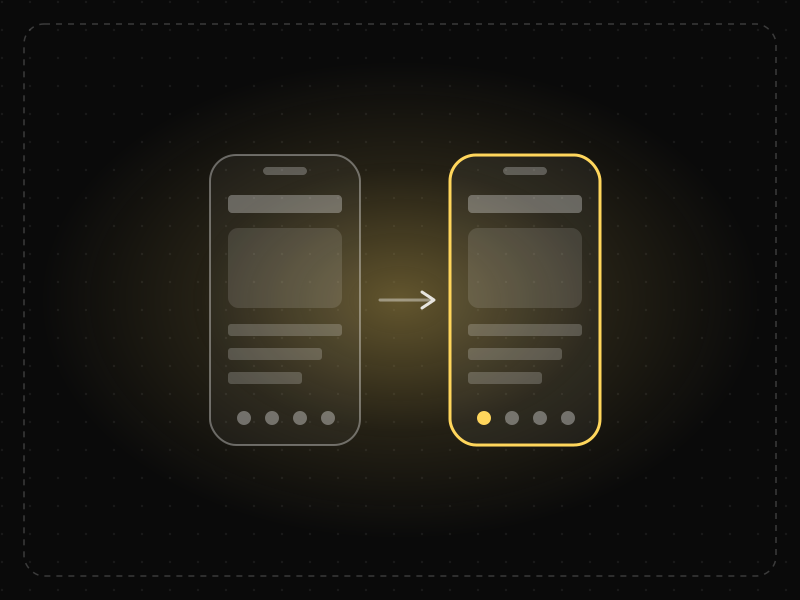
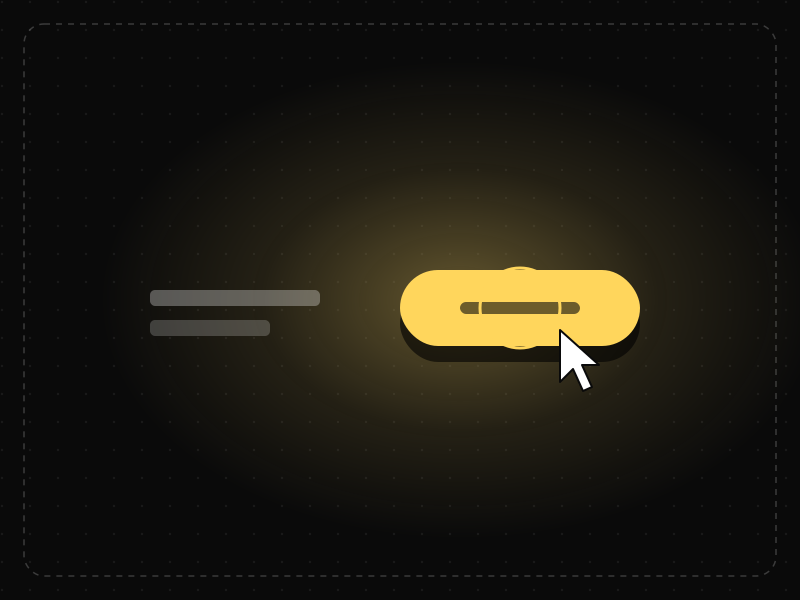
See it in action
The same screen without and with Jakob's Law. Watch both sides play out, then compare the outcome.
People look top-right first, like every other shop; the cart hides at the bottom-left and the hunt begins.
Following the convention, the cart is found instantly — no learning required.
What to watch: where the pointer goes first: to the place every other app taught it to look.
Follow established conventions for navigation, icons, cart, search and forms.
Reinvent familiar patterns for novelty; save originality for what makes your product unique.
Key takeaways
- Follow established conventions for navigation, gestures, icons and checkout.
- Innovate where it creates real value, not on patterns users already understand.
- When you must change a familiar pattern, ease users into it.
Quick facts
- Also known as
- —
- Described by
- Jakob Nielsen
- Year
- 2000
- Category
- Interaction & speed
- Often confused with
- Mental Model (Jakob's Law vs Mental Model)
Jakob's Law explained
Jakob's Law states that users spend most of their time on other sites and apps, so they expect yours to work the same way as the ones they already know.
People build expectations from repeated experience: the logo goes top left and links home, the cart icon goes top right, swiping left on an email does something, a magnifying glass means search. When your product follows these conventions, users can transfer what they already know and focus on their goal.
Breaking conventions forces people to learn something new before they can get value. Innovation is still possible, but it should be reserved for places where it delivers clear value and introduced gradually.
Where it comes from
Named after usability expert Jakob Nielsen, co-founder of Nielsen Norman Group, who articulated it in 2000: users transfer their expectations from the many products they use every day to every new one they try.
How it shows up in apps
Mental models built by leading apps in a category become your users' baseline. Benchmarking competitors' patterns shows which conventions users expect — and where breaking them is causing confusion.
Jakob's Law examples
A new shopping app puts the cart icon at the top right and uses swipe-to-delete on cart items, because that's where and how users expect them to work.
E-commerce conventions
Online stores place search at the top, the cart in the top right, product images on the left and the add-to-cart button near the price, because shoppers expect that layout from other stores.
Platform-native patterns
Apps that follow iOS and Android conventions for navigation, back gestures and system sheets feel instantly familiar, while custom alternatives often confuse people.
Gradual redesigns
Large products often let users opt into a redesign for a period before making it the default, so people can adjust instead of being forced to relearn everything at once.
How to apply Jakob's Law
- Use established patterns for common tasks such as navigation, search, forms, checkout and settings.
- Study the products your users use most and align with their conventions.
- Follow platform guidelines (Apple Human Interface Guidelines, Material Design) for mobile apps.
- Innovate where it creates real value for users, not for novelty, and test new patterns carefully.
- When changing a familiar interface, give users time and guidance to adapt.
Want Jakob's Law checked in your own product? Our mobile app ux audit evaluates it alongside the other principles that shape how users decide, onboard and stay.
Common mistakes
- Reinventing standard controls such as dropdowns, date pickers or navigation for visual distinctiveness.
- Copying competitors' layouts without understanding which patterns users actually depend on.
- Shipping a sudden, total redesign that breaks all existing habits at once.
How to measure it
Compare first-time task success and time on task for standard versus custom patterns in usability tests. After redesigns, track support tickets, feature usage and complaints; spikes indicate that familiar expectations were broken.
Frequently asked questions
What is Jakob's Law?
Users spend most of their time in other products, so they expect yours to work the same way as the apps and sites they already know.
Where does Jakob's Law come from?
Named after usability expert Jakob Nielsen, co-founder of Nielsen Norman Group, who articulated it in 2000: users transfer their expectations from the many products they use every day to every new one they try.
How does Jakob's Law apply to app design?
Mental models built by leading apps in a category become your users' baseline. Benchmarking competitors' patterns shows which conventions users expect — and where breaking them is causing confusion.
Who is Jakob's Law named after?
It is named after Jakob Nielsen, co-founder of the Nielsen Norman Group, who described the principle in 2000.
Does Jakob's Law mean every product should look the same?
No. It means interaction patterns should be familiar. Brand, visual style and content can still be distinctive.
How do you measure Jakob's Law in a product?
Compare first-time task success and time on task for standard versus custom patterns in usability tests. After redesigns, track support tickets, feature usage and complaints; spikes indicate that familiar expectations were broken.
Sources
- Nielsen, J. (2000). End of Web Design. Nielsen Norman Group (Alertbox). Find on Google Scholar ↗
- Nielsen Norman Group. Jakob's Law of Internet User Experience. Find on Google Scholar ↗
Related laws
 Memory & attention
Mental Model
A mental model is a person's internal picture of how a system works; interfaces feel intuitive when they match it and confusing when they don't.
 Interaction & speed
Paradox of the Active User
Users start using software immediately instead of reading instructions, even when learning first would save them time later.
 Perception
Law of Similarity
Elements that look alike — in color, shape, size or style — are perceived as related or as having the same function.
 Interaction & speed
Affordances & Signifiers
An affordance is what an object lets you do; a signifier is the cue that shows you how. Clear signifiers tell users what is interactive and how to use it.
Jakob's Law in practice
- App developmentNative vs hybrid vs cross-platform apps: which one should you build?Native is fastest, cross-platform (Flutter, React Native) saves 25–40%, hybrid is cheapest but weakest. How each works and which to choose.
- Everyday design scienceWhy is the keyboard QWERTY? What the patents, telegraphs and typing data actually showKeyboards are QWERTY because of an 1870s typewriter, not a plan to slow typists. What patents, telegraph history and 136 million keystrokes reveal about it.
- UI/UX designLaws of UX explained: Hick's law, Fitts's law and Jakob's law, with app examplesThe three most-used laws of UX explained with app examples: Hick's law (choices), Fitts's law (target size and distance) and Jakob's law (familiarity).
- App developmentWhy apps get rejected by the App Store, and how to fix itApple rejected 2 million+ submissions in its latest report, mostly for performance. The common App Store rejection reasons, guidelines and fixes.
- Everyday design scienceWhy is the save icon still a floppy disk? The icons that outlived their objectsThe save icon is a floppy disk because that is where files were saved when toolbars were designed. Why it survived, plus 10 icons that outlived their objects.
- Design historyOld website designs: what Google, Amazon, Yahoo, YouTube and Facebook looked like at launchSee old website designs from the first web page (1991) to Google, Amazon, YouTube and Flipkart at launch, with Wayback Machine links and what each one teaches.
Certifications that test it
- Free certification · UX/UI, Design, Research & CreativeUX Design CertificationCertifies that you can take a product problem from user need to a tested, usable flow — research, information architecture, interaction design and usability evaluation.
- Free certification · UX/UI, Design, Research & CreativeUI Design CertificationCertifies that you can design clear, consistent, accessible interfaces — visual hierarchy, typography, colour, layout, components and interaction states.
- Free certification · UX/UI, Design, Research & CreativeUX Writing & Content Design CertificationCertifies that you can write interface copy that helps people act — microcopy, errors, onboarding, voice and tone, content structure and testing words.
- Free certification · UX/UI, Design, Research & CreativeDesign Systems CertificationCertifies that you can build, document, govern and scale a design system — tokens, components, documentation, adoption and design–engineering collaboration.
- Free certification · UX/UI, Design, Research & CreativeFigma CertificationCertifies that you can build production-ready work in Figma — auto layout, components and variants, variables and modes, prototyping and developer handoff.
- Free certification · UX/UI, Design, Research & CreativeMobile App Design CertificationCertifies that you can design native-feeling iOS and Android apps — platform conventions, navigation and gestures, touch ergonomics and accessibility, and performance, offline and permission flows.






Get the ideas, not the noise.
Sign up with Google and we’ll send you short UX psychology tips by email — why people tap, stall and leave, and what to do about it. Unsubscribe anytime. Prefer something to keep? Get the free Laws of UX guide as a PDF.