 By
Quick answer: Do I need a hunter to launch on Product Hunt?
- Do you need a hunter? No; Product Hunt encourages makers to hunt their own product.
- What hunting means: posting the launch.
- Does the hunter affect ranking? No, says Product Hunt.
- What gets you featured: an editorial decision based on the product and page.
- Hunter vs maker: if you post your own product, you're both.
Key takeaways
- 'You need a famous hunter' is one of the myths Product Hunt lists explicitly.
- Self-hunting keeps you in control of the date, page and maker comment.
- Paying a hunter buys nothing the ranking rewards.
- Featuring depends on the product and page, not the poster.
- Your effort is better spent on preparation and your own community.
For years, founders were told to find a well-known "hunter" with a big following before launching on Product Hunt. Product Hunt now says the opposite, in writing: hunt your own product, because who posts it doesn't affect ranking. This short guide explains what a hunter is, why self-hunting is the recommended route, and what actually decides whether your launch gets seen, from Product Hunt's help centre, read on 17 November 2026.
The short answer: no
| Question | Product Hunt says |
|---|---|
| Do I need a hunter? | No; you can, and should, hunt your own product |
| What is hunting? | Just posting |
| Does a famous hunter help? | No; who posts doesn't affect ranking |
| Can I hunt others' products? | Yes, if they follow the Community Guidelines |
| How many can I hunt? | Up to 2 launches per day |
Table: Hunters on Product Hunt (Product Hunt help centre, checked 17 Nov 2026)
Hunter vs maker
A hunter is whoever submits the launch; a maker is anyone who helped build it. Post your own product and you're both. Add your co-makers with their own personal accounts so they're credited and can reply.
What actually gets you featured
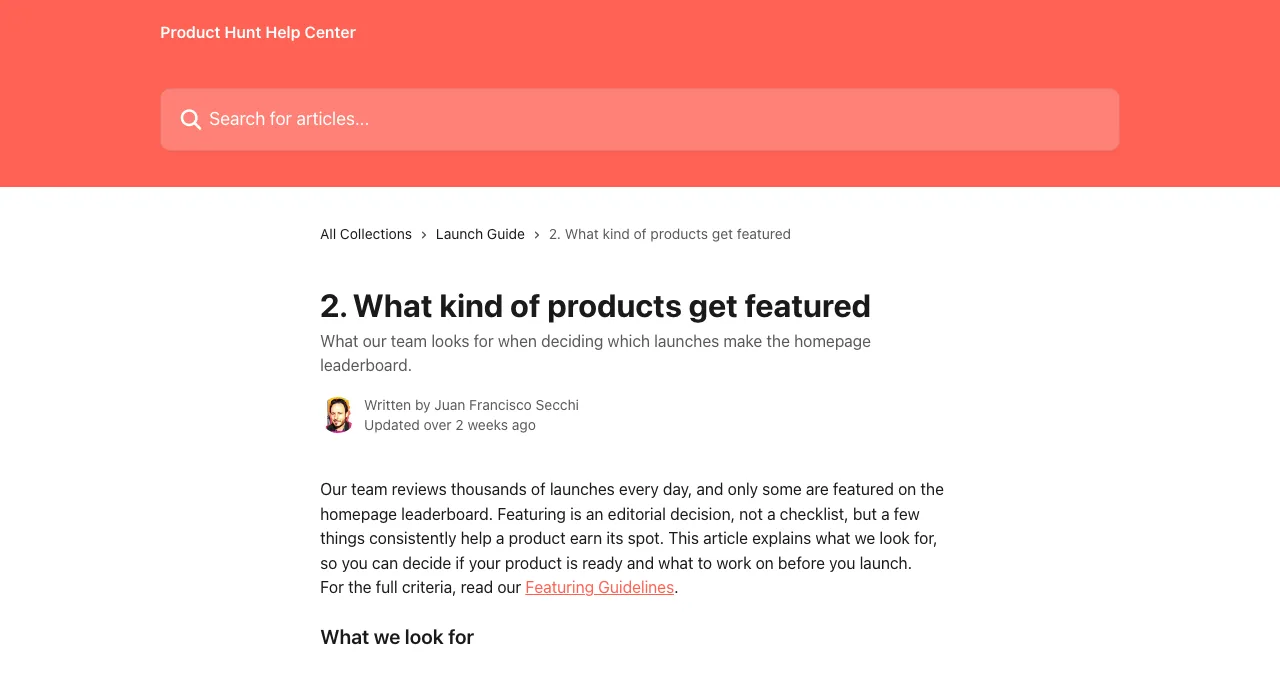

- A product people can use — not a closed beta or landing page
- A clear tagline — say what it does
- A gallery showing the product in use — not logos
- A maker comment — why you built it and what feedback you want
- Real engagement on the day — from established members, not new accounts
Why self-hunting is better

- You control the date — schedule from tomorrow up to 30 days ahead
- You control the page — tagline, gallery, description
- You write the maker comment — the first thing people read
- No dependency — nobody else's calendar or account
- No cost — and nothing to lose on ranking
If someone hunted you first
Product Hunt's two options: ride the wave and engage, then relaunch later with a major update; or email hello@producthunt.com straight away and it will help.
A launch with no gatekeeper
Ready to hunt it yourself?
How we know
Every rule comes from Product Hunt's help centre (Launch FAQ and myths; How Product Hunt works; What kind of products get featured; Set your goals and pick your launch date), read on 17 November 2026. Science of Apps runs the Launchpad and has no relationship with Product Hunt.
Key terms, defined
- Hunter: the person who submits a product to Product Hunt.
- Maker: anyone who helped build the product.
- Self-hunting: a maker posting their own product.
- Featured: selected by Product Hunt's team for the homepage.
- Co-maker: another maker credited on the launch with their own account.
Frequently asked questions
Do I need a hunter to launch on Product Hunt?
No. Product Hunt says you can, and should, hunt your own product. Hunting just means posting, and there's no advantage to having someone else post it for you.
Does a famous hunter help my ranking?
No. Product Hunt lists 'You need a famous hunter' as a myth: anyone can hunt, it encourages makers to post their own product, and who posts it doesn't affect ranking.
What is a hunter on Product Hunt?
A hunter is the person who submits a product, usually the maker. If you post your own product you're both the hunter and a maker. You can also hunt products you didn't build if they follow the Community Guidelines.
How do I get featured on Product Hunt?
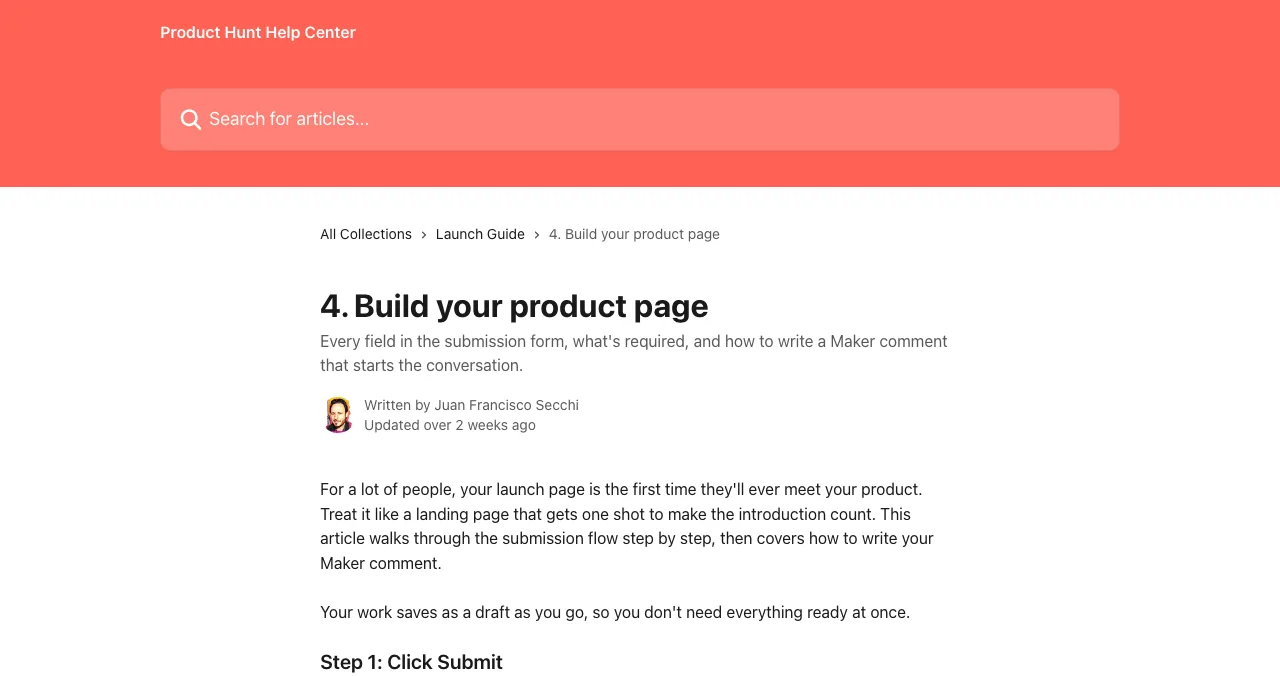
Product Hunt's team reviews every launch and hand-picks which to feature, using its Featuring Guidelines. A usable product, a clear tagline and a gallery that shows the product in use matter; meeting the guidelines doesn't guarantee a spot.
Should I pay someone to hunt my product?
There's no benefit to ranking, and services that promise upvotes break Product Hunt's rules. Spend the money and time on your page, a demo and your own community instead.
What if someone already hunted my product?
Product Hunt gives two options: ride the wave and relaunch later with a major update, or email hello@producthunt.com and it will help sort it out.
Sources
- Product Hunt Help Center — Launch FAQ and myths (checked 17 Nov 2026)
- Product Hunt Help Center — How Product Hunt works (checked 17 Nov 2026)
- Product Hunt Help Center — What kind of products get featured (checked 17 Nov 2026)
- Product Hunt Help Center — Set your goals and pick your launch date (checked 17 Nov 2026)
- Checked November 17, 2026. Figures that change — fees, salaries, prices — are reviewed every six months; if something is out of date, tell us.
Where to go from here
- How to launch on Product Hunt — self-hunting, step by step
- How Product Hunt ranking works — what actually ranks
- 14 Product Hunt alternatives — other launch sites
- Science of Apps - LaunchpadWhat is Product Hunt? How launches, the leaderboard, featuring, makers and Product of the Day actually workWhat Product Hunt is and how it works in 2027: daily launches, the leaderboard, featuring, makers and hunters, Product of the Day and the rules, explained.
- Science of Apps - LaunchpadHow much does a Product Hunt launch cost? Nothing to launch, but here's what founders actually spend time and money onA Product Hunt launch costs nothing to submit. What founders really spend on: time, a demo video, a launch offer, optional ads, and the services to avoid.
- Science of Apps - LaunchpadHow does Product Hunt work? Featuring, the daily leaderboard, upvote weighting and Product of the Day, from Product Hunt's own rulesHow Product Hunt works: launches go live at 12:01 AM PT, editors pick what's featured, and the leaderboard weighs upvotes, comments, time and more.
- Science of Apps - LaunchpadIs Product Hunt worth it in 2027? What it really gives you, what it can't, and who should launch thereIs Product Hunt worth it in 2027? It's free, but featuring is editorial and the spotlight lasts a day. Who it suits, what to expect and what to do instead.
- Science of Apps - LaunchpadWhich startup launch platforms let payment affect ranking or placement, which keep them separate, and how to spend launch money wiselyWhich startup launch platforms let money buy placement in 2027: DevHunt boosts, Uneed fast-track, featured slots, versus sites where payment never affects rank.
- Science of Apps - LaunchpadHow to launch on Product Hunt in 2027: the rules, the timing, the page and an hour-by-hour plan for launch dayHow to launch on Product Hunt in 2027, step by step: eligibility, scheduling, your launch page, promotion rules and an hour-by-hour launch-day plan.
Get the ideas, not the noise.
Sign up with Google and we’ll send you short UX psychology tips by email — why people tap, stall and leave, and what to do about it. Unsubscribe anytime. Prefer something to keep? Get the free Laws of UX guide as a PDF.
Launch day ends. Your listing shouldn't.
No hunter and no gatekeeper: list your own startup free on the Launchpad, ranked by relevance and never by payment, and get your product tested end to end with a detailed report.