 By
Quick answer: Which startup launch platforms let you pay for a better ranking?
- Payment affects position: DevHunt (tie-break boost; super boosts $99–$199), AI directories' featured slots.
- Payment buys timing: Uneed ($19.99 fast-track, $39.99 pick your day).
- Payment kept separate: Product Hunt (ads separate from the leaderboard; paid upvotes banned).
- Never by payment: Science of Apps Launchpad.
- Rule of thumb: know exactly what money buys before paying.
Key takeaways
- Paid placement isn't wrong if it's disclosed; hidden paid ranking is.
- Know whether you're buying position, timing, a link or exposure.
- Votes still decide most leaderboards; payment often only breaks ties or opens the day.
- Paying for upvotes is against the rules everywhere that has them.
- Free, fair platforms are worth using first.
Launch sites earn money somehow, and how they do it shapes what you're competing against. On some, payment buys a better spot; on some, it buys a sooner date; on others, it's kept entirely separate from ranking. None of that is wrong if it's clear, but founders often pay without knowing which they're buying. This investigation sorts the major launch platforms by what money does, from each site's own pages as read on 16–17 November 2026. Jump to the table, what money buys or how to spend.
At a glance
| Platform | What payment does | Price |
|---|---|---|
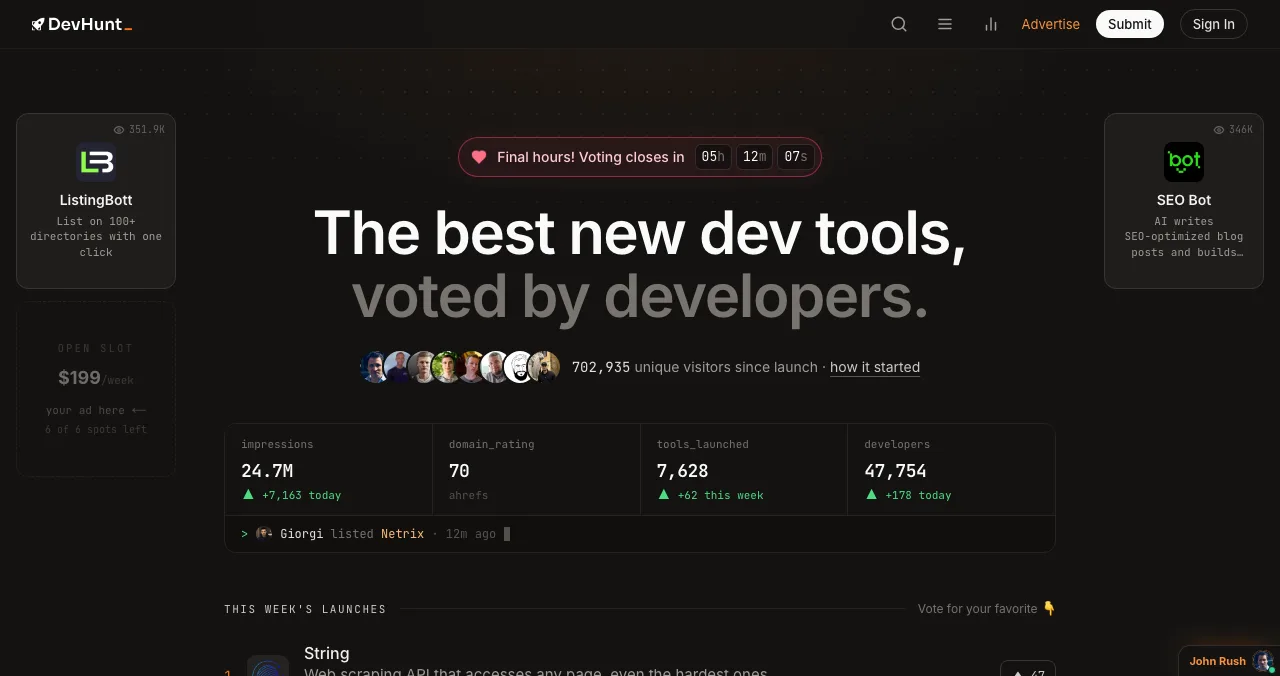
| DevHunt | Paid launch wins tie-breaks; super boosts open the week on top and lead the email | $49 launch; boosts $99–$199 |
| Uneed | Buys a sooner or chosen date | $19.99 fast-track; $39.99 pick your day |
| Microlaunch | Buys a 30-day launch with feedback | $49 |
| TopAI.tools | Buys faster listing and featured placement | $47 Fast Track; $229 Featured (7 days) |
| Product Hunt | Ads only, separate from the leaderboard | Ads; launching free |
| Science of Apps Launchpad | Nothing: never ranked by payment | Free |
Table: What payment does on launch platforms (each site's own pages, checked 16–17 Nov 2026)
What money buys
| You're buying | Example | Worth it when |
|---|---|---|
| Position | DevHunt super boost | Votes are close and the email matters to you |
| Timing | Uneed fast-track | You need a date that fits your plan |
| Exposure | Featured slots, ads | You've measured that the audience converts |
| A link | DevHunt dofollow on paid launches | You value the link and the audience |
Table: Kinds of paid launch upgrades
Where payment is kept separate
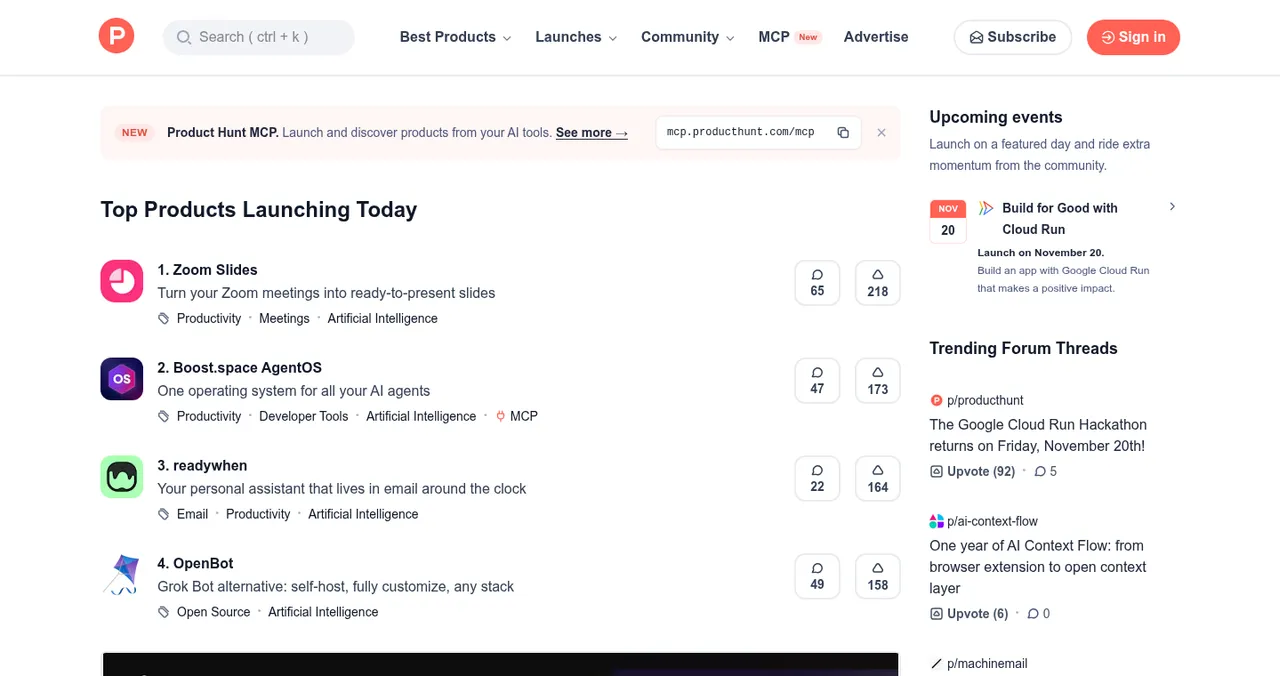
Product Hunt says launching is free, ads are separate from the leaderboard and paid upvotes can get you banned. Science of Apps Launchpad says ranking is by relevance, editorial selection and community interest, "never payment".
How to spend launch money wisely

- Use the free routes first.
- Write down what the payment buys — position, timing, exposure or a link.
- Buy one thing at a time — with a UTM link.
- Measure sign-ups for 30 days.
- Never buy votes, comments or reviews.
Ready to launch fairly?
How we know
Each platform's terms come from its own pages (DevHunt FAQ, Uneed launch guide, Product Hunt help centre, TopAI.tools submit page, Launchpad homepage), read on 16–17 November 2026. "Pay-to-win" is our shorthand for payment affecting position; we don't imply any site hides it.
Key terms, defined
- Paid placement: a position bought rather than earned.
- Super boost: DevHunt's paid top-of-week placement.
- Fast-track: paying to launch sooner.
- Featured slot: paid prominence on a directory.
- Tie-break: what decides order when votes are equal.
Frequently asked questions
Can you pay to rank higher on Product Hunt?
No legitimate way. Product Hunt says ads are separate from the leaderboard, and paid upvotes or comments are easy to spot and can get a launch removed and an account banned.
What do DevHunt super boosts do?
DevHunt says a super boost ($199 for #1, $149 for #2, $99 for #3) leads the launch email in that order and opens the week at the top of the home page; after that the home page ranks by votes.
Is Uneed pay-to-win?
Uneed's payments buy timing: a free waiting line or $19.99 to fast-track and $39.99 to pick your day. Its leaderboards then rank launches.
Which launch platforms never rank by payment?
Science of Apps Launchpad says products are ranked by relevance, editorial selection and community interest, never by payment. Product Hunt keeps its ads separate from the leaderboard.
Is paying for a featured listing worth it?
Sometimes, if you know what it buys and measure it with a tracked link. Pay for one thing at a time and keep it only if sign-ups justify the cost.
Is paid placement unethical?
Not if it's clearly labelled as sponsored or featured. It becomes a problem when paid positions look like earned ones.
Sources
- DevHunt — FAQ: launching, voting and pricing (checked 17 Nov 2026)
- Uneed — How to launch your product on Uneed (launch guide, 2026)
- Product Hunt Help Center — How Product Hunt works (checked 17 Nov 2026)
- Product Hunt Help Center — What to do during and after your launch: advertising (checked 17 Nov 2026)
- TopAI.tools — Submit your AI tool (checked 17 Nov 2026)
- Science of Apps — Launchpad: ranking and pricing (checked 17 Nov 2026)
- Checked November 17, 2026. Figures that change — fees, salaries, prices — are reviewed every six months; if something is out of date, tell us.
Where to go from here
- Best product launch platforms — ranked by fit
- Uneed vs Product Hunt vs Microlaunch — free and paid compared
- DevHunt review — boosts explained
- Science of Apps - LaunchpadDevHunt review: how the weekly developer-tool launches work, what's free, what the $49 launch and super boosts buy, and who it suitsA 2027 DevHunt review: free nofollow listings, the $49 weekly launch with a dofollow link, super boosts, developer voting and who it suits.
- Science of Apps - LaunchpadUneed vs Product Hunt vs Microlaunch: cost, timing, ranking and who each launch site suitsUneed vs Product Hunt vs Microlaunch in 2027: free and paid options, launch timing, how each ranks you and how long you stay visible, all checked.
- Science of Apps - LaunchpadThe best product launch platforms in 2027, matched to what you're launching: SaaS, AI, developer tools, apps and pre-launch, with costs and rulesThe best product launch platforms in 2027 by use case: Product Hunt, Science of Apps Launchpad, DevHunt, Peerlist, Uneed, BetaList, Show HN and more.
- Science of Apps - LaunchpadThe top 5 websites to launch your startup for free, checked against each site's own rulesThe 5 best free websites to launch a startup: Science of Apps Launchpad, Product Hunt, Show HN, Uneed and Peerlist, with costs, rules and who each one suits.
- Science of Apps - LaunchpadHow much does a Product Hunt launch cost? Nothing to launch, but here's what founders actually spend time and money onA Product Hunt launch costs nothing to submit. What founders really spend on: time, a demo video, a launch offer, optional ads, and the services to avoid.
- Science of Apps - LaunchpadHow to launch and promote a Chrome extension: the Chrome Web Store listing, the free launch sites that take extensions, and where users look for themHow to launch and promote a Chrome extension: the Web Store's one-time fee and listing, then Product Hunt, Show HN, DevHunt, AlternativeTo and a free profile.
Get the ideas, not the noise.
Sign up with Google and we’ll send you short UX psychology tips by email — why people tap, stall and leave, and what to do about it. Unsubscribe anytime. Prefer something to keep? Get the free Laws of UX guide as a PDF.
Launch day ends. Your listing shouldn't.
No pay-to-win: the Launchpad ranks by relevance, editorial picks and community interest, never payment, and listing is free forever, with a product test and detailed report.