 By
Quick answer: Are startup newsletters and lists worth submitting to?
- Launching Next: free; $99 to be considered within 1 business day.
- Startup Stash: curated tools directory; paid plans, free preview.
- Tiny Startups: featured spots to the top bidders (#1 was £199).
- Submit free where the audience fits.
- Pay only for an audience you've checked.
Key takeaways
- Small launch sites can add visitors and permanent pages.
- Read how each one ranks: editorial, votes or bids.
- Fast-track fees buy speed, not guaranteed publication.
- Bid-for-rank spots are advertising; treat them that way.
- Track referrals from each to decide where to spend.
After Product Hunt and BetaList, most founders hit a long tail of smaller launch sites with confident names and unclear rules. Three come up often: Launching Next, Startup Stash and Tiny Startups. They work quite differently: one reviews free submissions daily, one is a curated tools directory with paid plans, and one auctions its featured spots. This roundup explains each from its own pages as read on 17 November 2026, what it costs and who should bother. Jump to the comparison, each site or the verdict.
- Launching Next submission
- $0
- Launching Next one-business-day upgrade
- $99
- Tiny Startups #1 featured spot (17 Nov 2026)
- £199
- Startup Stash monthly search visits (its figure)
- 80,000+
Compared
| Site | What it is | Cost | How rank or placement works |
|---|---|---|---|
| Launching Next | Daily-reviewed startup submissions | Free; $99 to be considered within 1 business day | Editorial review |
| Startup Stash | Curated directory of startup tools | Paid plans; free page preview | Editorial, by category |
| Tiny Startups | Curated launch platform and directory | Check launch terms; featured spots by bid | Featured spots to top bidders; weekly leaderboard |
Table: Launching Next, Startup Stash and Tiny Startups compared (each site's own pages, checked 17 Nov 2026)
Launching Next
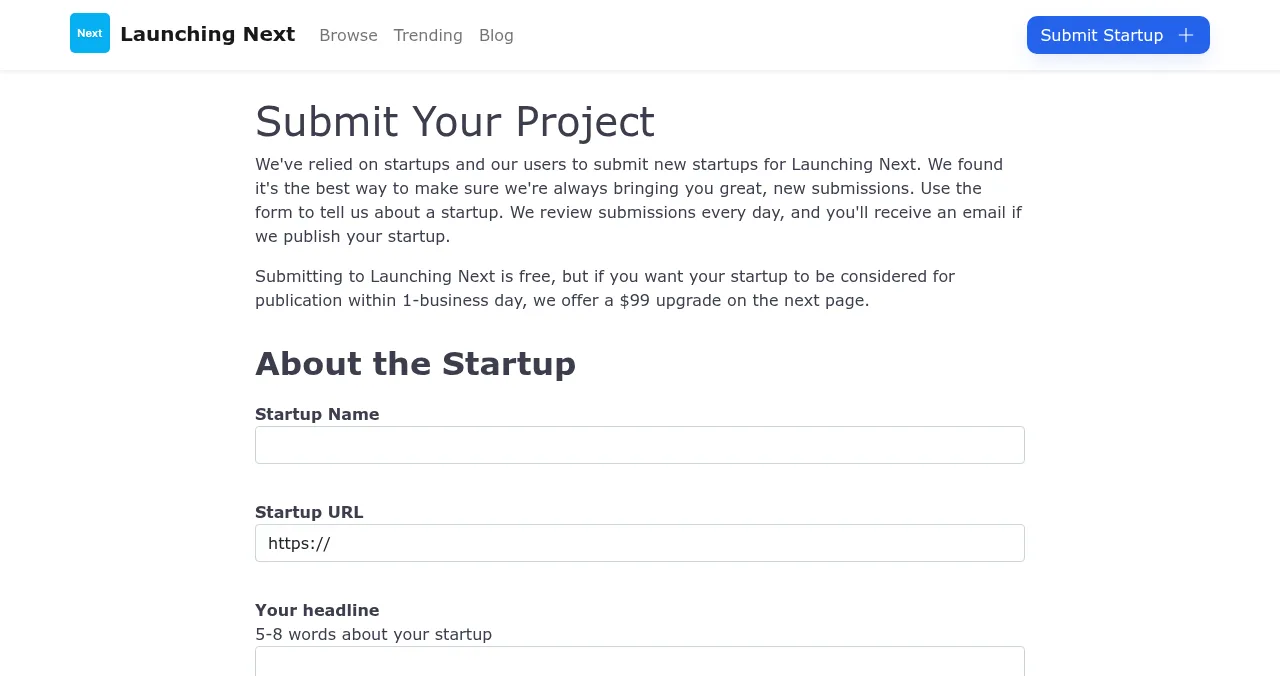
Launching Next says it reviews submissions every day and emails you if your startup is published. Submitting is free; a $99 upgrade gets you considered within one business day. The form asks for a 5–8 word headline, a description up to 2,500 characters and 5–10 tags. Its newsletter goes to 5,000+ founders, by its count. Best for: a free submission when you have time to wait.
Startup Stash
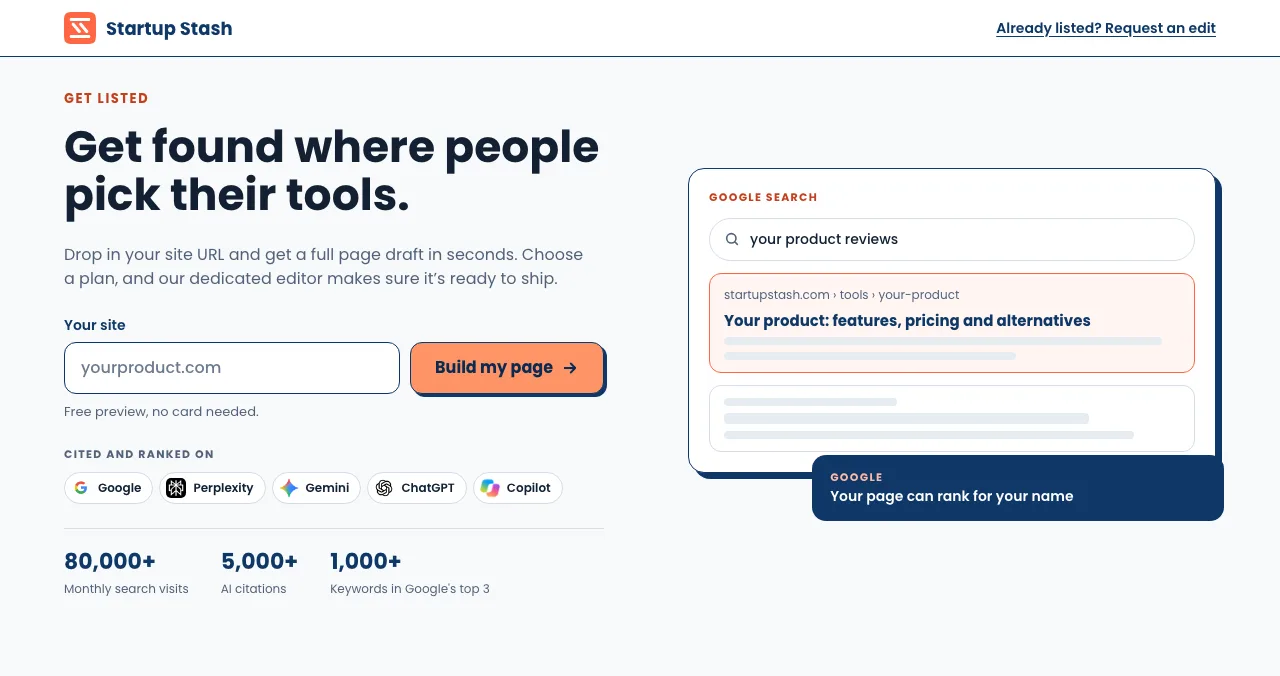
Startup Stash calls itself the curated directory of tools for startups. Its "Get listed" page builds a page draft from your URL as a free preview; you then choose a plan and an editor reviews it. It claims 80,000+ monthly search visits, 5,000+ AI citations and 1,000+ keywords in Google's top three. Best for: tools for founders (CRM, analytics, design) where people browse by category.
Tiny Startups
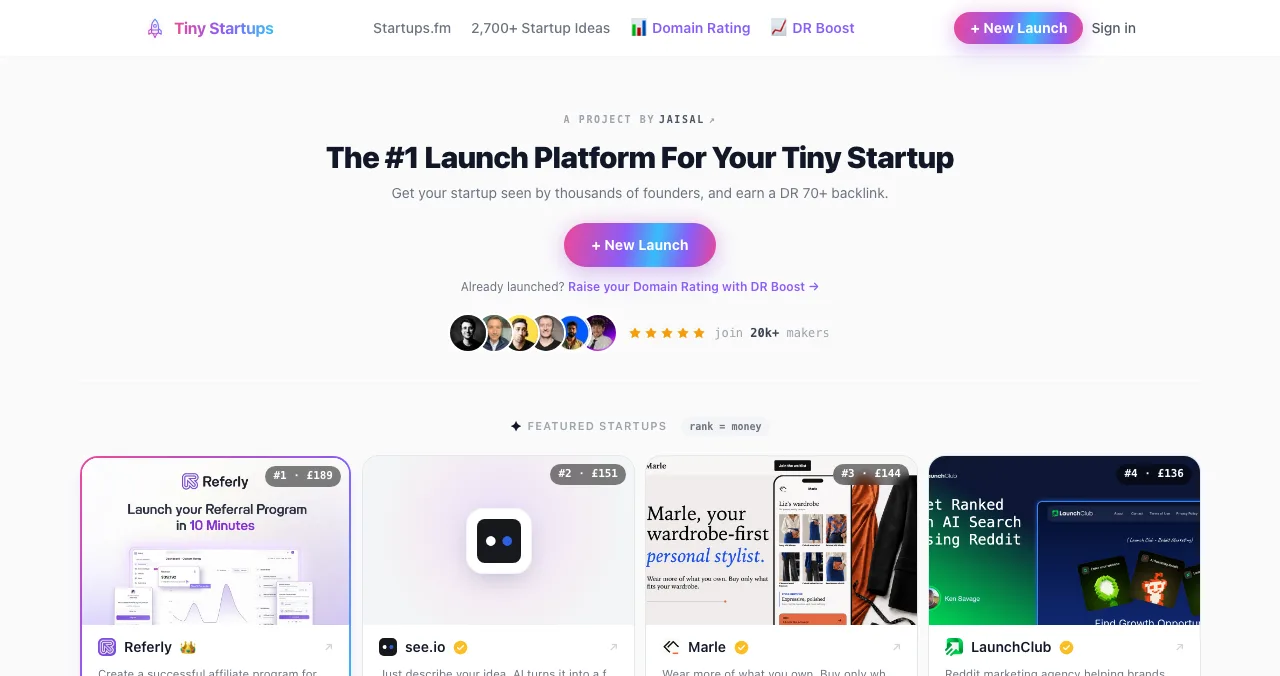
Tiny Startups describes itself as a curated launch platform and directory, hand-picked and updated daily, with 25k+ newsletter subscribers by its count. Its featured row is sold by bidding: "these spots belong to the board's top bidders"; on 17 November 2026 the #1 spot was £199. It also runs a weekly leaderboard and sells a directory submission service from £199. Best for: founders who want to buy a visible slot and treat it as advertising.
The verdict
Mistakes

- Paying before checking recent listings — do they get comments or clicks?
- Confusing a fast-track with acceptance — fees buy review speed
- Treating paid rank as organic — it's an ad
- Not tracking referrals — tag links per site
Ready to launch fairly?
How we know
Terms, prices and figures come from each site's own pages, read on 17 November 2026; audience figures are each site's own claims. Tiny Startups' featured prices change with bidding.
Key terms, defined
- Fast-track: a fee for faster review, not guaranteed acceptance.
- Bid-for-rank: placement sold to the highest bidder.
- Curated directory: a directory where editors choose what's listed.
- Featured spot: a highlighted placement, often paid.
- Referral traffic: visitors who arrive from another site's link.
Frequently asked questions
Are startup newsletters and lists worth submitting to?
Free submissions usually are: they take minutes and can bring visitors and a permanent page. Paid options are worth it only if the audience matches your buyers; check recent listings and ask founders who paid what it brought.
Is Launching Next free?
Yes. Launching Next says submitting is free and that it reviews submissions every day, emailing you if your startup is published. A $99 upgrade gets your startup considered for publication within one business day.
What is Startup Stash?
A curated directory of tools and resources for startups. It says it has 80,000+ monthly search visits and 5,000+ AI citations, offers a free page preview, and lists products through paid plans with an editor reviewing each page.
How does Tiny Startups work?
It's a curated startup launch platform and directory, hand-picked and updated daily. Its featured spots belong to the board's top bidders; on 17 November 2026 the #1 spot was £199. It also sells a directory submission service from £199.
Does paying guarantee publication on Launching Next?
No. The $99 upgrade is for your startup to be considered for publication within one business day; Launching Next still reviews submissions.
What's a fair alternative?
Free launch sites that don't sell rank, such as the Science of Apps Launchpad, plus Product Hunt and relevant directories. See our list of places to launch a startup.
Sources
- Launching Next — Submit Your Project (checked 17 Nov 2026)
- Startup Stash — Get listed (checked 17 Nov 2026)
- Tiny Startups — Launchpad (checked 17 Nov 2026)
- Tiny Startups — homepage (checked 17 Nov 2026)
- Science of Apps — Launchpad: launch your product free
- Checked November 17, 2026. Figures that change — fees, salaries, prices — are reviewed every six months; if something is out of date, tell us.
Where to go from here
- Pay-to-win launch sites — spot them
- Places to launch a startup — the best options
- Judge a launch website — the checklist
- Science of Apps - LaunchpadWhich startup launch platforms let payment affect ranking or placement, which keep them separate, and how to spend launch money wiselyWhich startup launch platforms let money buy placement in 2027: DevHunt boosts, Uneed fast-track, featured slots, versus sites where payment never affects rank.
- Science of Apps - LaunchpadFree startup directories in 2027: 16 checked sites to submit your startup to, grouped by what you want (investors, customers, a launch, India) with each one's rules16 free startup directories checked for 2027, grouped by goal: investors, customers, launch day and India, with each site's rules and the ones to skip.
- Science of Apps - LaunchpadSaaS directories worth your time in 2027: 13 checked places to list a SaaS, labelled buyer-intent or launch, free or paid, with their rules13 SaaS directories worth listing on in 2027, each checked: buyer-intent vs launch sites, free vs paid, the rules, and whether directories help SEO.
- Science of Apps - LaunchpadAIxploria review: the $79, $279 and $399 options, how long listing takes, and how it compares with other AI tools directoriesAIxploria review for 2027: $79 fast listing, $279 verified, $399 featured ads, timing and manual review, compared with Toolify, TAAFT, TopAI and free options.
- Science of Apps - LaunchpadThe best websites to launch an AI startup or AI tool, with what each one really costsWhere to launch an AI tool in 2027: free launch sites, AI directories and their real fees (TAAFT, Toolify, AIxploria), and which to use first.
- Science of Apps - LaunchpadAI tools directories in 2027: where you can still submit an AI tool for free, what the paid ones cost, and a submission kitWhere to submit an AI tool for free in 2027, which AI tools directories now charge (and how much), and a copy-ready submission kit, all checked.


Get the ideas, not the noise.
Sign up with Google and we’ll send you short UX psychology tips by email — why people tap, stall and leave, and what to do about it. Unsubscribe anytime. Prefer something to keep? Get the free Laws of UX guide as a PDF.
Launch day ends. Your listing shouldn't.
Unlike bid-for-rank spots, the Launchpad is free forever and ranks by relevance and community interest, never payment, with a permanent page found by the problem you solve.