 By
Quick answer: How do I know if a launch site is legit?
- Real people: recent launches have genuine comments.
- Fair ranking: by interest or relevance, not payment.
- Open pricing: fees and what they buy, in writing.
- Permanent page: your listing stays after launch day.
- Red flag: upvote packages or 'guaranteed #1'.
Key takeaways
- A launch site is only as good as its audience.
- Paid visibility is fine if it's labelled; paid rank isn't.
- Bought votes risk your reputation and break platform rules.
- Check the outbound link and its rel attribute yourself.
- Permanent pages outlast launch-day spikes.
There are now dozens of startup launch websites, and new ones appear every month promising "10,000 visitors" and "a top-3 spot". Some are genuine communities where early adopters try products. Some are directories that sell their front page. Some sell upvotes outright. Before you spend a launch day or a fee, it takes ten minutes to tell them apart. This guide gives you the checklist, the red flags and how to check a site yourself, with platform rules as read on 17 November 2026. For a ranked list of good ones, see places to launch a startup. Jump to the checklist, red flags or the ten-minute check.
- Signs of a good launch website
- 5
- Red flags
- 5
- To check a site before you list
- 10 min
- Votes worth buying
- 0
What makes a good startup launch website

- Real people — recent launches have genuine comments and questions
- Fair, explained ranking — by community interest or relevance, not payment
- Open pricing — fees and exactly what they buy, published
- A permanent page — your listing stays findable after launch day
- A working link to you — straight to your site, with its rel policy visible in the page
Red flags

- Upvote or "engagement" packages — artificial votes break most platforms' rules
- "Guaranteed #1" or "top 3" — rank shouldn't be for sale
- No visible activity — high upvote counts with no comments
- Hidden fees — prices revealed only after you submit
- Paid placements not labelled — sponsored should look sponsored
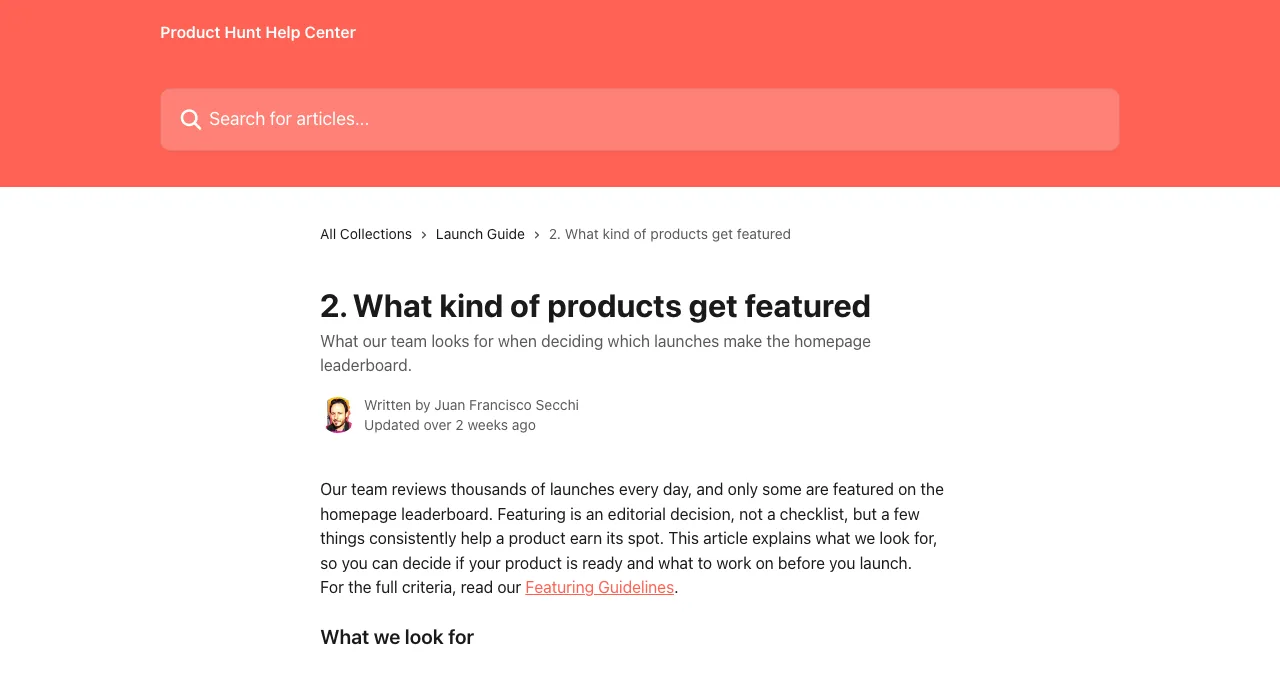
Product Hunt says never to pay for upvotes; bought engagement can get a launch removed and an account banned. In the US, the FTC's reviews rule bans fake indicators of social media influence, such as bought followers or views, used for commercial purposes, and Google's spam policies treat buying links for ranking as link spam. Bought votes also bring no real users. More in pay-to-win launch sites.
The ten-minute check

- Open three recent launches — read the comments: real questions, or "Congrats!" only?
- Read the ranking explanation — is it published? Does payment affect it?
- Read the pricing page — what's free, what costs, what each fee buys.
- Inspect a listing's outbound link — right-click, Inspect, read the rel (dofollow check).
- Search the site's name plus "review" — what do founders who launched there say?
Mistakes

- Choosing by promised traffic — check real activity
- Paying for votes — risky and useless for real users
- Launching on 30 sites the same day — you can't reply to everyone
- Ignoring permanence — a one-day spike vs a page that keeps working
Ready to launch on a fair site?
How we know
Rules come from Product Hunt's help centre, the US FTC's reviews and testimonials rule guidance and Google's spam policies, read on 17 November 2026. The checklist, red flags and ten-minute check are our editorial guidance.
Key terms, defined
- Launch website: a site where new products are presented to early users.
- Pay-to-win: where payment decides rank or visibility without labelling.
- Organic ranking: position earned through interest, not payment.
- Upvote: a vote of interest on a launch site.
- Rel attribute: the part of a link that tells search engines its nature.
Frequently asked questions
How do I know if a launch site is legit?
Look at recent launches: are there real comments and questions, not just upvote counts? Is the ranking explained? Are prices and what they buy published? Does the listing link to the product and stay up? Avoid sites selling upvotes or guaranteed positions.
What is a pay-to-win launch site?
A site where paying decides your rank or visibility without clear labelling: paid 'featured' slots that look organic, upvote packages, or 'guaranteed top 3'. See our guide to pay-to-win launch sites.
Is it OK to pay for a launch?
Paying for a clearly labelled feature, a faster queue or a newsletter slot is a normal business choice. Paying for votes or hidden ranking isn't, and buying links for ranking is link spam under Google's policies.
Do fake upvotes matter?
Yes. Product Hunt says paying for upvotes or comments can get a launch removed and an account banned, and in the US the FTC's reviews rule bans fake indicators of social media influence such as bought followers or views when used commercially. Bought votes also bring no real users.
What is a startup discovery platform?
A site where people browse or search for new products, by category or problem. Unlike a one-day launch site, a discovery platform keeps your page findable over time.
Which launch websites are worth it?
Ones where your buyers actually browse, with fair ranking and a permanent page. Our list of places to launch compares them.
Sources
- Product Hunt Help Center — How to promote your launch (and what to avoid) (checked 17 Nov 2026)
- US FTC — The Consumer Reviews and Testimonials Rule: Questions and Answers (checked 17 Nov 2026)
- Google Search Central — Spam policies for Google web search
- Science of Apps — Launchpad: launch your product free
- Checked November 17, 2026. Figures that change — fees, salaries, prices — are reviewed every six months; if something is out of date, tell us.
Where to go from here
- Pay-to-win launch sites — spot them
- Product Hunt alternatives — options
- Free startup directories — where to list
- Science of Apps - LaunchpadWhich startup launch platforms let payment affect ranking or placement, which keep them separate, and how to spend launch money wiselyWhich startup launch platforms let money buy placement in 2027: DevHunt boosts, Uneed fast-track, featured slots, versus sites where payment never affects rank.
- Science of Apps - LaunchpadWhere to launch your startup in 2027: 24 launch sites, directories and communities, each checked on its own pages24 places to launch your startup in 2027, free and paid: launch sites, directories, AI directories, databases and communities, each checked and dated.
- Science of Apps - LaunchpadThe startup launch checklist for 2027: everything to do before, during and after launch, in orderA startup launch checklist for 2027: product, page, visibility, assets, launch-day and follow-up items, in order, with the platform rules that matter.
- Science of Apps - LaunchpadThe top 5 websites to launch your startup for free, checked against each site's own rulesThe 5 best free websites to launch a startup: Science of Apps Launchpad, Product Hunt, Show HN, Uneed and Peerlist, with costs, rules and who each one suits.
- Science of Apps - LaunchpadAn honest F6S review: what the free F6S membership gives founders (programmes, grants, software deals, jobs), how to judge its opportunities, and the best alternatives by jobAn honest F6S review: free membership, 15.7k listed accelerators and grants, software deals up to 80% off, how to vet programmes, and F6S alternatives by job.
- Science of Apps - LaunchpadWhich launch sites and startup directories give dofollow backlinks? We inspected the rel attribute on real listing pages: most are nofollow or ugc, and that's fineWhich launch sites give dofollow backlinks? We checked real listings on 17 Nov 2026: Product Hunt is ugc, SaaSHub and AlternativeTo nofollow.
Get the ideas, not the noise.
Sign up with Google and we’ll send you short UX psychology tips by email — why people tap, stall and leave, and what to do about it. Unsubscribe anytime. Prefer something to keep? Get the free Laws of UX guide as a PDF.
Launch day ends. Your listing shouldn't.
The Science of Apps Launchpad is free forever, ranks by relevance and community interest (vouches and follows), never payment, and keeps your page permanent.