 By
At a glance: Persepolis
- Location
- Marvdasht, Fars Province, Iran
- Built
- c. 518 BCE – 330 BCE
- Type
- Ceremonial palace complex · Royal
- Style
- Achaemenid Persian
- Commissioned by
- Darius I, Xerxes I and Artaxerxes I
- Architects & builders
- Not recorded
- Materials
- Grey limestone, mud brick, cedar beams
- Size
- Terrace of about 125,000 m²; Apadana columns about 20 m tall
- UNESCO
- Persepolis (1979)
Persepolis: what it is
Darius I chose a site at the foot of the Mountain of Mercy (Kuh-e Rahmat) and levelled a terrace partly cut from the rock. On it his successors built audience halls, treasuries and palaces, approached by a monumental double staircase.
Persepolis was less an administrative city than a stage for kingship, especially for receiving gifts from the empire's peoples. Its reliefs show those peoples in procession, each in national dress, which makes it a picture of the first world empire.
Persepolis, then and now
Real images only: an earlier view and a recent photograph, each credited and linked to its original file. Switch between them or compare side by side.
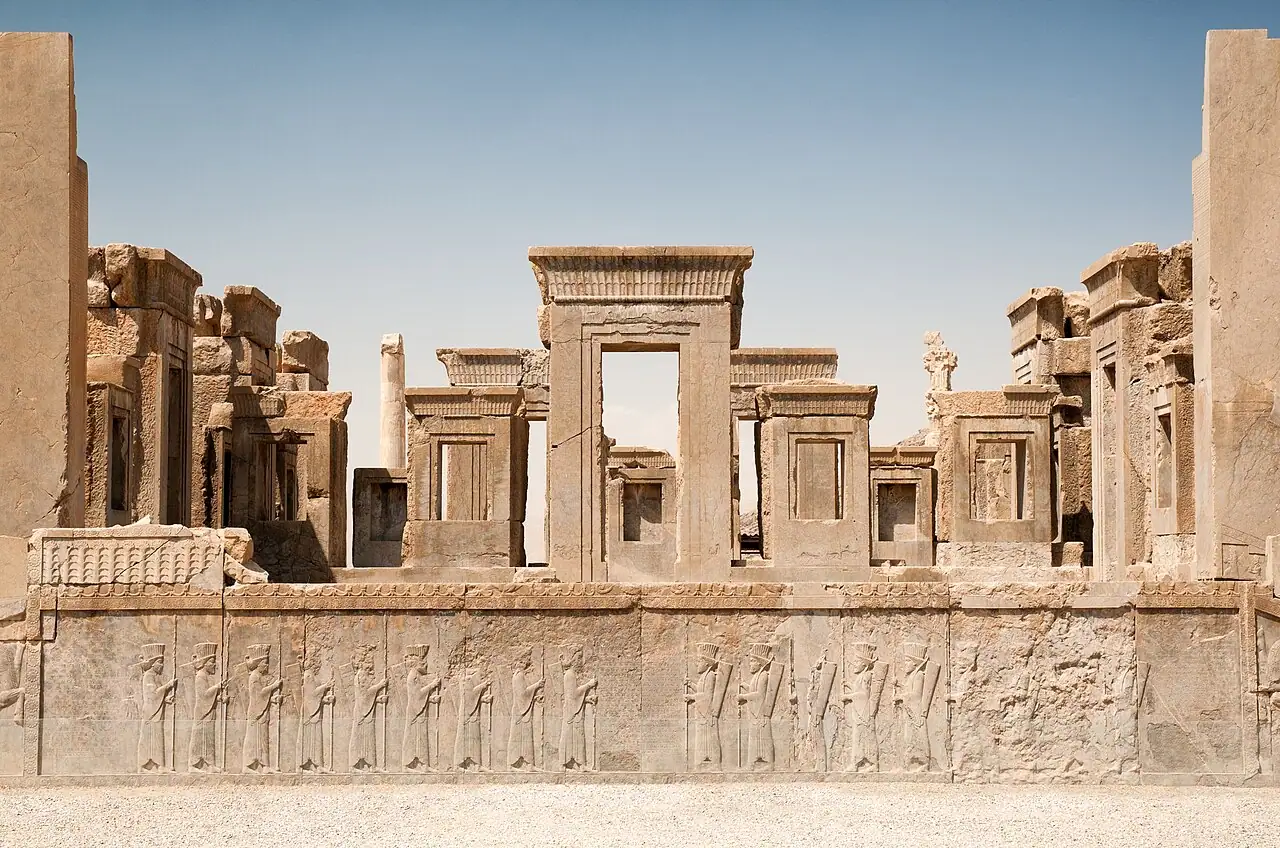
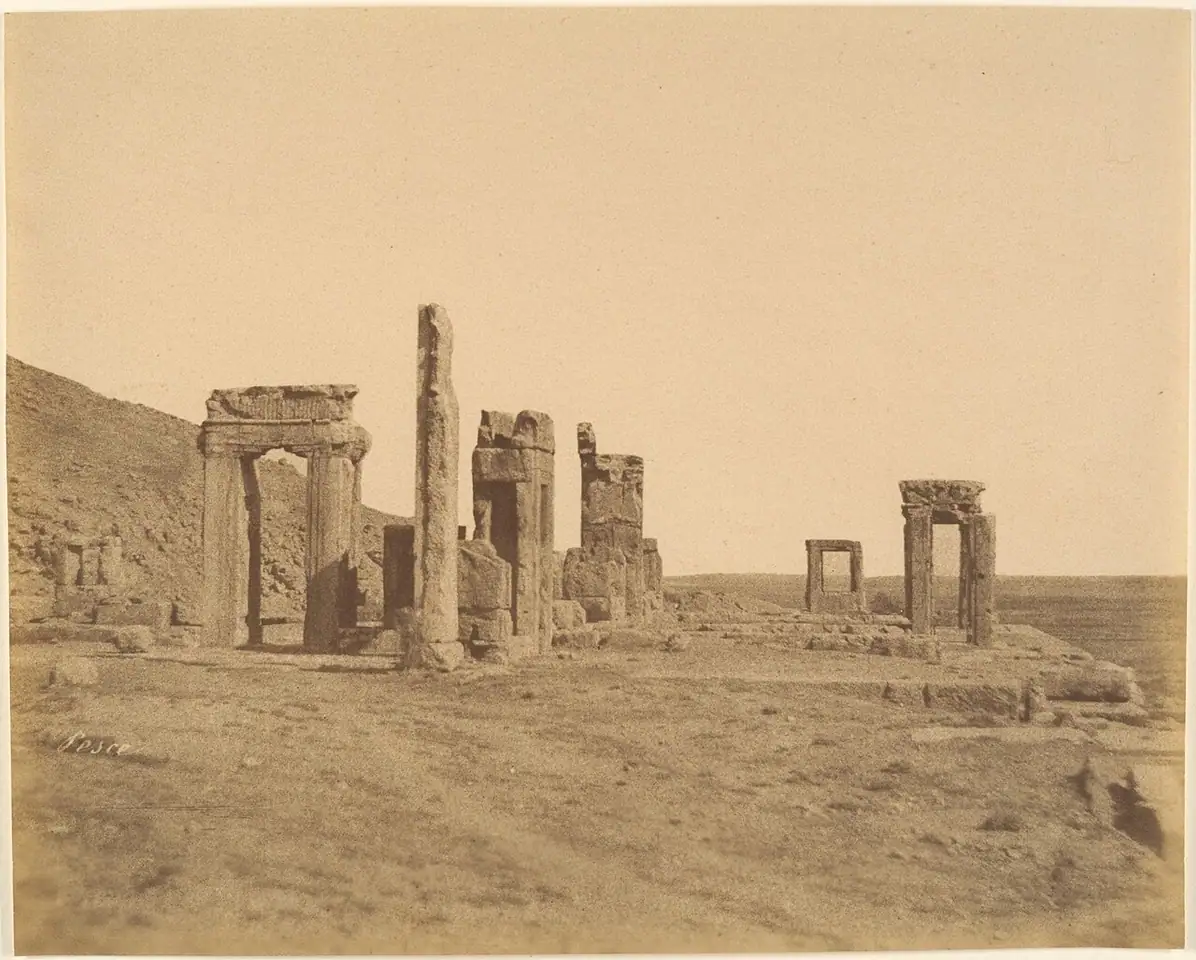 Then · 1840sNow · TodayMove across the image to compare
Persepolis: how it was designed
- 01
Columns as a forest
The Apadana, Darius's audience hall, had 72 columns about 20 metres tall. They carried roofs of cedar beams on capitals carved as pairs of bulls, lions or griffins facing away from each other — a distinctly Persian form.
- 02
Stairs built for processions
The terrace stairs have shallow, wide steps, gentle enough to climb in formal dress. The reliefs on the Apadana stairs show delegations from 23 nations bringing tribute.
- 03
Many cultures in one style
Achaemenid architecture blended ideas from across the empire: Assyrian winged bulls at the Gate of All Nations, Egyptian-style cornices and Ionian Greek stonework techniques.
Construction timeline
Darius I founds Persepolis and builds the terrace, the Apadana and his palace.
Xerxes I adds the Gate of All Nations and his own palace, and begins the Hall of a Hundred Columns.
Alexander the Great captures and burns the palaces.
The Oriental Institute of Chicago excavates the site under Ernst Herzfeld and Erich Schmidt.
About 30,000 clay tablets — the Persepolis Fortification and Treasury archives — are found, recording paid workers and rations.
Inscribed on the UNESCO World Heritage List.
How the design changed
Fire froze the design
The burning of 330 BCE destroyed the timber roofs and mud-brick walls, leaving only stone columns, door frames and stairs. Persepolis has looked like a skeleton ever since.
Ash preserved the reliefs
Collapsed debris buried the Apadana's eastern stairs, protecting their reliefs from weather until excavation, which is why they are so crisp today.
Who built it
Darius I, Xerxes I and Artaxerxes I commissioned the work. The Persepolis administrative tablets show it was built by paid workers drawn from across the empire — including Egyptians, Babylonians, Ionians and Lydians — with rations recorded for men, women and children.
Where it is
Marvdasht, Fars Province, Iran · 29.9350° N, 52.8900° E · Open in OpenStreetMap. Nearest in this guide: Burj Khalifa (577 km), Ziggurat of Ur (660 km), Göbekli Tepe (1,524 km).
 577 km660 km1,524 kmPersepolis
Drag to pan, use + and − or double-click to zoom, and tap any pin for a preview.
Built around the same time
| Monument | Country | Built | Gap |
|---|---|---|---|
| Parthenon | Greece | 447–432 BCE | 71 years later |
| Great Wall of China | China | 7th century BCE – 1644 CE (most visible parts Ming, 1368–1644) | 182 years earlier |
Persepolis: questions people ask
Who built Persepolis?
Darius I founded Persepolis around 518 BCE; Xerxes I and Artaxerxes I added most of its later buildings. Workers came from across the Persian Empire and were paid in rations.
Why did Alexander burn Persepolis?
Ancient writers give different reasons, including revenge for the Persian burning of Athens in 480 BCE. The palaces were burned in 330 BCE after Alexander captured the city.
What is the Apadana at Persepolis?
The Apadana was Darius I's great audience hall, with 72 columns about 20 metres tall and staircases carved with tribute bearers from 23 nations.
Where is Persepolis?
Persepolis is near Marvdasht in Fars Province, south-west Iran, about 60 km north-east of Shiraz.
Sources & image credits
- UNESCO World Heritage Centre — Persepolis
- Wikipedia — Persepolis
- Institute for the Study of Ancient Cultures, University of Chicago — Persepolis Fortification Archive
- Current photograph: 2018-09-21 Iran, Persepolis, Tachara (from the southeast).jpg by Laurens R. Krol, CC BY 4.0 — original on Wikimedia Commons · licence.
- Historic image: (12) -Persepolis, (W- before restoration) MET DP203038.jpg by Luigi Pesce, CC0 — original on Wikimedia Commons · licence.
- Coordinates from Wikidata. Images resized and converted to WebP; otherwise unaltered. Checked October 25, 2026.
More to wander into
- World monument · 1869–1886 (never completed)Neuschwanstein CastleA king's medieval fantasy with central heating, designed by a stage painter.
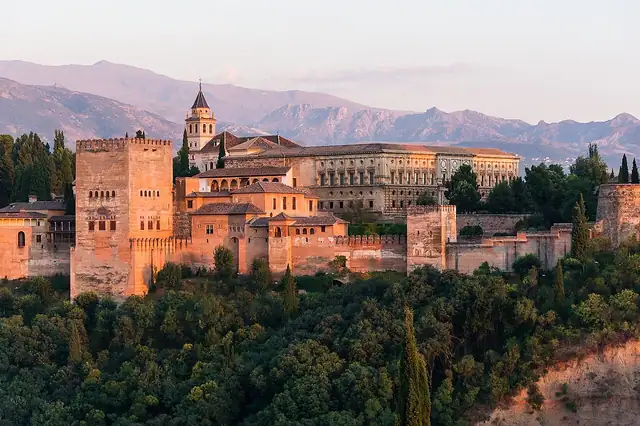
- World monument · 1238 – late 14th century (Nasrid palaces)AlhambraThe Nasrid palace where plaster, tile and water become poetry.
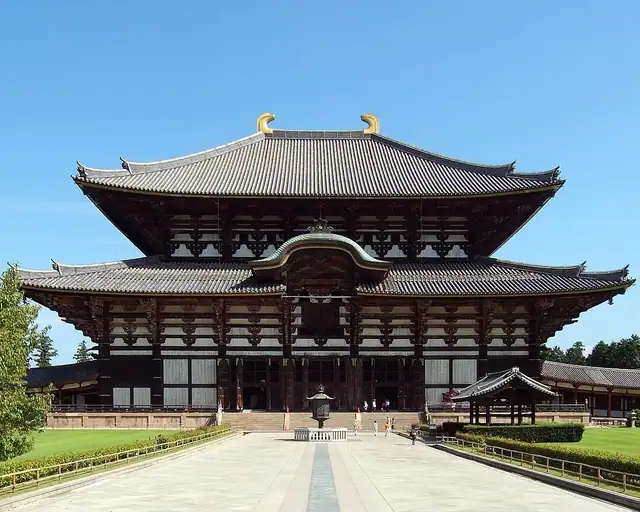
- World monument · 752 CE; hall rebuilt 1195 and 1709Tōdai-ji Great Buddha HallA giant bronze Buddha in a wooden hall rebuilt smaller after two fires.
- World monument · 1645–1694 (site used from the 7th century)Potala PalaceA 13-storey palace that grows out of its hill, in white for government and red for religion.
- World monument · 1406–1420Forbidden CityTwenty-four emperors' palace, built on one perfect north–south axis.
- World monument · c. 1971 BCE – 1st century BCEKarnak Temple ComplexA temple that grew for 2,000 years, with a forest of 134 stone columns.



Get the ideas, not the noise.
Sign up with Google and we’ll send you short UX psychology tips by email — why people tap, stall and leave, and what to do about it. Unsubscribe anytime. Prefer something to keep? Get the free Laws of UX guide as a PDF.