 By
Quick answer: How do I launch an open source project?
- Ready when: install to first result in minutes.
- README: what it does, why, quick start, example, licence, how to contribute.
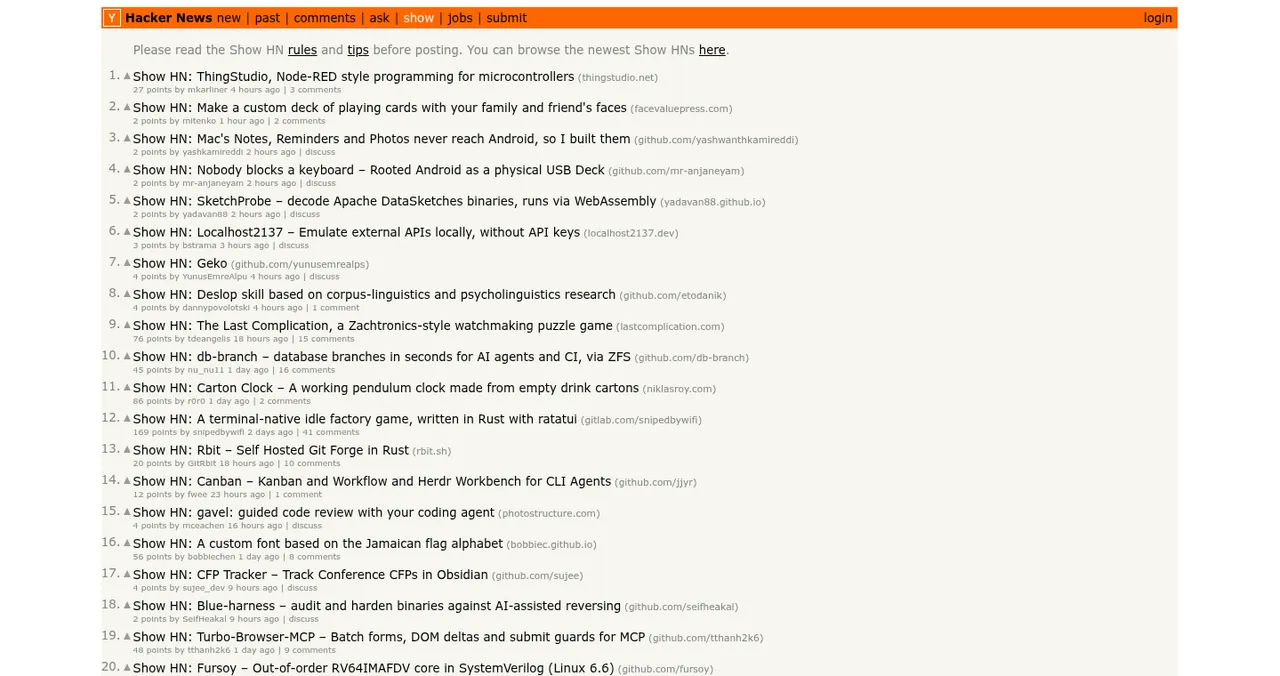
- Show HN: link to the repo; stay in the thread.
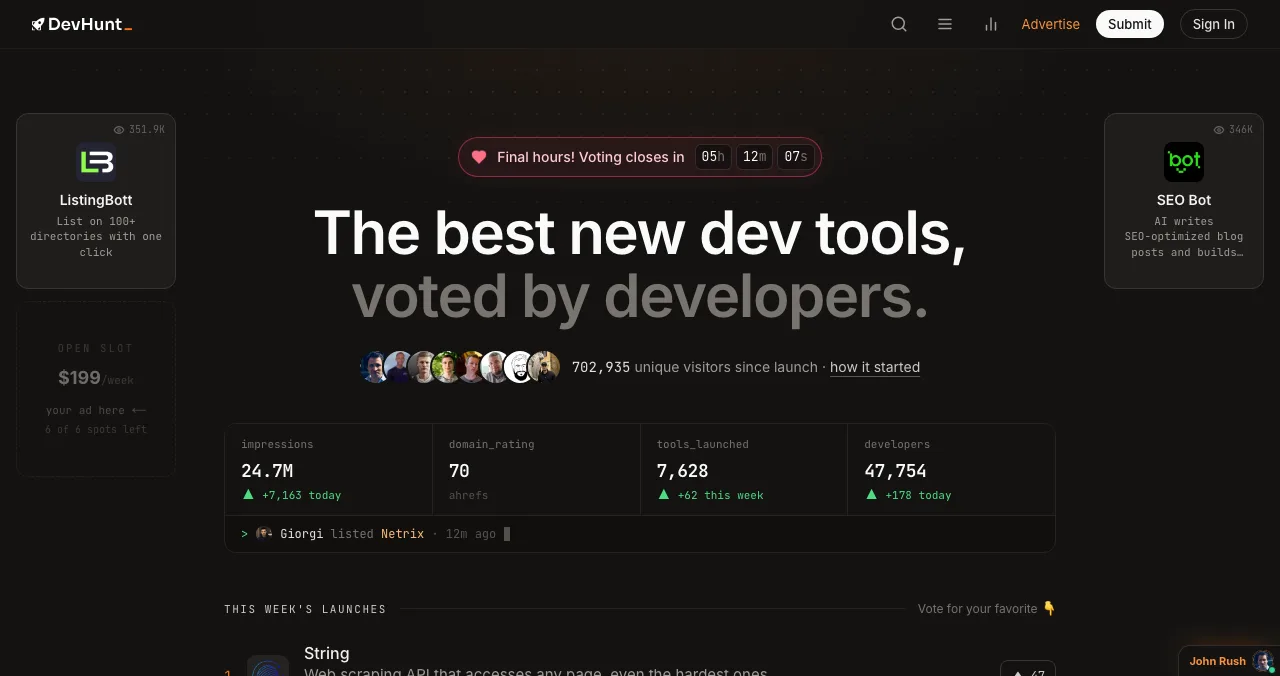
- DevHunt: accepts open-source projects; free listing or $49 launch week.
- Product Hunt: link to the repo; free.
- AlternativeTo: mark it open source and link the code.
Key takeaways
- Your README is your landing page; most visitors decide there.
- Developers try before they read; a working quick start wins.
- Show HN suits open source because people can run it immediately.
- Label good first issues so interested users can become contributors.
- Don't ask anyone to star or upvote; ask them to try it.
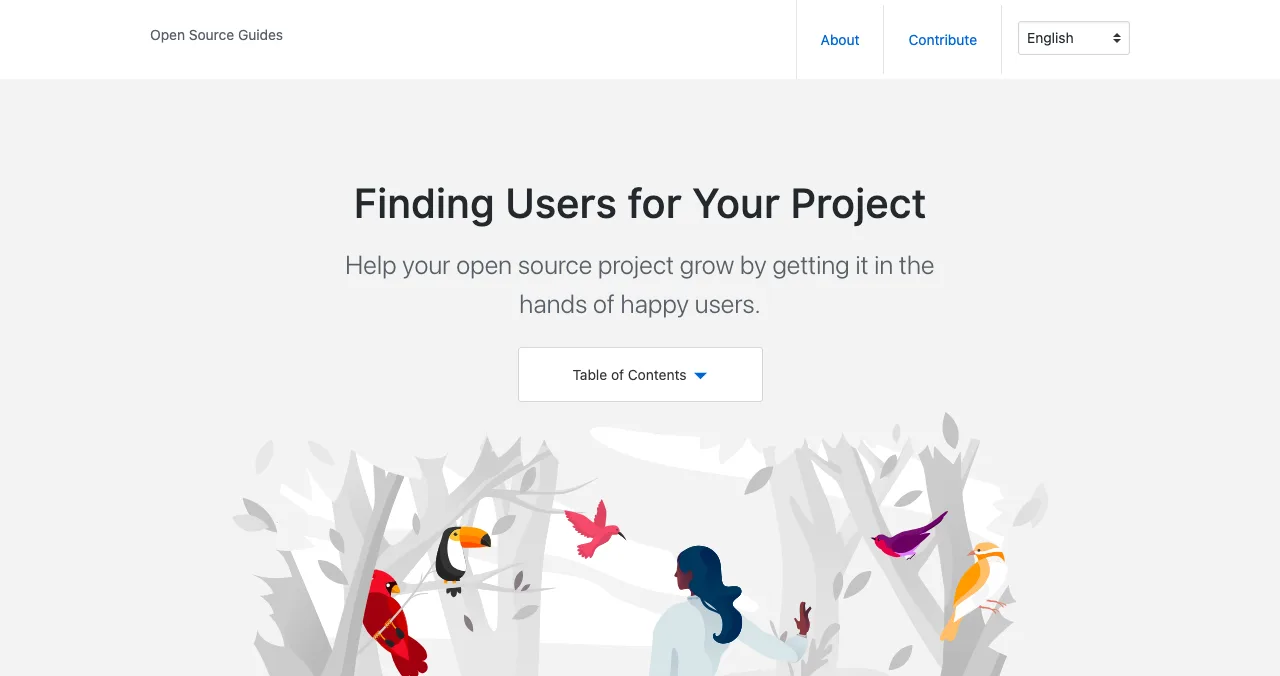
An open source launch has no checkout page and no sign-up funnel. The repository is the product, the README is the landing page, and the conversion is someone running your install command. That makes launching it simpler in one way and harder in another: developers decide in a minute. This guide covers being ready, the README, the launch sites developers read, and turning users into contributors, drawing on GitHub's Open Source Guides and each site's rules as read on 17 November 2026. Jump to the README, where to launch or contributors.
A README that converts

- What it does, for whom — one sentence at the top
- Why it exists — the problem it solves
- Quick start — install to first result in minutes
- An example — real input and output
- The licence — clearly stated
- How to contribute — a link to CONTRIBUTING and good first issues
Where to launch
| Site | Why | Cost |
|---|---|---|
| Show HN | Try-able projects; candid feedback | Free |
| DevHunt | Lists open-source projects; developers vote weekly | Free listing; $49 launch |
| Product Hunt | Broad launch day; link the repo | Free |
| AlternativeTo | Flag as open source, link the code | Free |
| A permanent project page | Found by the problem it solves | Free |
Table: Where to launch an open source project (each site's own pages, checked 17 Nov 2026)
Turning users into contributors

- Label good first issues — small, well-described tasks.
- Write CONTRIBUTING — setup, tests, style, how to submit.
- Review quickly — a fast first response keeps people.
- Thank publicly — in release notes.
- Invite repeat contributors — to review and maintain.
Mistakes

- Launching before the quick start works
- No licence — people can't safely use it
- Asking for stars or upvotes — ask them to try it
- Disappearing after launch — answer issues and comments
Ready to launch?
How we know
Launch-site rules come from the Show HN guidelines, DevHunt's FAQ, Product Hunt's help centre and AlternativeTo's FAQ, read on 17 November 2026; finding-users advice from GitHub's Open Source Guides. The README and contributor checklists are our editorial recommendations.
Key terms, defined
- Open source: software whose code is published under a licence allowing use and modification.
- README: the main document shown on a repository's page.
- Good first issue: a small task labelled for new contributors.
- Licence: the terms under which code may be used.
- Contributor: someone who submits changes to a project.
Frequently asked questions
How do I launch an open source project?
Make it installable with a quick start, write a clear README with a licence, then post a Show HN, list it on DevHunt, launch on Product Hunt and add it to AlternativeTo as open source. Stay present to answer questions.
Where should I promote an open source project?
Show HN on Hacker News, DevHunt (it lists open-source projects), Product Hunt, AlternativeTo (with the open-source flag and code link), communities around the problem, and a permanent project page.
What should an open source README include?
What it does and for whom, why it exists, a quick start that reaches a result, an example, the licence, and how to contribute.
Can I post an open source project on Show HN?
Yes, if people can try it: link to the repository or a demo, write a first comment on how and why you built it, and stay to discuss.
How do I get contributors?
Make contributing easy: a CONTRIBUTING file, labelled good first issues, quick reviews, and thanks for every contribution. Early users who hit an issue are your likeliest contributors.
Should I ask people to star my repo?
Ask people to try it and tell you what's missing. Launch sites such as Product Hunt and Hacker News forbid asking for upvotes, and the same spirit applies to stars.
Sources
- GitHub Open Source Guides — Finding users for your project
- Hacker News — Show HN guidelines (checked 17 Nov 2026)
- DevHunt — FAQ (checked 17 Nov 2026)
- Product Hunt Help Center — Build your product page (checked 17 Nov 2026)
- AlternativeTo — FAQ: licences and open source (checked 17 Nov 2026)
- Checked November 17, 2026. Figures that change — fees, salaries, prices — are reviewed every six months; if something is out of date, tell us.
Where to go from here
- How to launch a developer tool — the launch order
- Show HN guide — the rules
- DevHunt review — free listing or $49 week
- Science of Apps - LaunchpadHow to launch and promote a Chrome extension: the Chrome Web Store listing, the free launch sites that take extensions, and where users look for themHow to launch and promote a Chrome extension: the Web Store's one-time fee and listing, then Product Hunt, Show HN, DevHunt, AlternativeTo and a free profile.
- Science of Apps - LaunchpadHow to market an AI tool in 2027: positioning by task, AI directories, AI search, demos and the trust that makes people payHow to market an AI tool in 2027: position by task, list in AI directories, get cited by AI search, show real outputs and earn trust that converts.
- Science of Apps - LaunchpadHow to get your first users for a new app: the store listing, launch sites, communities, direct outreach and a web page that keeps bringing people inHow to get users for a new app, free: fix the store listing, launch on Product Hunt and Peerlist, reach people directly, and add a permanent web page.
- Science of Apps - LaunchpadHow to launch a developer tool: Show HN, DevHunt, Product Hunt and Peerlist in the right order, and what developers need to try it in a minuteHow to launch a developer tool in 2027: make it try-able in a minute, then Show HN, DevHunt, Product Hunt and Peerlist in the right order, with the rules.
- Science of Apps - LaunchpadThe best product launch platforms in 2027, matched to what you're launching: SaaS, AI, developer tools, apps and pre-launch, with costs and rulesThe best product launch platforms in 2027 by use case: Product Hunt, Science of Apps Launchpad, DevHunt, Peerlist, Uneed, BetaList, Show HN and more.
- Science of Apps - LaunchpadPeerlist Launchpad explained: verified profiles, Monday launches and scheduling, plus seven alternatives for buildersHow Peerlist Launchpad works (verified profile, 100% complete project, Monday launches) and seven alternatives: DevHunt, Uneed, Fazier, Show HN and more.


Get the ideas, not the noise.
Sign up with Google and we’ll send you short UX psychology tips by email — why people tap, stall and leave, and what to do about it. Unsubscribe anytime. Prefer something to keep? Get the free Laws of UX guide as a PDF.
Launch day ends. Your listing shouldn't.
Give your open source project a free, permanent Launchpad page found by the problem it solves, ranked by relevance and never by payment, alongside your repo.