 By
Quick answer: Is Futurepedia free to submit?
- Futurepedia: a big AI tools directory (2,500+ tools in 70+ categories, by its own count), but no public submission page on 18 Nov 2026.
- Toolify: paid only; one-time $99, listed within 48 hours.
- Launchpad: free forever; AI products accepted; ranked by relevance, never payment.
- Only the Launchpad tests your AI product, including prompt and output trust, with a report.
- Order: Launchpad and free routes first; Toolify as a measured experiment.
Key takeaways
- Futurepedia now presents itself as an AI workspace for professionals; browsing tools is still possible, submitting isn't visibly offered.
- Be wary of anyone selling a way onto a directory that has no public submission route.
- Toolify is a straightforward paid listing: pay once, live within 48 hours.
- AI directories send curious visitors; they judge your output in the first minute.
- Test the first prompt and the first result before you pay any directory.
"Futurepedia" is searched about 22,200 times a month and "toolify" about 18,100 (Google Keyword Planner, global 12-month average), and AI founders make up a good share of those searches: they want to know where to list a new AI tool and what it costs. The answer changed this year. Futurepedia still lets people browse thousands of AI tools, but we couldn't find any public way to submit one, and Toolify is paid-only. This comparison sets both beside the free Science of Apps Launchpad, using each site's own pages as checked on 18 November 2026. Jump to the comparison, which to use first or the plan.
Launchpad vs Futurepedia vs Toolify
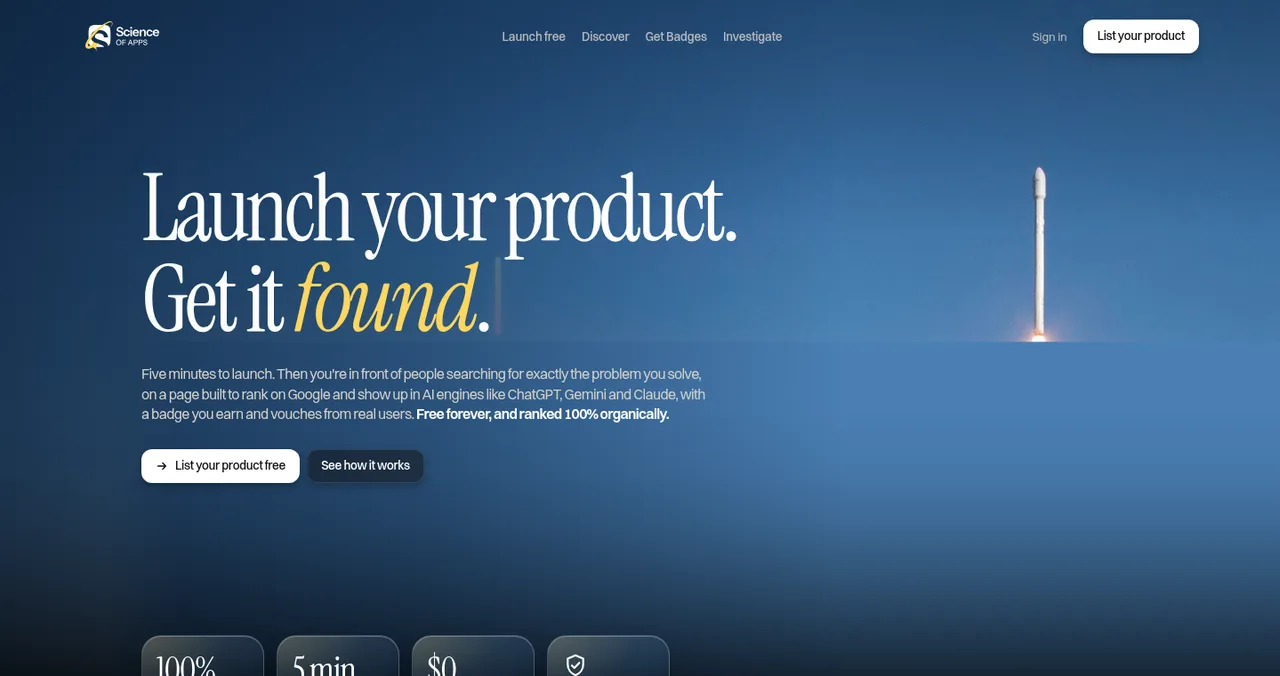 List free
Science of Apps Launchpad Start here
Free, permanent listing for AI products, plus your product tested with a detailed report.
Free foreverAI trust tested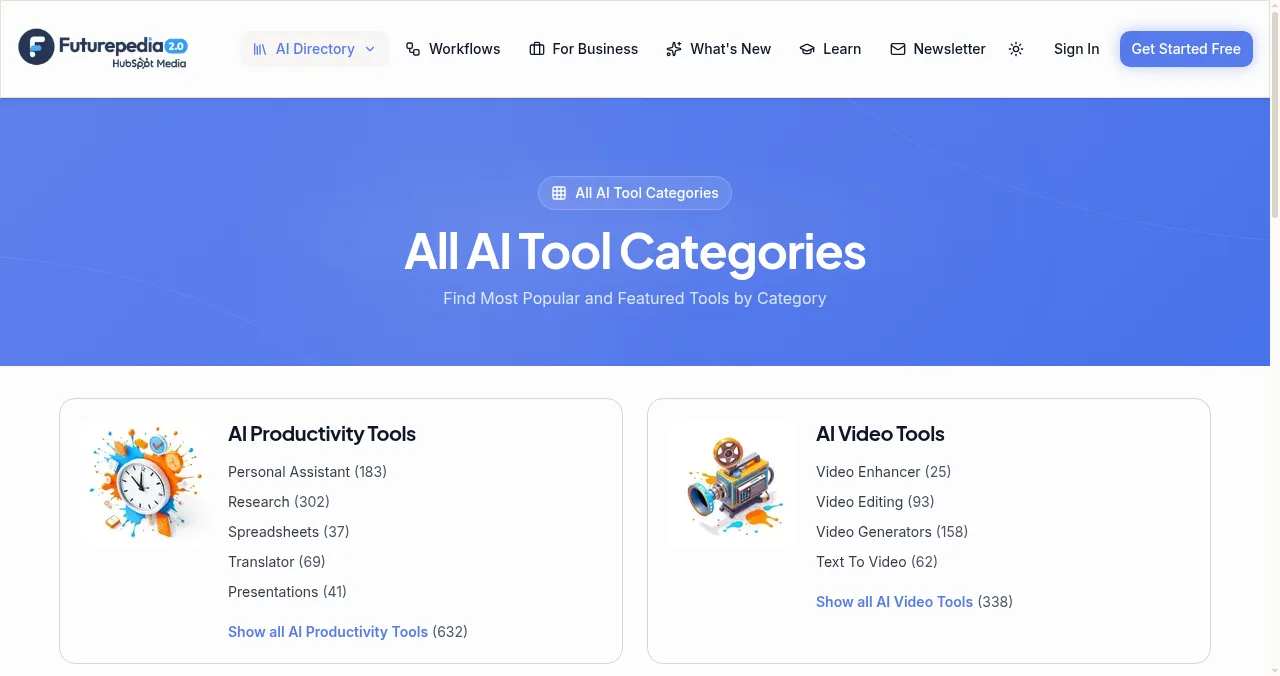
Futurepedia
A large, curated AI tools directory with no public submission page.
Browse only2,500+ tools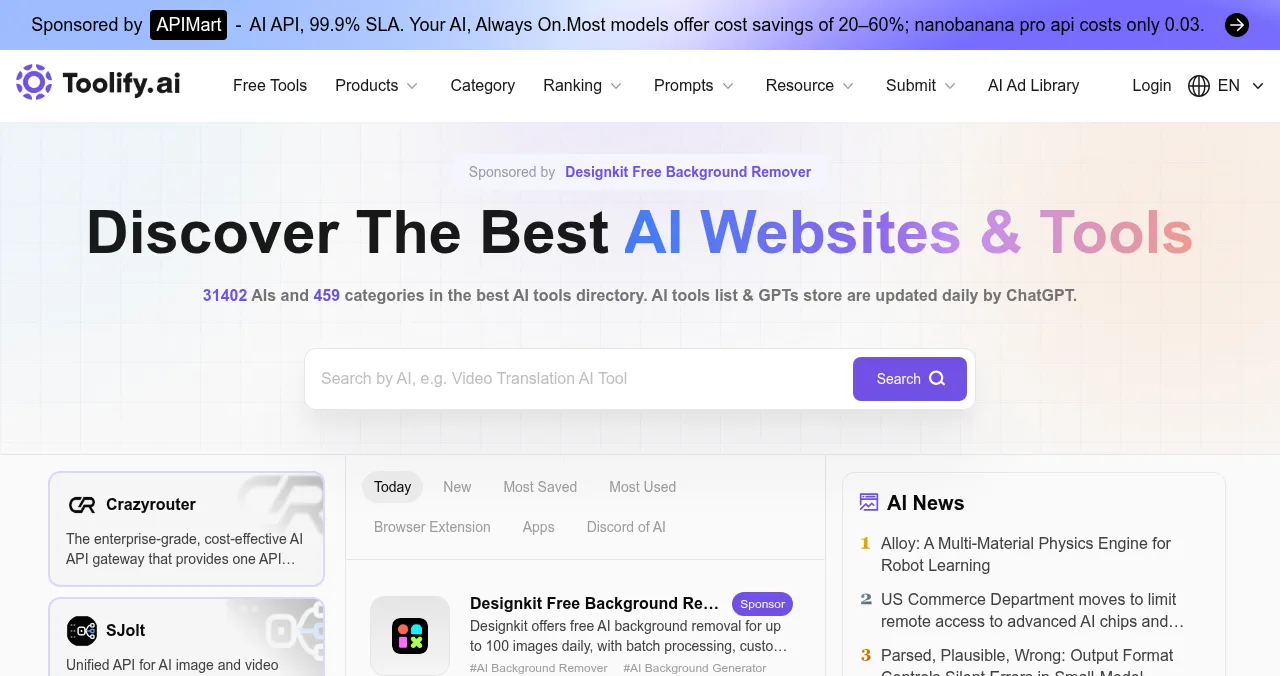
Toolify
A paid AI tools directory: pay once, listed within 48 hours.
$99 one-time48 hours
Futurepedia vs Toolify vs the Launchpad, side by side
| Science of Apps Launchpad | Futurepedia | Toolify | |
|---|---|---|---|
| Cost to list | Free, forever | No public submission route found | $99, one-time |
| Time to go live | Six steps, then automated checks and a human review | n/a | Within 48 hours of payment |
| What it is | Product discovery for any digital product, AI included | AI tools directory (2,500+ tools, 70+ categories) and AI learning workspace | AI tools directory with ads and featured promotions |
| Ranking | Relevance, editorial picks, community interest; never payment | Its own curation | Its own ranking; paid promotions available |
| Visible for | Permanent | n/a | Listed after payment |
| Product test and report | Yes, re-cut for AI: prompt and output trust | No | No |
Table: Science of Apps Launchpad vs Futurepedia vs Toolify (each site's own pages, checked 18 Nov 2026)
Science of Apps Launchpad: free, and it tests your AI product
- Cost
- Free, forever
- Accepts
- AI products, SaaS, apps, dev tools and more
- Visible for
- Permanent
- Ranking
- Relevance, never payment
- Included
- AI-specific product test and report
- Cost: free to list, forever. Science of Apps earns money from optional reports and an optional, labelled Premium listing; paying never changes organic ranking.
- Getting listed: six short steps; automated checks and a human moderator.
- Being found: a permanent profile people find by the job they need done, with earned badges (Featured, Verified, Community favourite, Editor's pick) and vouches from real users.
- The difference for AI: the product investigation is re-cut per category. For AI products it looks at prompt and output trust: whether a new user understands what to type, what the tool did, and how far to trust the result.
- Areas of your product tested
- 22
- Automatic measurements, desktop and mobile
- 39
- Expert checks behind your login
- 74
- Verdicts that rank what to fix first
- 5

Find out whether your first result convinces
List free, then order the report that fits: the first impression, or the full diagnosis with a plan.

 Economy
See what new customers see
- Store listing and homepage, screen by screen
- Scorecard against 60 Laws of UX
- Customers, competitors and the fixes worth most
PremiumThe full diagnosis and the plan
- Every screen, every finding, every flow
- All 60 laws with evidence and fixes
- 8 strategy chapters and a 90-day roadmap
Researched from your live product and fact-checked against the evidence. Private to your team.
Best for: any AI product that wants a permanent, free page and evidence about its first-run experience.
Futurepedia: big, curated, and closed to submissions
- Size
- 2,500+ tools, 70+ categories (its count)
- Submit
- No public route found
- Focus now
- AI learning and workflows
- Branding
- HubSpot Media
- Catch
- Can't be bought into, publicly
Futurepedia is one of the best-known AI tools directories, and what it does better than most is curation and education: categories with counts, comparisons, and YouTube channels its homepage says have millions of views. Its homepage now leads with "Your AI Operating System for Work", personalised AI plans and workflow libraries for professionals.
- Submitting: its submit-tool page returned "not found" on 18 November 2026, and we found no other public route, free or paid.
- Browsing: its AI tools page says you can browse 2,500+ verified tools in 70+ categories and compare features, pricing and reviews.
- What that means for you: you can't plan on Futurepedia. If you're contacted by someone offering a paid placement, ask Futurepedia directly first.
Best for: researching your category and competitors, not getting listed. More in our Futurepedia review.
Toolify: a paid AI directory, live in 48 hours
- Cost
- $99, one-time
- Goes live
- Within 48 hours of payment
- Extras
- Ads, featured promotions
- Free option
- None on the submit page
- Catch
- Pay before you know it works
Toolify is the opposite of Futurepedia's closed door: anyone can get listed, quickly, for a fixed price. That predictability is its strength.
- Cost: a one-time $99 listing; ads and featured promotions are sold on top.
- Timing: live within 48 hours of payment, so have your description, screenshots and pricing ready first.
- What to send: the task your tool does and for whom, real output screenshots and a short demo. Buyers search for jobs, not model names.
Best for: an AI tool that already converts, as a tracked, one-off experiment. See our Toolify review.
Which should you use first?
| Your situation | Start with | Then |
|---|---|---|
| New AI tool, no budget | Launchpad listing and free directories | Toolify once sign-ups convert |
| AI tool live, onboarding untested | Launchpad listing and its product check | Fix the first prompt and result, then paid directories |
| You hoped to be on Futurepedia | Free routes now | Recheck Futurepedia's site later; never pay a middleman |
| Converting well, want reach | Toolify with a UTM link | Keep only what pays back in 30 days |
Table: Which of Futurepedia, Toolify and the Launchpad to use first
A 30-day plan for listing an AI tool
- Day 1
List on the Launchpad
Your permanent page; the baseline check covers landing page, discoverability and speed.
- Days 2–7
Fix the first result
Make the first prompt obvious and the first output worth sharing; that's what directory visitors judge.
- Week 2
Free directories
Add free AI and software directories with the same one-liner and a UTM link each.
- Week 3
One paid test
Toolify at $99, tracked; record visits, sign-ups and activated users.
- Day 30
Decide on evidence
Keep paying only where activated users justify the cost.
Mistakes to avoid

- Paying for "Futurepedia placement" from a third party — there's no public route to verify it
- Describing the model, not the job — "GPT-powered" tells a buyer nothing
- Paying before onboarding works — directory visitors give an AI tool one try
- No UTM links — you won't know which directory brought users who stayed
- Different descriptions everywhere — AI assistants describe you from consistent facts
Visitors judge a tool's quality by how it looks before they test what it does, the aesthetic-usability effect: real output screenshots on your listing do more than adjectives.
Ready to list?
How we compared them
We opened Futurepedia's submit-tool page, AI tools page and homepage, and Toolify's submit page, on 18 November 2026; the Toolify homepage screenshot is from 17 November. The Launchpad's terms come from its homepage, investigation page and pricing page, read on 18 November 2026. Search volumes are Google Keyword Planner's global 12-month averages. Science of Apps runs the Launchpad and has no relationship with Futurepedia or Toolify.
Key terms, defined
- AI tools directory: a site that catalogues AI products by category for people looking for one.
- Paid listing: a directory entry you pay for, as on Toolify's $99 plan.
- Prompt and output trust: whether a user knows what to ask an AI product and how far to rely on what it returns.
- UTM link: a URL with tags that tell your analytics which source sent a visitor.
- Permanent listing: a product page that stays live and findable after any launch.
Frequently asked questions
Is Futurepedia free to submit?
We couldn't find any way to submit. On 18 November 2026, Futurepedia's submit-tool page returned 'not found', its homepage promoted a personal AI workspace for professionals rather than tool submissions, and we found no other public route, free or paid. Check its site again before relying on this, and don't pay a third party claiming to get you listed.
What is Futurepedia AI?
Futurepedia is an AI tools directory and learning site. Its AI tools page says you can browse 2,500+ verified AI tools sorted into 70+ categories and compare features, pricing and reviews. Its homepage now leads with personalised AI plans, workflows and tutorials, and its header carries HubSpot Media branding.
How much does Toolify cost?
Toolify's submit page lists a one-time $99 fee to list an AI tool, with the listing live within 48 hours of payment. There's no free submission option on that page. Ads and featured promotions are sold on top of the basic listing.
Is Toolify worth $99?
It can be a reasonable experiment once your free listings are live and your product converts. Use a UTM-tagged link, measure sign-ups for 30 days, and compare the cost per activated user with your other channels. Don't judge it by the directory's traffic claims; judge it by your own numbers.
Where can I list an AI tool for free?
The Science of Apps Launchpad lists AI products free and permanently, and tests them with a detailed report. Future Tools takes free submissions reviewed by hand, and Product Hunt, SaaSHub (for released products) and AlternativeTo are free as well. Our Futurepedia alternatives guide covers the paid AI directories and their prices.
How is the Launchpad different from AI tool directories?
AI directories list your tool among thousands and send browsing traffic. The Science of Apps Launchpad also lists your product permanently, ranked by relevance and community interest rather than payment, but then tests it: for AI products, the investigation is re-cut to cover prompt and output trust, as well as sign-up, onboarding, pricing and speed.
Sources
- Futurepedia — Homepage; its former submit-tool page returned 404 (checked 18 Nov 2026)
- Futurepedia — AI tools by category (checked 18 Nov 2026)
- Futurepedia — Homepage (checked 18 Nov 2026)
- Toolify — Submit AI: $99 listing, live within 48 hours (checked 18 Nov 2026)
- Future Tools — Submit a tool (checked 17 Nov 2026)
- Science of Apps — Launchpad: launch your product free (checked 18 Nov 2026)
- Science of Apps — Product investigation (checked 18 Nov 2026)
- Science of Apps — Pricing: free listing, Economy and Premium reports (checked 18 Nov 2026)
- Checked November 18, 2026. Figures that change — fees, salaries, prices — are reviewed every six months; if something is out of date, tell us.
Where to go from here
- Futurepedia review and alternatives — every AI directory's price
- Toolify review — is the $99 listing worth it?
- AI tools directories — where to submit an AI tool
- Science of Apps - LaunchpadScience of Apps Launchpad vs BetaList: a free permanent listing with a product report, or a paid, curated feature for early adopters? Cost, selection, refunds and which to useBetaList now charges every submission. Here's how it compares with the free Science of Apps Launchpad on cost, selection, visibility and the product report.
- Science of Apps - LaunchpadAIxploria review: the $79, $279 and $399 options, how long listing takes, and how it compares with other AI tools directoriesAIxploria review for 2027: $79 fast listing, $279 verified, $399 featured ads, timing and manual review, compared with Toolify, TAAFT, TopAI and free options.
- Science of Apps - LaunchpadCan you still submit to Futurepedia? What we found in November 2026, and six alternatives for listing an AI tool, free and paidCan you still submit an AI tool to Futurepedia? What we found in Nov 2026, plus 6 alternatives: Future Tools, TAAFT, TopAI, Toolify, AIxploria, Launchpad.
- Science of Apps - LaunchpadAI tools directories in 2027: where you can still submit an AI tool for free, what the paid ones cost, and a submission kitWhere to submit an AI tool for free in 2027, which AI tools directories now charge (and how much), and a copy-ready submission kit, all checked.
- Science of Apps - LaunchpadWhere to submit your startup in 2027: 11 startup submission sites checked on their own pages, what each costs, how long review takes and which links they giveWhere to submit your startup free: 11 startup submission sites checked 18 Nov 2026, with cost, review time, link type and which to submit to first.
- Science of Apps - LaunchpadToolify review: what the $99 listing buys, how fast it goes live, how it compares with other AI directories, and the free alternativesA 2027 Toolify review: the $99 one-time listing, 48-hour go-live, how it compares with TAAFT, TopAI and AIxploria, and free places to list an AI tool.
Get the ideas, not the noise.
Sign up with Google and we’ll send you short UX psychology tips by email — why people tap, stall and leave, and what to do about it. Unsubscribe anytime. Prefer something to keep? Get the free Laws of UX guide as a PDF.
Launch day ends. Your listing shouldn't.
The Science of Apps Launchpad lists AI products free, forever, and tests them end to end, including how far users can trust the prompts and outputs, with a detailed report.