 By
Quick answer: What should a product launch plan include?
- Eight parts: goal, audience, positioning, launch size, readiness, channels, roadmap, follow-up.
- 12 weeks for a major launch; two to four for a small update.
- Every task has an owner and a date — or it won't happen.
- Week 10: list on the Launchpad and read the product report while there's time to fix things.
- Measure against the goal you set in week 1, not against downloads or upvotes.
Key takeaways
- A launch plan is a list of decisions and deadlines, not a marketing document.
- The launch size should match the change: not every update deserves a launch day.
- Product readiness belongs in the plan, with a date, not as an assumption.
- Channels are chosen by where your audience already is.
- The follow-up weeks decide whether launch attention becomes users.
Most launches don't fail on launch day. They fail in the planning: no clear goal, a sign-up flow nobody tested, or a launch date picked before anyone checked whether the product was ready. Launch planning fixes that by turning a big, vague event into decisions and deadlines. "Launch planning" is searched about 1,000 times a month and "product launch planning" about 880 (Google Keyword Planner, global 12-month average). This template gives you the eight parts every product launch plan needs, a 12-week product launch roadmap you can copy, and the metrics to judge it by. Platform rules were checked on each platform's own page on 18 November 2026. Jump to the eight parts, the 12-week roadmap or the follow-up.
- Parts every launch plan needs
- 8
- Weeks of planning for a major launch
- 12
- Owner for the whole plan
- 1
- List, test and fix before launch day
- Week 10
What should a product launch plan include?
Copy this table into a doc or spreadsheet and fill in the right-hand column. If a row is blank, that's the first thing to decide.
| # | Part | The question it answers | Fill in |
|---|---|---|---|
| 1 | Goal and metric | What does success look like, in a number? | e.g. 300 activated users in 30 days |
| 2 | Audience and problem | Who is this for, and what pain does it remove? | |
| 3 | Positioning | What's the one line a stranger should remember? | |
| 4 | Launch size | Is this a major launch, a feature launch or a quiet release? | |
| 5 | Product readiness | Can a stranger sign up and get value without help? | Test date: |
| 6 | Channels and dates | Where is the audience already, and when do we launch there? | |
| 7 | Roadmap and owners | Who does what, by when? | See the roadmap below |
| 8 | Follow-up and measurement | What happens after launch day, and when do we review? | Review at +1 and +4 weeks |
Table: Product launch plan template: the eight parts (Science of Apps editorial framework)
Size the launch before you plan it
Not every release deserves a launch day. Matching the effort to the change is the first decision in product launch planning.
| Launch size | When | Planning time | Channels |
|---|---|---|---|
| Major launch | A new product, or a change that makes it a different product | About 12 weeks | Own audience, communities, launch sites, press |
| Feature launch | A significant new capability for existing users | Two to four weeks | Own audience, changelog, communities, a relaunch where allowed |
| Quiet release | Fixes and small improvements | Days | Changelog and in-product notes |
Table: Product launch sizes and how much planning each needs
The 12-week product launch roadmap
Each row is a week. Put an owner's name next to every task.
- Week 1
Goal and audience
Write the goal and metric; name the audience and the problem; appoint one owner for the plan.
- Week 2
Positioning
One-line message, three proof points, the main objection and your answer to it.
- Week 3
Readiness audit
Sign up as a stranger on desktop and mobile; list everything that blocks first value.
- Weeks 4–6
Fix the core flow
Fix blockers in sign-up, onboarding and the core task; set up analytics and UTM conventions.
- Week 6
Choose channels
Where your audience already is; shortlist launch sites that fit; check each one's rules.
- Week 7
Build the audience
Waitlist, build-in-public posts, conversations with early adopters.
- Week 8
Assets
Tagline, screenshots of the real product, a 30–60 second demo, the launch post, an FAQ.
- Week 9
Book dates
Schedule launch sites (Product Hunt allows up to 30 days ahead); brief anyone helping.
- Week 10
List and test
List free on the Launchpad; read the product report; fix critical findings.
- Week 11
Rehearse
Dry-run the sign-up with five strangers; check every link and tag; draft replies.
- Week 12
Launch
Own audience first, then launch sites one at a time; reply to everyone all day.
- Weeks 13–16
Follow up
Personal follow-ups, fixes, a results post, a review at one and four weeks.
Product readiness: week 10 in detail
Launch traffic is the least patient traffic you'll ever get. If the first screen confuses people or sign-up breaks on a phone, the launch is wasted, and you rarely find out why. That's why this roadmap tests the product two weeks before launch day: early enough to fix things, late enough that you're testing the real thing.

The Science of Apps Launchpad does two jobs in week 10. It gives the product a free, permanent launch page that every channel can link to, ranked by relevance and never payment. And it tests the product: a free baseline check of landing page, discoverability and speed as the listing goes live, and, if you want it, a full investigation of 22 areas with 39 automatic measurements in a real browser on desktop and mobile, 74 expert checks and five verdicts, reviewed by an analyst and private to your team.
Know what launch-day visitors will hit
List free, then order the report that fits: the first impression, or the full diagnosis with a 90-day roadmap.

 Economy
See what new customers see
- Store listing and homepage, screen by screen
- Scorecard against 60 Laws of UX
- Customers, competitors and the fixes worth most
PremiumThe full diagnosis and the plan
- Every screen, every finding, every flow
- All 60 laws with evidence and fixes
- 8 strategy chapters and a 90-day roadmap
Researched from your live product and fact-checked against the evidence.
Choosing channels and launch dates
Pick channels by where your audience already spends time, then check each one's rules before you put it in the plan.
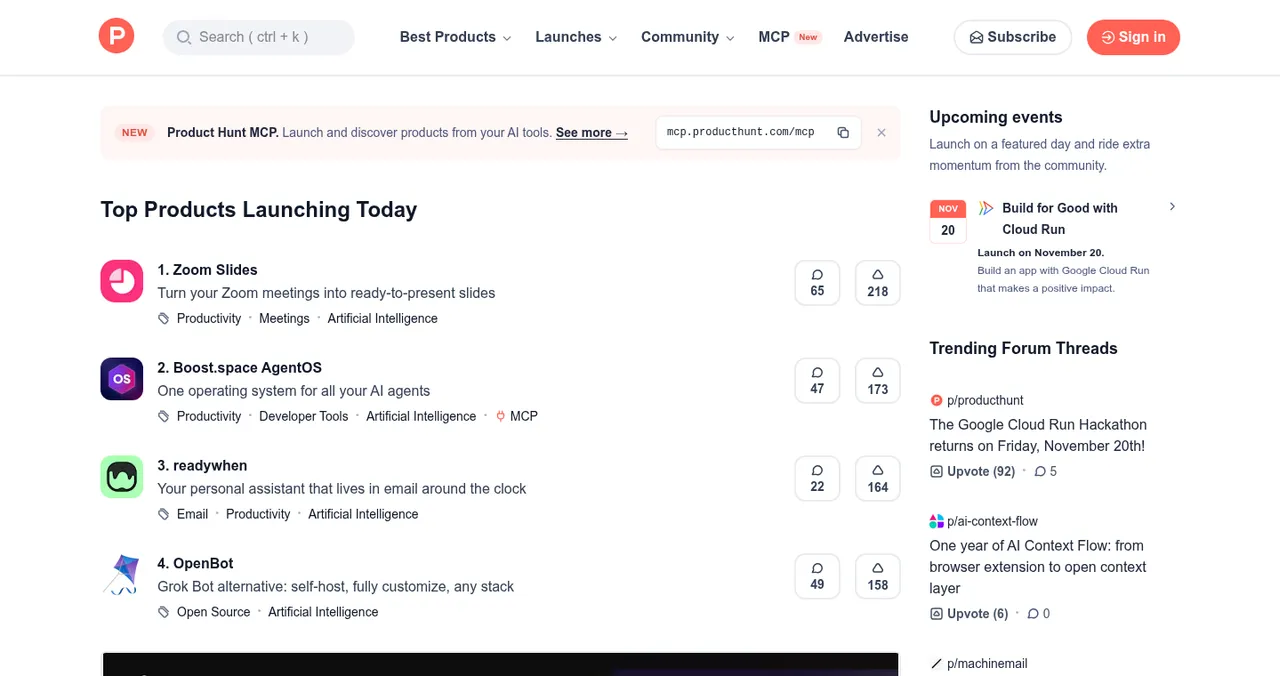
- Product Hunt: schedule up to 30 days ahead; launches go live at 12:01 AM Pacific. Never ask for upvotes; Product Hunt can flag your account for it. If your last launch was less than two months ago, you need a relaunch request.
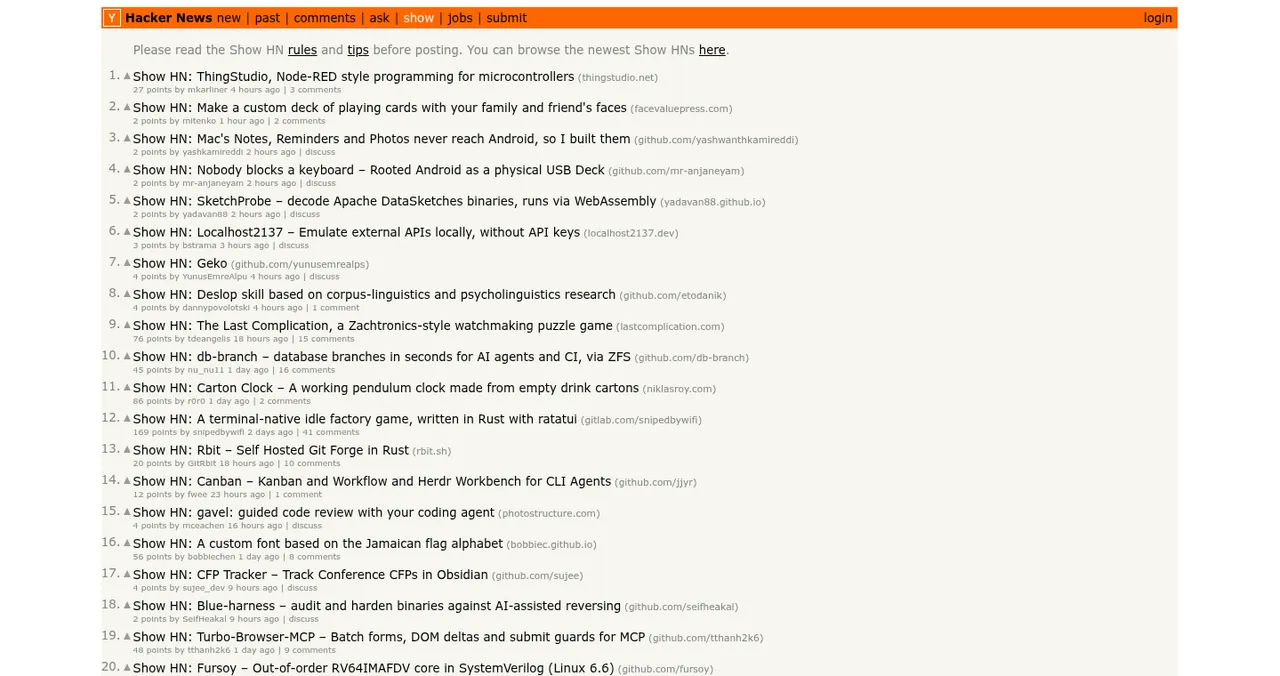
- Show HN: for something people can try, ideally without sign-ups. Landing pages, sign-up pages and fundraisers don't qualify, and asking friends to upvote isn't allowed.
- Your own channels: email list, existing users, social accounts and communities you already take part in. These come first on launch day.
Follow-up and measurement
Write down now when you'll review results and what counts as success. Then tag every launch link.
| When | Review | Decide |
|---|---|---|
| Launch day +1 | Sign-ups, activation, top questions, bugs | Hotfixes; FAQ updates |
| +1 week | Results by channel (UTM), activation rate | Which channels to repeat |
| +4 weeks | Retention, revenue or goal metric vs the target | Next launch, next fixes, what to stop |
Table: Product launch follow-up reviews
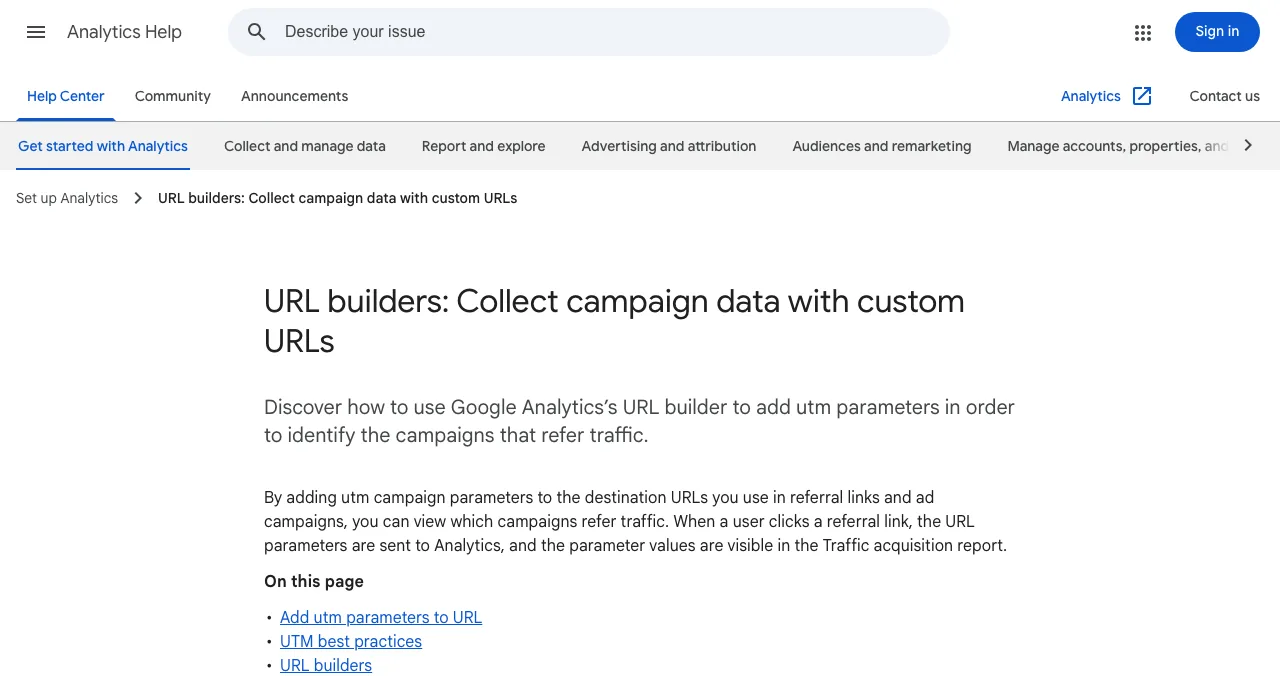
Google Analytics advises always using utm_source, utm_medium and utm_campaign when you tag links. Use one campaign name for the launch and a different source per channel.
Product launch steps people skip

- No written goal — you can't tell whether it worked
- Picking the date before the readiness check — the date should follow the fixes
- Too many channels on one day — you can't reply properly everywhere
- Assets made the night before — screenshots and demos take longer than you think
- No owner per task — shared tasks are nobody's tasks
- No follow-up weeks — attention fades in days; follow-up turns it into users
The closer people get to a goal, the harder they push, the goal-gradient effect, which works on teams as well as users: a visible roadmap with weekly milestones keeps a 12-week launch moving.
Ready to plan your launch?
How we built this template
The eight-part structure, launch sizes and roadmap are Science of Apps editorial guidance. Platform rules (Product Hunt scheduling and upvotes, Show HN eligibility, UTM parameters) come from each platform's own help pages, read on 18 November 2026. The Launchpad's terms come from its homepage, investigation page and pricing page, read the same day. Search volumes are Google Keyword Planner's global 12-month averages. Science of Apps runs the Launchpad.
Key terms, defined
- Launch planning: deciding the goal, audience, size, channels, timeline and follow-up of a launch before it happens.
- Product launch roadmap: a week-by-week schedule of launch tasks with owners and deadlines.
- Launch size: how big a launch is, matched to how big the change is.
- Product readiness: whether a stranger can sign up and reach value without help.
- Activation: a new user reaching the product's first moment of value.
- UTM parameters: tags on a link that tell analytics the source, medium and campaign of a visit.
Frequently asked questions
What should a product launch plan include?
Eight parts: a measurable goal, the audience and the problem you solve, positioning and a one-line message, the launch size, a product readiness check, the channels and launch dates, a week-by-week roadmap with owners, and a follow-up plan with the metrics you'll judge success by. Everything else is detail inside those parts.
How far in advance should product launch planning start?
For a major launch of a new product, about 12 weeks: enough to test the product, fix the critical issues, build an audience, prepare assets and book launch dates. A small feature update needs two to four weeks. Product Hunt lets you schedule a launch up to 30 days ahead.
What are the steps of the product launch process?
Set a goal and metric; define the audience and positioning; size the launch; test and fix the product; publish a permanent page; prepare assets and messages; warm up your audience; launch on your own channels first, then launch sites; reply to everyone; measure against the goal; turn feedback into fixes and plan the next launch.
What is a product launch roadmap?
A week-by-week timeline of every launch task with an owner and a deadline, usually from about 12 weeks before launch day to four weeks after. It turns the plan into a schedule so dependencies, such as a fixed sign-up flow before a launch date, are visible early.
How do you measure whether a product launch worked?
Against the goal you wrote down in week one: sign-ups, activated users, trials, revenue or qualified conversations. Tag each channel's link with UTM parameters so you know which sources brought users who stayed, and review results at one week and four weeks after launch.
Who should own the product launch plan?
One person, usually the founder in an early startup or a product marketing manager in a larger team. They own the plan and the deadline; each task inside it has its own owner. Without a single owner, launch tasks drift because everyone assumes someone else has them.
Sources
- Product Hunt Help Center — Launch FAQ and myths: scheduling and upvotes (checked 18 Nov 2026)
- Hacker News — Show HN guidelines (checked 18 Nov 2026)
- Google Analytics Help — URL builders: collect campaign data with custom URLs (checked 18 Nov 2026)
- Science of Apps — Launchpad: launch your product free (checked 18 Nov 2026)
- Science of Apps — Product investigation (checked 18 Nov 2026)
- Science of Apps — Pricing: free listing, Economy and Premium reports (checked 18 Nov 2026)
- Checked November 18, 2026. Figures that change — fees, salaries, prices — are reviewed every six months; if something is out of date, tell us.
Where to go from here
- Product launch strategy — the five parts of a good launch
- Startup launch checklist — before, during and after
- Pre-launch marketing — a six-week plan
- Science of Apps - LaunchpadProduct launch strategy for 2027: how to plan, run and follow up a launch that brings users, not just a spikeA product launch strategy for 2027: set goals, size the launch, build a permanent page, sequence launch days, run launch week and follow up, step by step.
- Science of Apps - LaunchpadA mobile app launch plan for 2027: what to do eight weeks before, on launch day and in the 30 days after, with store rules, pre-orders and pre-registration, launch marketing and how to know it workedA mobile app launch plan in three phases: 8 weeks before, launch day and 30 days after. Store rules, pre-orders, launch marketing and the metrics to watch.
- Science of Apps - LaunchpadA product launch email template you can copy: the launch-day email, the heads-up, the follow-up, and the rules that keep a Product Hunt launch safeA product launch email template to copy: heads-up, launch-day and follow-up emails, subject lines, and the Product Hunt rules on asking for upvotes.
- Science of Apps - LaunchpadHow to do a UX audit of your website in one day: the eight steps, the standards to check against, the free tools, and how to turn findings into a fix listHow to do a UX audit in one day: set goals, walk the journey, check Nielsen's heuristics and WCAG 2.2, measure speed, read analytics and rank the fixes.
- Science of Apps - LaunchpadA go-to-market strategy for startups on one page: the eight boxes of a GTM canvas, a worked example, the B2B and self-serve motions, and a 90-day launch planA go-to-market strategy template for startups: an eight-box GTM canvas covering customer, problem, promise, price, channels and motion, plus a 90-day plan.
- Science of Apps - LaunchpadThe startup launch checklist for 2027: everything to do before, during and after launch, in orderA startup launch checklist for 2027: product, page, visibility, assets, launch-day and follow-up items, in order, with the platform rules that matter.


Get the ideas, not the noise.
Sign up with Google and we’ll send you short UX psychology tips by email — why people tap, stall and leave, and what to do about it. Unsubscribe anytime. Prefer something to keep? Get the free Laws of UX guide as a PDF.
Launch day ends. Your listing shouldn't.
In this template, week 10 is when you list free on the Science of Apps Launchpad: your permanent launch page goes live and your product is tested with a detailed report, in time to fix what matters before launch day.