 By
Quick answer: When should a startup start SEO?
- Month 0: Search Console, sitemap, check you're indexed (site: search).
- Month 1: one clear page per product, feature and use case.
- Months 1–2: listings on directories and launch sites that link to you.
- Months 2–6: one page a week answering a real buyer question.
- Skip: meta keywords, word-count targets, keyword-stuffed domains.
Key takeaways
- Start SEO when you launch; it compounds slowly.
- Google mainly finds pages through links from pages it already knows.
- Unique, helpful pages beat volume.
- Many popular SEO 'rules' don't matter, per Google itself.
- Measure in Search Console, not by checking your rank by hand.
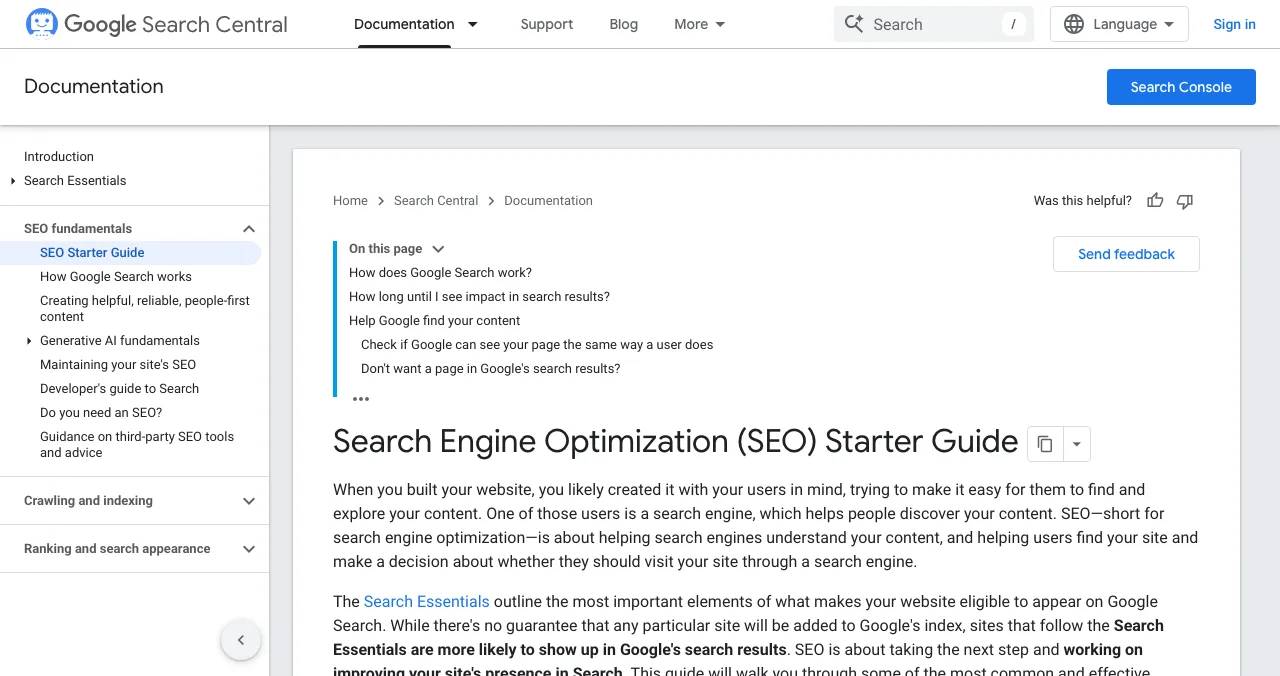
A new startup's website usually has three pages, no links pointing to it and a founder who's been told SEO "takes a year". Both halves of that are misleading. The basics take an afternoon, and the slow part, Google trusting and ranking your pages, only starts once they're done. This plan sets out what to do in each of the first six months, drawing on Google's own SEO starter guide as read on 17 November 2026. Jump to the plan, what not to bother with or measuring.
When should a startup start SEO?
At launch. The setup is cheap and the results lag: Google says some changes show within hours and others take several months, and it suggests waiting a few weeks before judging whether a change worked. Starting early means the compounding starts early.
The six-month plan
- Month 0
Get found
Verify Search Console; submit a sitemap; search site:yourdomain.com to see what's indexed.
- Month 1
Clear pages
One page per product, feature and use case, each with a descriptive title and one job.
- Months 1–2
First links
Directories and launch sites relevant to your product; Google mainly finds pages through links.
- Months 2–6
Answer pages
One page a week answering a question buyers actually ask, answer first.
- Month 6
Review
Search Console: which queries show you, which pages get clicks; double down.
What Google says not to bother with
Google's starter guide lists common SEO beliefs that don't matter, or matter far less than people think:
| Belief | What Google says |
|---|---|
| Meta keywords | Google Search doesn't use the keywords meta tag |
| Keyword stuffing | Against Google's spam policies |
| Keywords in the domain | Hardly any effect beyond breadcrumbs |
| A target word count | Length alone doesn't matter for ranking |
| Subdomain vs subdirectory | Do what suits your business |
| Duplicate-content "penalty" | Same content on several URLs is inefficient, not a manual action |
| Heading order and count | Doesn't matter to Search (it does help screen readers) |
| E-E-A-T as a ranking factor | "No, it's not." |
Table: SEO myths, per Google's SEO starter guide (checked 17 Nov 2026)
What a good startup page has

- A title that says what it is — "Invoice software for freelancers in India", not "Home"
- The answer first — what it does, for whom, in the first lines
- One topic per page — separate pages for separate use cases
- Descriptive URLs — /pricing/, /for-agencies/
- Original detail — screenshots, numbers, examples only you have
Measuring
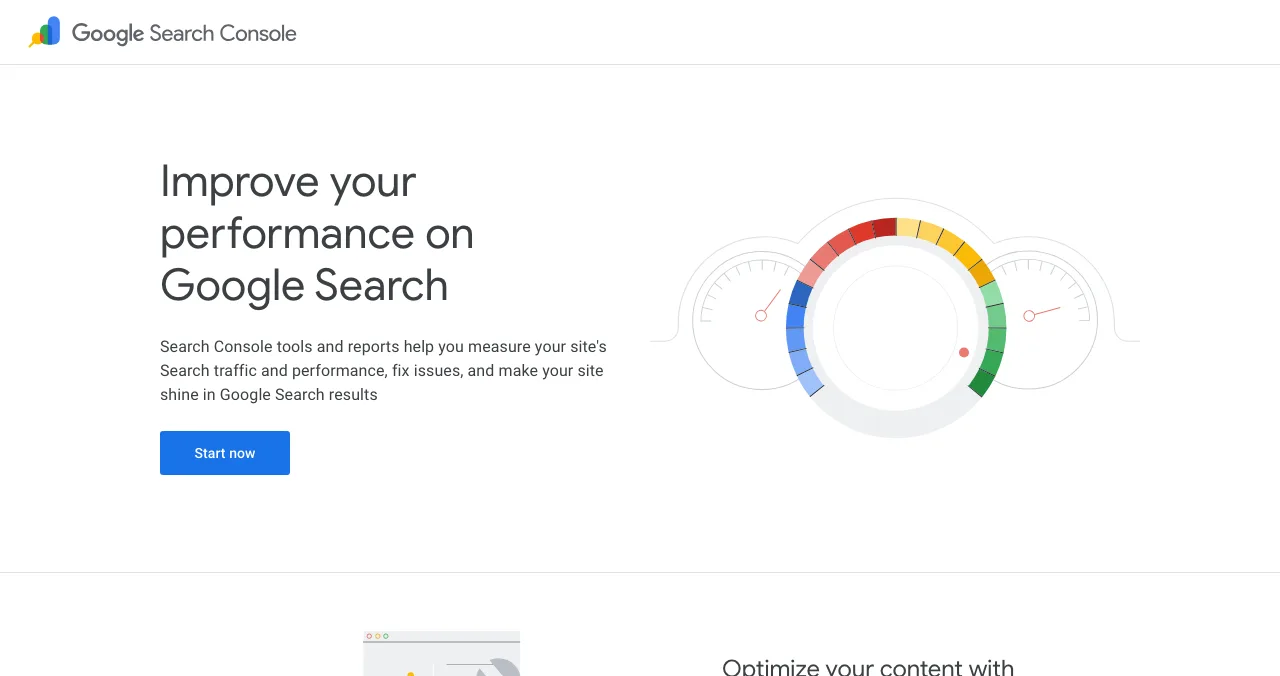
Use Google Search Console: the queries you appear for, clicks, and which pages are indexed. Don't check your rank by hand; results vary by person and place.
Mistakes

- Waiting for "later" — the clock starts when you start
- Blog posts nobody searches for — answer real buyer questions
- Buying links — against Google's spam policies
- Thin pages at scale — Google asks for people-first content
- Ignoring AI search — see how to rank in ChatGPT
Ready for month 0?
How we know
Timing, myths and page advice come from Google Search Central's SEO Starter Guide, helpful-content guidance and spam policies, read on 17 November 2026. The month-by-month plan is our editorial recommendation.
Key terms, defined
- SEO: helping search engines understand your pages and users find them.
- Indexed: stored by Google and eligible to appear in results.
- Sitemap: a file listing your site's pages for search engines.
- Search Console: Google's free tool for site search data.
- Backlink: a link to your site from another site.
Frequently asked questions
When should a startup start SEO?
At launch. The basics (Search Console, a sitemap, clear pages, a few relevant links) cost little and take months to compound, so starting early means results arrive when you need them.
How long does SEO take for a new startup?
Google's SEO starter guide says some changes show within hours and others take several months, and suggests waiting a few weeks to judge whether a change helped.
What should a startup's first SEO tasks be?
Verify the site in Google Search Console, submit a sitemap, check you're indexed with a site: search, give each page a clear title and one topic, and get links from relevant directories and launch sites.
Does content length matter for SEO?
Not by itself. Google says there's no minimum or maximum word count for ranking; write as much as the question needs.
Do I need keywords in my domain name?
No. Google says keywords in the domain or URL have hardly any ranking effect beyond appearing in breadcrumbs. Pick a name that's good for your business.
Should a startup hire an SEO agency?
Usually not first. The early tasks are simple and the best content comes from founders who know the customer. Hire help when you have proof that search brings buyers.
Sources
- Google Search Central — SEO Starter Guide (checked 17 Nov 2026)
- Google Search Central — Creating helpful, reliable, people-first content
- Google Search Central — Spam policies for Google web search
- Google Search Console
- Science of Apps — Launchpad: launch your product free
- Checked November 17, 2026. Figures that change — fees, salaries, prices — are reviewed every six months; if something is out of date, tell us.
Where to go from here
- Free startup directories — first links
- Rank in ChatGPT — AI search too
- Backlinks for startups — earning links
- Science of Apps - LaunchpadHow to get backlinks for a new startup for free, and which link tactics Google treats as spamHow a new startup can earn backlinks for free in 2027: launch sites, reviewed directories, data, free tools, partners and press, plus the link tactics to avoid.
- Science of Apps - LaunchpadPre-launch marketing for startups: a six-week plan from waitlist to launch day, with the channels, assets and rules that matterPre-launch marketing for startups: a 6-week plan with a waitlist, building in public, early adopters, launch assets and a scheduled launch date.
- Science of Apps - LaunchpadHow to launch a SaaS product in 2027: from private beta to public launch to the first paying customersHow to launch a SaaS in 2027, step by step: private beta, pricing, onboarding that activates, a permanent page, launch days, and turning trials into customers.
- Science of Apps - LaunchpadHow to get organic visibility for your startup on Google and in AI search, without paying for adsHow to get organic visibility for your startup in 2027: get indexed, let AI search crawlers in, build profiles and citations, and write pages engines quote.
- Science of Apps - LaunchpadThe startup launch checklist for 2027: everything to do before, during and after launch, in orderA startup launch checklist for 2027: product, page, visibility, assets, launch-day and follow-up items, in order, with the platform rules that matter.
- Science of Apps - LaunchpadHow to get your first SaaS customers: from design partners to paid plans, without a sales teamHow to get your first paying SaaS customers in 2027: design partners, founder-led sales, communities, launch sites, directories and a trial that works.



Get the ideas, not the noise.
Sign up with Google and we’ll send you short UX psychology tips by email — why people tap, stall and leave, and what to do about it. Unsubscribe anytime. Prefer something to keep? Get the free Laws of UX guide as a PDF.
Launch day ends. Your listing shouldn't.
A free, permanent Launchpad profile is one of the first pages that links to a new site and describes what it does, ranked by relevance and never by payment.