 By
Quick answer: How can a new startup get backlinks for free?
- Week 1 links: your permanent Launchpad profile, Crunchbase, SaaSHub, AlternativeTo, GitHub (if open source).
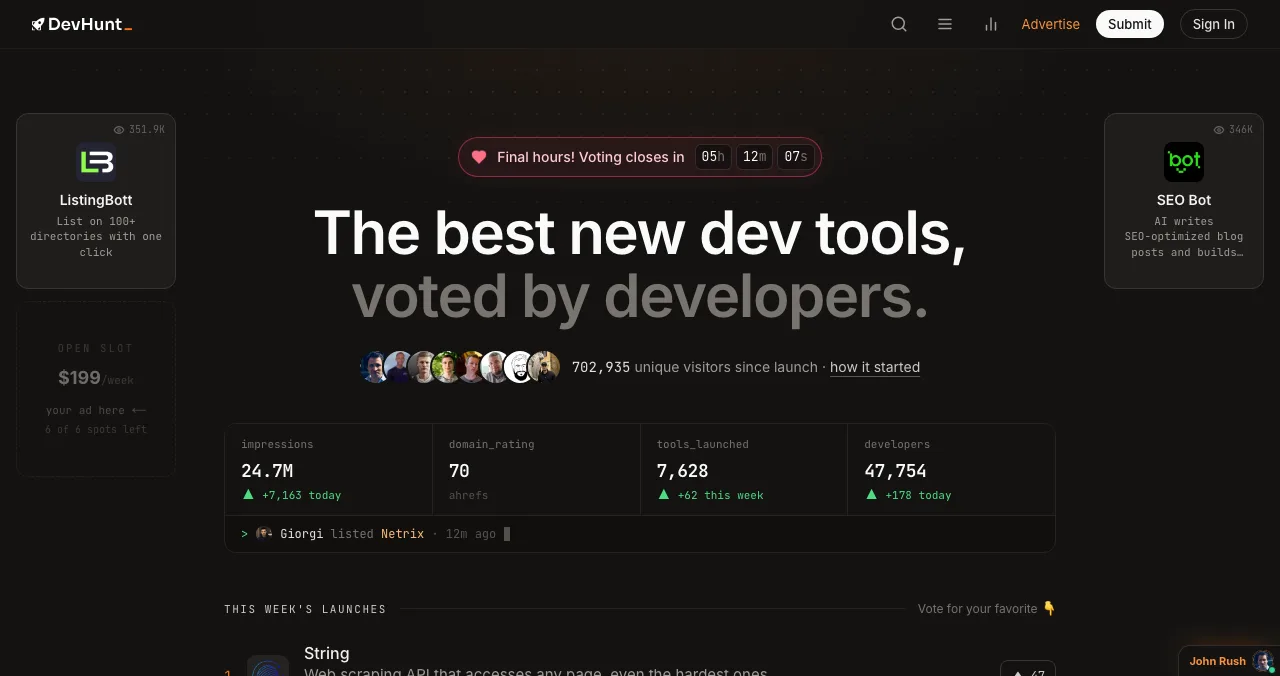
- Launch links: Product Hunt, Peerlist, Uneed, DevHunt (dofollow on its $49 launch).
- Earned links: original data, free tools, honest comparisons and templates people cite.
- Relationship links: integration partners, customers' case studies, podcasts and communities.
- Avoid: buying links for ranking, link swaps, automated link building and low-quality directories.
Key takeaways
- A new startup's first links come from profiles and launches; later links come from things worth citing.
- Google defines link spam as links made primarily to manipulate rankings, and lists buying, swapping and automated links as examples.
- Paid placements are fine if the links are marked nofollow or sponsored; they just shouldn't be bought for ranking.
- Original data and free tools earn links for years; most other tactics earn them once.
- Judge links by referral visits and relevance, not by count.
A new startup has a chicken-and-egg problem: to rank, you need links; to get links, people need to find you. The way out isn't buying links or joining swap schemes, which Google's spam policies name as link spam. It's a sequence: profiles and launches first, then things worth citing. This playbook lists the free sources in the order a startup can realistically get them, with the rules from Google's spam policies (read 17 November 2026) for what to avoid. Jump to week-one links, earned links or what to avoid.
- Kinds of free backlinks a startup can get
- 4
- Rule from Google: don't create links mainly to manipulate rankings
- 1
- DevHunt's launch, which includes a permanent dofollow link
- $49
- Upvotes a free Uneed launch needs to keep its dofollow link
- 20
1. Profile links: your first week
Every startup can get these in a few hours, free.
| Source | What you get | Notes |
|---|---|---|
| Science of Apps Launchpad | A permanent profile linking to your product | Reviewed by a person; found by problem |
| Crunchbase | A company profile with your website | Any registered, authenticated user can add one |
| SaaSHub | A reviewed software listing | Released products only; list competitors |
| AlternativeTo | An alternatives listing | Sign in to suggest |
| GitHub | A repository linking to your site | For open-source and developer products |
| A company page | Use the same description everywhere |
Table: Profile links a startup can create in week one (each site's own pages, checked 16–17 Nov 2026)
2. Launch links: your launch month
- Product Hunt: a free launch and a permanent product page.
- Peerlist Launchpad: Monday launches for builders.
- Uneed: free launches keep a dofollow link once they reach 20 upvotes.
- DevHunt: free listings are nofollow; the $49 launch adds a permanent dofollow link.
- Fazier: paid plans include a backlink; the free tier requires a link back to Fazier.
Even nofollow launch links matter: they bring visitors, and people who find you there may link to you later. See 14 Product Hunt alternatives.
3. Earned links: things worth citing
This is where lasting links come from. Journalists, bloggers and AI answers all cite specific, sourced material; the GEO research found that statistics, quotations and citations make content more visible in AI answers.

Original data
Anonymised numbers from your product or a small survey, published with the method. "We analysed 1,000 onboarding flows" gets cited for years, if it's real.
Free tools
A calculator, checker or generator that solves a small problem in your space. People link to useful tools.
Templates and checklists
A copy-ready template is easy to link to: think of the checklists in your niche people keep asking for.
Honest comparisons
"X vs Y" pages that are genuinely fair get referenced in forums and AI answers.
Clear definitions
The best short explanation of a term in your field becomes the page people link to.
4. Relationship links: partners and people

- Integration partners — many tools list integrations on their site; ask to be added when you integrate
- Customer stories — happy customers may write about how they use you
- Podcasts and interviews — show notes usually link to guests' products
- Communities you contribute to — helpful answers with a relevant link, never link drops
- Open source — libraries and examples that others depend on
Your permanent profile
A free Science of Apps Launchpad profile is a reviewed, permanent page that links to your product and is found by the problem you solve. Once it's live, your product is also tested end to end, including how findable you are on Google and AI assistants, with a detailed report.
What to avoid
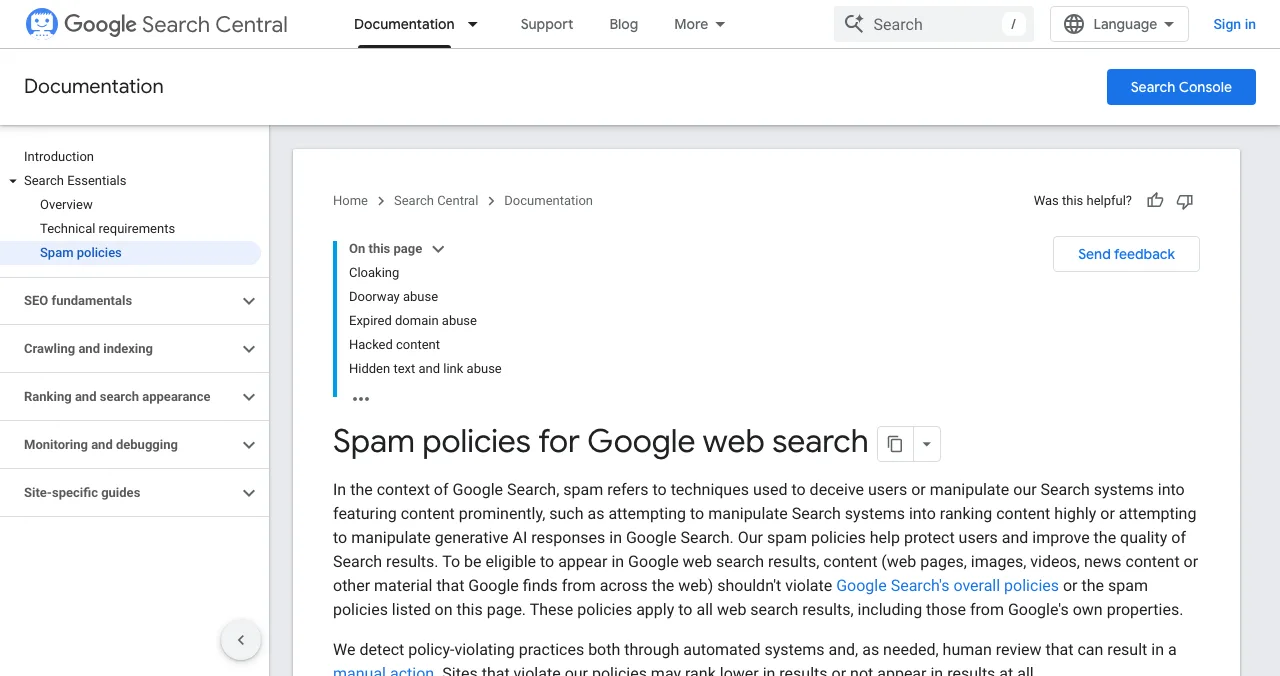
Google's spam policies list these as link spam:

- Buying or selling links for ranking — including paying for posts with links, or swapping products for links
- Excessive link exchanges — "link to me and I'll link to you"
- Automated link building — programs or services that create links to your site
- Low-quality directory or bookmark links — directories nobody uses
- Optimised-anchor links in guest posts or press releases — distributed across other sites
- Forum comments with optimised links — signature spam
Paid placements and sponsorships are fine when the links are marked rel="nofollow" or rel="sponsored".
A 90-day backlink plan
- Week 1
Profiles
Launchpad, Crunchbase, SaaSHub, AlternativeTo, GitHub and LinkedIn, all with the same description.
- Weeks 2–4
Launches
Peerlist, Product Hunt, Uneed or DevHunt, matched to your audience.
- Month 2
One linkable asset
Publish original data, a free tool or a template, with a clear method.
- Month 3
Relationships
Integration partner pages, a customer story, two podcast or community appearances.
- Ongoing
Measure
Referral visits and sign-ups per link source; keep doing what sends users.
Ready for your first good link?
How we know
Link spam rules come from Google's spam policies page, read on 17 November 2026; dofollow and nofollow details from DevHunt's FAQ and Uneed's launch guide; directory rules from each site's own pages. The GEO finding is from Aggarwal et al. (KDD 2024). Science of Apps runs the Launchpad mentioned above.
Key terms, defined
- Backlink: a link from another site to yours.
- Dofollow / nofollow: whether a link is meant to pass ranking credit (nofollow and sponsored don't).
- Link spam: links created mainly to manipulate rankings.
- Linkable asset: content others want to reference, such as original data or a free tool.
- Referral traffic: visitors who arrive by clicking a link on another site.
Frequently asked questions
How can a new startup get backlinks for free?
Start with profiles and launches: a permanent Science of Apps Launchpad profile, Crunchbase, SaaSHub, AlternativeTo and GitHub, then launches on Product Hunt, Peerlist, Uneed and DevHunt. Then earn links by publishing things others want to cite: original data, free tools, templates and honest comparisons. Integration partners and customers can link to you too.
Are launch site backlinks dofollow?
It depends on the site. DevHunt, for example, says free listings get a nofollow link and paid launches get a permanent dofollow link. Uneed says free launches keep a dofollow link once they reach 20 upvotes. Even nofollow links bring visitors and help people and engines find you.
Is buying backlinks against Google's rules?
Buying or selling links for ranking purposes is listed as link spam in Google's spam policies. Paid placements for advertising are fine if the links are qualified with rel="nofollow" or rel="sponsored".
Do guest posts still work for backlinks?
Guest posts written to inform an audience can bring visitors and credibility. But Google lists links with optimised anchor text in guest posts distributed on other sites as an example of link spam. Write for the readers, link naturally, and don't use guest posting mainly to collect links.
What content earns backlinks for a startup?
Content others need to reference: original data from your product or a survey, free calculators and tools, templates and checklists, clear definitions, and honest comparisons. Journalists, bloggers and AI-written answers all cite specific, sourced material.
How many backlinks does a new startup need?
There's no number. A handful of relevant links from places your customers use (launch sites, reviewed directories, partners) does more than hundreds of irrelevant ones. Focus on links that also send real visitors.
Sources
- Google Search Central — Spam policies for Google web search: link spam (checked 17 Nov 2026)
- DevHunt — FAQ: nofollow listings and dofollow launches (checked 17 Nov 2026)
- Uneed — How to launch your product on Uneed (launch guide, 2026)
- SaaSHub — Submit a product: guidelines (checked 17 Nov 2026)
- Crunchbase Knowledge Center — How do I create a Crunchbase profile?
- Aggarwal et al. — GEO: Generative Engine Optimization (arXiv 2311.09735, KDD 2024)
- Science of Apps — Launchpad: launch your product free
- Checked November 17, 2026. Figures that change — fees, salaries, prices — are reviewed every six months; if something is out of date, tell us.
Where to go from here
- Free directory submission sites — the quality-checked list
- Does directory submission still help SEO? — what Google says
- Organic visibility for startups — the full foundation
- Science of Apps - LaunchpadDoes directory submission still help SaaS SEO in 2027? What Google's spam policies say, and which directories are worth itDoes directory submission still help SaaS SEO in 2027? Google calls low-quality directory links spam, but reviewed directories still bring users and citations.
- Science of Apps - LaunchpadFree directory submission sites in 2027: a quality-checked list, and the directory links Google calls spamA quality-checked list of free directory submission sites for 2027, from Google Business Profile to SaaSHub, plus the low-quality directories to avoid.
- Science of Apps - LaunchpadHow to market an AI tool in 2027: positioning by task, AI directories, AI search, demos and the trust that makes people payHow to market an AI tool in 2027: position by task, list in AI directories, get cited by AI search, show real outputs and earn trust that converts.
- Science of Apps - LaunchpadHow to launch an AI product: prove the outputs, describe the task not the model, pick free and paid launch sites, and make sure AI search can find youHow to launch an AI product in 2027: show real outputs, describe the task, launch on Product Hunt and AI directories, and get found by AI search engines.
- Science of Apps - LaunchpadHow to get your first SaaS customers: from design partners to paid plans, without a sales teamHow to get your first paying SaaS customers in 2027: design partners, founder-led sales, communities, launch sites, directories and a trial that works.
- Science of Apps - LaunchpadHow to get your first 100 users without paid ads: a channel-by-channel plan founders can start todayHow to get your first 100 users without paid ads in 2027: your network, communities, launch sites, directories, content and one-to-one outreach, step by step.
Get the ideas, not the noise.
Sign up with Google and we’ll send you short UX psychology tips by email — why people tap, stall and leave, and what to do about it. Unsubscribe anytime. Prefer something to keep? Get the free Laws of UX guide as a PDF.
Launch day ends. Your listing shouldn't.
A permanent, free profile on a reviewed directory that links to your product and is found by the problem you solve, plus your product tested end to end with a detailed report.