 By
Quick answer: Does directory submission still help SEO for a SaaS?
- Mass directory submission: doesn't help, and Google lists low-quality directory links as link spam.
- Automated link services: Google names them as a link spam example too.
- Reviewed niche directories: still useful for buyers, citations and some authority.
- Paid listings: fine for visibility; links bought for ranking should be marked nofollow or sponsored.
- The test: would a buyer use this directory to find a tool like yours?
Key takeaways
- Directory submission is a distribution tactic first and an SEO tactic second.
- Google defines link spam as links made mainly to manipulate rankings, and lists low-quality directory links among its examples.
- Reviewed directories (SaaSHub, AlternativeTo, launch sites) are valuable because they reject low-quality listings.
- Consistent listings help search engines and AI assistants connect the facts about your product.
- Measure directories by visitors and sign-ups, not by the number of backlinks.
Ten years ago, "submit your site to 200 directories" was standard SEO advice. Today it's on Google's list of things not to do. But many SaaS founders still get real users from directories: the reviewed ones where buyers compare tools. The difference between the two is the whole answer to "does directory submission still help?". This analysis uses Google's own spam policies, read on 17 November 2026, to separate them, then shows which directories are worth your time and how to measure them. Jump to what Google says, the directories worth it or how to measure.
- Question that decides it: would a buyer browse this directory?
- 1
- Value Google assigns to links made mainly to manipulate rankings
- 0
- Reviewed directories most SaaS products need
- 10–20
- UTM link per directory, to know what works
- 1
What Google says about directory links
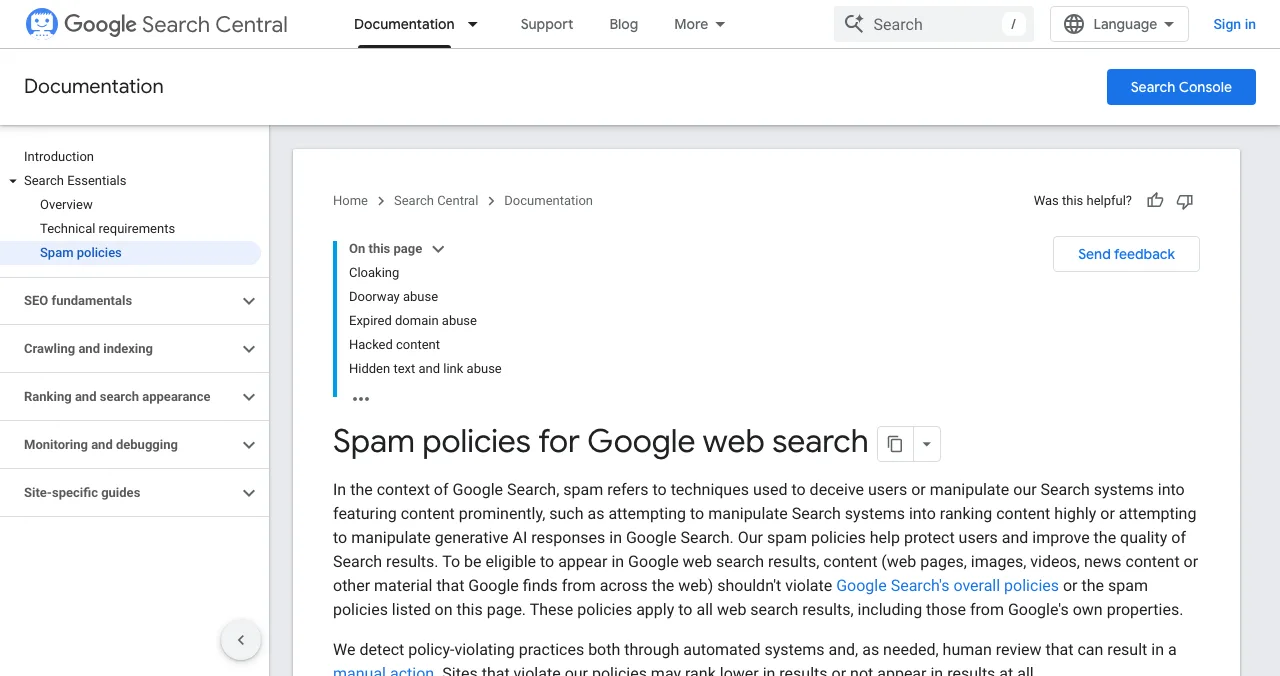
Google defines link spam as "the practice of creating links to or from a site primarily for the purpose of manipulating search rankings". Among its examples:
- "Low-quality directory or bookmark site links"
- "Using automated programs or services to create links to your site"
- "Buying or selling links for ranking purposes", unless they're qualified with
rel="nofollow"orrel="sponsored" - "Excessive link exchanges" ("link to me and I'll link to you")
Google also says buying and selling links is a normal part of advertising and sponsorship, as long as those links don't pass ranking credit.
Two kinds of directories
| Low-quality link directory | Reviewed niche directory | |
|---|---|---|
| Who uses it | Almost nobody | Buyers comparing tools |
| Review | Accepts anything | Editorial or community review |
| Why it exists | To sell links | To help people find products |
| SEO effect | None, or a link spam risk | Visitors, citations, some authority |
| Example | "Submit to 500 directories" packages | SaaSHub, AlternativeTo, launch sites |
Table: Low-quality link directories vs reviewed niche directories
Why good directories still help a SaaS
- Buyers use them. People searching "alternatives to [tool]" land on alternatives directories and launch sites.
- Citations. Consistent listings help search engines and AI assistants connect your name, description and link. Google says the same SEO fundamentals apply to its AI features.
- Some authority. Links from reviewed, relevant directories can pass value; some, like DevHunt, say their free listings are nofollow and paid launches are dofollow.
- Trust. Being listed where buyers compare tools is a form of social proof.
The directories worth it for a SaaS
| Directory | Why it's worth it | Cost |
|---|---|---|
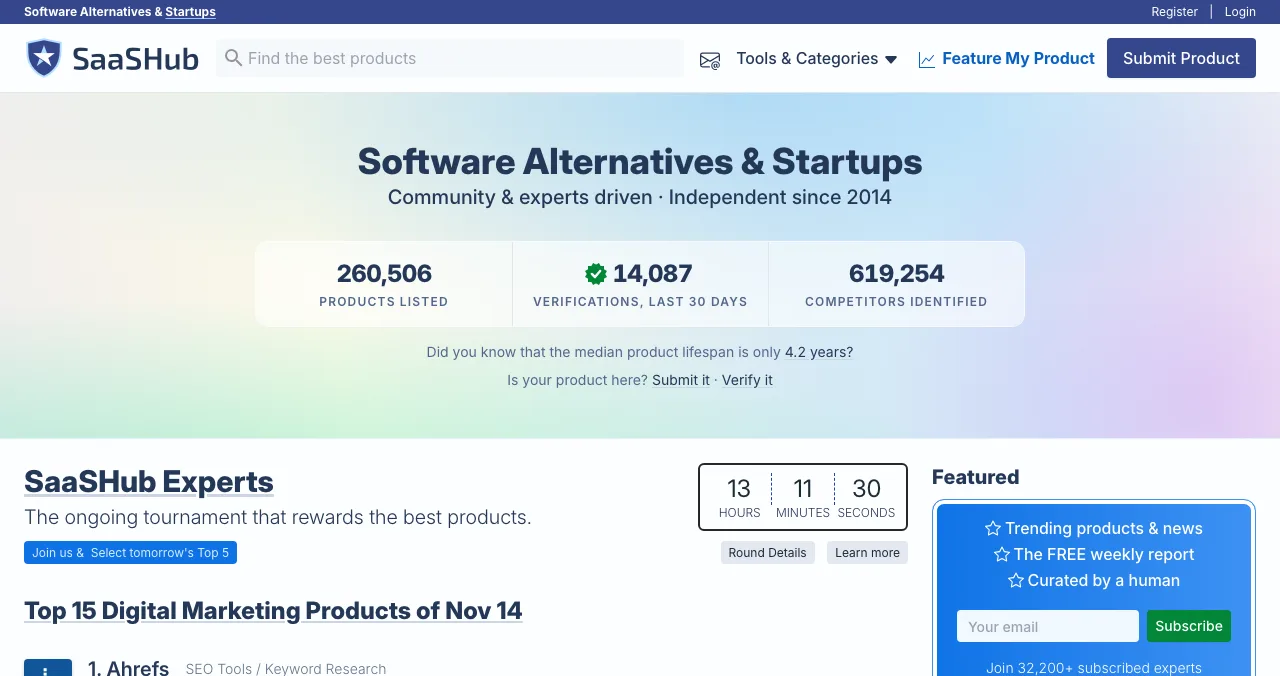
| SaaSHub | Manual review; rejects waitlists and unreleased products | Free |
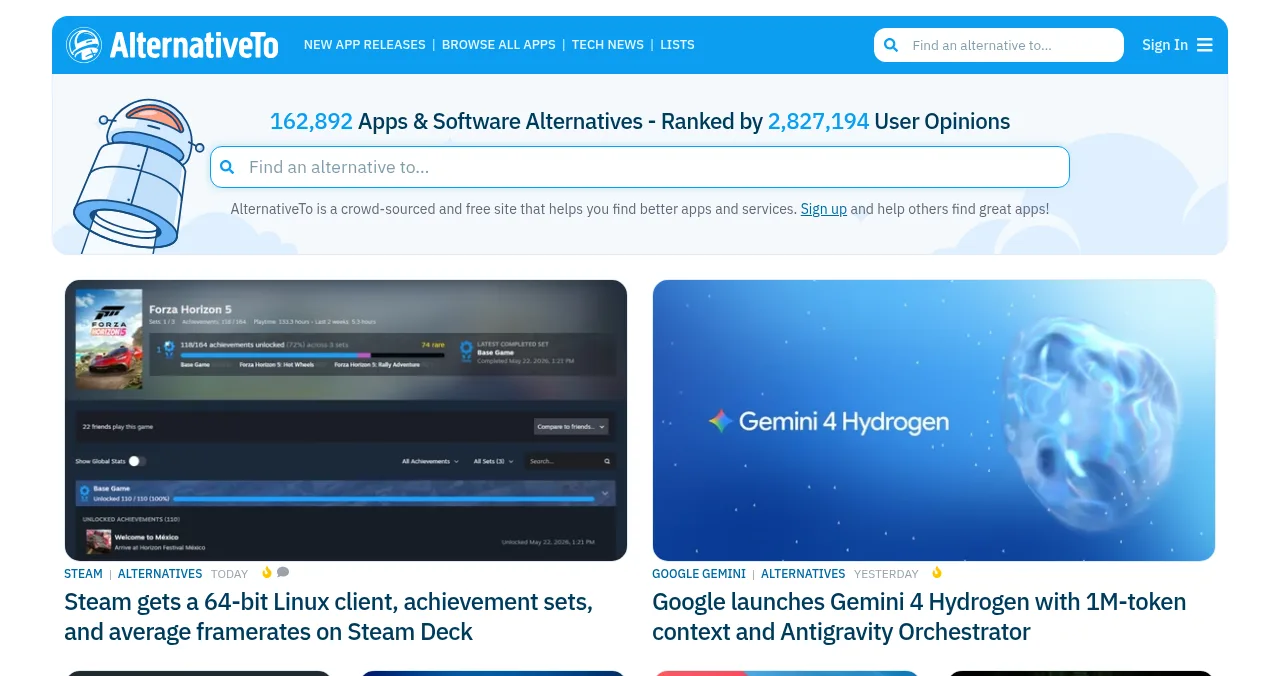
| AlternativeTo | Buyers search alternatives to tools you replace | Free |
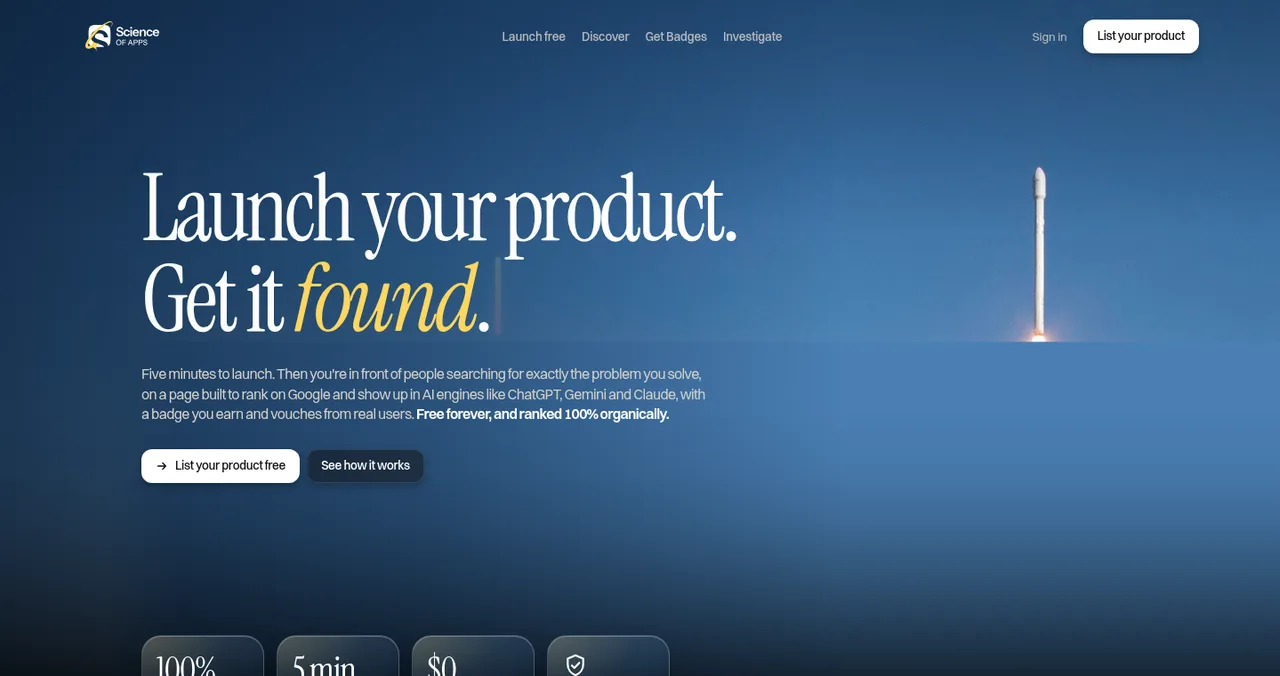
| Science of Apps Launchpad | Found by problem; reviewed by a person; product tested | Free, forever |
| Product Hunt | Launch day plus a permanent product page | Free |
| Peerlist, Uneed, DevHunt | Launches for builders and developers | Free options |
| Crunchbase | Investors and press check it | Free profile |
Table: Directories worth listing a SaaS in (each site's own pages, checked 16–17 Nov 2026)
The full list, with each site's rules, is in free directory submission sites.
How to measure directory submissions

- One UTM link per directory — so analytics shows the source.
- Track sign-ups and activations, not just visits.
- Review after 30 and 90 days — some directories send slow, steady traffic.
- Keep and update the winners — new screenshots, features and descriptions as you ship.
- Drop the rest — don't maintain listings nobody sees.
Directory mistakes that hurt a SaaS

- Buying a mass-submission package — what Google calls automated link building
- Link-for-link swaps — excessive link exchanges are link spam
- Inconsistent listings — different names and descriptions split your signals
- Listing before you're live — reviewed directories reject waitlists
- Counting backlinks as success — count users
Ready to list?
How we know
Google's link spam definition and examples come from its spam policies page, read on 17 November 2026; directory rules from each directory's own pages. Whether a given link passes ranking value isn't published by Google, so we describe benefits in terms of users and citations first. Science of Apps runs the Launchpad mentioned above.
Key terms, defined
- Directory submission: listing your product or business in an online directory.
- Link spam: links created mainly to manipulate rankings, against Google's policies.
- Citation: a consistent mention of your product's name, description and link on another site.
- nofollow / sponsored: link attributes telling search engines not to pass ranking credit.
- Alternatives directory: a directory listing software by the tools it replaces.
Frequently asked questions
Does directory submission still help SEO?
Selectively. Links from low-quality directories don't help and Google's spam policies list them as link spam. Listings in reviewed, relevant directories can still help: they send visitors, provide consistent citations that search engines and AI assistants use to understand your product, and some pass authority.
Are directory backlinks bad?
Not inherently. The problem is directories that exist to sell links or accept anything. Google's examples of link spam include 'low-quality directory or bookmark site links' and using automated services to create links. A link from a curated directory that people use is not the same thing.
Should I pay for a directory submission service?
Be very careful. Services that submit your SaaS to hundreds of directories automatically resemble what Google calls link spam. If you use a service, require a named list of reviewed directories, check them yourself and skip anything you wouldn't browse.
Which directories are worth it for a SaaS?
Ones buyers use to compare tools: SaaSHub and AlternativeTo; launch sites such as Product Hunt, Peerlist and Uneed; a permanent Science of Apps Launchpad profile; a Crunchbase company profile; and niche directories for your industry. Use our free directory list for the details.
Do paid directory listings violate Google's rules?
Paying for visibility is normal. Google says buying and selling links is part of advertising and sponsorship as long as links that pass ranking credit are qualified with rel="nofollow" or rel="sponsored". The issue is paying specifically for links meant to manipulate rankings.
How should I measure directory submissions?
With a UTM link per directory: visits, sign-ups and activations. Keep and update the listings that send real users; ignore the rest.
Sources
- Google Search Central — Spam policies for Google web search: link spam (checked 17 Nov 2026)
- Google Search Central — AI features and your website (checked 17 Nov 2026)
- SaaSHub — Submit a product: guidelines (checked 17 Nov 2026)
- DevHunt — FAQ: free nofollow listings and dofollow launches (checked 17 Nov 2026)
- Science of Apps — Launchpad: launch your product free
- Checked November 17, 2026. Figures that change — fees, salaries, prices — are reviewed every six months; if something is out of date, tell us.
Where to go from here
- Free directory submission sites — the quality-checked list
- Where to launch a SaaS — directories and launch sites by layer
- Organic visibility for startups — the five-step foundation
- Science of Apps - LaunchpadFree directory submission sites in 2027: a quality-checked list, and the directory links Google calls spamA quality-checked list of free directory submission sites for 2027, from Google Business Profile to SaaSHub, plus the low-quality directories to avoid.
- Science of Apps - LaunchpadHow to get backlinks for a new startup for free, and which link tactics Google treats as spamHow a new startup can earn backlinks for free in 2027: launch sites, reviewed directories, data, free tools, partners and press, plus the link tactics to avoid.
- Science of Apps - LaunchpadSaaS directories worth your time in 2027: 13 checked places to list a SaaS, labelled buyer-intent or launch, free or paid, with their rules13 SaaS directories worth listing on in 2027, each checked: buyer-intent vs launch sites, free vs paid, the rules, and whether directories help SEO.
- Science of Apps - LaunchpadAI tools directories in 2027: where you can still submit an AI tool for free, what the paid ones cost, and a submission kitWhere to submit an AI tool for free in 2027, which AI tools directories now charge (and how much), and a copy-ready submission kit, all checked.
- Science of Apps - LaunchpadHow to write a product directory listing: name, one-liner, description, categories, screenshots and the field rules of Product Hunt, SaaSHub and AlternativeToHow to write a directory listing that gets clicks: one-liner, description, categories, screenshots, and the rules of Product Hunt, SaaSHub and AlternativeTo.
- Science of Apps - LaunchpadFree startup directories in 2027: 16 checked sites to submit your startup to, grouped by what you want (investors, customers, a launch, India) with each one's rules16 free startup directories checked for 2027, grouped by goal: investors, customers, launch day and India, with each site's rules and the ones to skip.
Get the ideas, not the noise.
Sign up with Google and we’ll send you short UX psychology tips by email — why people tap, stall and leave, and what to do about it. Unsubscribe anytime. Prefer something to keep? Get the free Laws of UX guide as a PDF.
Launch day ends. Your listing shouldn't.
A reviewed directory that buyers actually browse: a permanent, free profile found by the problem your SaaS solves, plus your product tested end to end with a detailed report.