 By
Quick answer: How do I get my first 100 users without paying for ads?
- Users 1–20: your network, people who have the problem, asked one by one.
- Users 20–50: communities where your users already talk, by helping first.
- Users 50–80: launch sites matched to your audience, spaced over weeks.
- Users 80–100: a permanent profile, reviewed directories and one useful piece of content.
- All along: fix activation, so sign-ups become users who come back.
Key takeaways
- The first 100 users come from many small, manual channels, not one big one.
- One-to-one asks convert far better than broadcasts in the first weeks.
- Communities reward people who help before they promote; most remove drive-by links.
- Launch sites bring spikes; permanent profiles and directories bring steady sign-ups.
- A user isn't a sign-up: count people who reach the first result and come back.
Nobody's first 100 users came from one channel. They came from a founder messaging people one by one, answering questions in a forum, launching on a couple of sites, and making sure the product worked when people arrived. It's unglamorous, it doesn't scale, and it's how almost every product starts. This plan breaks the first 100 into four stages, each with the channels that fit it and the platform rules that matter (checked on their own pages, 16–17 November 2026). Jump to users 1–20, communities, launches or keeping them.
- Stages to your first 100 users
- 4
- Free channels: network, communities, launches, directories, outreach
- 5
- Ad budget needed
- $0
- Number that matters: users who come back
- 1
Users 1–20: your network, one by one

- List 50 people who have the problem. Former colleagues, customers of your last job, people who've complained about it publicly.
- Message each one personally. "I built X because Y. Would you try it for 10 minutes and tell me where it's confusing?"
- Watch them use it. A screen-share beats a survey.
- Fix the first blockers immediately. Then message the next ten.
Users 20–50: communities where they already talk
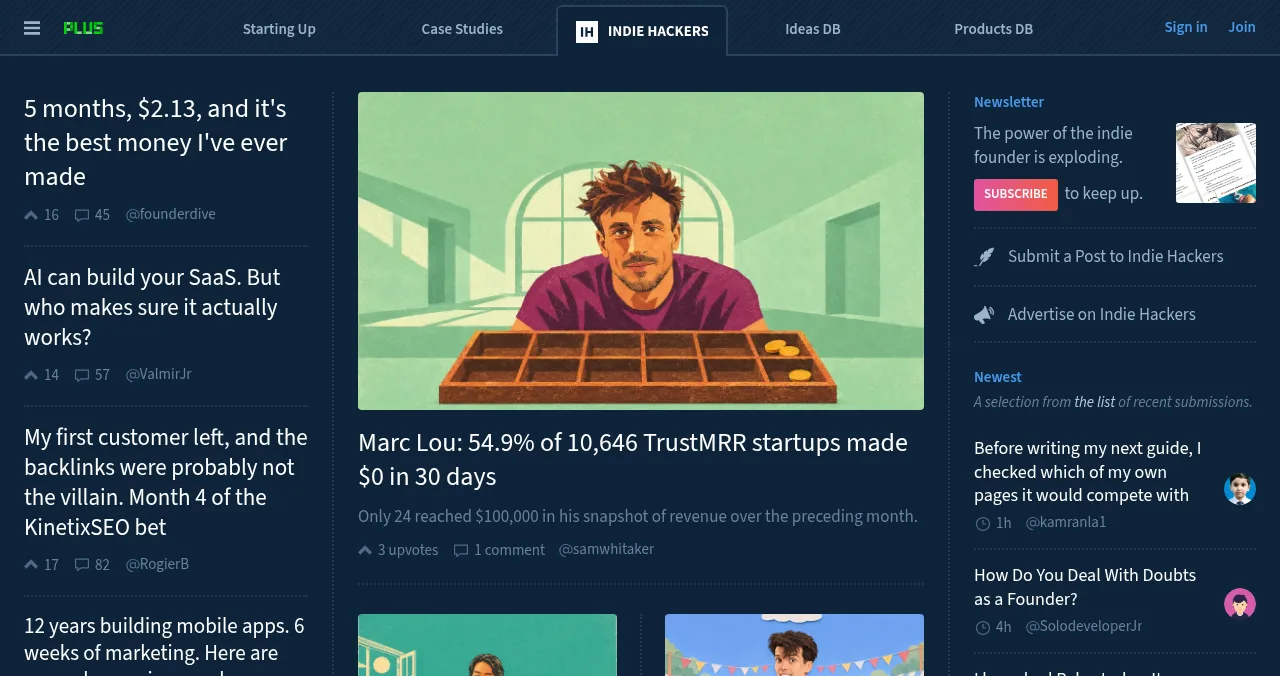
Find the forums, subreddits, Slack and Discord groups and LinkedIn circles where your users discuss the problem. Then:

- Help first, for weeks — answer questions with no link
- Read the rules — most communities remove self-promotion outside set threads
- Share the story, not the link — what you learned building it, what you're stuck on
- Ask for feedback, not sign-ups — people help builders; they ignore ads
- Indie Hackers for founder and maker products — post progress and numbers openly
Users 50–80: launch sites, spaced out
| Your product | Launch here | Rule to know |
|---|---|---|
| Polished app or SaaS | Product Hunt | Free; featuring is editorial; never ask for upvotes |
| Side project or MVP | Peerlist Launchpad | Monday launches; verified individuals; complete project |
| Anything, planned ahead | Uneed | Free waiting line 50+ days out |
| Developer tool | Show HN | Must be tryable; no landing pages |
Table: Launch sites for early users (each site's own pages, checked 16–17 Nov 2026)
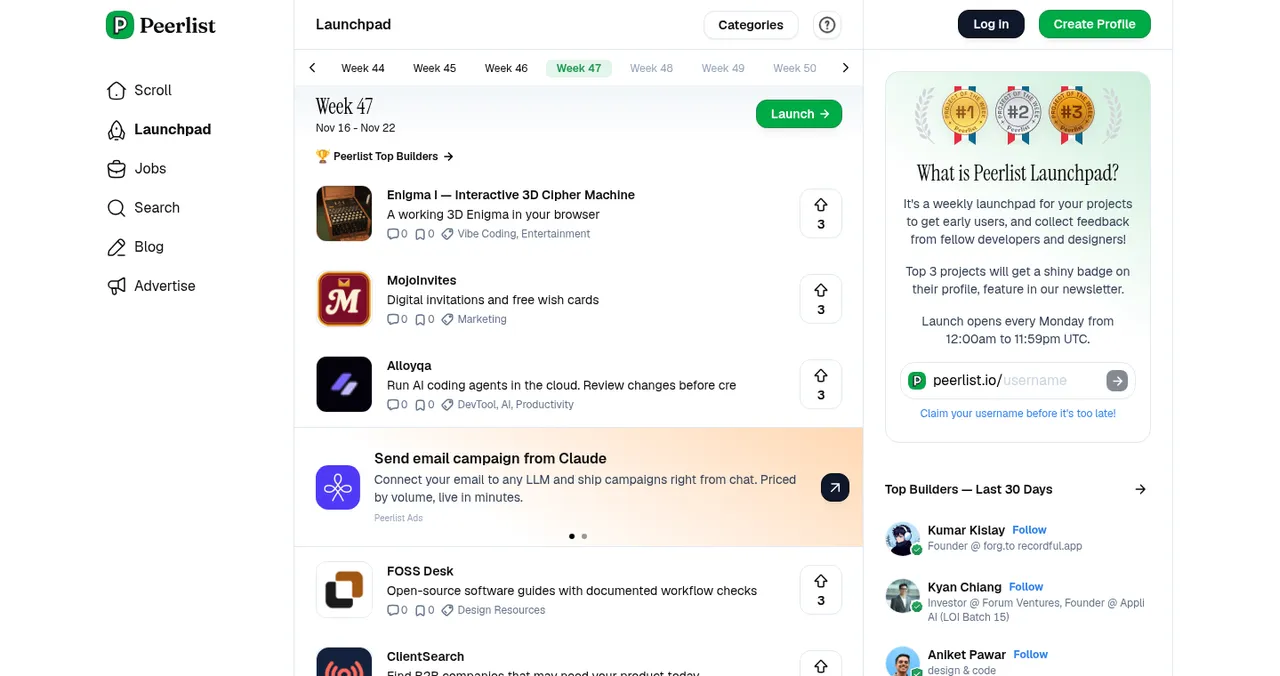
Space launches a week or two apart, ask people to try it and give feedback (never to upvote), and reply to every comment. More options in top websites to launch a startup.
Users 80–100: a permanent page, directories and one useful post
Launch spikes fade; these keep working:
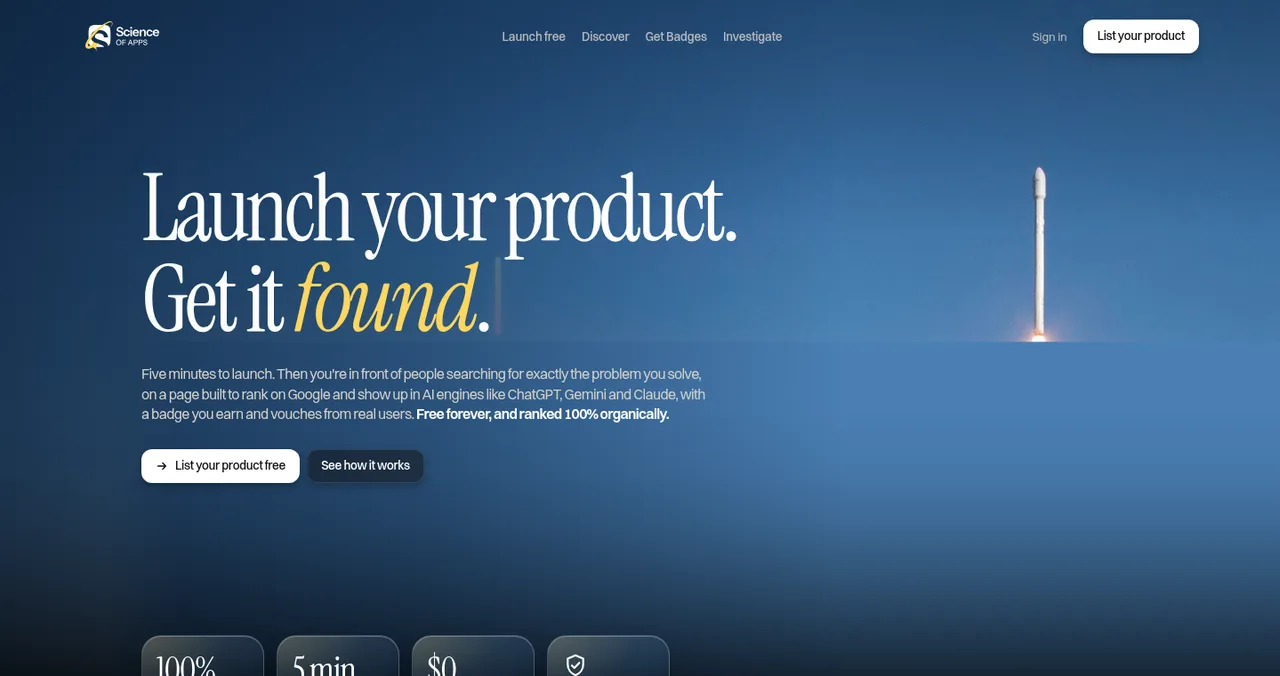
- A permanent profile: a free Science of Apps Launchpad listing people find by the problem they have, on the Launchpad, Google and AI answers. Once it's live, your product is tested end to end and you get a detailed report.
- Reviewed directories: SaaSHub and AlternativeTo for software, Future Tools for AI. See free directory submission sites.
- One genuinely useful post: an answer to the question your users search before they find you.
Keep them: activation beats acquisition
A hundred sign-ups who never come back isn't a hundred users. Before you push for more:

- Sign-up is short — no phone number or card before value
- The first screen isn't empty — templates, examples or one guided step
- New users reach a real result fast — the first moment of value
- You follow up personally — a short email to every new user in week one
- You fix one thing a week — and tell the people who asked
Visible early users and their words reassure the next ones (social proof); a cluttered first screen loses them (cognitive load).
A six-week plan to 100 users
- Week 1
Network
50 personal messages; 10 watched sessions; fix the top blockers.
- Week 2
Foundation
Publish your permanent page; submit to SaaSHub and AlternativeTo; join Uneed's line.
- Weeks 2–4
Communities
Help daily where your users talk; share one progress post a week.
- Week 4
Peerlist
Monday launch; reply all week.
- Week 5
Product Hunt or Show HN
Matched to your audience; be online all day.
- Week 6
Content and follow-up
One useful post; email every user; ship the top fix.
Mistakes that stall the first 100

- Waiting for a big launch — the first users come from small, manual work
- Broadcasting instead of asking — one-to-one messages convert better early on
- Dropping links in communities — you'll be removed and remembered
- Counting sign-ups — count people who come back
- Not fixing what they tell you — early users leave quietly
Ready to be found?
How we know
Launch-site rules come from Product Hunt's help centre, Show HN's guidelines, Peerlist's help centre and Uneed's launch guide, read on 16–17 November 2026. The stages and timeline are our editorial framework; we don't quote averages for how long the first 100 users take, because results vary too much between products. Science of Apps runs the Launchpad mentioned above.
Key terms, defined
- Early adopter: one of the first people to try a product, tolerant of rough edges.
- Activation: a new user reaching the first real result.
- One-to-one outreach: personal messages to individuals, not mass email.
- Permanent profile: a page about your product that keeps working after launch day.
- Retention: users coming back after their first use.
Frequently asked questions
How do I get my first 100 users without paid ads?
Ask people in your network who have the problem, help in communities where your users already talk, launch on sites that match your audience (Product Hunt, Peerlist, Uneed, Show HN for developers), list in reviewed directories with a permanent profile, and reach out one to one. Most first users come from manual work across several channels.
Where do I find my first users?
Where they already spend time discussing the problem: industry forums and Slack or Discord groups, subreddits, Indie Hackers for founders and makers, LinkedIn for B2B, and launch sites for early adopters. Start with places you already belong to.
How long does it take to get the first 100 users?
It varies widely by product and market; there's no reliable average. Many founders reach it over a few weeks to a few months of consistent manual effort. A clear product, a niche audience and fast follow-up shorten it.
Should my first 100 users be free?
They can be, but try to charge some of them, even a small amount, if your product is paid. Paying early users give clearer feedback about value. Offer founder pricing or an extended trial rather than free forever.
What should I do once I have users?
Talk to them: ask what they were trying to do, where they got stuck and what would make them recommend it. Fix the top problem each week and tell them. Early users who see their feedback shipped often become your first advocates.
Is Product Hunt enough to get 100 users?
Sometimes, but don't rely on it. Featuring is editorial, so even a good launch may get limited attention. Combine it with your own audience, a second launch site, communities and a permanent profile.
Sources
- Product Hunt Help Center — How to promote your launch (and what to avoid) (checked 17 Nov 2026)
- Product Hunt Help Center — What kind of products get featured (checked 17 Nov 2026)
- Hacker News — Show HN guidelines
- Peerlist Help Center — How do I launch a project on Peerlist Launchpad?
- Uneed — How to launch your product on Uneed (launch guide, 2026)
- Indie Hackers — Homepage
- Science of Apps — Launchpad: launch your product free
- Checked November 17, 2026. Figures that change — fees, salaries, prices — are reviewed every six months; if something is out of date, tell us.
Where to go from here
- BetaList alternatives — where early adopters gather
- Top 5 websites to launch your startup free — the launch-site shortlist
- Roast my startup — honest feedback from your first users
- Science of Apps - LaunchpadHow to get your first SaaS customers: from design partners to paid plans, without a sales teamHow to get your first paying SaaS customers in 2027: design partners, founder-led sales, communities, launch sites, directories and a trial that works.
- Science of Apps - LaunchpadHow to market a startup with no money: the free channels that work, in the order to use them, and what each costs in time insteadHow to market a startup with no money: direct outreach, communities, free launch sites, directories, content and AI search, in order, with the time each costs.
- Science of Apps - LaunchpadHow to get your first users for a new app: the store listing, launch sites, communities, direct outreach and a web page that keeps bringing people inHow to get users for a new app, free: fix the store listing, launch on Product Hunt and Peerlist, reach people directly, and add a permanent web page.
- Science of Apps - LaunchpadHow to launch an AI product: prove the outputs, describe the task not the model, pick free and paid launch sites, and make sure AI search can find youHow to launch an AI product in 2027: show real outputs, describe the task, launch on Product Hunt and AI directories, and get found by AI search engines.
- Science of Apps - LaunchpadHow to find early adopters: who they are, the ten places they gather, and how to turn them into your first users and championsHow to find early adopters for a startup: who they are, where they gather (communities, launch sites, BetaList), how to approach them and keep them.
- Science of Apps - LaunchpadHow to promote your startup for free in 2027: 30 tactics across launches, listings, content, communities and partners30 free ways to promote a startup in 2027: launch sites, listings, search and AI visibility, content, communities, partners and your own users.
Get the ideas, not the noise.
Sign up with Google and we’ll send you short UX psychology tips by email — why people tap, stall and leave, and what to do about it. Unsubscribe anytime. Prefer something to keep? Get the free Laws of UX guide as a PDF.
Launch day ends. Your listing shouldn't.
A permanent, free page your first users find by the problem they have, plus your product tested end to end so those first users don't hit the obvious problems.