 By
Quick answer: How can I market my startup with no money?
- 1. Direct: talk to people with the problem; ask for introductions.
- 2. Communities: help first, share when relevant.
- 3. Free launches: Product Hunt, Peerlist, Show HN, Uneed's line.
- 4. Free directories: SaaSHub, AlternativeTo, Science of Apps Launchpad.
- 5. Content: pages that answer buyers' questions.
- 6. AI search: let the search bots in; keep facts consistent.
Key takeaways
- No budget means spending time; spend it where buyers already are.
- Direct conversations find the first users and teach you the message.
- Free launch days give spikes; directories and content compound.
- Consistent facts everywhere help search and AI engines recommend you.
- Do a few channels well rather than all of them badly.
"We have no marketing budget" usually means "we have no money", not "we have no options". Every free channel costs something else, usually time, and the trick is spending that time where buyers already are. This playbook ranks the free channels in the order that tends to work for a new startup, with what each costs in hours, using launch-site and search-engine rules as read on 17 November 2026. Jump to the channels, a weekly plan or mistakes.
Free channels, in order
| # | Channel | Time cost | Payoff |
|---|---|---|---|
| 1 | Direct conversations and introductions | High | First users and your message |
| 2 | Communities about the problem | Medium, ongoing | Trust and referrals |
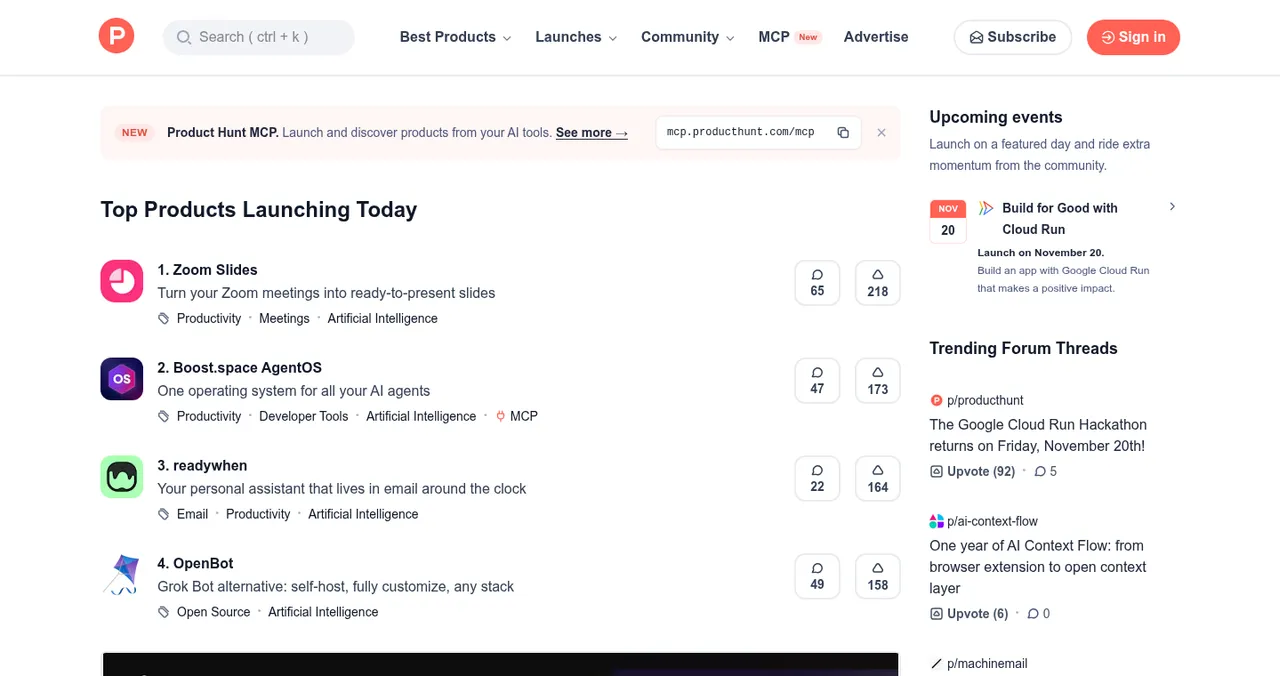
| 3 | Free launch days (Product Hunt, Peerlist, Show HN) | A few days each | Spikes of attention and feedback |
| 4 | Free directories (SaaSHub, AlternativeTo, Launchpad) | Hours, once | Buyers comparing tools, for years |
| 5 | Pages answering buyers' questions | Days per page | Search and AI traffic that compounds |
| 6 | AI search readiness | Hours | Recommendations from assistants |
Table: Zero-budget marketing channels (editorial; site rules checked 17 Nov 2026)
A weekly plan
- Every day
30 minutes in communities
Answer questions; share only when it genuinely helps.
- Mon–Wed
Ten direct conversations
People with the problem; ask for introductions.
- Thursday
One page
Answer one buyer question, answer first, with facts.
- Friday
One listing or launch
A directory or launch site, then reply to everyone.
Mistakes

- Every channel at once — pick three and do them well
- Spamming communities — you get banned and remembered
- Buying upvotes or reviews — against the rules and easy to spot
- Generic content — Google asks for unique, people-first content
- Blocking AI search bots — you vanish from AI answers
Ready to start?
How we know
Launch and directory rules come from each site's own pages and Google's generative AI guide, read on 17 November 2026; the direct-outreach approach from Y Combinator's Startup School. The channel order and weekly plan are our editorial recommendations.
Key terms, defined
- Zero-budget marketing: marketing that costs time, not money.
- Channel: a route to reach potential users.
- Compounding: benefits that grow over time.
- Community: a group gathered around a topic or problem.
- Directory: a site listing products by category.
Frequently asked questions
How do I market a startup with no money?
Talk to people with the problem directly, help in communities, launch free on Product Hunt, Peerlist and Show HN, list on free directories, and publish pages answering buyers' questions so search and AI engines can find you.
What are the best free marketing channels for startups?
Direct outreach and introductions, communities where your users gather, free launch sites, software directories, helpful content, and a permanent profile people can find by the problem you solve.
Where can I launch my startup for free?
Product Hunt, Peerlist Launchpad, Show HN (if people can try it now), Uneed's free waiting line, DevHunt's free listing for developer tools, and Science of Apps Launchpad.
How long does zero-budget marketing take to work?
Direct outreach can bring first users in days; launch sites give spikes; content and directories build over months. Plan for all three.
Is content marketing worth it for a tiny startup?
Yes, if each page answers a specific question your buyers ask. A handful of genuinely useful pages beats a blog of generic posts.
What should I avoid?
Spamming communities, buying upvotes or reviews, mass cold email to bought lists, and spreading yourself across every channel at once.
Sources
- Product Hunt Help Center — Launch FAQ and myths (checked 17 Nov 2026)
- Hacker News — Show HN guidelines (checked 17 Nov 2026)
- Peerlist Help Center — How do I launch a project on Peerlist Launchpad? (checked 17 Nov 2026)
- SaaSHub — Submit a Product (checked 17 Nov 2026)
- Google Search Central — Optimizing your website for generative AI features on Google Search (updated 10 Jul 2026)
- Y Combinator Startup Library — How to talk to users (Gustaf Alströmer)
- Checked November 17, 2026. Figures that change — fees, salaries, prices — are reviewed every six months; if something is out of date, tell us.
Where to go from here
- Promote your startup for free — more free channels
- Your first 100 users — the playbook
- Cold outreach for startups — do it right
- Science of Apps - LaunchpadHow to promote your startup for free in 2027: 30 tactics across launches, listings, content, communities and partners30 free ways to promote a startup in 2027: launch sites, listings, search and AI visibility, content, communities, partners and your own users.
- Science of Apps - LaunchpadHow to get your first 100 users without paid ads: a channel-by-channel plan founders can start todayHow to get your first 100 users without paid ads in 2027: your network, communities, launch sites, directories, content and one-to-one outreach, step by step.
- Science of Apps - LaunchpadHow to promote my website for free: 15 ways that work for a new startup or small business site, grouped by where visitors actually come fromHow to promote your website for free: 15 ways grouped by where visitors come from (search, listings, communities and people), with what each costs in time.
- Science of Apps - LaunchpadHow to market an AI tool in 2027: positioning by task, AI directories, AI search, demos and the trust that makes people payHow to market an AI tool in 2027: position by task, list in AI directories, get cited by AI search, show real outputs and earn trust that converts.
- Science of Apps - LaunchpadHow to get your first users for a new app: the store listing, launch sites, communities, direct outreach and a web page that keeps bringing people inHow to get users for a new app, free: fix the store listing, launch on Product Hunt and Peerlist, reach people directly, and add a permanent web page.
- Science of Apps - LaunchpadHow long until a startup gets its first users? There's no honest average, but each channel has a published clock: from same-day launch sites to months for searchHow long until a startup gets first users? No honest average exists, but each channel has a published clock, from same-day launches to months for search.


Get the ideas, not the noise.
Sign up with Google and we’ll send you short UX psychology tips by email — why people tap, stall and leave, and what to do about it. Unsubscribe anytime. Prefer something to keep? Get the free Laws of UX guide as a PDF.
Launch day ends. Your listing shouldn't.
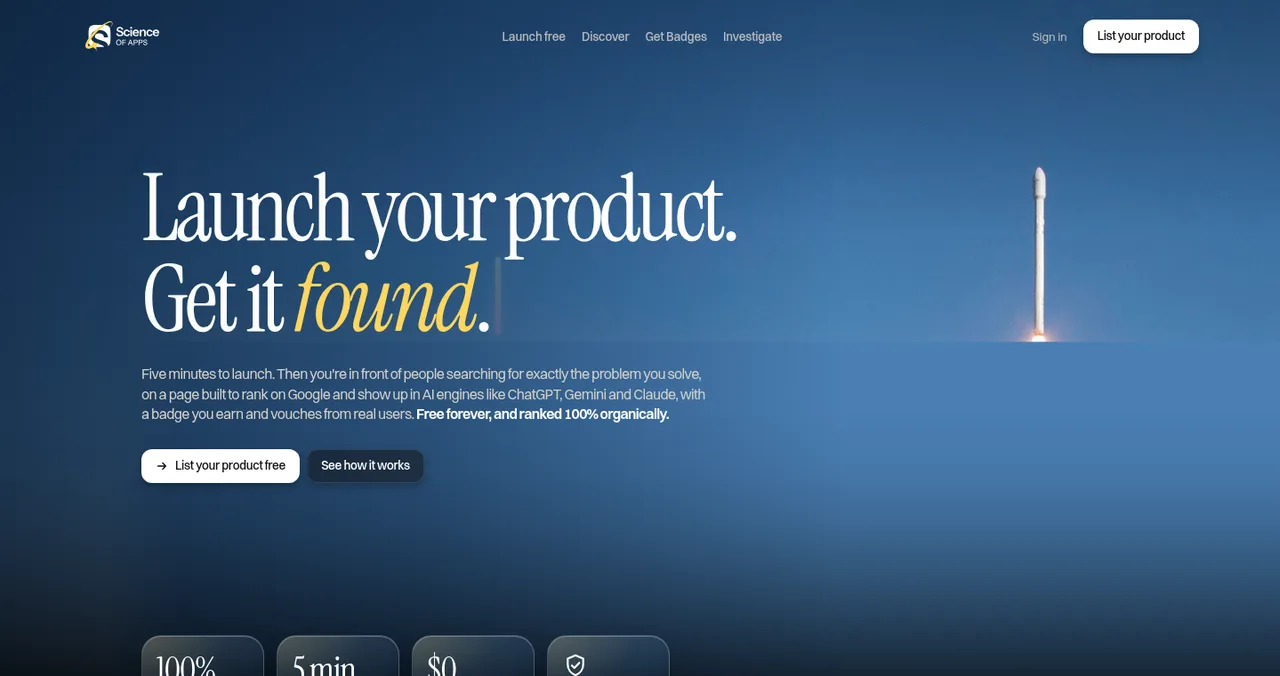
Zero-budget friendly: a free, permanent Launchpad profile, ranked by relevance and never by payment, plus your product tested end to end with a detailed report.