 By
Quick answer: How do I do cold outreach for my startup?
- Who: a short list of people who clearly have the problem.
- What: 3–5 sentences about their situation, one easy ask.
- Follow-up: one or two, a few days apart, then stop.
- Law (US CAN-SPAM): accurate headers, honest subjects, a postal address, an opt-out honoured within 10 business days.
- Gmail: SPF or DKIM for all senders; bulk senders need SPF, DKIM, DMARC and one-click unsubscribe.
Key takeaways
- Relevance beats volume: twenty researched emails outperform two thousand generic ones.
- Lead with their problem, not your product.
- Ask for something small: a 15-minute call, feedback, a yes or no.
- Authentication and low spam reports protect your domain's reputation.
- Check the rules where you and your recipients are; CAN-SPAM is the US law.
Most cold emails fail in the first line, because the first line is about the sender. The ones that get replies read like a note from someone who has done their homework: here's what I noticed about you, here's the problem I think you have, would a 15-minute call be useful? This playbook covers who to contact, a template, follow-ups, and the two rulebooks that keep you legal and out of spam, the FTC's CAN-SPAM guide and Gmail's sender guidelines, both read on 17 November 2026. Jump to the template, follow-ups or the rules.
Who to contact

- People with a visible sign of the problem — a job post, a complaint, a workaround
- The person who feels the pain — not just the most senior title
- A list you can research — twenty, not two thousand
- Introductions first — warm beats cold when you have it
The template
Subject: [Their company]'s [specific problem] Hi [name], I noticed [specific thing: a post, a job ad, a process]. Teams like yours often [problem], which costs [time or money]. We built [product] to [outcome]. [One proof point, if real.] Would a 15-minute call next week be useful? If not, no worries. [Name], [role], [company postal address] · [Opt-out line]
Follow-ups

- Day 3–4 — a short nudge with one useful thing (a relevant tip, a short case).
- Day 8–10 — a polite close: "Shall I stop here?"
- Then stop — and honour any opt-out straight away.
The rules
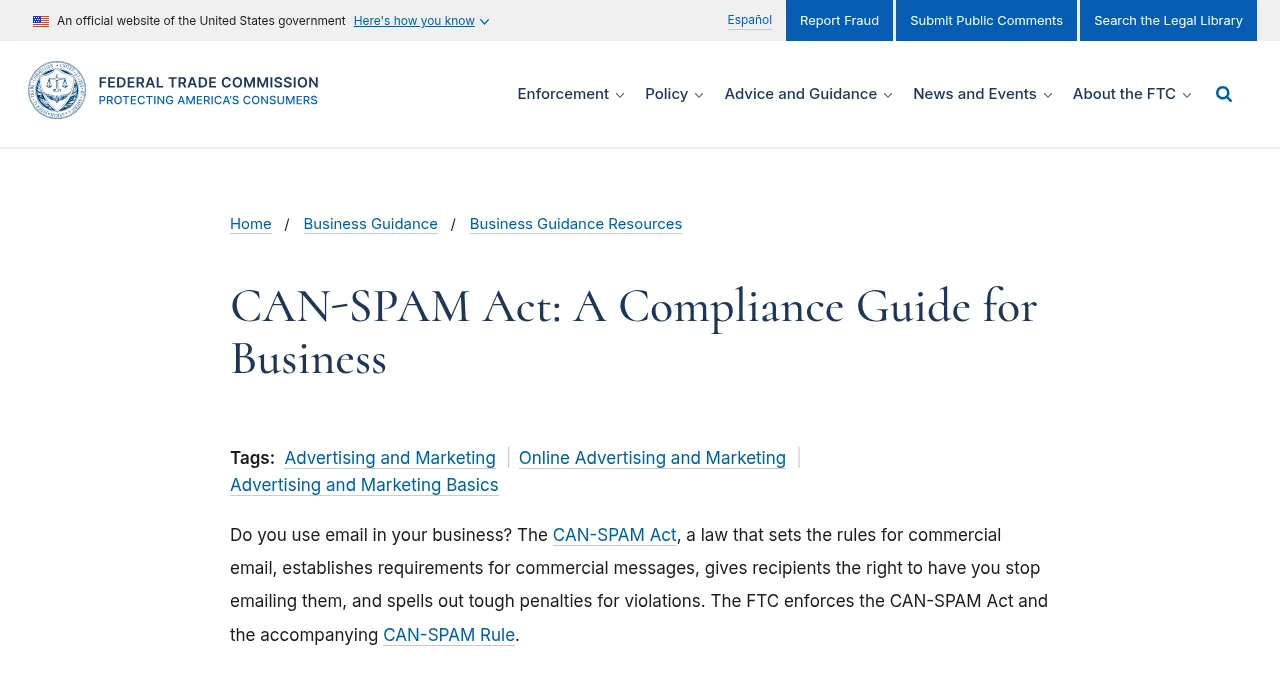
| CAN-SPAM requirement (US) | In practice |
|---|---|
| Accurate header information | Your real name, domain and reply address |
| Honest subject lines | The subject reflects the content |
| Identify it as an ad | Clearly, where the email is commercial |
| Your physical postal address | A valid street address or registered box |
| A clear opt-out | Honoured within 10 business days |
| Applies to B2B email too | No exception for business recipients |
Table: CAN-SPAM's main requirements (FTC compliance guide, checked 17 Nov 2026)
The FTC says each separate email in violation is subject to penalties of up to $53,088. Other countries have their own rules; check where your recipients are.
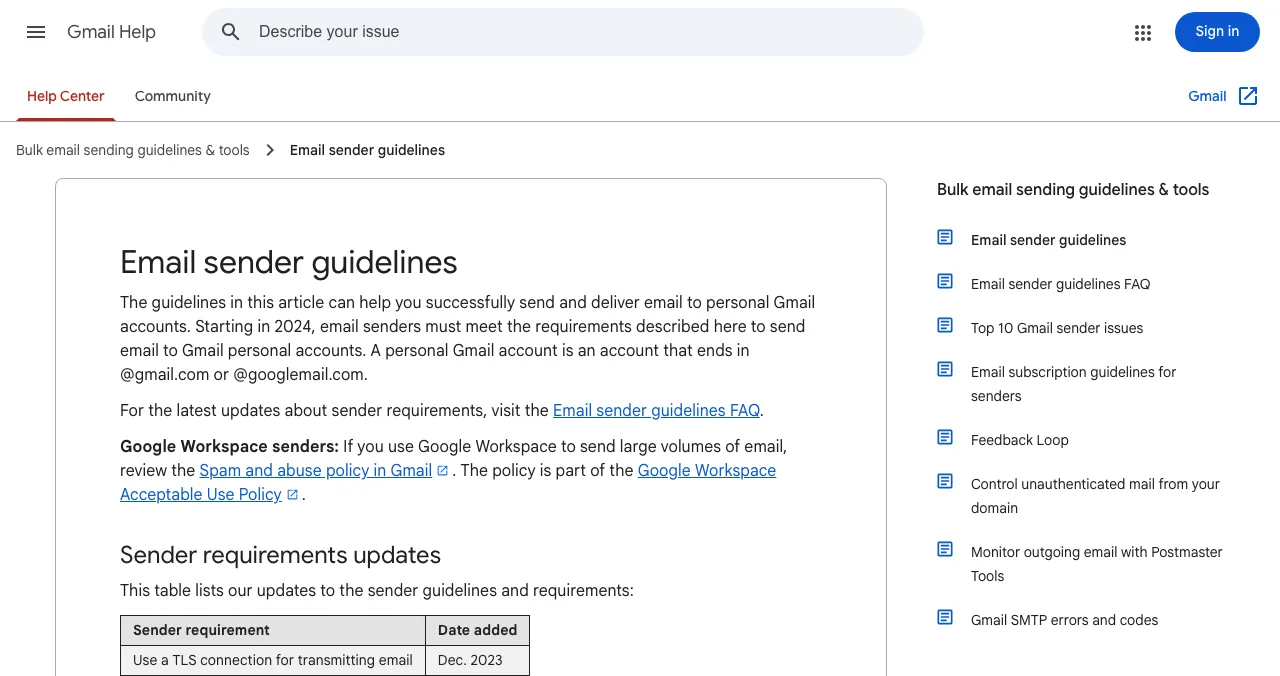
| Gmail sender rule | Who |
|---|---|
| SPF or DKIM | All senders |
| SPF, DKIM and DMARC | Senders of 5,000+ messages a day |
| One-click unsubscribe | Marketing messages from 5,000+ a day senders |
| Low spam reports | Everyone; monitor in Postmaster Tools |
Table: Gmail email sender guidelines (Gmail Help, checked 17 Nov 2026)
Mistakes

- Buying lists — irrelevant recipients report you as spam
- Opening with your product
- Long emails and attachments
- Endless follow-ups
- No authentication on your domain
Ready to reach out?
How we know
Legal requirements come from the FTC's CAN-SPAM compliance guide and deliverability rules from Gmail's sender guidelines, both read on 17 November 2026. The template and follow-up plan are our own. This is general information, not legal advice.
Key terms, defined
- Cold outreach: contacting people who haven't contacted you.
- CAN-SPAM: the US law setting rules for commercial email.
- SPF, DKIM, DMARC: email authentication standards.
- Opt-out: a recipient's request to stop emails.
- Deliverability: whether email reaches the inbox.
Frequently asked questions
How do I write a cold email for my startup?
Three to five sentences: why you're writing to them specifically, the problem you think they have, one line on how you help, and one small ask. No attachments, one link at most.
Is cold emailing legal?
In the US, the CAN-SPAM Act allows commercial email if you follow its rules: accurate headers, honest subject lines, a physical postal address, a clear opt-out honoured within 10 business days. Other countries have their own laws; check where your recipients are.
How many follow-ups should I send?
One or two, a few days apart, each adding something useful. If there's no reply, stop.
How do I keep cold emails out of spam?
Authenticate your domain (Gmail requires SPF or DKIM for all senders, and SPF, DKIM and DMARC for bulk senders), send to small relevant lists, avoid spammy wording, and keep spam reports low.
What are the penalties for breaking CAN-SPAM?
The FTC says each separate email in violation is subject to penalties of up to $53,088.
Should I use cold email or LinkedIn?
Whichever your buyers actually read. Many founders combine a short LinkedIn connection note with an email; the same rules of relevance and brevity apply.
Sources
- Federal Trade Commission — CAN-SPAM Act: A Compliance Guide for Business (checked 17 Nov 2026)
- Gmail Help — Email sender guidelines (checked 17 Nov 2026)
- Y Combinator Startup Library — How to talk to users (Gustaf Alströmer)
- Science of Apps — Launchpad: launch your product free
- Checked November 17, 2026. Figures that change — fees, salaries, prices — are reviewed every six months; if something is out of date, tell us.
Where to go from here
- Get your first SaaS customers — where outreach fits
- Customer interview script — for the calls you book
- Get users with no money — other free channels
- Science of Apps - LaunchpadA product launch email template you can copy: the launch-day email, the heads-up, the follow-up, and the rules that keep a Product Hunt launch safeA product launch email template to copy: heads-up, launch-day and follow-up emails, subject lines, and the Product Hunt rules on asking for upvotes.
- Science of Apps - LaunchpadHow to get your first users for a new app: the store listing, launch sites, communities, direct outreach and a web page that keeps bringing people inHow to get users for a new app, free: fix the store listing, launch on Product Hunt and Peerlist, reach people directly, and add a permanent web page.
- Science of Apps - LaunchpadHow ChatGPT, Google's AI features, Claude and Perplexity choose which products to recommend, from what they publish, and what that means for your startupHow ChatGPT, Google AI Overviews, Claude and Perplexity recommend products: search, fan-out, sources and corroboration, and how a startup gets included.
- Career guidesHow to get an email marketing job in 2027: lists, segmentation, automation, deliverability rules, measurement after privacy changes and payHow to get an email marketing job in 2027: list building, segmentation, automated flows, Gmail and Yahoo sender rules, metrics beyond opens and pay.
- Science of Apps - LaunchpadHow to get your first 100 users without paid ads: a channel-by-channel plan founders can start todayHow to get your first 100 users without paid ads in 2027: your network, communities, launch sites, directories, content and one-to-one outreach, step by step.
- Science of Apps - LaunchpadHow to get your first SaaS customers: from design partners to paid plans, without a sales teamHow to get your first paying SaaS customers in 2027: design partners, founder-led sales, communities, launch sites, directories and a trial that works.
Get the ideas, not the noise.
Sign up with Google and we’ll send you short UX psychology tips by email — why people tap, stall and leave, and what to do about it. Unsubscribe anytime. Prefer something to keep? Get the free Laws of UX guide as a PDF.
Launch day ends. Your listing shouldn't.
Prospects you email will look you up: give them a free, credible Launchpad profile with earned badges, ranked by relevance and never by payment, plus a product test.