 By
Quick answer: Where can I get my startup roasted for honest feedback?
- r/roastmystartup — a subreddit built for blunt feedback; the best posts draw dozens of comments.
- Show HN — free and candid, but only for things people can try right now.
- Indie Hackers — founders who share numbers; good for business-model roasts.
- Microlaunch — paid 30-day launches that collect feedback and 'roasts'.
- Science of Apps Launchpad — free listing plus a product test: an evidence-based roast of your live product.
Key takeaways
- A roast is only useful if it's specific: ask about one screen, one promise or one price, not 'thoughts?'.
- On r/roastmystartup, comments are the prize, not upvotes: in the month to 17 November 2026 the top posts scored under 10 but drew up to 48 comments.
- Strangers can tell you where they got confused; only real users and evidence can tell you what to fix first.
- Separate idea roasts (is this worth building?) from product roasts (why did I stop at sign-up?).
- Reply to every comment and thank critics; harsh feedback in public is free research.
Your friends say it's great. Your mum says it's great. Your first ten users said nothing at all and left. That's why founders type "roast my startup": they want someone with no reason to be polite to tell them what's wrong. Done well, a public roast is the cheapest research you'll ever get. Done badly, it's a pile of hot takes. This guide covers where roasts actually happen, how to post so the feedback is specific, and how to get an evidence-based roast of your live product rather than opinions. Jump to where to post, how to write the post or what useful feedback looks like.
Where to get brutally honest startup feedback
 Test free
Science of Apps Launchpad With evidence
An evidence-based roast: your live product tested end to end, with a report.
Free listingFindings with proof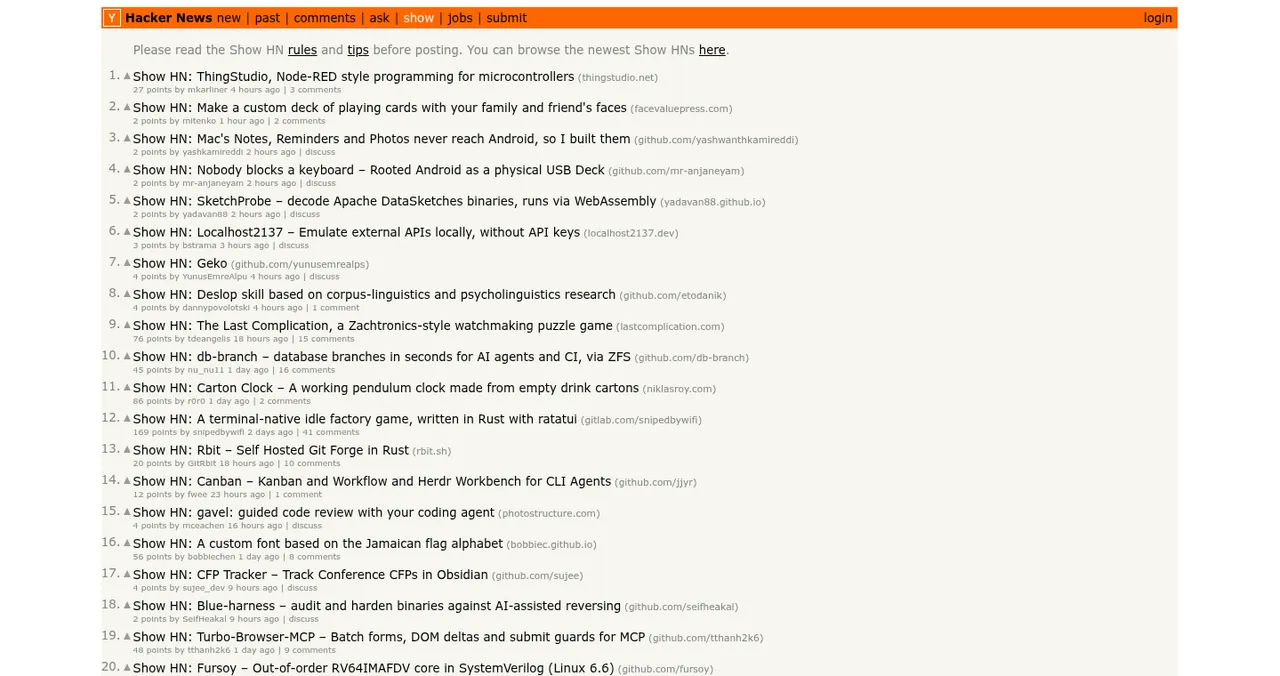
Hacker News (Show HN)
Candid developers, for things they can try right now.
FreeTry-it-now only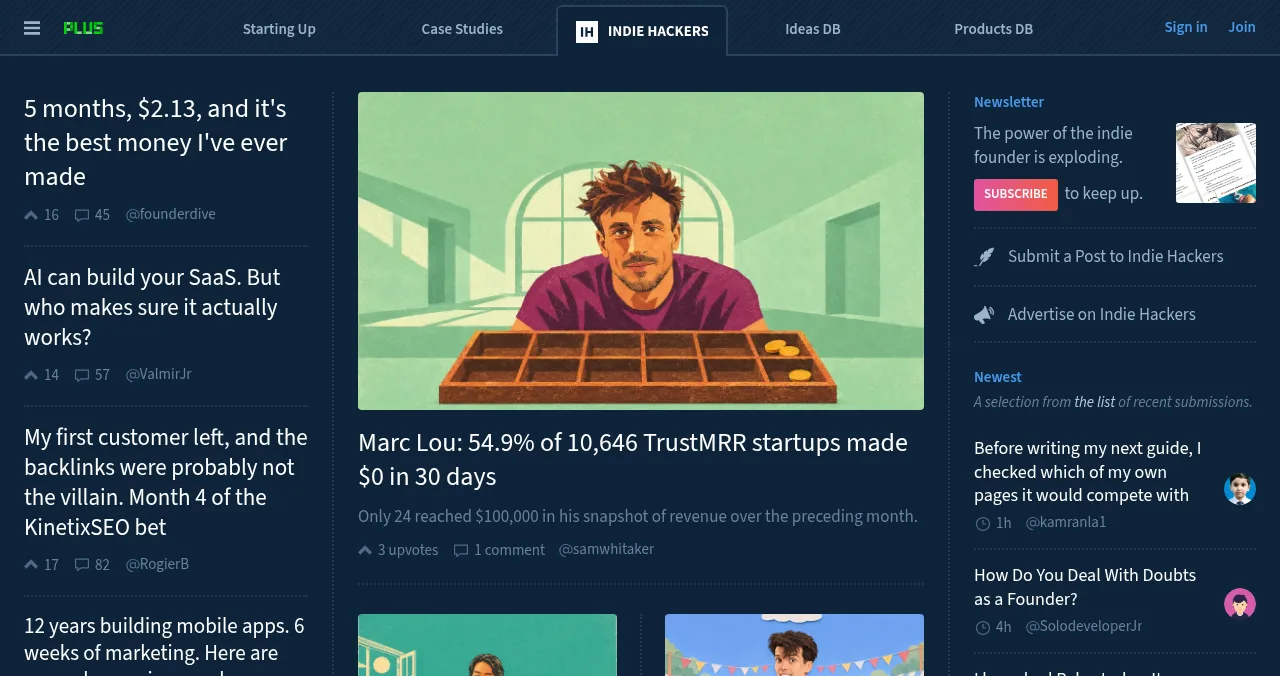
Indie Hackers
Founders who share revenue numbers; strong on business models.
FreeBuild in public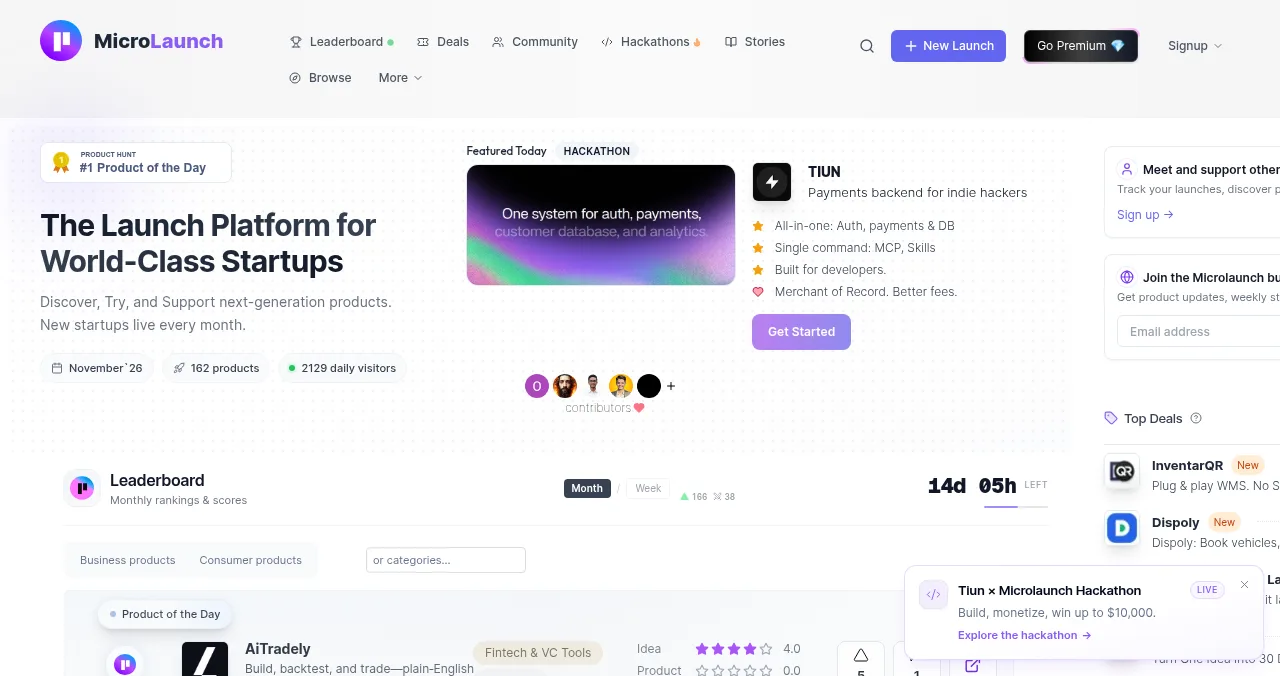
Microlaunch
30-day launches that collect feedback and "roasts".
From $4930 days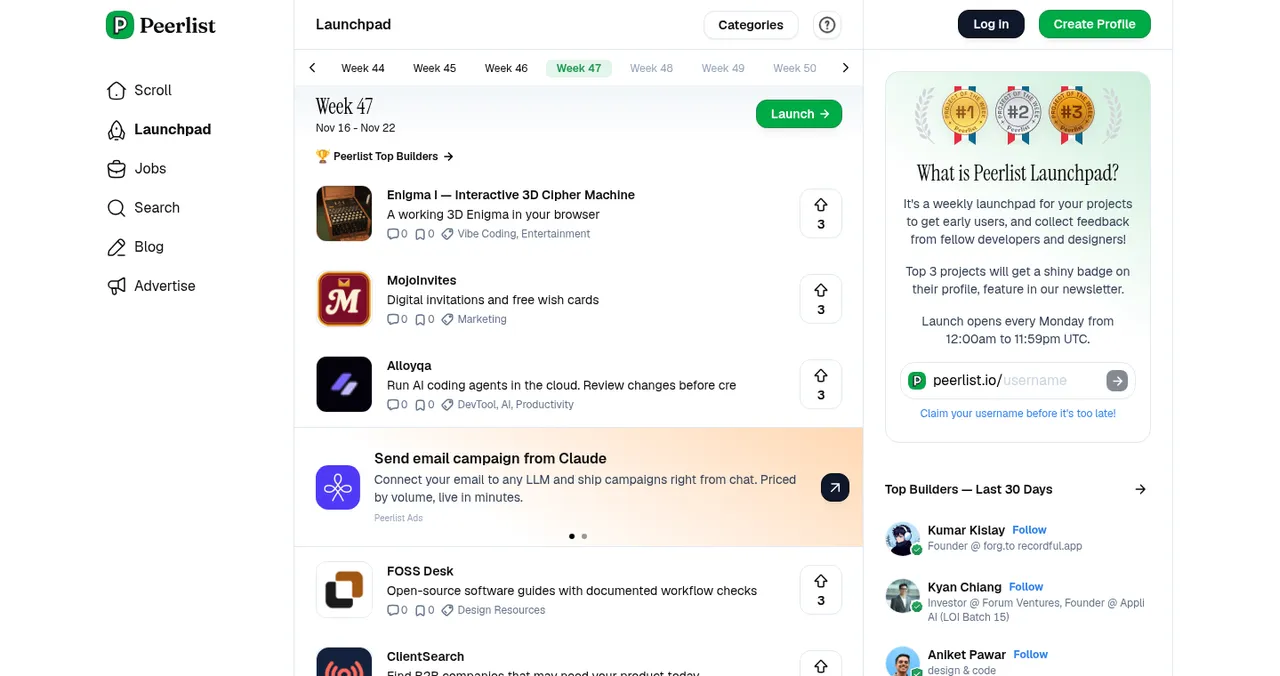
Peerlist Launchpad
A week of feedback from fellow builders.
FreeEvery Monday
Where to get your startup roasted
Each place suits a different stage. Pick by what you want roasted.
| Place | Best for roasting | Cost | What you get |
|---|---|---|---|
| r/roastmystartup | Ideas, landing pages, early products | Free | Blunt comments from strangers |
| Hacker News (Show HN) | Products people can try now | Free | Candid technical and product feedback |
| Indie Hackers | Business model, pricing, positioning | Free | Feedback from founders who share numbers |
| Microlaunch | A launch with feedback built in | From $49 | 30 days of visibility, reviews and "roasts" |
| Peerlist Launchpad | Side projects and MVPs | No fee mentioned | A week of comments from builders |
| Science of Apps Launchpad | Your live product, with evidence | Free listing | A product test and a detailed report |
Table: Where to get startup feedback, by what you want roasted (checked 17 Nov 2026)
r/roastmystartup: the subreddit built for it
r/roastmystartup is a subreddit where founders post a startup, idea or landing page and ask for blunt feedback. We pulled its top posts for the month to 17 November 2026: the highest scored under 10 points, but they drew up to 48 comments each, with a median of 18. That's the pattern to expect. Votes are low; detailed criticism is the payoff.
What the best-performing posts had in common:
- A one-line pitch in the title: "I built a logo maker that charges once instead of monthly. Roast it."
- Context in the body: who it's for, how it works, the price.
- Specific questions: "Is anything confusing between concepts and checkout?" "Would you trust it enough to pay $49.99?"
- A promise to reply: and then replying to every comment.
Read the subreddit's rules in the sidebar before posting; most founder communities remove drive-by links.
Hacker News (Show HN): candid, if people can try it
Show HN is for "something you've made that other people can play with". Its readers are mostly developers and technical founders, and the feedback can be blunt. The rules: no landing pages or sign-up pages, make it easy to try without an account, and don't ask friends to upvote or comment. Best for: developer tools and technical products.
Indie Hackers: roasts from founders who share numbers
Indie Hackers is a community where founders share the strategies and revenue numbers behind their companies and side projects. That makes it the best place to get your business roasted: pricing, positioning, channels and whether the numbers add up. Post as a story ("Month 3, $0 MRR, here's what I tried") rather than an ad, and ask what you'd change.
Microlaunch: a launch that collects roasts
Microlaunch runs 30-day launches and says you'll "receive honest feedback, roasts, and collect testimonials". Products on its leaderboard are scored separately on idea and product, with a count of roasts. Launch Pro costs $49 ($39 with the code on its page). Best for: a structured month of feedback around a launch.
Peerlist Launchpad: a week of builder feedback
Launches open every Monday and run a week, from verified individual builders; no fee is mentioned. Comments come from people who build things too. Best for: side projects and MVPs.
The evidence-based roast: Science of Apps Launchpad
- Listing
- Free, forever
- Tested
- In a real browser, desktop and mobile
- Findings
- Backed by evidence
- Checked by
- An analyst, before you see it
- Private
- Only your team sees it
Public roasts tell you what strangers think. The product test tells you what happens. List your product free on the Launchpad, and once it's live it's put through a full investigation: loaded in a real browser on desktop and mobile, measured automatically, and the screens behind your login reviewed by experts the way a new user meets them, from the search result and landing page to sign-up, onboarding, the core task, the paywall and settings.
Arrive
First impression
How findable you are on Google, AI assistants and social feeds; your landing page, pricing, trust signals; speed and stability.
Join
The first few minutes
Sign-up, sign-in and recovery, and onboarding to the first moment of value.
Use
The everyday job
The core task end to end, navigation, microcopy, and empty, loading and error states.
Pay
Where value turns into revenue
The paywall, upgrade and checkout.
Stay
What brings people back
Notifications, account, settings and help.
Every screen
Judged throughout
Accessibility to WCAG 2.2, and visual design and consistency.
Evidence for every finding
Backed by a measurement or pinned to the exact screen it came from. No roast without proof.
A verdict and a next step
Good, Needs improvement, Needs to be fixed, Critical or Recommendation, so you know what to fix first.
The reason behind it
Each finding cites the behavioural principle at work, from the 60 Laws of UX.
Checked by people
An analyst approves, edits or rejects every finding before it reaches you.
Private by default
Only your team sees it, and it never affects your listing's ranking.
Make your product live. Get it diagnosed today.
List free, and once it's live, order the report that fits your stage: what new customers see first, or the full diagnosis with a plan to fix it.

 Economy
See what new customers see
- Store listing and homepage, screen by screen
- Scorecard against 60 Laws of UX
- Customers, competitors and the fixes worth most
PremiumThe full diagnosis and the plan
- Every screen, every finding, every flow
- All 60 laws with evidence and fixes
- 8 strategy chapters and a 90-day roadmap
Both reports are researched from your live product and fact-checked against the evidence before they reach you.
How to write a "roast my startup" post

- One line that says what it is — "A budgeting app for couples who split rent", not "The future of money".
- Who it's for and where you are — "Six months in, 40 users, most stop at bank connection."
- A link people can use — no sales call, no waitlist if you can avoid it; a demo account if sign-up is heavy.
- What exactly to roast — two or three questions: the headline, the onboarding step where people drop, the price.
- One screenshot — of the screen you're asking about.
- Reply to everything — thank the harsh comments first; ask follow-ups ("what would you expect to see there?").
What useful feedback looks like
| Useful (act on it) | Not useful (thank and move on) |
|---|---|
| "Your headline doesn't say what it does." | "This will never work." |
| "I couldn't find the price before signing up." | "I'd never use this." |
| "Sign-up asked for my phone number first." | "Just use [big competitor]." |
| "I didn't know what to type in the empty box." | "Ugly design." |
Table: Roast feedback you can act on, and feedback you can't
Look for patterns: if three people mention the same screen, that's your fix. One-off opinions are noise. Harsh comments also tell you how strangers see you; people judge a product by how it looks before they try it (aesthetic-usability effect), and a confusing first screen loses people before they read anything (cognitive load).
Mistakes founders make when asking for a roast

- Asking "thoughts?" — vague questions get vague answers; ask about one thing
- Arguing with critics — defending yourself stops the feedback; ask "what would you expect?"
- Roasting a landing page as if it were the product — strangers can judge the pitch, not the product
- Treating a roast as validation — praise from non-buyers doesn't mean anyone will pay
- Posting a broken flow — test sign-up in a clean browser first
- Dropping a link and leaving — communities can tell, and they stop helping
Ready for an honest look?
How we know
We pulled the top r/roastmystartup posts for the month to 17 November 2026 (through ScrapeCreators' Reddit data) to see what kinds of posts get detailed feedback, and read Show HN's guidelines, Microlaunch's launch page and Peerlist's rules on 16–17 November 2026. Science of Apps runs the Launchpad and the product investigation described above.
Key terms, defined
- Roast: blunt, public feedback on a startup, idea or landing page.
- Show HN: a Hacker News post sharing something people can try, with a title that starts "Show HN".
- Build in public: sharing progress and numbers openly as you build.
- Product investigation: a structured test of a live product, screen by screen, with findings backed by evidence.
- Validation: evidence that people will use or pay for something, from conversations, sign-ups or pre-sales, not opinions.
Frequently asked questions
What is r/roastmystartup?
r/roastmystartup is a subreddit where founders post their startup, idea or landing page and ask for brutally honest feedback. In the month to 17 November 2026, its top posts had modest vote scores (under 10) but drew up to 48 comments each, which is the point: detailed criticism, not popularity. Read the subreddit's rules before posting.
Where can I get honest startup feedback?
For an idea: r/roastmystartup, Indie Hackers and founders you know. For a product people can try: Show HN and r/roastmystartup. For a launch with built-in feedback: Microlaunch or Peerlist. For evidence on your live product rather than opinions: a product test, such as the one included when you list free on Science of Apps Launchpad.
How do I write a 'roast my startup' post?
Say what it is in one line, who it's for, and what you want roasted: your landing page headline, the sign-up flow, or the price. Share a link people can use without a sales call, add one screenshot, and ask two or three specific questions. Then reply to every comment, especially the harsh ones.
Can AI roast my startup?
AI tools can give fast, general feedback on a landing page's clarity and copy, which is a cheap first pass. But they can't tell you where real users get stuck. Use AI to tidy the obvious, then get feedback from people who try the product and from an evidence-based test of the live flows.
Is it worth posting my startup idea for a roast before building?
Yes, for a sanity check, but don't treat it as validation. Strangers who will never pay can tell you what's unclear or what already exists, not whether people will buy. Validate with conversations and pre-sales from the people you're building for; see our guide to validating an app idea.
What makes a startup roast useful?
Specific, evidence-based criticism you can act on: 'your headline doesn't say what it does', 'I couldn't find pricing', 'sign-up asked for my phone number before I saw any value'. Vague hostility ('this will fail') isn't useful; thank the person and move on.
Sources
- Reddit — r/roastmystartup, top posts of the month (via ScrapeCreators, retrieved 17 Nov 2026)
- Hacker News — Show HN guidelines
- Indie Hackers — Homepage
- Microlaunch — Premium: how a launch works (checked 17 Nov 2026)
- Peerlist Help Center — Launchpad rules and guidelines
- Science of Apps — Product investigation: what we investigate and how
- Science of Apps — Launchpad: launch your product free
- Checked November 17, 2026. Figures that change — fees, salaries, prices — are reviewed every six months; if something is out of date, tell us.
Where to go from here
- How to validate an app idea — the step after the idea roast
- Top 5 websites to launch your startup free — where to launch once the roast is fixed
- 14 Product Hunt alternatives — launches that come with feedback
- Science of Apps - LaunchpadHow to get honest feedback on your startup idea: 10 places that work, and the questions that get useful answersHow to get honest feedback on a startup idea in 2027: customer interviews, r/roastmystartup, Indie Hackers, Peerlist, Show HN and the questions to ask.
- Science of Apps - LaunchpadHow to use Indie Hackers to launch and grow: what the community rewards, what to post, and how it fits with Product Hunt and Show HNHow to use Indie Hackers to launch: what the founder community rewards, posts that work, mistakes that get ignored, and where it fits with other launches.
- Science of Apps - LaunchpadThe best BetaList alternatives in 2027: ten places to find early adopters, most of them freeThe best BetaList alternatives for 2027: free and cheap places to find early adopters, from Peerlist and Uneed to Indie Hackers and Microlaunch, checked.
- Science of Apps - LaunchpadProduct Hunt vs Indie Hackers vs Hacker News: three very different communities, what each rewards, and where your startup should go firstProduct Hunt vs Indie Hackers vs Hacker News: a launch day, a founder community and a Show HN thread compared, with the rules and which to use first.
- Science of Apps - LaunchpadThe top 5 websites to launch your startup for free, checked against each site's own rulesThe 5 best free websites to launch a startup: Science of Apps Launchpad, Product Hunt, Show HN, Uneed and Peerlist, with costs, rules and who each one suits.
- Science of Apps - LaunchpadWhere to launch your startup in 2027: 24 launch sites, directories and communities, each checked on its own pages24 places to launch your startup in 2027, free and paid: launch sites, directories, AI directories, databases and communities, each checked and dated.





Get the ideas, not the noise.
Sign up with Google and we’ll send you short UX psychology tips by email — why people tap, stall and leave, and what to do about it. Unsubscribe anytime. Prefer something to keep? Get the free Laws of UX guide as a PDF.
Launch day ends. Your listing shouldn't.
An evidence-based roast of your live product: list it free on the Launchpad and get it tested end to end, with every finding backed by a measurement or pinned to the screen it came from.