 By
Quick answer: Where can I get honest feedback on my startup idea?
- Before building: 10–20 conversations with people who have the problem, about what they did last time.
- Blunt outside views: r/roastmystartup, Indie Hackers and founders you trust.
- Once it's tryable: Peerlist Launchpad, Microlaunch (feedback and roasts), Show HN for developer products.
- Evidence, not opinions: a product test of your live first version.
- Ask about the past: 'When did this last happen? What did you do?', not 'Would you use this?'.
Key takeaways
- The most useful feedback comes from people who have the problem, not from people who like startups.
- Ask about past behaviour; people are poor predictors of what they'd use or pay for.
- Public roasts catch unclear pitches and obvious competitors; they can't validate demand.
- Once a first version exists, feedback from people trying it beats any opinion about the idea.
- Look for patterns across many conversations; one enthusiastic person is noise.
Ask friends about your startup idea and they'll say it's great. Ask strangers on the internet and they'll say it's doomed. Neither tells you much. Useful feedback comes from the right people, asked the right way, at the right stage: people with the problem before you build, blunt outsiders on your pitch, and real users once something exists. This guide lists ten places that work, grouped by stage, and the questions that get honest answers. Jump to before you build, outside views, once it's tryable or the questions to ask.
Ten places to get feedback, by stage
| Stage | Where | What it's good for |
|---|---|---|
| Before you build | 1. People with the problem | Whether the problem is real and painful |
| 2. Your past colleagues and customers | Context and introductions | |
| Outside views | 3. r/roastmystartup | Blunt reactions to your pitch |
| 4. Indie Hackers | Founders' views on the business model | |
| 5. Founders you trust | Pattern-matching from experience | |
| 6. Niche communities | Whether the audience recognises the problem | |
| Once it's tryable | 7. Peerlist Launchpad | A week of builder feedback |
| 8. Microlaunch | 30 days of feedback and roasts | |
| 9. Show HN | Candid technical feedback, for things people can try | |
| 10. A product test | Evidence of where users get stuck |
Table: Where to get feedback on a startup idea, by stage
Before you build: talk to people with the problem

- List 30 people who have the problem. Not people who'd "find it interesting".
- Ask for 20 minutes to learn, not to pitch. "I'm researching how teams handle X."
- Ask about the past. "When did this last happen? What did you do? What did it cost? What have you tried?"
- Pitch only at the end, if at all. Watch for follow-up questions and requests to try it; those are signals.
- Write down exact words. The way people describe the problem becomes your headline later.
Outside views: blunt and fast
r/roastmystartup is a subreddit built for blunt feedback. In the month to 17 November 2026, its top posts scored under 10 points but drew up to 48 comments, so the value is in the comments. Ask specific questions and reply to everyone; see Roast my startup.
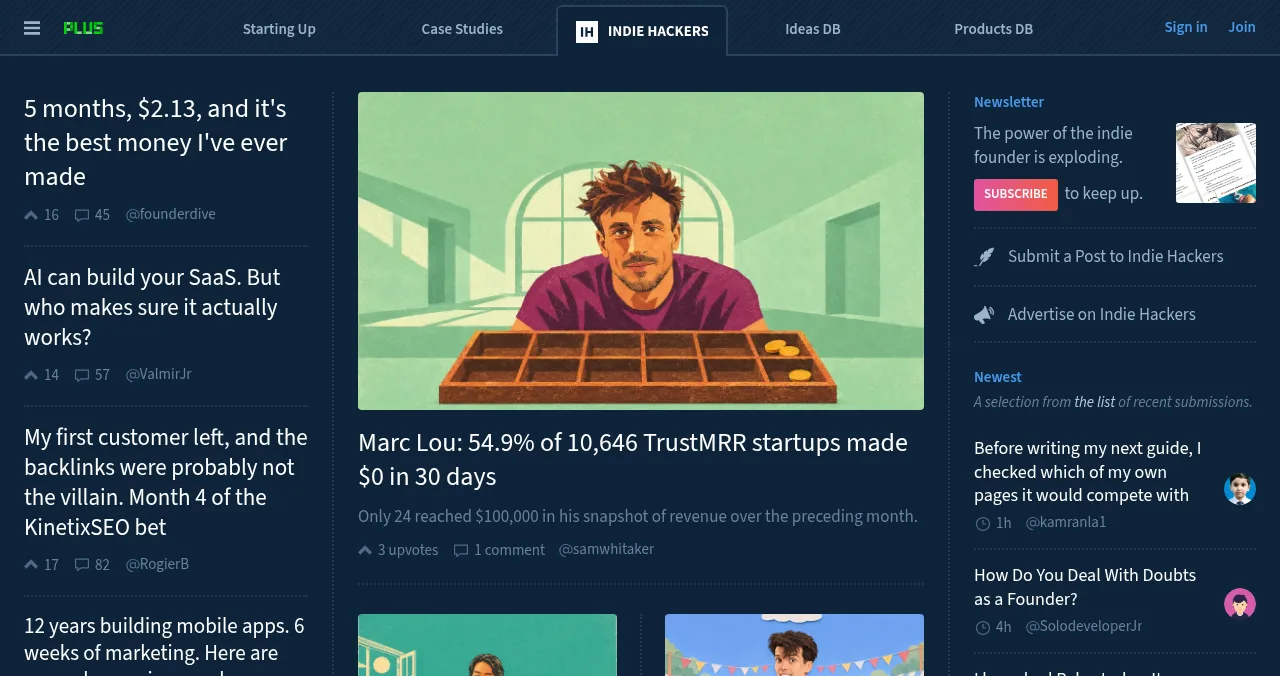
Indie Hackers is a free community of founders sharing strategies and revenue numbers: the best place to have your business model questioned. Post your reasoning and numbers, and ask what you're missing.
Founders you trust and niche communities where your users already talk round it out. In communities, help first and read the rules; most remove promotion.
Once it's tryable: real users
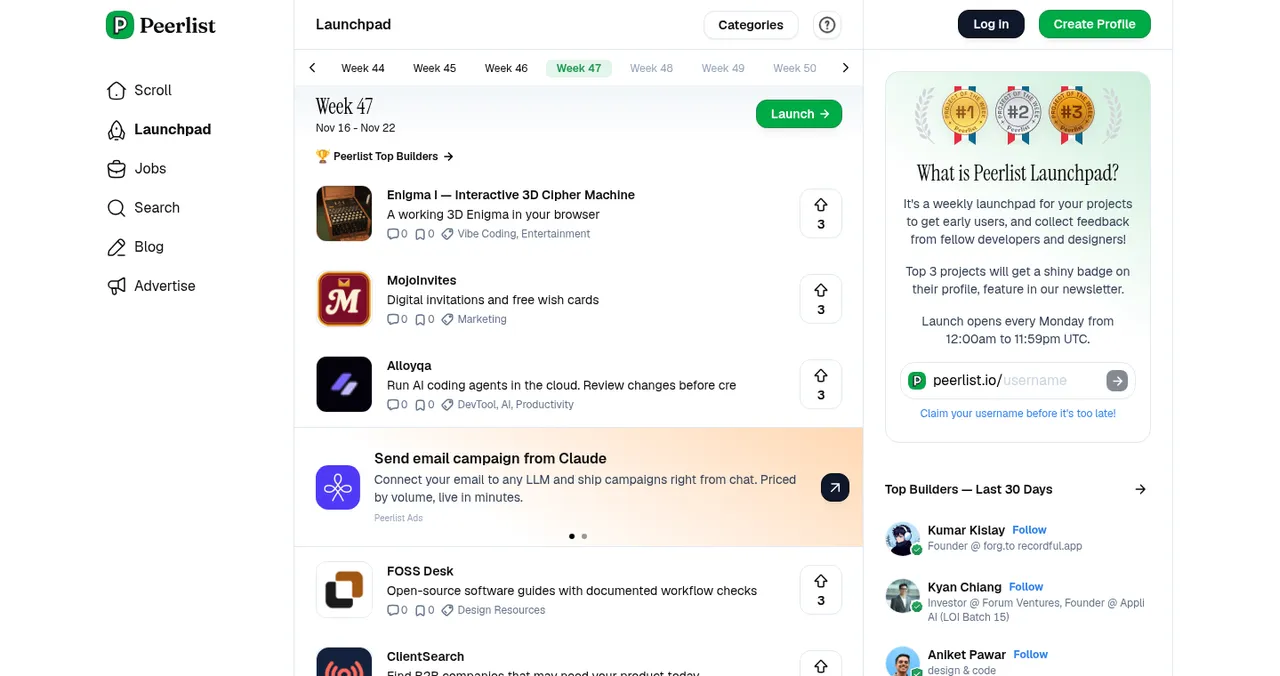
- Peerlist Launchpad: launches open every Monday and run a week, for verified individuals with a complete project; no fee is mentioned. Builders try projects and comment.
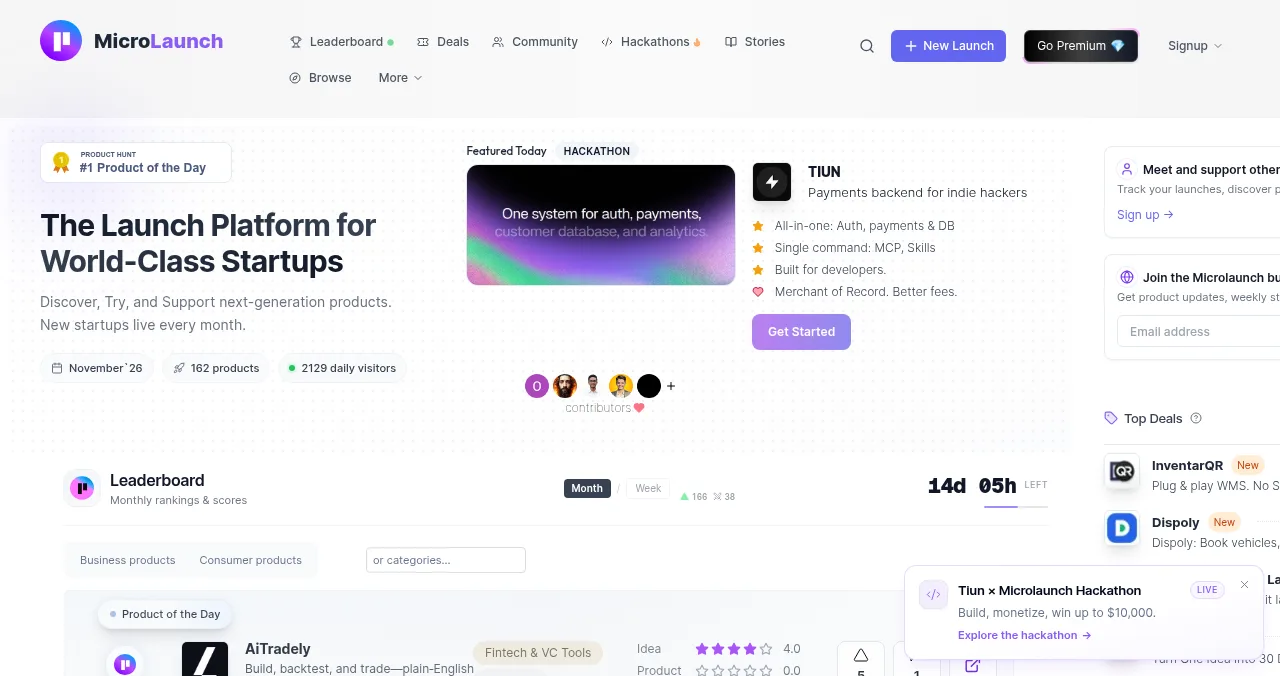
- Microlaunch: a paid 30-day launch (from $49) designed to collect "honest feedback, roasts, and testimonials".
- Show HN: free, for "something you've made that other people can play with"; not for landing pages or sign-up pages.
Evidence instead of opinions

Comments tell you what people think. A product test shows what happens. List your first version free on Science of Apps Launchpad, and once it's live it's tested end to end: loaded in a real browser on desktop and mobile, measured automatically and reviewed by experts, with each finding rated and approved by an analyst.
The questions that get honest answers
| Instead of… | Ask… |
|---|---|
| "Would you use this?" | "When did this problem last happen? What did you do?" |
| "Do you like the idea?" | "What have you already tried? What was wrong with it?" |
| "How much would you pay?" | "What do you spend on this today, in money or time?" |
| "Any feedback?" | "Where did you get confused? What did you expect to happen?" |
| "Is this a good idea?" | "Who else have you seen try to solve this?" |
Table: Questions that get honest feedback on a startup idea
Mistakes that waste feedback

- Asking people who don't have the problem — their opinions are guesses
- Pitching before listening — people become polite
- Treating compliments as validation — look for behaviour, not praise
- Arguing with critics — ask what they'd expect instead
- Acting on one voice — wait for patterns
Ready for real feedback?
How we know
Platform details come from Peerlist's help centre, Microlaunch's premium page and Show HN's guidelines (16–17 November 2026); the r/roastmystartup pattern from its top posts of the month to 17 November 2026. The interview approach is our editorial guidance, consistent with widely used customer-discovery practice. Science of Apps runs the Launchpad and the product investigation.
Key terms, defined
- Customer interview: a conversation with someone who has the problem, focused on their past behaviour.
- Feedback: opinions and reactions to an idea or product.
- Validation: evidence that people will use or pay, such as repeat use or pre-orders.
- Leading question: a question that suggests the answer you want.
- Roast: blunt, public feedback on a startup or pitch.
Frequently asked questions
Where can I get honest feedback on my startup idea?
From people who have the problem, in one-to-one conversations. For outside opinions: r/roastmystartup, Indie Hackers and experienced founders. Once something exists to try: Peerlist Launchpad, Microlaunch (which collects feedback and roasts), Show HN for developer products, and an evidence-based product test.
How do I ask for feedback without leading people?
Don't pitch first. Ask about the last time the problem happened, what they did, what it cost them and what they've tried. Only describe your idea at the end, and watch for specific follow-up questions, which signal real interest.
How many people should I talk to?
Enough to see patterns: often 10–20 conversations with people in one target group. If you hear the same problem described the same way repeatedly, you've learned something; if every conversation is different, narrow your audience.
Is feedback from Reddit useful?
For specific questions, yes: whether your pitch is clear, what competitors exist and what confuses people. It isn't validation, because most commenters aren't your customers. Read each subreddit's rules before posting.
What's the difference between feedback and validation?
Feedback is opinions and reactions. Validation is evidence that people will use or pay: repeat usage, pre-orders, a signed letter of intent, or people doing the workaround you'd replace. Collect feedback to improve; look for validation before you invest heavily.
How do I get feedback on a product, not just an idea?
Watch people use it, launch it where builders try new things (Peerlist, Microlaunch), post a Show HN if developers can try it, and get the live product tested end to end so you see where people get stuck, not just what they say.
Sources
- Reddit — r/roastmystartup, top posts of the month (via ScrapeCreators, retrieved 17 Nov 2026)
- Indie Hackers — Homepage
- Peerlist Help Center — Launchpad rules and guidelines
- Microlaunch — Premium: feedback and roasts over 30 days (checked 17 Nov 2026)
- Hacker News — Show HN guidelines
- Science of Apps — Product investigation: what we investigate and how
- Checked November 17, 2026. Figures that change — fees, salaries, prices — are reviewed every six months; if something is out of date, tell us.
Where to go from here
- How to validate an app idea — from feedback to evidence
- Roast my startup — how to post for blunt feedback
- Roast my landing page — 25 fixes with the reason for each
- Science of Apps - LaunchpadRoast my startup: the best places to get brutally honest feedback, and how to post so the roast is usefulWhere to get your startup roasted in 2027: r/roastmystartup, Show HN, Indie Hackers, Microlaunch and an evidence-based product test, and how to post.
- Science of Apps - LaunchpadStartup review: where founders can get an honest review of their startup free, from structured product reviews to Show HN, Indie Hackers and real users, and how to ask so people tell the truthWhere to get an honest startup review free: a structured product review, Show HN, Indie Hackers, Product Hunt and real users, and how to ask for feedback.
- Science of Apps - LaunchpadStartup showcase websites explained: showcase vs launch site vs directory, and the best places to show off what you built, from Peerlist and Indie Hackers to Show HN and permanent listingsStartup showcase websites explained: showcase vs launch site vs directory, and the best places to show what you built, from Peerlist to Show HN.
- Science of Apps - LaunchpadHow to use Indie Hackers to launch and grow: what the community rewards, what to post, and how it fits with Product Hunt and Show HNHow to use Indie Hackers to launch: what the founder community rewards, posts that work, mistakes that get ignored, and where it fits with other launches.
- Science of Apps - LaunchpadThe best BetaList alternatives in 2027: ten places to find early adopters, most of them freeThe best BetaList alternatives for 2027: free and cheap places to find early adopters, from Peerlist and Uneed to Indie Hackers and Microlaunch, checked.
- Science of Apps - LaunchpadWhat is Hacker News? A founder's guide to HN: who runs it, how ranking works, what Show HN, Ask HN and Launch HN are, the rules that matter, and how startups use it without getting flaggedWhat Hacker News is, who runs it, how its ranking works and how startups use Show HN, Ask HN and comments without breaking the rules. Checked Nov 2026.





Get the ideas, not the noise.
Sign up with Google and we’ll send you short UX psychology tips by email — why people tap, stall and leave, and what to do about it. Unsubscribe anytime. Prefer something to keep? Get the free Laws of UX guide as a PDF.
Launch day ends. Your listing shouldn't.
Once you have a live product, list it free and get evidence-based feedback: your product tested end to end, with every finding backed by a measurement or pinned to the screen it came from.