 By
Quick answer: Where can I showcase my startup?
- Showcase: a lasting page to show what you built.
- Launch site: a one-day or one-week moment.
- Directory: a category listing for browsers.
- Best showcases: Peerlist, Indie Hackers, Show HN, Product Hunt, Launchpad.
- Do both: a showcase page plus a launch moment.
Key takeaways
- Showcases build credibility over time; launches spike.
- Pick showcases where your peers or users already look.
- Real screenshots and a short story beat a pitch.
- Keep every showcase linked to one permanent product page.
- Update your showcase when you ship something new.
You built something and want people to see it, but "launch" sounds like a bigger event than you're ready for. That's what showcase websites are for: lasting pages where peers and early users can see what you made, how, and why. They sit between launch sites (a one-day moment) and directories (category listings for browsers). This guide explains the difference and lists five good places to showcase a startup, from each site as checked on 16–17 November 2026. Jump to showcase vs launch vs directory, the list or a good showcase page.
- Kinds of site: showcase, launch, directory
- 3
- Showcases in this list
- 5
- Cost to post on all five
- $0
- Permanent product page to link from each
- 1
Showcase vs launch site vs directory
| Type | What it's for | How long it matters | Examples |
|---|---|---|---|
| Showcase | Showing your work to peers and users | Ongoing | Peerlist profile, Indie Hackers product page |
| Launch site | A launch moment with votes and comments | A day or a week | Product Hunt, Peerlist Launchpad, Show HN |
| Directory | Category listings for people browsing | Ongoing | SaaSHub, AlternativeTo, AI tool directories |
Table: Showcase, launch site and directory compared (editorial framework)
Where to showcase your startup
1. Peerlist
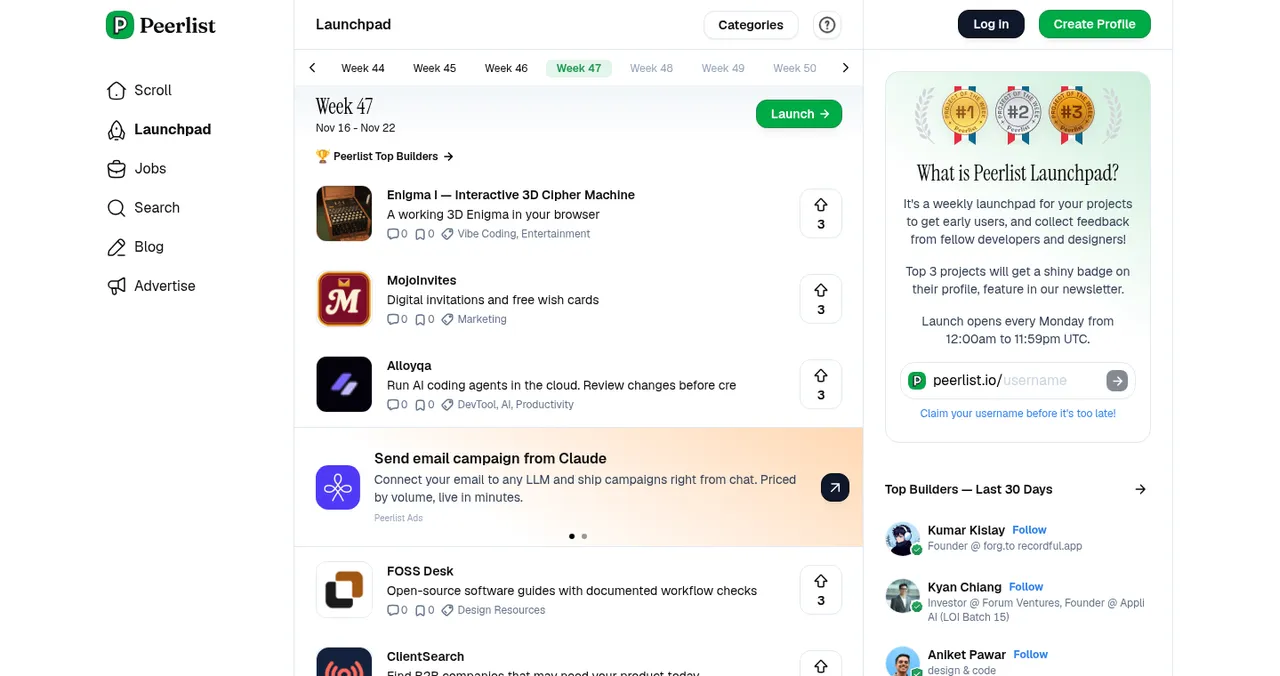
A network for builders with profiles that show your projects, plus a Launchpad that runs a new launch week every Monday. Best for: builders showing work to peers (Peerlist Launchpad alternatives).
2. Indie Hackers
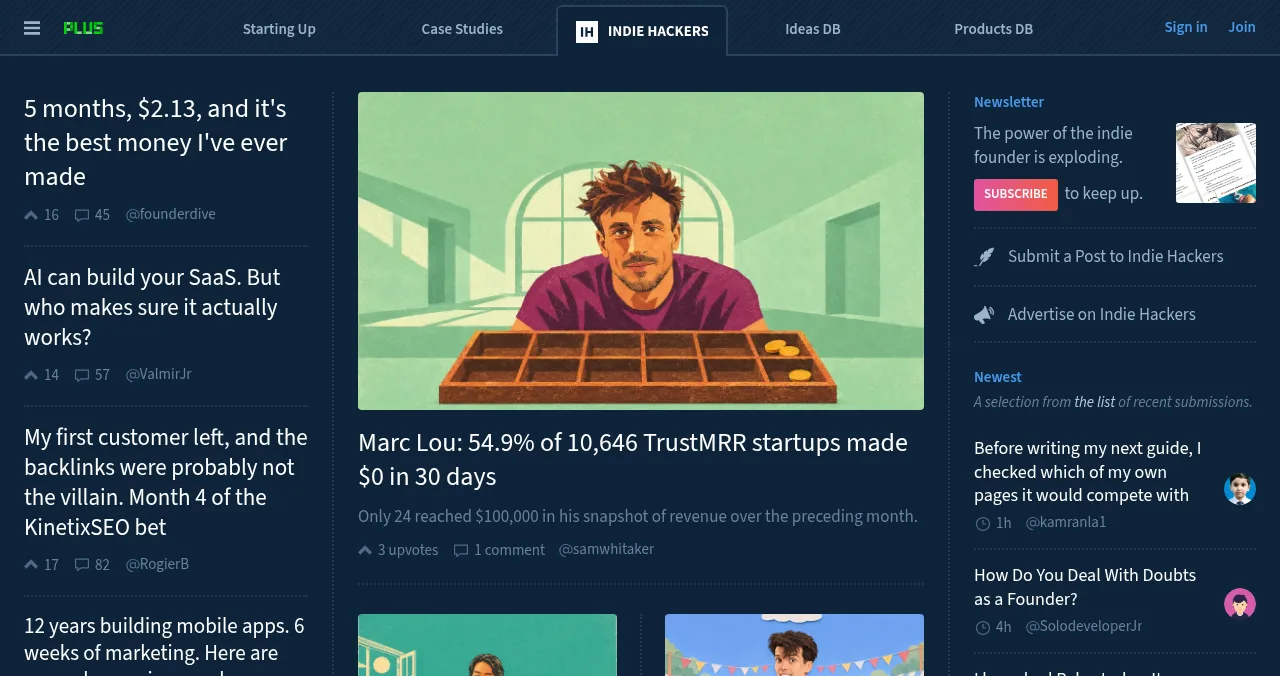
Share your product and the story behind it: numbers, decisions, lessons. Best for: bootstrapped founders and work in progress (Indie Hackers guide).
3. Show HN
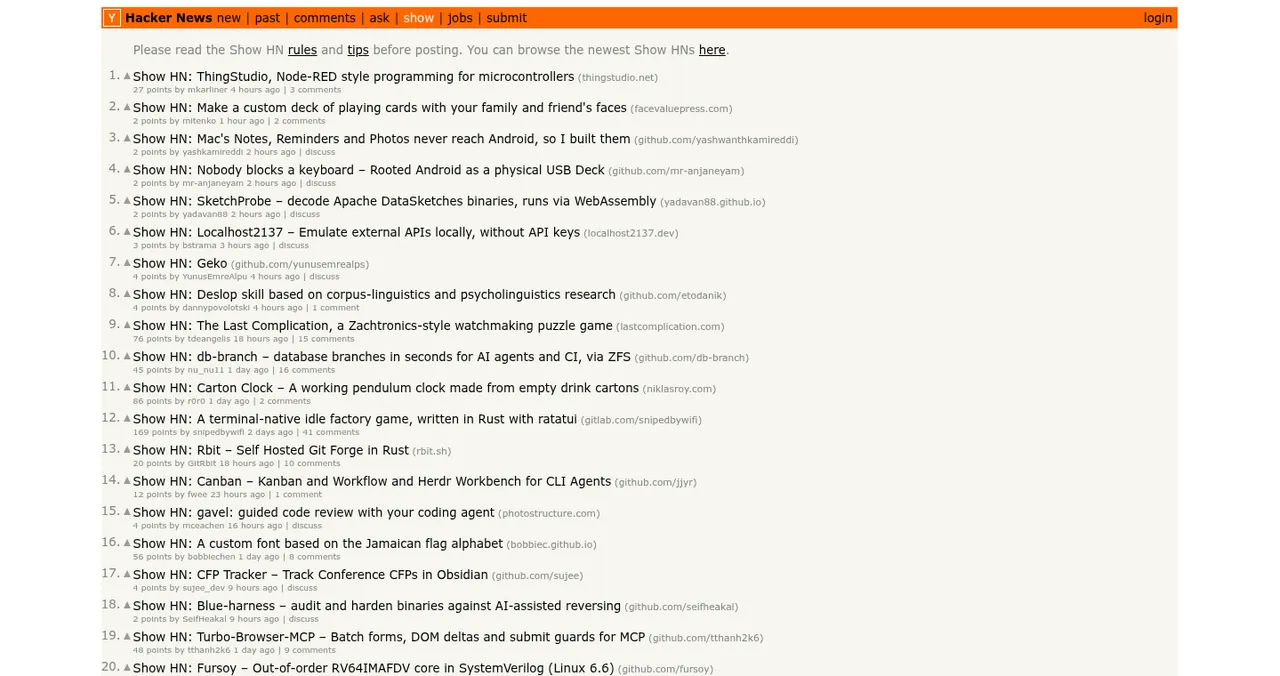
For things people can try right now; landing pages and sign-up walls don't qualify. Best for: technical products (Show HN guide).
4. Product Hunt
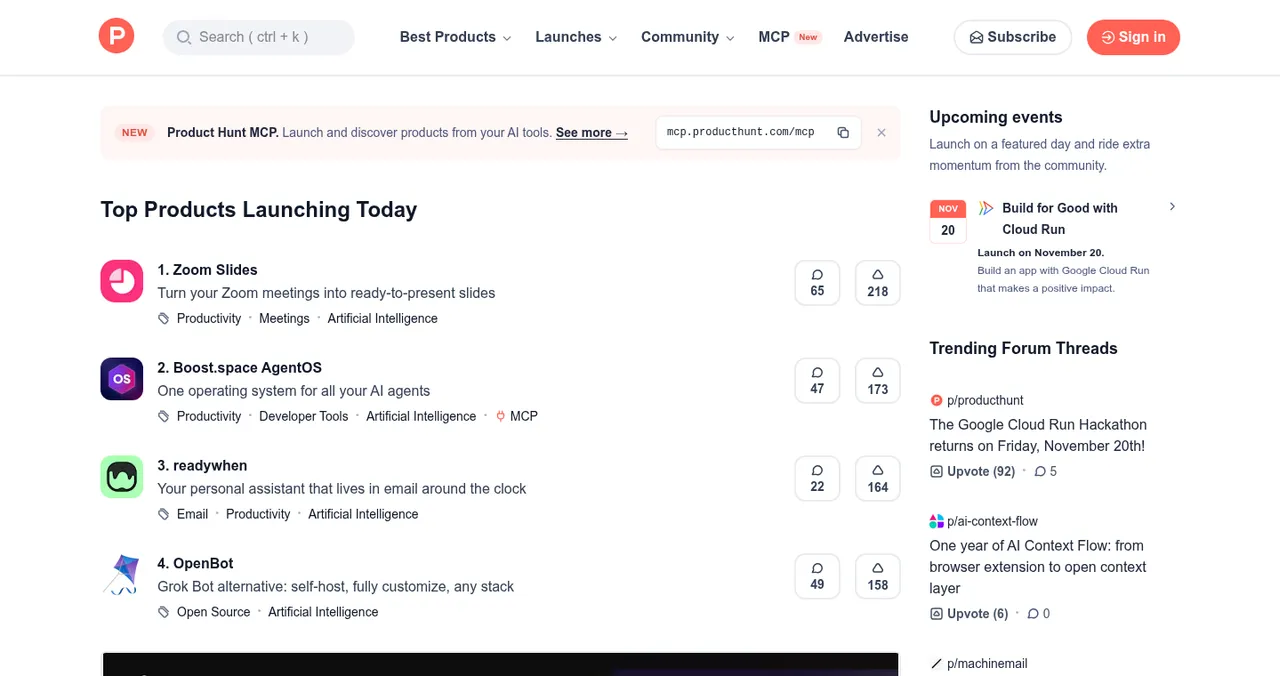
A launch day plus a product page that stays up afterwards, with reviews and a badge. Best for: a bigger moment when you're ready (launch guide).
5. Science of Apps Launchpad
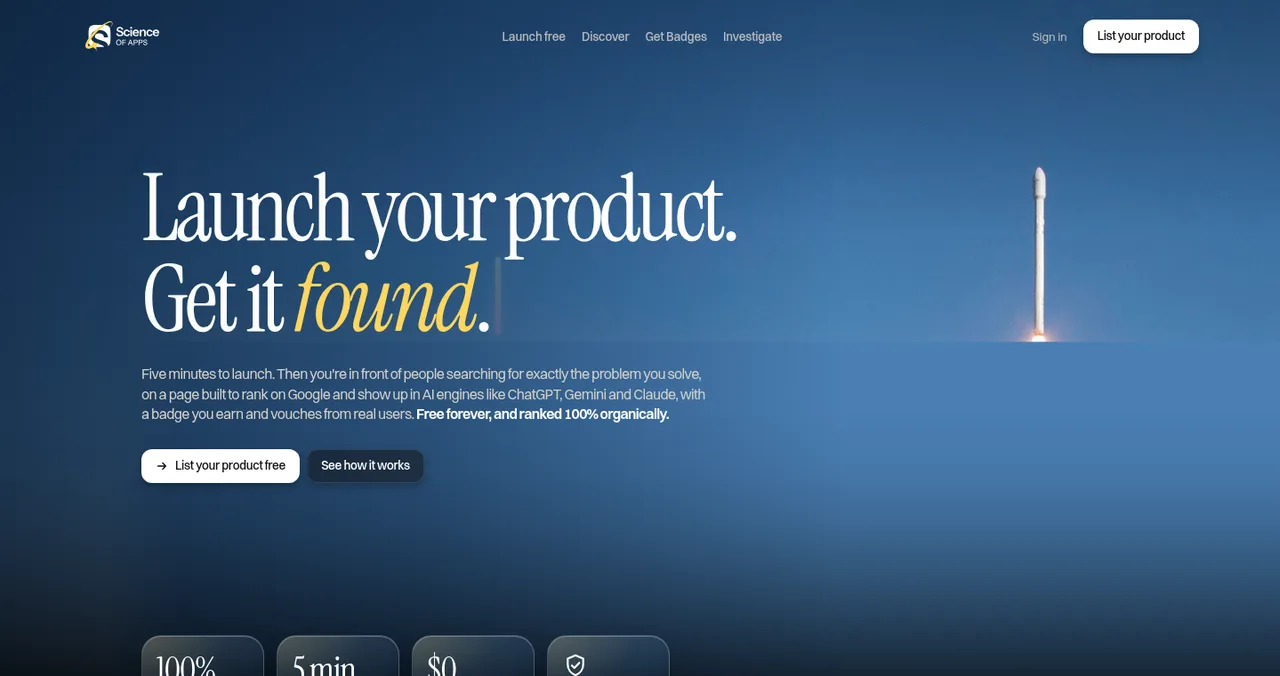
A free, permanent profile with screenshots, a description and links, found by the problem you solve. Best for: the page every other showcase links to.
What a good showcase page has

- A one-line description — what it does, for whom
- Three real screenshots or a short demo — the product working
- The story — why you built it, in a few sentences
- Who it's for — so the right people stop scrolling
- One clear link — to try it or join the waitlist
- Recent updates — what you shipped lately
Mistakes

- Mockups instead of the real product — show what exists
- A pitch instead of a story — peers want the how and why
- Different descriptions everywhere — one one-liner
- Never updating — a stale showcase looks abandoned
Ready to show it off?
How we know
Site details come from each site's own pages and our earlier verified guides, read on 16–17 November 2026. The showcase / launch / directory framework and the page checklist are our editorial guidance.
Key terms, defined
- Startup showcase: a lasting page showing what you built.
- Launch site: a site for a time-limited launch moment.
- Directory: a site listing products by category.
- Build in public: sharing progress openly.
- One-liner: a single sentence saying what you do and for whom.
Frequently asked questions
Where can I showcase my startup?
Peerlist (builder profiles and a weekly Launchpad), Indie Hackers (your product and the story behind it), Show HN for things people can try now, Product Hunt for a launch and lasting product page, and a permanent listing like the Science of Apps Launchpad.
What's the difference between a showcase, a launch site and a directory?
A showcase is a lasting page to show your work to peers and users; a launch site creates a one-day or one-week moment; a directory lists products by category for people browsing. Many sites mix all three.
Where can I post my startup for free?
Peerlist, Indie Hackers, Show HN, Product Hunt and the Science of Apps Launchpad are free to post on. Follow each community's rules on self-promotion.
Should I showcase a startup before it's finished?
Yes, on showcases built for work in progress (Indie Hackers, build-in-public posts). Save Show HN and launch days for when people can try it.
How do I make a good showcase page?
A one-line description, three real screenshots or a short demo, the story of why you built it, who it's for, and one clear link to try it.
Do showcase websites help SEO?
They add pages that describe and link to your product, which helps people and search engines find you. Many use nofollow or ugc links; the visitors still count.
Sources
- Peerlist — Launchpad
- Indie Hackers (checked 17 Nov 2026)
- Hacker News — Show HN guidelines
- Product Hunt Help Center — 4. Build your product page (checked 17 Nov 2026)
- Science of Apps — Launchpad: launch your product free
- Checked November 17, 2026. Figures that change — fees, salaries, prices — are reviewed every six months; if something is out of date, tell us.
Where to go from here
- Places to launch a startup — launch moments
- Free startup directories — category listings
- Build in public — show the work
- Science of Apps - LaunchpadWhere to launch a product built with no-code: platform showcases (Made in Webflow, Bubble's showcase), launch sites, founder communities and a permanent listingWhere to launch a product built with no-code: Made in Webflow, Bubble's showcase, Product Hunt, Indie Hackers and a free permanent listing.
- Science of Apps - LaunchpadHow to launch a side project: where to post it (Show HN, Product Hunt, Indie Hackers, a permanent listing), how to launch on limited hours, and the signals it could be a startupHow to launch a side project on limited hours: where to post it (Show HN, Product Hunt, Indie Hackers, a listing) and signs it could be a startup.
- Science of Apps - LaunchpadThe top 5 websites to launch your startup for free, checked against each site's own rulesThe 5 best free websites to launch a startup: Science of Apps Launchpad, Product Hunt, Show HN, Uneed and Peerlist, with costs, rules and who each one suits.
- Science of Apps - LaunchpadThe best BetaList alternatives in 2027: ten places to find early adopters, most of them freeThe best BetaList alternatives for 2027: free and cheap places to find early adopters, from Peerlist and Uneed to Indie Hackers and Microlaunch, checked.
- Science of Apps - LaunchpadRoast my startup: the best places to get brutally honest feedback, and how to post so the roast is usefulWhere to get your startup roasted in 2027: r/roastmystartup, Show HN, Indie Hackers, Microlaunch and an evidence-based product test, and how to post.
- Science of Apps - LaunchpadHow to get honest feedback on your startup idea: 10 places that work, and the questions that get useful answersHow to get honest feedback on a startup idea in 2027: customer interviews, r/roastmystartup, Indie Hackers, Peerlist, Show HN and the questions to ask.


Get the ideas, not the noise.
Sign up with Google and we’ll send you short UX psychology tips by email — why people tap, stall and leave, and what to do about it. Unsubscribe anytime. Prefer something to keep? Get the free Laws of UX guide as a PDF.
Launch day ends. Your listing shouldn't.
A free, permanent Launchpad profile showcases your product with screenshots, a description and links, found by the problem you solve and ranked by relevance, never payment.