 By
Quick answer: Does building in public work?
- What: progress, real numbers, decisions, mistakes.
- Where: where your users are, not just where founders are.
- How often: one weekly update you can sustain.
- Numbers: one or two you're comfortable keeping public.
- Convert: every post links to a page people can try.
Key takeaways
- An audience of other founders only helps if founders are your customers.
- Consistency beats virality.
- Honest numbers, including bad ones, build trust.
- Decide what stays private before you start.
- Measure sign-ups from posts, not likes.
"Day 47 of building in public: 3 users, $0 MRR, still shipping." Thousands of these posts go out every week, and most reach the same few hundred founders, who like them, reply "keep going" and never become users. Building in public isn't the problem. Building in front of the wrong audience, with nothing to click, is. Done well, it gives you early users, honest feedback and a launch day where people already know your name. This guide covers what to share, where, how often, which numbers to publish and how to turn readers into users. Jump to what to share, the weekly template or turning followers into users.
- Update a week, sustained
- 1
- Real numbers per update
- 1–2
- Link to a page people can try
- 1
- Customer data or secrets shared
- 0
Does building in public work?
It works when your readers are your customers. If you sell to designers, posts that designers read bring users; posts only founders read bring encouragement. Decide who you're building for, then go where they are.

What you gain
- Early users and feedback before launch
- Trust from visible, honest progress
- A warm audience on launch day
- Accountability to keep shipping
What it costs
- Time each week
- Competitors see your playbook
- Bad weeks are public
- An audience of peers, if you aim it wrong
What to share

- What you shipped — with a screenshot or a 20-second clip
- One or two numbers — the same ones every week
- A decision and why — pricing, a feature cut, a channel dropped
- A mistake — and what you changed
- A question for readers — the best source of feedback
- What's next — so they come back
Keep private: customer names and data without permission, security details, unannounced deals, and anything you're not ready to defend.
Which numbers to publish
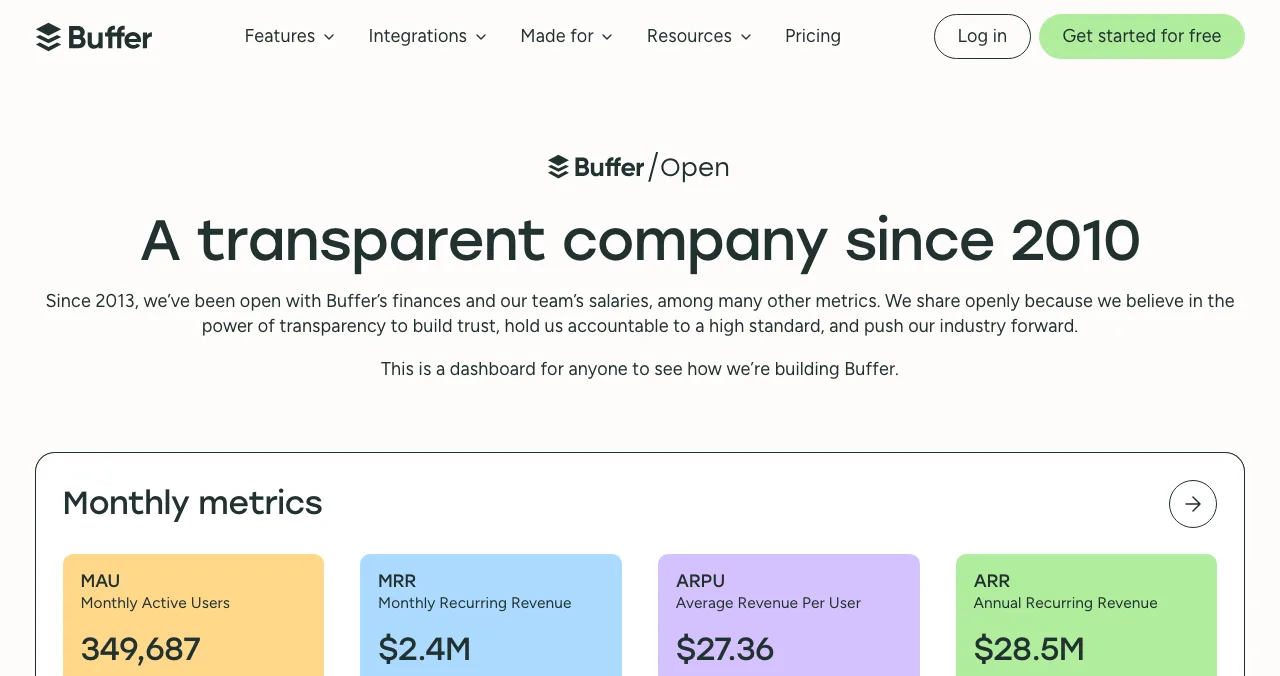
Buffer says it has shared its finances and salaries openly since 2013, with a dashboard of monthly active users, MRR, ARPU and ARR. You don't need to go that far. Pick numbers you'll keep sharing when they fall.
| Stage | Numbers worth sharing |
|---|---|
| Pre-launch | Waitlist sign-ups, interviews done |
| Just launched | Weekly sign-ups, activation rate |
| Early revenue | MRR, paying customers, churn |
| Growing | Active users, revenue by channel |
Table: Numbers to share when building in public, by stage (editorial guidance)
Where to build in public
| Channel | Best for | Format |
|---|---|---|
| B2B buyers | Weekly post with one chart | |
| X | Tech and developer audiences | Short updates, threads |
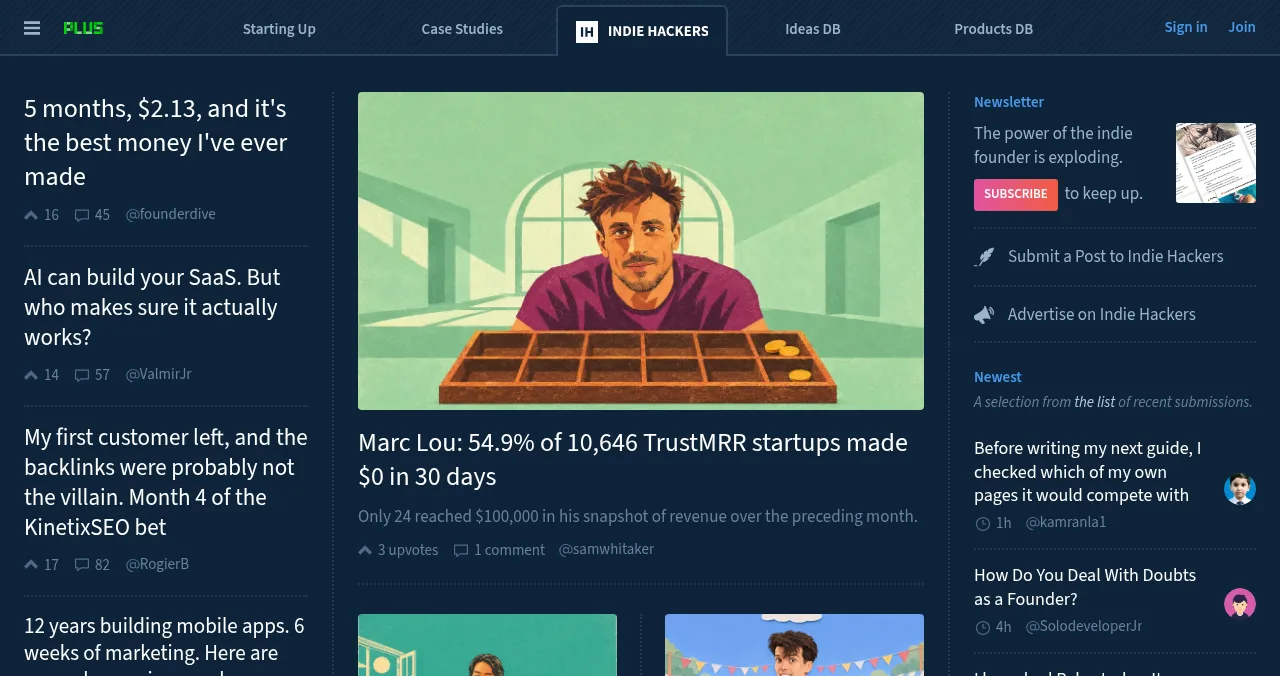
| Indie Hackers | Founders and makers | Monthly milestone posts |
| Show HN | Developers, once it's tryable | One launch post |
| Your blog or listing | Everyone, permanently | Weekly or monthly changelog |
Table: Where to build in public (editorial guidance; check each community's rules)
The weekly update template
Week [n] of [product]: [one-line headline] Shipped: [feature], [screenshot] Numbers: [metric] [this week] (last week [x]) Learned: [one lesson in two sentences] Question: [one thing you want readers' input on] Try it: [link to your product page]
Turning followers into users

- Link every post — to one product page, not your profile.
- Invite, don't just report — "Looking for 10 clinics to try this" beats "Day 47".
- Reply to every comment — that's where users come from.
- Collect emails — a waitlist or newsletter, so you're not dependent on one platform.
- Measure sign-ups by source — UTM links per channel.
- Launch to the audience — they've watched it being built; ask them on launch day.
Mistakes

- Writing for founders when you sell to someone else
- Vanity numbers — followers and impressions instead of users
- Posting daily, then stopping — weekly and steady wins
- No link — every post is a dead end
- Oversharing — customer data and security details stay private
Ready to build in public?
How we know
Buffer's open-metrics details come from its public dashboard, read on 17 November 2026. The template, channel table and stage-by-stage numbers are our editorial guidance; check each community's rules before posting.
Key terms, defined
- Build in public: sharing a startup's progress and numbers openly.
- MRR: monthly recurring revenue.
- Activation rate: the share of new users who reach a first result.
- UTM link: a link tagged so analytics shows where a visit came from.
- Changelog: a public list of what changed in the product.
Frequently asked questions
What is building in public?
Sharing the process of building your startup openly: what you shipped, numbers like users or revenue, decisions and mistakes, usually in regular posts on social media, a blog or a community like Indie Hackers.
Does building in public work?
It works when your audience overlaps with your customers and posts link to something people can use. It can build trust, bring early users and feedback, and make launches easier. It doesn't work when you only reach other founders selling to someone else.
What should I share when building in public?
What you shipped this week, one or two real numbers, a decision you made and why, something that went wrong, and what's next. Skip customer data, security details and anything you'd regret competitors seeing.
Which metrics should I share?
Ones you can keep sharing when they go down: weekly active users, MRR, sign-ups or a key activation rate. Buffer, for example, shows MRR, ARR, active users and ARPU on a public dashboard.
Where should I build in public?
Where your customers spend time: LinkedIn for B2B buyers, X for tech audiences, Indie Hackers for founders, Reddit or niche communities for specific users. Cross-post a weekly summary to your own blog or listing so it lasts.
What are the risks of building in public?
Competitors see your playbook, bad weeks are visible, and it can eat time. Decide upfront what stays private and cap the time you spend on it.
Sources
- Buffer — Open metrics (checked 17 Nov 2026)
- Indie Hackers
- Hacker News — Show HN guidelines
- Science of Apps — Launchpad: launch your product free
- Checked November 17, 2026. Figures that change — fees, salaries, prices — are reviewed every six months; if something is out of date, tell us.
Where to go from here
- Indie Hackers guide — a home for the build
- Social proof — why openness builds trust
- Validate your app idea — before you build
- Science of Apps - LaunchpadHow to use Indie Hackers to launch and grow: what the community rewards, what to post, and how it fits with Product Hunt and Show HNHow to use Indie Hackers to launch: what the founder community rewards, posts that work, mistakes that get ignored, and where it fits with other launches.
- Science of Apps - LaunchpadHow to launch a side project: where to post it (Show HN, Product Hunt, Indie Hackers, a permanent listing), how to launch on limited hours, and the signals it could be a startupHow to launch a side project on limited hours: where to post it (Show HN, Product Hunt, Indie Hackers, a listing) and signs it could be a startup.
- Science of Apps - LaunchpadRoast my startup: the best places to get brutally honest feedback, and how to post so the roast is usefulWhere to get your startup roasted in 2027: r/roastmystartup, Show HN, Indie Hackers, Microlaunch and an evidence-based product test, and how to post.
- Science of Apps - LaunchpadGame launch platforms for indie developers: Steam ($100 per game, recoupable), itch.io (open revenue sharing), the mobile app stores, and where to find beta testersGame launch platforms for indie developers: Steam's $100 fee and coming-soon rule, itch.io's open revenue share, app stores and beta testers.
- Science of Apps - LaunchpadHow to launch a startup in 2027: from a validated problem to a working product, a public launch and your first customersHow to launch a startup in 2027, step by step: validate the problem, build a small product, test it, publish a permanent page, launch and win first users.
- Science of Apps - LaunchpadHow to get honest feedback on your startup idea: 10 places that work, and the questions that get useful answersHow to get honest feedback on a startup idea in 2027: customer interviews, r/roastmystartup, Indie Hackers, Peerlist, Show HN and the questions to ask.






Get the ideas, not the noise.
Sign up with Google and we’ll send you short UX psychology tips by email — why people tap, stall and leave, and what to do about it. Unsubscribe anytime. Prefer something to keep? Get the free Laws of UX guide as a PDF.
Launch day ends. Your listing shouldn't.
A free, permanent Launchpad profile is the public home for your build: every post links to it, people find it by the problem you solve, and it's ranked by relevance, never payment.