 By
Quick answer: What are the top websites to launch my startup?
- Every product: start with one permanent page, such as a free Science of Apps Launchpad listing.
- SaaS: Product Hunt, then SaaSHub and Uneed.
- AI tools: Product Hunt, Future Tools (free), then one paid AI directory.
- Developer tools and open source: Show HN and DevHunt, then Peerlist.
- Mobile apps and extensions: your permanent page, then Product Hunt and AlternativeTo.
- Side projects and MVPs: Peerlist Launchpad, Uneed's free line and Fazier's free tier.
Key takeaways
- The best launch site is the one whose audience matches your product; a dev tool on a consumer launch day wastes the day.
- Every launch is temporary except your own permanent page, so publish that first and link every launch back to it.
- Three sites done well beat ten done badly: a complete listing and replies to every comment matter more than reach.
- Most of the top launch sites are still free; paid options mainly buy timing and placement.
- After launch week, fix what new users struggled with before you launch again.
"Where should I launch my startup?" gets a list of a hundred sites as an answer, and that's the problem. You don't need a hundred. You need the three that match what you built, plus one page that keeps working after launch day. This shortlist picks them by product type: SaaS, AI tools, developer tools and open source, mobile apps and browser extensions, and side projects. Every site's rules and fees come from its own pages, checked on 16 and 17 November 2026. Jump to the decision tree, the shortlist table or the launch plan.
The top websites to launch a startup
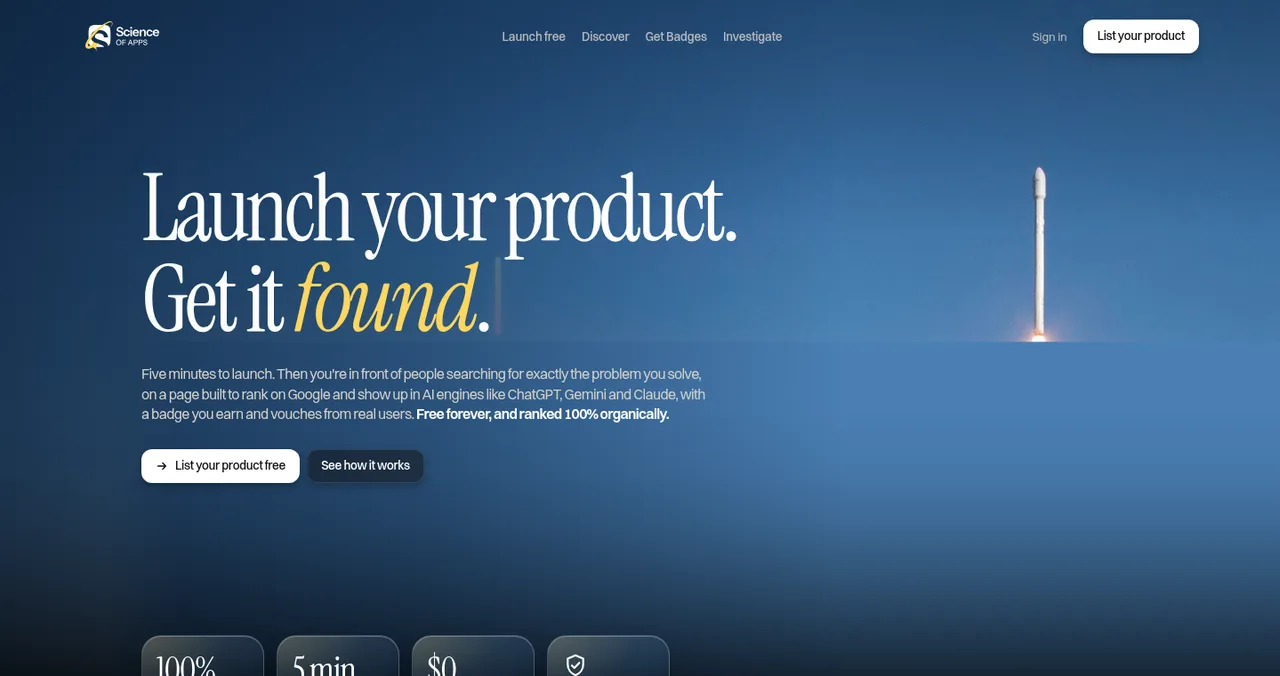 Launch free
Science of Apps Launchpad Start here
Your permanent home base, plus your product tested and a detailed report.
Free foreverEvery product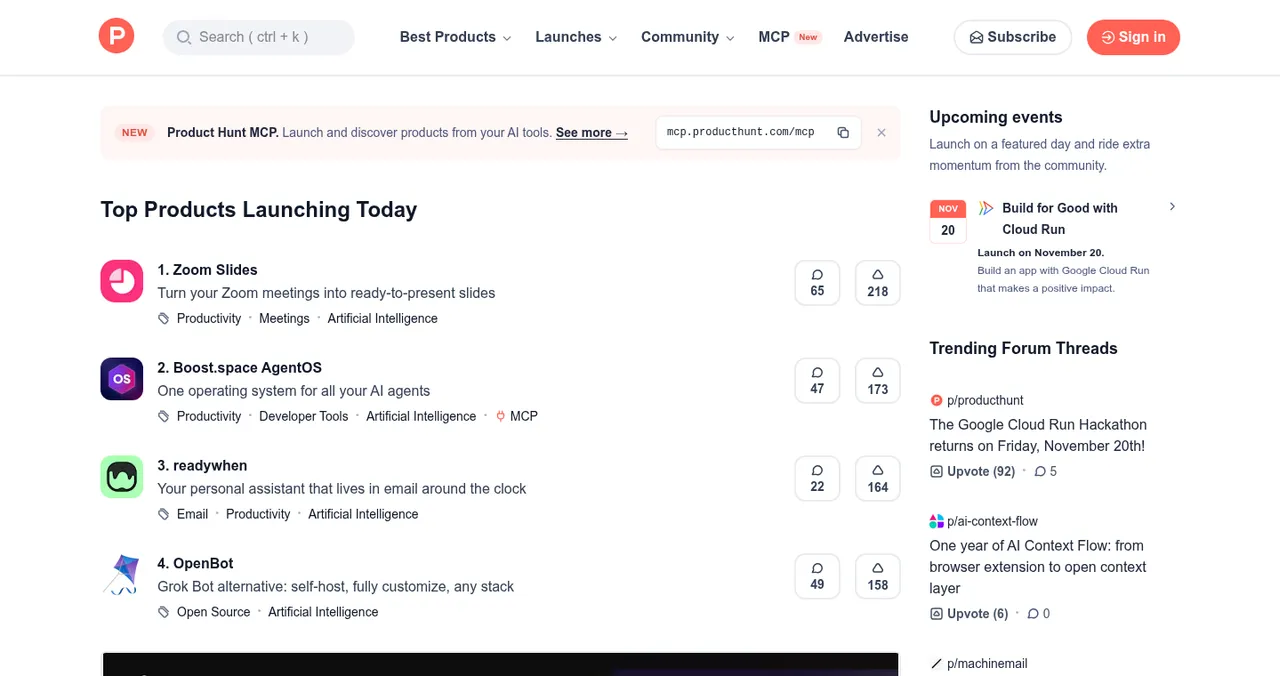
Product Hunt
The biggest single launch day for polished SaaS, AI and consumer apps.
FreeOne big day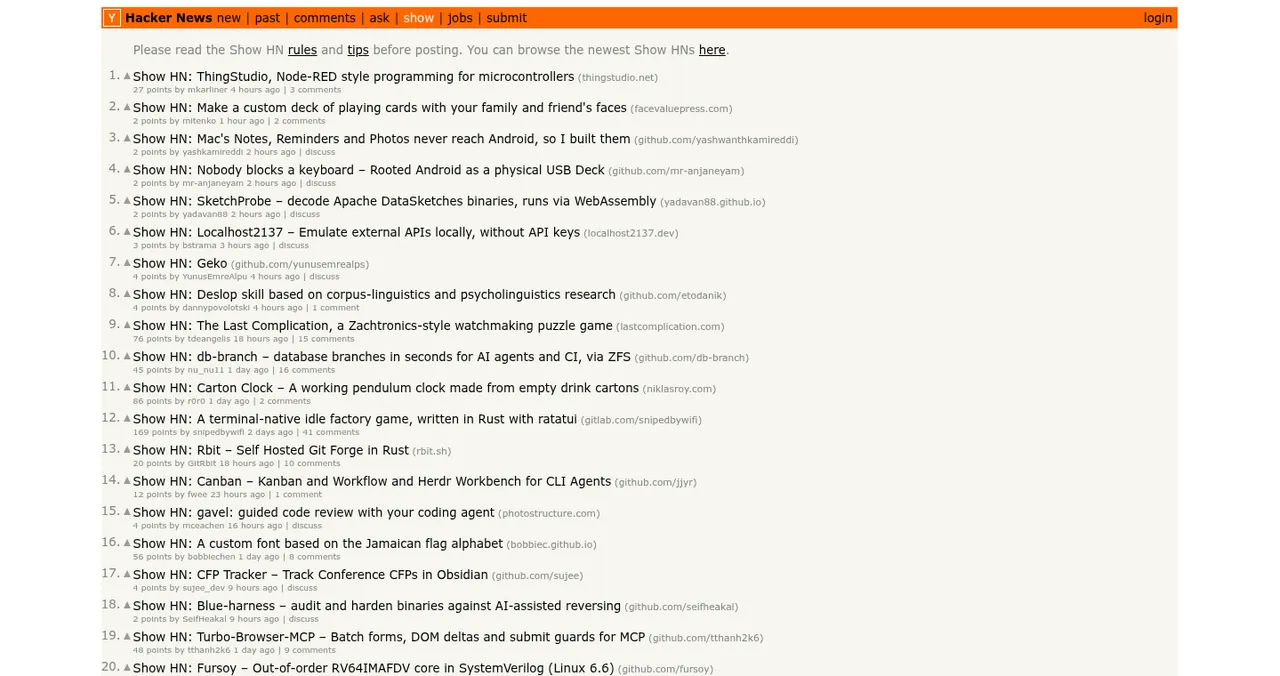
Hacker News (Show HN)
Developers, for things they can try in a minute.
FreeDev tools, open source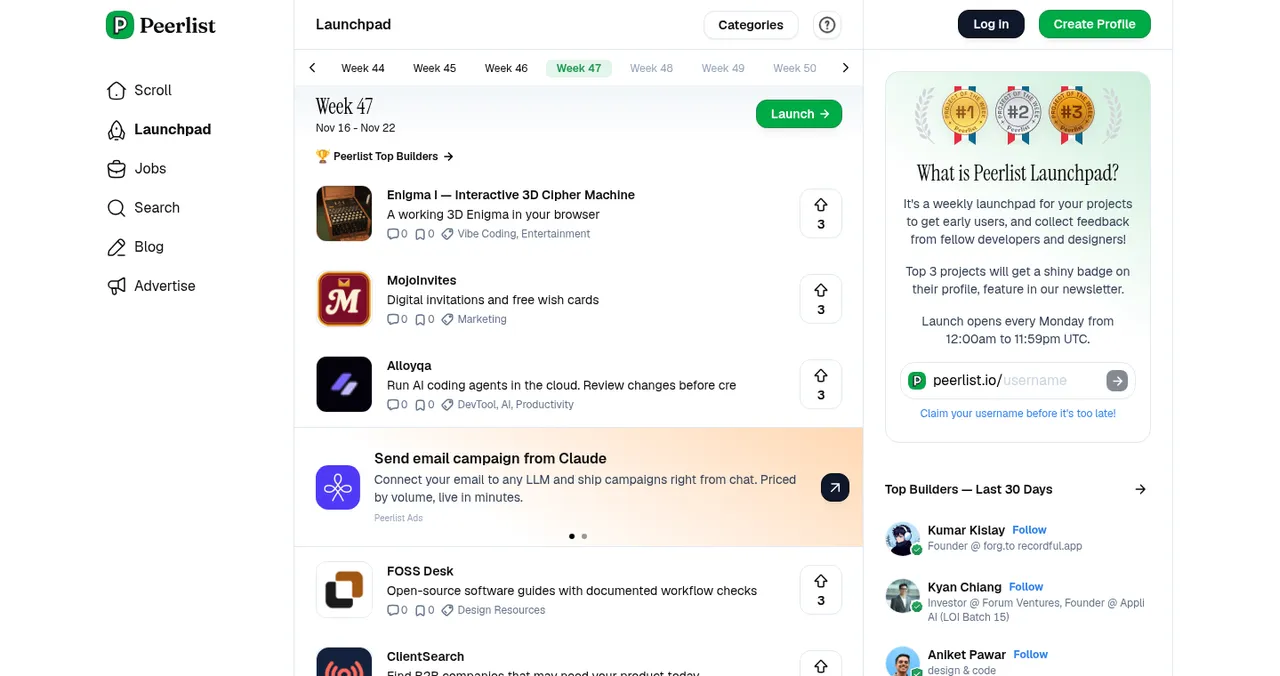
Peerlist Launchpad
A week-long launch for builders and side projects.
FreeEvery Monday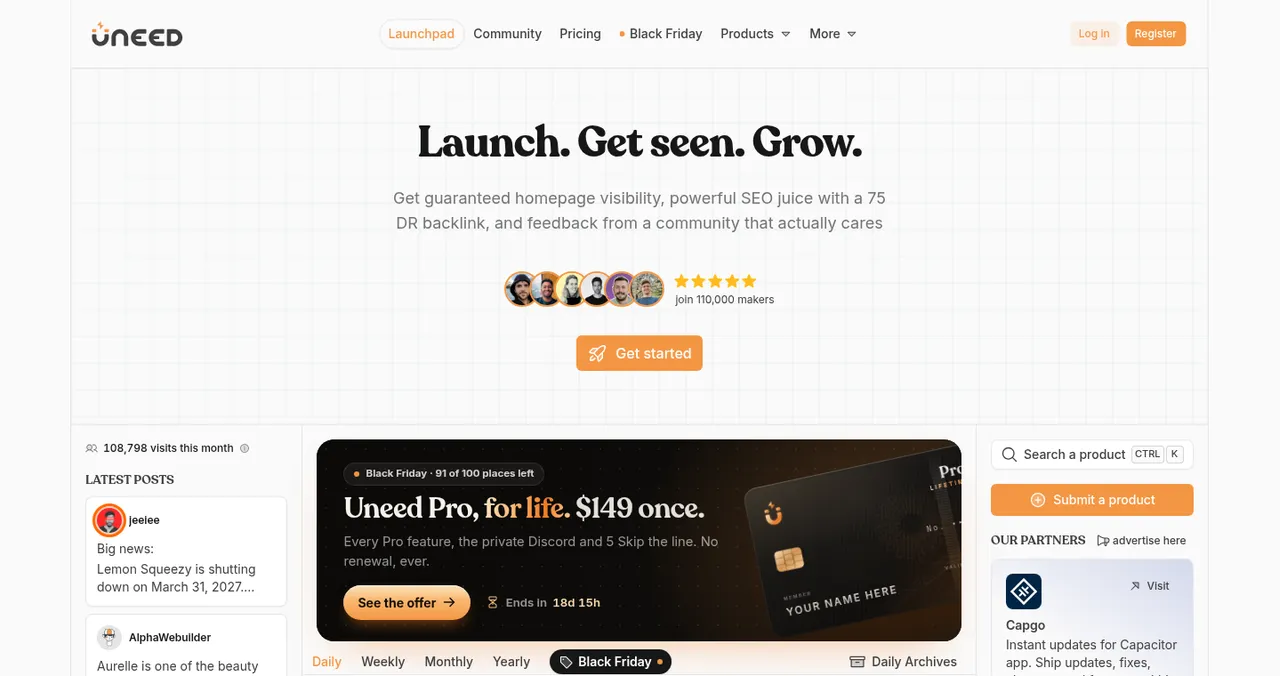
Uneed
A daily launch with leaderboards that keep counting.
Free linePlan ahead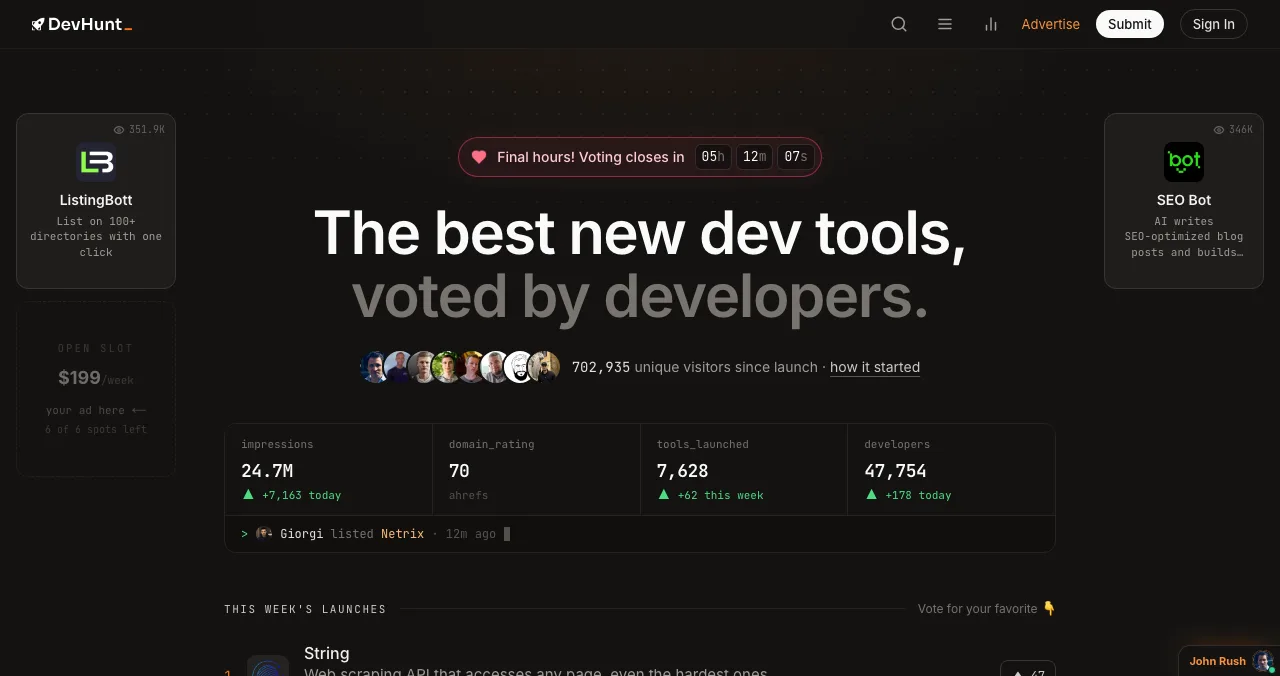
DevHunt
Weekly launches for developer tools, voted by developers.
Free listing$49 launch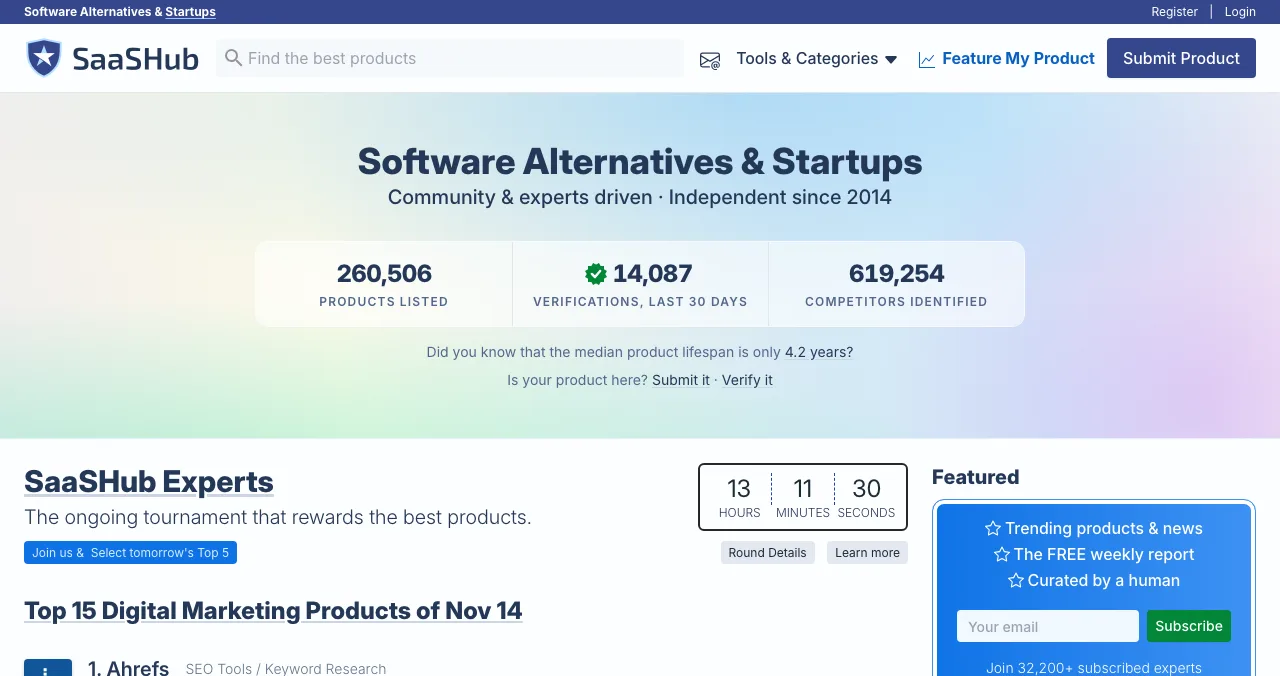
SaaSHub
Where people search for alternatives to the tools you compete with.
FreeAfter review
The shortlist: three sites for each kind of product
Every product starts with a permanent page. After that, match the audience.
| You built… | 1st | 2nd | 3rd |
|---|---|---|---|
| A SaaS product | Product Hunt | SaaSHub | Uneed |
| An AI tool | Product Hunt | Future Tools (free) | One paid AI directory |
| A developer tool | Show HN | DevHunt | Peerlist Launchpad |
| An open-source project | Show HN | DevHunt | Peerlist Launchpad |
| A mobile app | Product Hunt | AlternativeTo | Uneed |
| A browser extension | Product Hunt | AlternativeTo | Fazier |
| A side project or MVP | Peerlist Launchpad | Uneed (free line) | Fazier (free tier) |
Table: The top three launch sites by product type, after your permanent Science of Apps Launchpad page (rules checked 16–17 Nov 2026)
The decision tree: which launch site should you use first?
Answer three questions and you'll know where to start.

- Can people try it today without talking to you? If not, publish your permanent page and a waitlist, and hold the launch days until they can. Show HN and SaaSHub both turn away landing pages and waitlists.
- Who is it for? Developers → Show HN and DevHunt. Builders and indie makers → Peerlist and Uneed. A broad tech audience → Product Hunt. People switching from a known tool → SaaSHub and AlternativeTo.
- Can you be online all day on launch day? Product Hunt and Show HN reward replies within minutes. If you can't, pick week-long launches (Peerlist) or directories that don't need a launch day (SaaSHub, AlternativeTo).
The top websites to launch a startup, one by one
1. Science of Apps Launchpad: your permanent home base
- Cost
- Free, forever
- Accepts
- Every product type
- Ranking
- Relevance, never payment
- Visible for
- Permanent
- Included
- A full product test and report
It accepts startups, SaaS, mobile apps, AI products, developer tools, browser extensions, games and open source. Your profile is permanent, found by the problem people search for, and written to rank on Google and in AI answers. It takes about two minutes in six steps and is reviewed by a person, usually within a day. Once it's live, your product is tested end to end and you get a detailed report on what to fix: 22 areas, 39 automatic measurements and 74 expert checks on the screens behind your login.
Best for: every product, first.
2. Product Hunt: the biggest launch day
Free; launches go live at 12:01 AM Pacific on a date you schedule up to 30 days ahead, from a personal account. Ranking weighs upvotes, comments and time, and the homepage is hand-picked. Never ask for upvotes. Best for: polished SaaS, AI and consumer apps. Plan the day with our Product Hunt guide.
3. Hacker News (Show HN): developers, for things they can try
Free; titles start "Show HN"; no landing pages or sign-up pages. Make it possible to try without an account and stay in the thread. Best for: developer tools and open source.
4. Peerlist Launchpad: a week for builders
Launches open every Monday and run a week, from verified individual profiles with a complete project; no fee is mentioned. Best for: side projects, MVPs and developer tools.
5. Uneed: a daily launch that keeps counting
Free waiting line with a date at least 50 days out, or $19.99 / $39.99 to launch sooner. Free launches need 10 upvotes to stay listed. Best for: SaaS and side projects planned ahead.
6. DevHunt: weekly dev-tool launches
Listing is free with a permanent page; a launch week costs $49 and adds a newsletter spot and a dofollow link. Developers sign in to vote. Best for: developer tools and open source.
7. SaaSHub: for people looking to switch
Free after review; list your competitors and verify with a domain email for priority. No waitlists or unreleased products. Best for: released SaaS with known competitors.
Want more options? See our 14 Product Hunt alternatives and, for AI tools, the AI launch guide.
What to prepare once, for every site

- A one-line tagline — name the problem you solve, not the technology
- A 2–3 sentence description — who it's for, what it does, why now
- Logo and three to five screenshots — real screens, not mock-ups
- A 30–60 second demo — show one job done start to finish
- UTM-tagged links — one per site, so you know what worked
- A first comment — why you built it and what feedback you want
A three-week launch plan
- Day 1
Publish your permanent page
Your Science of Apps Launchpad profile goes live; your free product test starts. Submit to SaaSHub and AlternativeTo, which take time to review.
- Week 1
Fix the first five minutes
Use your product report to fix sign-up and onboarding before launch days. Book Product Hunt (up to 30 days ahead) and join Uneed's line if you can wait.
- Week 2, Monday
Peerlist
Launch for the week and reply to every comment.
- Week 2, midweek
Product Hunt or Show HN
Pick by audience. Be online all day.
- Week 3
DevHunt or Fazier
One more launch for your audience, then compare results per source.
Mistakes that waste a launch

- Launching everywhere on one day — you can't reply properly in five places at once
- The wrong audience — a dev tool on a consumer launch day, or a consumer app on Show HN
- Launching a landing page — Show HN and SaaSHub turn them away
- Asking for upvotes — every launch site here bans it
- No permanent page — when the spike fades, visitors need somewhere to land
Launch pages work on social proof: early comments and badges reassure new visitors. And keep the first screen simple; too many choices slow people down (Hick's Law).
Ready to launch?
How we built this shortlist
We started from the launch sites founders recommend most, kept those we could verify on their own pages (16 and 17 November 2026), and matched each to the audience it actually serves: Show HN's and DevHunt's rules make them developer-first, Peerlist requires individual builders, SaaSHub lists released software with competitors. Science of Apps runs one of the sites and has described it on the same terms as the others.
Key terms, defined
- Permanent page (canonical listing): the one page about your product that every launch links to.
- Launch day: the day a product goes live on a launch platform and competes on its leaderboard.
- Alternatives directory: a site that lists software by the products it replaces.
- UTM link: a link with tags that show in analytics which site sent a visitor.
- Waiting line: a free queue that assigns your launch date, as on Uneed.
Frequently asked questions
What are the top 10 websites to launch a startup?
A strong top 10 for 2027: Science of Apps Launchpad, Product Hunt, Hacker News (Show HN), Uneed, Peerlist Launchpad, DevHunt, Fazier, SaaSHub, AlternativeTo and, for AI tools, Future Tools. All but DevHunt's launch and Fazier's faster plans can be used free. Pick three or four that match your product rather than all ten.
Which launch site should I use first?
Start with your permanent page, so every other launch has one canonical place to link to; a free Science of Apps Launchpad listing takes about two minutes. Then use the site whose audience matches your product best: Product Hunt for polished SaaS and AI, Show HN for developer tools, Peerlist for side projects.
Where can I showcase my startup for free?
Science of Apps Launchpad (free forever, permanent), Product Hunt (free launch day), Peerlist Launchpad (weekly, no fee mentioned), Uneed (free waiting line), Show HN (free, for things people can try), and SaaSHub and AlternativeTo (free listings after review).
How do I list my startup on launch sites?
Prepare once and reuse: a one-line tagline that names the problem, a 2–3 sentence description, a logo, three to five screenshots, a short demo video and your link with UTM tags. Create your permanent page first, then submit or schedule each launch, and be online to reply on launch day.
Should I launch on all of them on the same day?
No. Spread launches over two to four weeks so you can reply properly on each and learn from the first. Product Hunt, Show HN and Peerlist each want your full attention on the day; directories like SaaSHub can be submitted anytime.
Is it worth paying for a launch?
Sometimes. Paid options such as Uneed's $19.99 fast-track, DevHunt's $49 launch or a $49 AI directory listing mainly buy timing, placement or backlinks. Pay for one, track the visits and sign-ups it sends, and only pay again where it worked.
Sources
- Product Hunt Help Center — How Product Hunt works (2026)
- Hacker News — Show HN guidelines
- Uneed — How to launch your product on Uneed (launch guide, 2026)
- Peerlist Help Center — How do I launch a project on Peerlist Launchpad?
- DevHunt — FAQ: launching, voting and pricing (checked 17 Nov 2026)
- Fazier — Submit: plans (checked 17 Nov 2026)
- SaaSHub — Submit a product: guidelines (checked 17 Nov 2026)
- Future Tools — Submit a tool (checked 17 Nov 2026)
- Science of Apps — Launchpad: launch your product free
- Checked November 17, 2026. Figures that change — fees, salaries, prices — are reviewed every six months; if something is out of date, tell us.
Where to go from here
- Top 5 websites to launch your startup free — the five free sites in depth
- 14 Product Hunt alternatives — every alternative, fee by fee
- App launch checklist — what to finish before launch week
- Science of Apps - LaunchpadThe best websites to launch an AI startup or AI tool, with what each one really costsWhere to launch an AI tool in 2027: free launch sites, AI directories and their real fees (TAAFT, Toolify, AIxploria), and which to use first.
- Science of Apps - LaunchpadThe best product launch platforms in 2027, matched to what you're launching: SaaS, AI, developer tools, apps and pre-launch, with costs and rulesThe best product launch platforms in 2027 by use case: Product Hunt, Science of Apps Launchpad, DevHunt, Peerlist, Uneed, BetaList, Show HN and more.
- Science of Apps - LaunchpadFree startup directories in 2027: 16 checked sites to submit your startup to, grouped by what you want (investors, customers, a launch, India) with each one's rules16 free startup directories checked for 2027, grouped by goal: investors, customers, launch day and India, with each site's rules and the ones to skip.
- Science of Apps - LaunchpadProduct launch taglines that get clicks: Product Hunt's 60-character rules, patterns that work, examples by product type, and the hype to cutHow to write a product launch tagline: Product Hunt's 60-character rule, patterns that work, examples for SaaS, apps, AI and dev tools, and what to cut.
- Science of Apps - LaunchpadHow to get backlinks for a new startup for free, and which link tactics Google treats as spamHow a new startup can earn backlinks for free in 2027: launch sites, reviewed directories, data, free tools, partners and press, plus the link tactics to avoid.
- Science of Apps - LaunchpadWhere to launch your startup in 2027: 24 launch sites, directories and communities, each checked on its own pages24 places to launch your startup in 2027, free and paid: launch sites, directories, AI directories, databases and communities, each checked and dated.
Get the ideas, not the noise.
Sign up with Google and we’ll send you short UX psychology tips by email — why people tap, stall and leave, and what to do about it. Unsubscribe anytime. Prefer something to keep? Get the free Laws of UX guide as a PDF.
Launch day ends. Your listing shouldn't.
Your home base: a permanent, free page every other launch links back to, ranked by relevance, plus your product tested end to end with a detailed report on what to fix.