 By
Quick answer: What are profitable agritech startup ideas?
- 25 agriculture startup ideas in five groups.
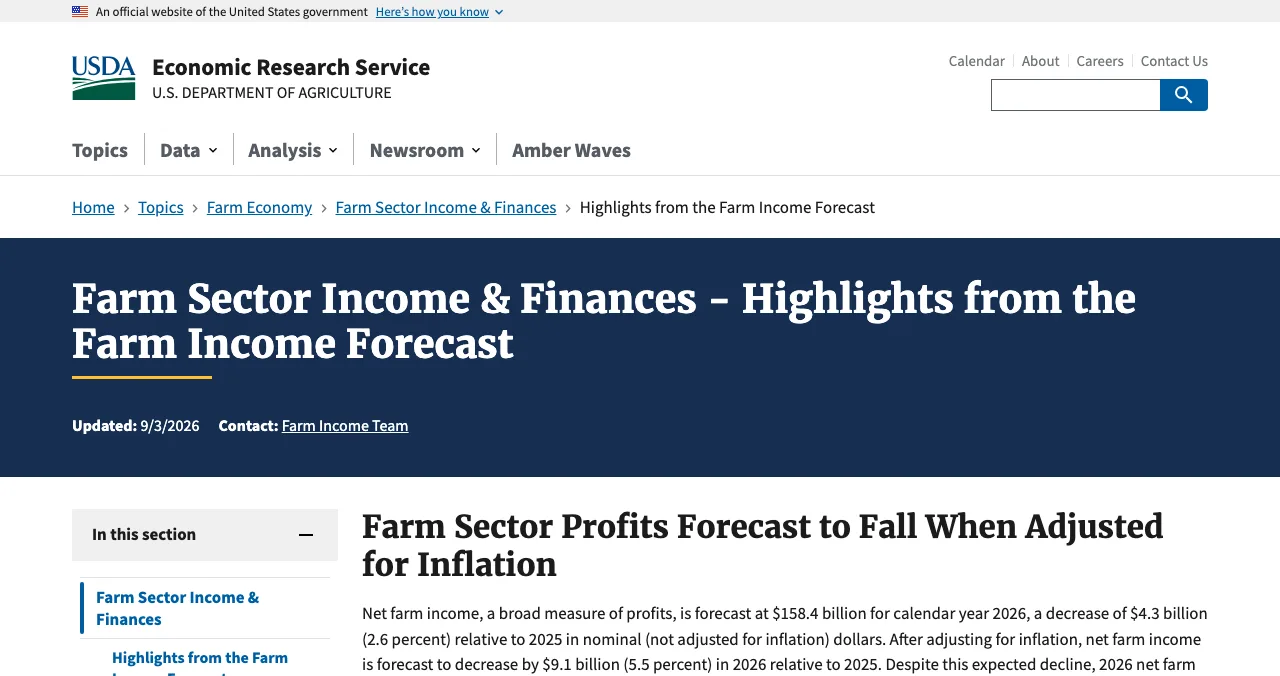
- Squeeze: US net farm income forecast at $158.4bn for 2026, down 2.6% (USDA ERS).
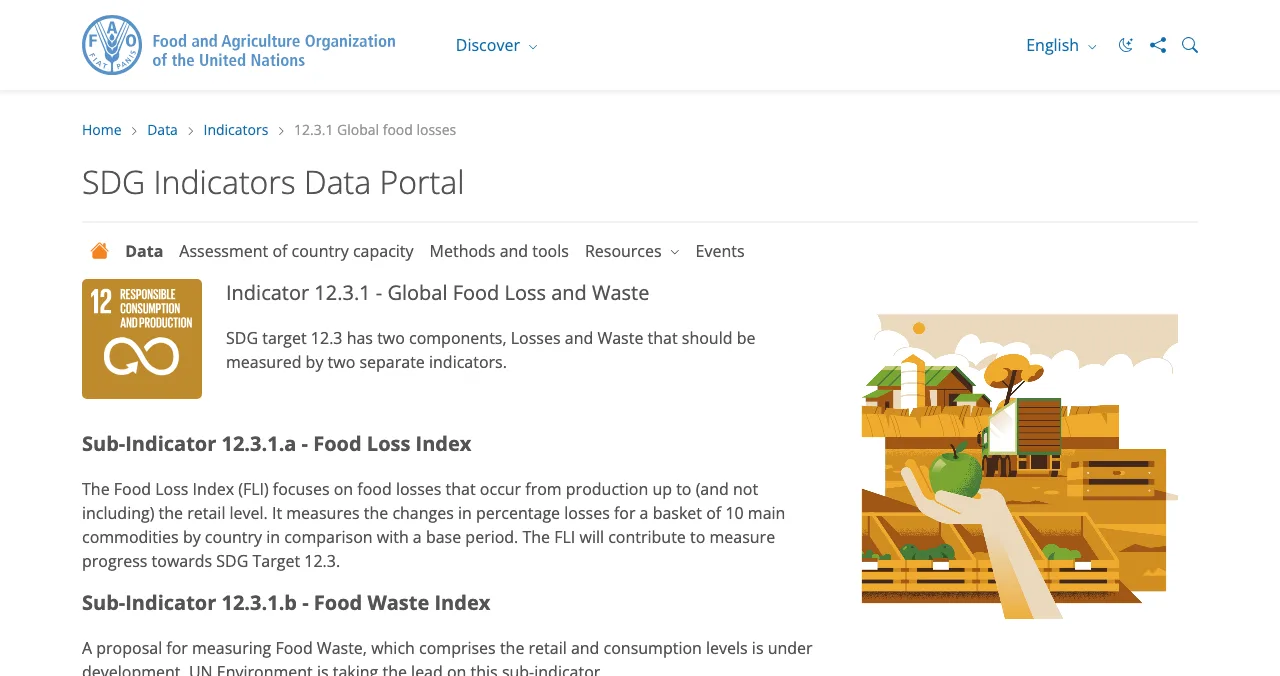
- Waste: 13.3% of food lost between harvest and retail in 2023 (FAO).
- Farmers' own posts: loose dogs, dry wells, million-dollar combines.
- Profitable agritech saves money a farmer can count.
Key takeaways
- When farm income falls, tools that cut costs sell more easily than tools that add features.
- The best agriculture startup ideas come from people who've worked on farms or with farmers.
- Rural connectivity, seasonality and trust shape every product decision.
- Selling through co-ops, dealers and extension services can beat direct sales.
- Pilot on one farm for one season before scaling.
Farming is one of the hardest markets for a startup and one of the most underserved. Margins are thin, buyers are cautious, connectivity is patchy, and decisions follow the seasons. But farmers post about their problems as plainly as anyone, and official data shows where money is being lost. This guide gives 25 agriculture startup ideas for 2027, each tied to USDA or FAO data or a real r/farming thread (with its date), explains what makes an agritech idea pay, and ends with how to launch and test yours free. Sources were checked on 18 November 2026. More areas are in our 100 startup ideas. Jump to the data, the 25 ideas or selling to farmers.
- US net farm income forecast for 2026 (USDA ERS)
- $158.4bn
- Change from 2025, nominal (−5.5% after inflation)
- −2.6%
- Food lost between harvest and retail, 2023 (FAO)
- 13.3%
- Agriculture startup ideas in this guide
- 25
What does the data say about agriculture right now?
USDA's Economic Research Service forecast, updated 3 September 2026, puts US net farm income at about $158.4 billion for 2026, down $4.3 billion (2.6%) from 2025, and down 5.5% after inflation. When income falls, farmers buy tools that cut costs or losses, and postpone the rest.
Globally, FAO estimates that 13.3% of food was lost between harvest and retail in 2023, up from 13.0% in 2015. That loss happens on farms, in storage, in transport and in processing: places where better information pays.
And on r/farming, the problems are concrete:
| Problem | What farmers posted | Thread date |
|---|---|---|
| Livestock losses | Two calves lost to neighbours' loose dogs as housing surrounds a pasture; 520 comments | 7 Jan 2026 |
| Drought | A rancher deep in the red after drilling three new wells as the water hole dried up | 23 Apr 2026 |
| Machinery costs | A shared report that new combines list near $1 million, with farmers keeping old machines running | 24 Aug 2026 |
| Succession | A shared report that farmers are ageing and their children don't want the family business; 190+ comments | 15 Feb 2026 |
Table: Farm problems posted on r/farming (threads read 18 Nov 2026)
25 agriculture startup ideas
Each idea lists the buyer and a first test. They're editorial suggestions; none is a proven business.
Water and weather
A rancher posted on r/farming on 23 April 2026 that drought had dried his usual water hole and forced him to drill three new wells, leaving him unsure he could make hay.
| # | Idea | Buyer | First test |
|---|---|---|---|
| 1 | Low-cost well and tank level sensors with text alerts | Ranchers | Install one sensor on one farm |
| 2 | Drought decision planner (hay, herd size, water) | Livestock farmers | Build a spreadsheet with one rancher |
| 3 | Irrigation scheduling from local weather data | Smallholders | Run one field's schedule for a month |
| 4 | Water-hauling coordination between neighbours | Rural communities | Run a group chat for one county |
| 5 | Wildfire-risk alerts for pastures | Ranchers in fire zones | Send alerts by hand during one season |
Table: Water and weather agriculture startup ideas (signal: r/farming, 23 Apr 2026)
Livestock
The 7 January 2026 r/farming thread about loose dogs killing calves drew 520 comments, many describing the same problem as housing spreads into farmland.
| # | Idea | Buyer | First test |
|---|---|---|---|
| 6 | Pasture camera and motion alerts for predators and dogs | Pasture farmers | Trial one camera kit |
| 7 | Neighbour notification and incident log for livestock attacks | Farmers near housing | Run one area's log |
| 8 | Calving monitoring alerts | Beef farmers | Pilot during one calving season |
| 9 | Herd health records for small farms | Smallholders | Digitise one herd's paper records |
| 10 | Vet visit scheduling and cost sharing between farms | Small livestock farms | Coordinate one vet route |
Table: Livestock agriculture startup ideas (signal: r/farming, 7 Jan 2026)
Machinery and inputs
With new machines expensive and income down, older equipment stays in service longer. A 24 August 2026 r/farming thread shared a report that new combines list near $1 million while farmers keep older machines going.
| # | Idea | Buyer | First test |
|---|---|---|---|
| 11 | Parts finder for older machinery (salvage, reman, cross-references) | Farmers, independent mechanics | Source five hard-to-find parts |
| 12 | Repair-video library for common older models | Farmers | Record five repairs with a mechanic |
| 13 | Machinery sharing and booking between neighbours | Smallholders | Run one county on a calendar |
| 14 | Input-price comparison across local dealers | Row-crop farmers | Collect quotes for ten inputs |
| 15 | Used-equipment inspection reports | Buyers of used machinery | Inspect five machines |
Table: Machinery and input agriculture startup ideas (signal: r/farming, 24 Aug 2026)
Post-harvest and market access
FAO's 13.3% loss figure covers the stretch from harvest to retail, where storage, transport and selling happen.
| # | Idea | Buyer | First test |
|---|---|---|---|
| 16 | Cold-chain temperature logging with loss reports | Packhouses, co-ops | Log one season |
| 17 | Direct-to-restaurant ordering for small growers | Growers, chefs | Take orders by form for a month |
| 18 | Surplus produce matching with food banks | Growers, food banks | Broker one surplus |
| 19 | Grading-photo tool to settle quality disputes | Growers, buyers | Photograph one season's deliveries |
| 20 | Shared cold storage booking | Small growers | Map one region's capacity |
Table: Post-harvest agriculture startup ideas (signal: FAO SDG 12.3.1)
Farm business and succession
A 15 February 2026 r/farming thread shared a report on ageing farmers whose children don't want to take over; it drew 190+ comments.
| # | Idea | Buyer | First test |
|---|---|---|---|
| 21 | Farm succession planning service | Farm families | Partner with one farm lawyer |
| 22 | New-entrant farmer matching with retiring owners | Retiring farmers, new farmers | Match one pair |
| 23 | Grant and programme finder for one state | Farmers, extension offices | Build one state's list |
| 24 | Farm bookkeeping for seasonal cash flow | Small farms | Do one farm's books |
| 25 | Farm labour scheduling and payroll | Fruit and vegetable growers | Run one season's rota |
Table: Farm business agriculture startup ideas (signal: r/farming, 15 Feb 2026)
What makes an agritech startup idea profitable?
| Test | Strong | Weak |
|---|---|---|
| Payback | Within one season, in money the farmer can count | "Better insights" |
| Works offline | Yes, or with patchy signal | Needs constant connectivity |
| Fits the season | Sold and set up in the off-season | Needs attention at harvest |
| Channel | Co-ops, dealers, extension services | Cold ads to farmers |
| Founder | Has farmed or worked with farmers | Learned about farming last month |
Table: What separates profitable agriculture startup ideas from the rest (Science of Apps editorial)
The first row matters most. A farmer comparing your product with a bigger tractor payment, a vet bill or a load of feed needs to see the saving in the same units: dollars, hours, animals or tonnes. Products that promise "visibility" or "insights" ask the farmer to do that translation, and most won't. If you can't state the saving in one sentence after a pilot season, the product isn't ready to sell, however good the technology. Ideas that pass this test also tend to sell through co-ops and dealers more easily, because those partners can repeat the sentence to their own members and customers.
Designing agritech that farmers actually use
Farm products fail for practical reasons more often than technical ones. Before you build, check your idea against the conditions it will meet in a field, a barn or a packhouse.
| Condition | What it means for the product |
|---|---|
| Patchy signal | Work offline; sync when back in range; send alerts by SMS as well as the app |
| Gloves, mud, sunlight | Large tap targets, high contrast, as few steps as possible |
| Seasonality | Set-up and training in the off-season; nothing new to learn at harvest |
| Shared devices | Family members and workers may share one phone or login |
| Long equipment lives | Integrate with older machines, not just this year's models |
| Thin margins | A price the farmer can compare with a cost they already pay |
Table: Design conditions for agriculture startup products (Science of Apps editorial)
A hypothetical pilot. Say you're testing water-level alerts with one rancher. Before installing anything, you note how often they currently drive out to check tanks and what a dry tank has cost them in the past. You install one sensor for one season, send alerts by text, and keep a log of every trip they didn't need to make. At the end of the season you have a number in their terms (hours and fuel saved, a loss avoided), a reference you can call, and a list of what broke. That number is your pitch to the next ten ranchers and to the co-op that can reach a hundred more.
How do you sell to farmers?

- Start with people farmers trust — co-ops, dealers, agronomists, extension offices.
- Pilot on one farm for one season — and measure the money saved.
- Price against the saving — a share of the loss avoided is easy to agree.
- Use that farmer as a reference — farmers believe other farmers.
- Sell in the off-season — when there's time to decide.
- Put up a page and list it free — so co-ops and buyers can find and share it.
Launch on the Science of Apps Launchpad
List your agritech startup free, forever: six short steps, automated checks and a human moderator, ranked by relevance, editorial picks and community interest, never payment. Going live unlocks a free baseline diagnosis of your landing page, discoverability and speed. When your app or dashboard is ready, a full investigation loads it in a real browser on desktop and mobile and tests it end to end, which matters for products farmers use on a phone in a field.
- Areas of your product tested
- 22
- Automatic measurements, desktop and mobile
- 39
- Expert checks behind your login
- 74
- Verdicts that rank what to fix first
- 5
Check your product works for a farmer on a phone
List free, then order the report that fits your stage.

 Economy
See what new customers see
- Store listing and homepage, screen by screen
- Scorecard against 60 Laws of UX
- The fixes worth most
PremiumThe full diagnosis and the plan
- Every screen, every finding, every flow
- All 60 laws with evidence and fixes
- 8 strategy chapters and a 90-day roadmap
Private to your team. Never affects ranking.
An off-season plan
- Month 1
Listen
Visit or call ten farmers; ask about last season's biggest loss.
- Month 2
Pick and partner
Choose one idea; find one co-op, dealer or extension officer to help.
- Month 3
Manual pilot
Deliver the result by hand on one farm.
- Month 4
Page and listing
A one-page site and a free Launchpad listing.
- Next season
Measure
Count the money saved; ask for a reference.
Mistakes

- Building for investors, not farmers — the farmer has to see the saving
- Assuming good connectivity — design for offline first
- Launching at harvest — nobody has time; sell in the off-season
- Too many features — one job done reliably beats a dashboard; see cognitive load
- No local partner — trust travels through co-ops, dealers and neighbours
Ready to launch?
How we chose
Ideas are grouped by problem, each tied to USDA ERS's farm income forecast (updated 3 September 2026), FAO's SDG 12.3.1 indicator, or r/farming threads named by date, all read on 18 November 2026. Two of the r/farming threads share news reports; we cite the thread and paraphrase. Comment counts are as shown on 18 November 2026. Ideas are editorial suggestions, not proven businesses. Science of Apps runs the Launchpad.
Key terms, defined
- Agritech: technology products and services for farming and the food supply chain.
- Net farm income: a broad measure of farm profits, as forecast by USDA's Economic Research Service.
- Food loss: food lost between harvest and retail, measured by FAO's Food Loss Index.
- Cold chain: temperature-controlled storage and transport for perishable food.
- Extension service: publicly funded advisers who help farmers adopt new practices.
Frequently asked questions
What are profitable agritech startup ideas?
Agritech ideas that pay save farmers money they can measure within a season: low-cost well and water-level sensors for drought, livestock monitoring against predators and loose dogs, parts sourcing for older machinery, cold-chain loss tracking for packhouses, and input-price comparison. With USDA forecasting lower 2026 net farm income, cost savings make the clearest business case.
What are good agriculture startup ideas for beginners?
Ones that start as a service and need little hardware: a grant and programme finder for one state, an input-price comparison for local dealers, an equipment-sharing calendar for one county, or matching surplus produce to food banks. They build relationships with farmers, which every later agritech product depends on.
How big is the food loss problem?
FAO's SDG indicator 12.3.1 estimates that 13.3% of food was lost between harvest and retail in 2023, up slightly from 13.0% in 2015. That excludes waste at retail and in homes, which is measured separately. Cold storage, handling, transport and market access are where agritech startups can reduce losses.
Is US farm income rising or falling?
USDA's Economic Research Service forecast, updated 3 September 2026, puts 2026 net farm income at about $158.4 billion, down $4.3 billion (2.6%) from 2025 in nominal terms, and down 5.5% after inflation. Lower income makes farmers more cautious buyers, so products need a clear, quick payback.
How do I sell an agritech product to farmers?
Through people farmers already trust: co-ops, equipment dealers, agronomists, extension offices and other farmers. Pilot on one or two farms for a full season, measure the money saved, and use those farmers as references. Expect seasonality: many decisions are made in the off-season, not at harvest.
Do agriculture startups need hardware?
Not always. Many valuable ideas are software or services: parts finders, succession planning, grant finders, price comparison, marketplace matching. Hardware ideas, like sensors, need more capital and field testing for weather, power and connectivity. Starting with software can fund and inform later hardware.
Sources
- USDA Economic Research Service — Highlights from the Farm Income Forecast, updated 3 Sep 2026 (checked 18 Nov 2026)
- FAO — SDG indicator 12.3.1 Global food losses (checked 18 Nov 2026)
- Reddit — r/farming: dealing with dogs getting at cows and sheep, 7 Jan 2026 (checked 18 Nov 2026)
- Reddit — r/farming: This drought is killing me, 23 Apr 2026 (checked 18 Nov 2026)
- Reddit — r/farming: Farmers are aging; their kids don't want to be in the family business, 15 Feb 2026 (checked 18 Nov 2026)
- Reddit — r/farming: new combines list for $1 million as farm income drops, 24 Aug 2026 (checked 18 Nov 2026)
- Science of Apps — Launchpad: list your product free (checked 18 Nov 2026)
- Science of Apps — Product investigation: 22 areas (checked 18 Nov 2026)
- Checked November 18, 2026. Figures that change — fees, salaries, prices — are reviewed every six months; if something is out of date, tell us.
Where to go from here
- 100 startup ideas — with a signal for each
- Government schemes for startups — funding by country
- Validate a startup idea — before the pilot
- Science of Apps - Launchpad50 tech startup ideas for 2027, grouped by the technical shift that makes each one newly possible, with the problem signal behind it and how to launch and test a software startup free50 tech startup ideas for 2027, grouped by the shift that makes each possible now, from air-gapped AI to permit software, plus a free way to launch yours.
- Science of Apps - Launchpad100 startup ideas for 2027, each tied to a real problem signal from YC's Requests for Startups, Reddit threads or official data, and how to test any of them free before you build100 startup ideas for 2027, each tied to a real problem signal: YC's requests, dated Reddit threads and official data. Plus a free way to test yours.
- Science of Apps - LaunchpadE-commerce startup ideas: 30 online startup ideas you can run from a laptop, each tied to a problem sellers are posting about, with the latest US e-commerce data and a free way to launch30 e-commerce startup ideas you can run from a laptop, each tied to a real seller problem, with the latest Census data and a free way to launch online.
- Science of Apps - LaunchpadStartup ideas for women founders in 2027: 30 ideas built on real problem signals, from care tech to deep tech, plus funding programmes for women that are open right now and how to launch free30 startup ideas for women founders, from care tech to deep tech, plus three funding programmes for women open now (checked 18 Nov 2026) and a free launch.
- Science of Apps - LaunchpadWhat is indie hacking? What the term means, where it came from, how indie hackers pick ideas, build, launch and grow without investors, and where they launch their productsIndie hacking means building a profitable internet business on your own terms, funded by customers, not VCs. What it means, how indie hackers launch and grow.
- Science of Apps - LaunchpadHow to market an AI tool in 2027: positioning by task, AI directories, AI search, demos and the trust that makes people payHow to market an AI tool in 2027: position by task, list in AI directories, get cited by AI search, show real outputs and earn trust that converts.




Get the ideas, not the noise.
Sign up with Google and we’ll send you short UX psychology tips by email — why people tap, stall and leave, and what to do about it. Unsubscribe anytime. Prefer something to keep? Get the free Laws of UX guide as a PDF.
Launch day ends. Your listing shouldn't.
List your agritech startup free on the Science of Apps Launchpad: a permanent profile that farmers, co-ops and investors can find, and your product tested end to end with a detailed report.